Maki sits on Budačka ulica in Gospić, the administrative and cultural centre of the Lika region, a part of Croatia that remains largely off the coastal tourist circuit. Lika's inland agriculture and its tradition of direct, unfussy cooking give venues here a different supply logic than their Adriatic counterparts. For travellers already planning a route through our full Gospić restaurants guide, Maki offers a local reference point in a city with few dedicated dining options.
Pearl is the En Primeur Club membership app — saves, bookings, and concierge access live there. Same editors, same standards.
- Address
- Budačka ul. 200, 53000, Gospić, Croatia
- Phone
- +38553575510
- Website
- motel-maki.hr
- Directions
- Get directions
 Saves & bookings on Pearl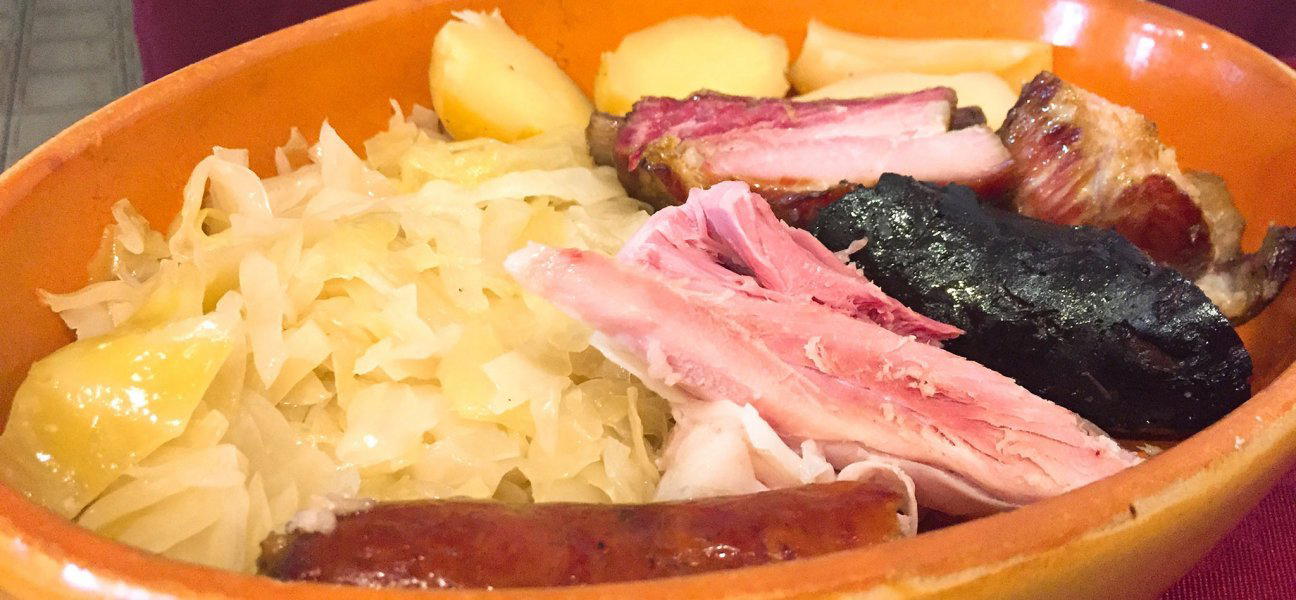
Gospić and the Lika Table
Croatia's dining conversation concentrates heavily on the coast. The Michelin-recognised tier, from Pelegrini in Šibenik to Restaurant 360 in Dubrovnik and Agli Amici Rovinj, runs almost entirely along the Adriatic corridor. Gospić, the main town of the Lika region, sits roughly 100 kilometres inland, in a limestone plateau flanked by Velebit mountain and the Plitvice Lakes watershed. That geography shapes what ends up on local plates more directly than any culinary trend: lamb raised on highland pastures, freshwater fish from clean karst streams, forest mushrooms, game, and field vegetables grown without the pressure of tourist-season volumes. Lika's food identity is specific, if underwritten, and it is the context in which a restaurant like Maki on Budačka ulica should be understood.
Arriving on Budačka Ulica
Gospić is compact enough that Budačka ulica is navigable on foot from the town centre. The address, Budačka ul. 200, places Maki on a street that mixes residential blocks with small commercial premises, a spatial pattern common in Croatian inland towns that developed outside the coastal tourism economy. There is no harbour promenade, no old-town stone-paved pedestrian zone as a backdrop. What you find instead is a working town with a quieter, more local rhythm than anywhere on the Dalmatian or Kvarner coasts. That context matters for setting expectations: Gospić does not operate on the same visitor infrastructure as Rovinj, Split, or Dubrovnik, and the dining options here reflect a community feeding itself rather than an industry constructed for outsiders.
The Lika Larder: Why Sourcing Defines This Region
The editorial case for paying attention to inland Croatian cooking rests almost entirely on ingredient quality. Lika lamb, lička janjetina, has a protected designation of origin and is raised on highland pastures at elevations between 600 and 1,200 metres, producing meat with a distinctive mineral character from the herb-rich grazing. Lika potatoes carry a similar regional reputation, grown in the cooler plateau climate where the short growing season concentrates starch and flavour. The rivers feeding into the karst system, including tributaries of the Una and Gacka, support brown trout populations that supply local kitchens with freshwater fish largely absent from coastal menus. This is a supply geography that operates entirely outside the Adriatic seafood economy, and it gives inland Lika restaurants a raw material set that is, by definition, different from what drives the celebrated coastal tier.
The contrast is worth stating plainly. A coastal restaurant in Croatia competes partly on the quality of its Adriatic catch, its wine list from Dalmatian or Istrian producers, and the ambient appeal of a sea-facing setting. An inland Lika restaurant sits in a different category entirely: its sourcing is land-based, its seasons run on highland agricultural rhythms, and its culinary tradition draws from a pastoral rather than maritime history. Venues like Boskinac in Novalja and Alfred Keller in Mali Lošinj operate within the Adriatic logic; a Gospić restaurant does not, and should not be evaluated as if it did.
Placing Maki in Its Local Tier
Gospić has a limited number of sit-down restaurants relative to coastal Croatian towns of comparable or smaller population. That scarcity is itself a data point: the town's economy does not generate the hospitality volume that would support a dense restaurant scene, and visitors passing through on the way to Plitvice Lakes or the Velebit hiking routes are the secondary audience rather than the primary one. Maki, at its Budačka ulica address, operates in a context where being a known local venue carries weight that formal awards do not need to confer. Maki is a local restaurant in Gospić serving traditional Croatian barbecue.
For comparison: Dubravkin Put in Zagreb, Korak in Jastrebarsko, and Cantilly Garden Restaurant in Samobor represent the recognised tier of inland Croatian dining, all within the Zagreb gravitational pull where critical infrastructure and a denser professional class support more formal restaurant models. Gospić has no equivalent critical mass, which places Maki in a different frame: a local institution serving a community, not a destination restaurant competing in the national tier. That framing is not a diminishment; it is an accurate account of how to read it.
For the Traveller Passing Through
Gospić sits on the main road and rail corridor between Zagreb and the Dalmatian coast, and a significant proportion of its visitors arrive in transit. The Plitvice Lakes National Park lies approximately 30 kilometres to the north, making Gospić a practical overnight stop for travellers who want to avoid the park's immediate hotel zone. Visitors arriving in that mode should treat Maki as a direct address for regional cooking rather than as an occasion meal. Booking is recommended.
Travellers building a wider Croatian itinerary that takes in the coast can use our full Gospić restaurants guide to calibrate the full local picture. Those whose route includes Nebo by Deni Srdoč in Rijeka, Krug in Split, or LD Restaurant in Korčula will find Gospić and the Lika region a substantive contrast to the coast rather than a gap in the itinerary. The same logic applies to travellers who have visited Cubo in Opatija, Burin in Crikvenica, or Bodulo in Pag: the shift to a landlocked, highland food culture is sharp enough to justify the detour on its own terms.
For those with a specific interest in ingredient-driven regional cooking and wanting a broader reference point, BioMania Bistro Bol in Bol represents a coastal analogue in the sourcing-first category, while two of the more technically rigorous examples of what ingredient provenance can achieve in a fine-dining register are Le Bernardin in New York City and Atomix in New York City, where single-sourcing decisions are treated as the central editorial statement of the menu.
Practical Notes
Maki is located at Budačka ul. 200, Gospić, Croatia. Phone and website details are unavailable here. Maki serves traditional Croatian barbecue and is priced around $15 per person. Travellers from Zagreb can reach Gospić by car in approximately two hours via the A1 motorway, or by regional rail on the Zagreb-Split line, with Gospić as a scheduled stop. The town itself is walkable, and the Budačka ulica address is reachable on foot from the central bus and rail connections.
Comparable Venues
Comparable venues nearby, for context on price, style, and recognition.
| Venue | Cuisine | Price | Notes |
|---|---|---|---|
| MakiThis venue — the venue you are viewing | Traditional Croatian Barbecue | $$ | Not listed |
| Izletište Kuzmanović Slavagora | Traditional Croatian Rural Cuisine | $$ | Slavagora |
| Restoran Dva potoka | Croatian Zagorje Traditional | $$ | Pluska |
| Seoski Turizam Stara Preša | Traditional Croatian Farmhouse Cuisine | $$ | Šenkovec |
| Stari Fijaker | Traditional Croatian Zagreb-Zagorje | $$ | Lower Town |
| Curry Bowl | Sri Lankan Street Food | $$ | Tkalčićeva |
Continue exploring
More in Gospic
Restaurants in Gospic
Browse all →
Bars in Gospic
Browse all →
Hotels in Gospic
Browse all →
Wineries in Gospic
Browse all →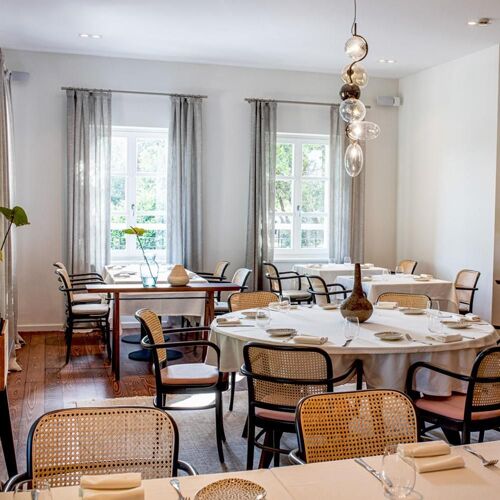

At a Glance
- Classic
- Rustic
- Family
- Group Dining
- Casual Hangout
- Open Kitchen
- Local Sourcing
Current opening hours
- Monday
- Closed
- Tuesday
- 7 AM–11 PM
- Wednesday
- 7 AM–11 PM
- Thursday
- 7 AM–11 PM
- Friday
- 7 AM–11 PM
- Saturday
- 7 AM–11 PM
- Sunday
- 7 AM–11 PM
Hours can change for holidays and private events. Last verified .