On Mesnička Street in Zagreb's Upper Town, Stari Fijaker is among the city's most enduring addresses for traditional Croatian cooking. The dining room reads as a living record of continental Zagreb, where carved wood, linen tablecloths, and unhurried service define the register. For visitors building a picture of what Zagreb actually eats, rather than what it performs for tourists, this is the address to know.
Pearl is the En Primeur Club membership app — saves, bookings, and concierge access live there. Same editors, same standards.
- Address
- Mesnička ul. 6, 10000, Zagreb, Croatia
- Phone
- +38514833829
- Website
- starifijaker.hr
- Directions
- Get directions
 Saves & bookings on Pearl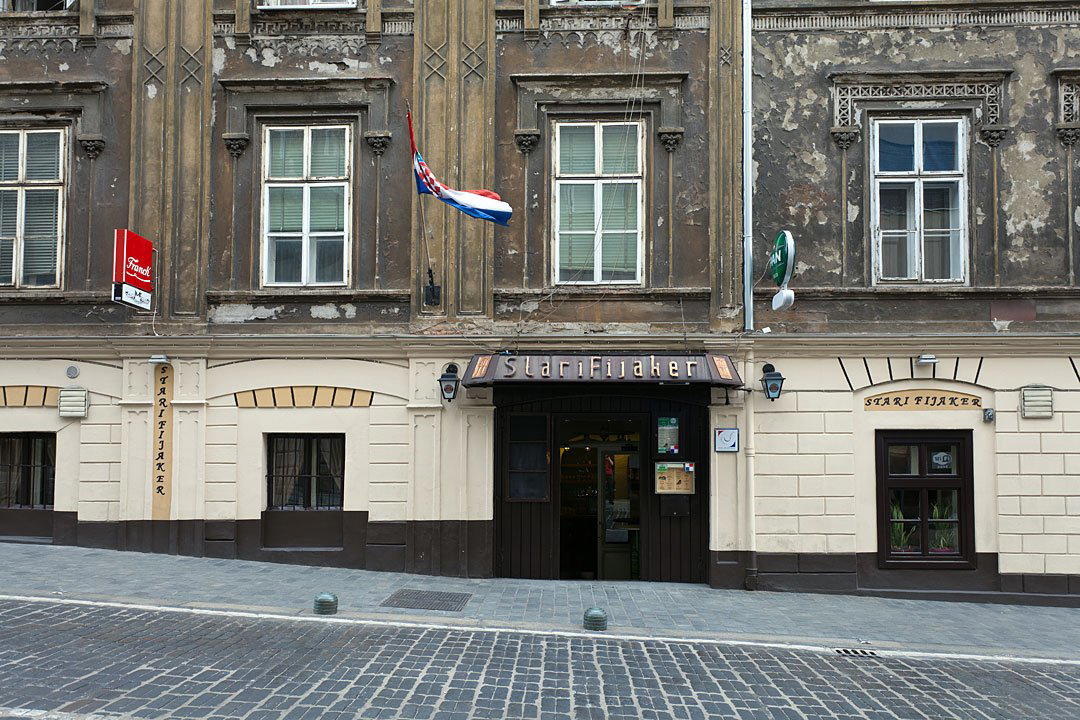
A Room That Argues for Continuity
Zagreb's Upper Town has a particular relationship with time. The streets around Mesnička run quieter than the Dolac market bustle below, and the buildings carry the accumulated weight of Austro-Hungarian civic confidence. Stari Fijaker, at Mesnička ul. 6, reads as a direct extension of that architectural register: a dining room where the physical container and the cooking inside it arrive at the same conclusion about what Zagreb values. Dark timber panelling, cloth-covered tables, and a formality that stops well short of stiffness make up a space that positions itself in conscious opposition to the lighter, more internationally oriented interiors that have opened elsewhere in the city over the past decade.
That kind of interior is a specific argument. It tells the guest before the menu arrives that the kitchen is not chasing contemporary technique or seasonal reinvention for its own sake. The room commits to a tradition, and the cooking follows. In Zagreb, that tradition is rooted in the continental Croatian kitchen: slow-braised meats, freshwater fish from the rivers of the Zagorje and Slavonia regions, and preparations that owe their character to centuries of Austro-Hungarian and Hungarian influence rather than to the Adriatic coast that dominates most international perception of Croatian food.
The Continental Croatian Kitchen in Context
Croatia's dining scene divides more sharply along geographic lines than almost any other country in the region. The coastal addresses, from Restaurant 360 in Dubrovnik to Pelegrini in Sibenik and LD Restaurant in Korčula, work with olive oil, seafood, and the Dalmatian pantry. The Zagreb kitchen operates on entirely different logic: pork fat over olive oil, paprika over capers, game and offal over fish, and desserts that lean toward strudel and kremšnita rather than anything the Adriatic islands would recognise.
That inland tradition rarely receives the international attention commanded by the coastal restaurants. Addresses like Agli Amici Rovinj in Rovinj, Boskinac in Novalja, and Nebo by Deni Srdoč in Rijeka occupy Croatia's more internationally reviewed tier, while the continental Zagreb kitchen remains largely a city-level proposition. Stari Fijaker operates inside that local-authority bracket, known to Zagrebers as a reliable custodian of preparations that other restaurants in the city have quietly dropped in favour of pan-European menus.
This is not a criticism of the modern Zagreb dining scene, which has genuine range. Noel represents the city's most technically serious contemporary cooking, while Dubravkin Put brings a Mediterranean lightness that reflects the coastal influence even at inland coordinates. Izakaya marks the city's developing appetite for Japanese formats. Stari Fijaker simply does not compete in those registers. It competes on depth in the continental tradition, which is a different and narrower game.
What the Space Communicates
The room matters here because it carries the restaurant's character. Zagreb's newer dining rooms trend toward exposed concrete, open kitchens, and the kind of stripped-back aesthetic that signals a particular relationship with modernity. The restaurant's interior does the opposite: upholstered seating, warm lighting calibrated to candlepower rather than design-studio specification, and a density of decorative detail that positions the room as a document of Zagreb bourgeois dining culture from an earlier period.
That document is not static or merely nostalgic. The room functions as a working restaurant, not a heritage museum, and the distinction matters. A preserved historic dining room that serves mediocre food is a curiosity. A preserved historic dining room where the cooking holds up is an argument for continuity. The reputation the restaurant carries in Zagreb is built on the second case, not the first. Locals return not because the room is old but because the cooking inside it still makes sense on its own terms.
The restaurant occupies a completely different position on the formality-to-technique spectrum. The interest here is in tradition, not innovation. The room and the menu reinforce each other, which is a coherence that more technically ambitious restaurants sometimes sacrifice.
Placing It Among Zagreb's Dining Options
Zagreb's mid-to-upper dining tier now includes addresses across several distinct registers. Al Dente and Amfora represent the city's competent Italian and Adriatic-leaning options respectively. Korak in Jastrebarsko, just outside the city, and BioMania Bistro Bol further down the coast illustrate the range of Croatian food traditions available within reasonable reach. Against that backdrop, the restaurant occupies a specific niche: the traditional Zagreb konoba scaled up to full restaurant format, with the room and service register to match, operating on Mesnička without the self-consciousness that sometimes creeps into establishments that know they are the last of a type.
That address is worth noting practically. Mesnička sits between the Upper Town and the main commercial axis of the city, making the restaurant accessible on foot from most central Zagreb accommodation. For visitors, this is the address to include when the itinerary needs a grounding point in the city's culinary inheritance.
Planning Your Visit
The restaurant is a reference on the Zagreb restaurant circuit, and it draws both locals and visitors who have specifically sought out traditional continental Croatian cooking. Weekend evenings tend to fill early, and advance reservations are advisable for groups and for Friday or Saturday dinner. The address on Mesnička ul. 6 is direct to reach from the city centre on foot, and the Upper Town setting means it pairs naturally with an afternoon walk through the Gornji Grad before dinner.
Cuisine Lens
Comparable venues nearby, for context on price, style, and recognition.
| Venue | Cuisine | Price | Notes |
|---|---|---|---|
| Stari FijakerThis venue — the venue you are viewing | Traditional Croatian Zagreb-Zagorje | $$ | Not listed |
| SOL tapas na hrvatski | Croatian Tapas | $$ | centar |
| Kod Pere | Traditional Croatian | $$ | Gornji Grad |
| Tvornica Pljeskavica Kosta | Serbian Grill / Pljeskavica | $$ | Savski marof |
| RESTORAN Maksimir | Traditional Croatian | $$ | Maksimir |
| Curry Bowl | Sri Lankan Street Food | $$ | Tkalčićeva |
Continue exploring
More in Zagreb
Restaurants in Zagreb
Browse all →
Bars in Zagreb
Browse all →
Hotels in Zagreb
Browse all →

At a Glance
- Classic
- Rustic
- Cozy
- Historic
- Well Known
- Family
- Casual Hangout
- Historic Building
Current opening hours
- Monday
- 11 AM–11 PM
- Tuesday
- 11 AM–11 PM
- Wednesday
- 11 AM–11 PM
- Thursday
- 11 AM–11 PM
- Friday
- 11 AM–11 PM
- Saturday
- 11 AM–11 PM
- Sunday
- 11 AM–10 PM
Hours can change for holidays and private events. Last verified .
Retro interior with vintage wooden cupboards, knitted tablecloths with traditional motifs, pictures of old Zagreb, and warm inviting atmosphere.