
Michelin Selected
A MICHELIN Selected property occupying a restored medieval bastion on the old city walls of Zadar, Bastion Heritage sits where Dalmatian stone architecture meets considered hospitality. Its address at Bedemi Zadarskih Pobuna 13 places guests within the fortified core of a city that rewards those who stay inside its walls rather than at its periphery.

Pearl is the En Primeur Club membership app, where members save venues, book tables and use the concierge.
Stone Walls and Staying Inside Them
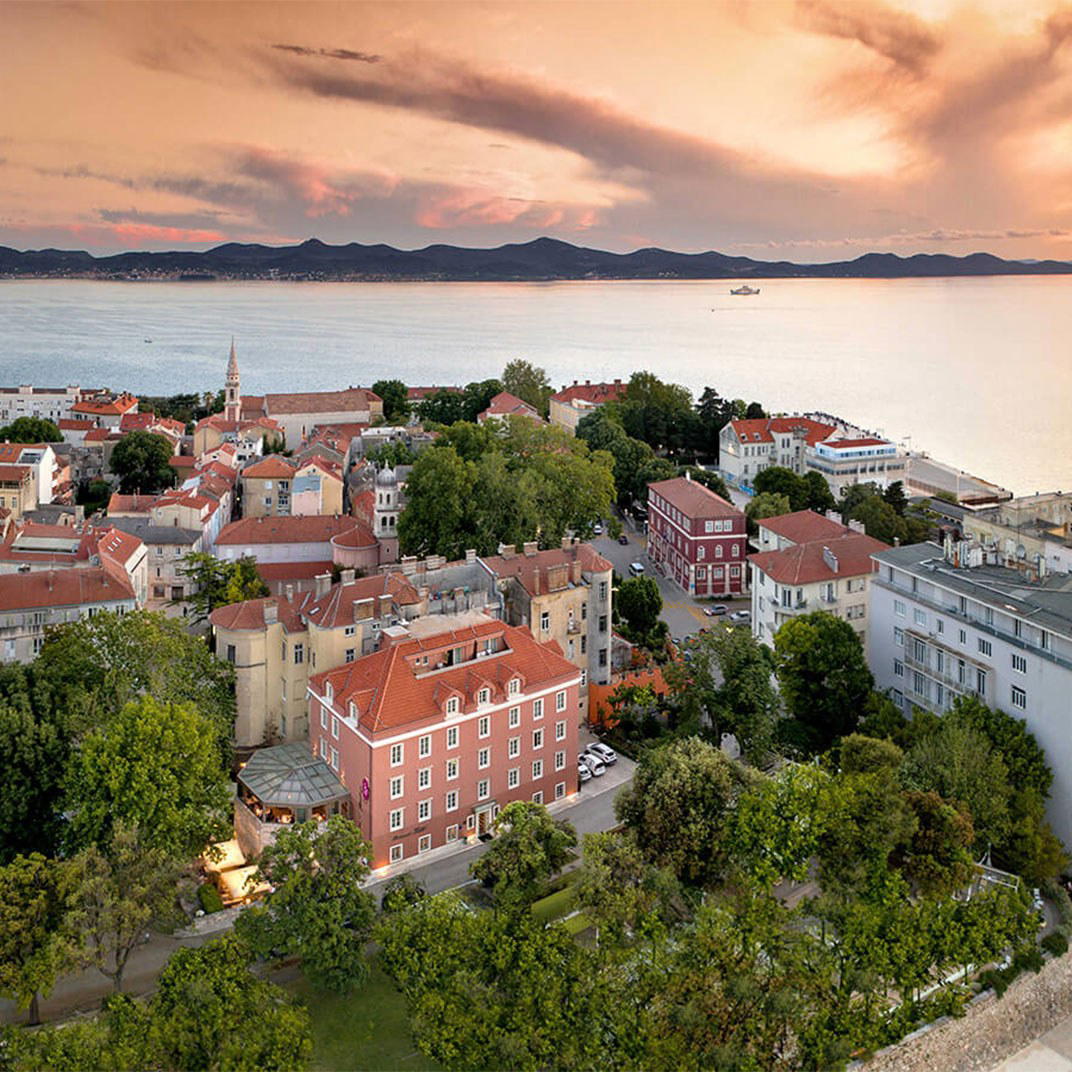
Zadar's old town is a peninsula, and where you sleep within it changes everything. The city's medieval fortifications, built and reinforced over centuries by Venetian engineers, form not just a boundary but a character. Properties that occupy the wall fabric itself belong to a small, structurally distinct category: they cannot be replicated, expanded, or relocated. Bastion Heritage, at Bedemi Zadarskih Pobuna 13, sits directly within that fortified perimeter, and the physical experience of arrival confirms it. Thick stone, recessed apertures, and the spatial logic of a defensive structure give the building a presence that purpose-built hotels in the same city bracket cannot reproduce.
Zadar has attracted growing attention from travellers who find Dubrovnik overcrowded and Split undercut by its own scale. The old town here offers a compressed, walkable Roman grid with a functioning local population, the kind of city that rewards slow itineraries. Hotels that position themselves inside the walls rather than on the waterfront fringe operate in a distinct niche, where the architecture itself is part of what guests are paying for. Bastion Heritage received a MICHELIN Selected designation in 2025, placing it within the curated tier of the Michelin hotel guide for Croatia, a list that applies the same editorial rigour to accommodation as the restaurant guide applies to kitchens.
The Dining Programme in Context
Croatia's Adriatic coast has developed a coherent culinary identity over the past decade, moving from tourist-facing seafood platters toward a more considered use of local ingredients: Pag lamb, Dalmatian olive oils pressed from varieties found nowhere else in the region, the briny small fish of the Zadar archipelago, and the wines of nearby Benkovac and the Šibenik hinterland. Properties that take their food and drink seriously in this environment tend to operate as anchors for that produce story, giving guests access to ingredients and preparations that disappear quickly from menus when supply is seasonal.
The dining format at a heritage-footprint hotel of this type, where kitchen space and dining room capacity are shaped by centuries-old stone rather than a contemporary brief, typically rewards intimacy over scale. Guests are not eating in a hotel restaurant designed to serve hundreds; they are eating in a room that the building has always constrained, which generally means shorter menus, more deliberate sourcing, and a closer relationship between what arrives at the table and what was available that morning. That structural logic, common across heritage properties from Istria to Korčula, tends to produce more interesting food than volume-driven hotel dining.
For a broader sense of how Zadar's dining scene positions itself relative to the rest of Dalmatia, the EP Club Zadar restaurants guide maps the city's food and drink options across neighbourhoods and price tiers.
Where Bastion Heritage Sits in Zadar's Hotel Market
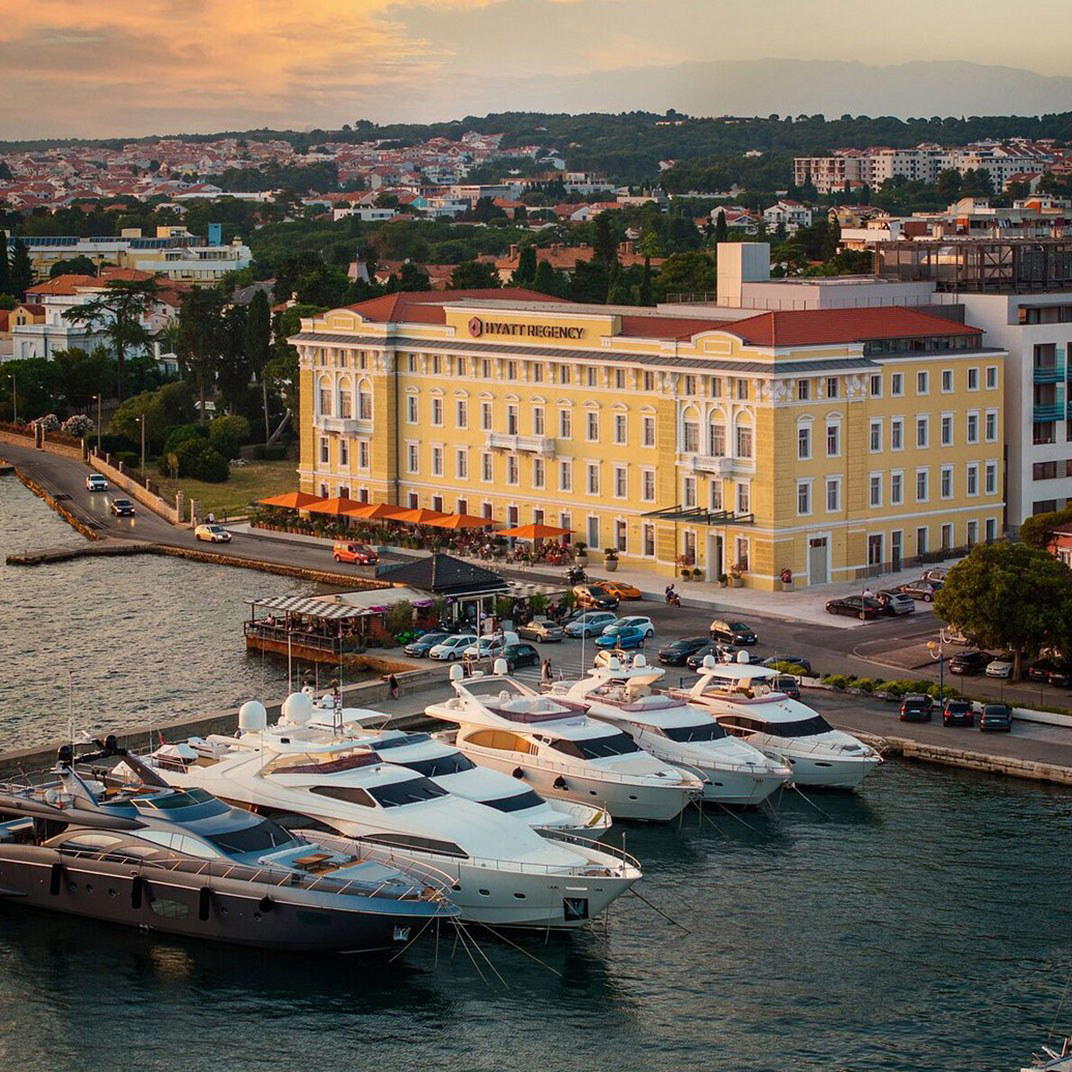
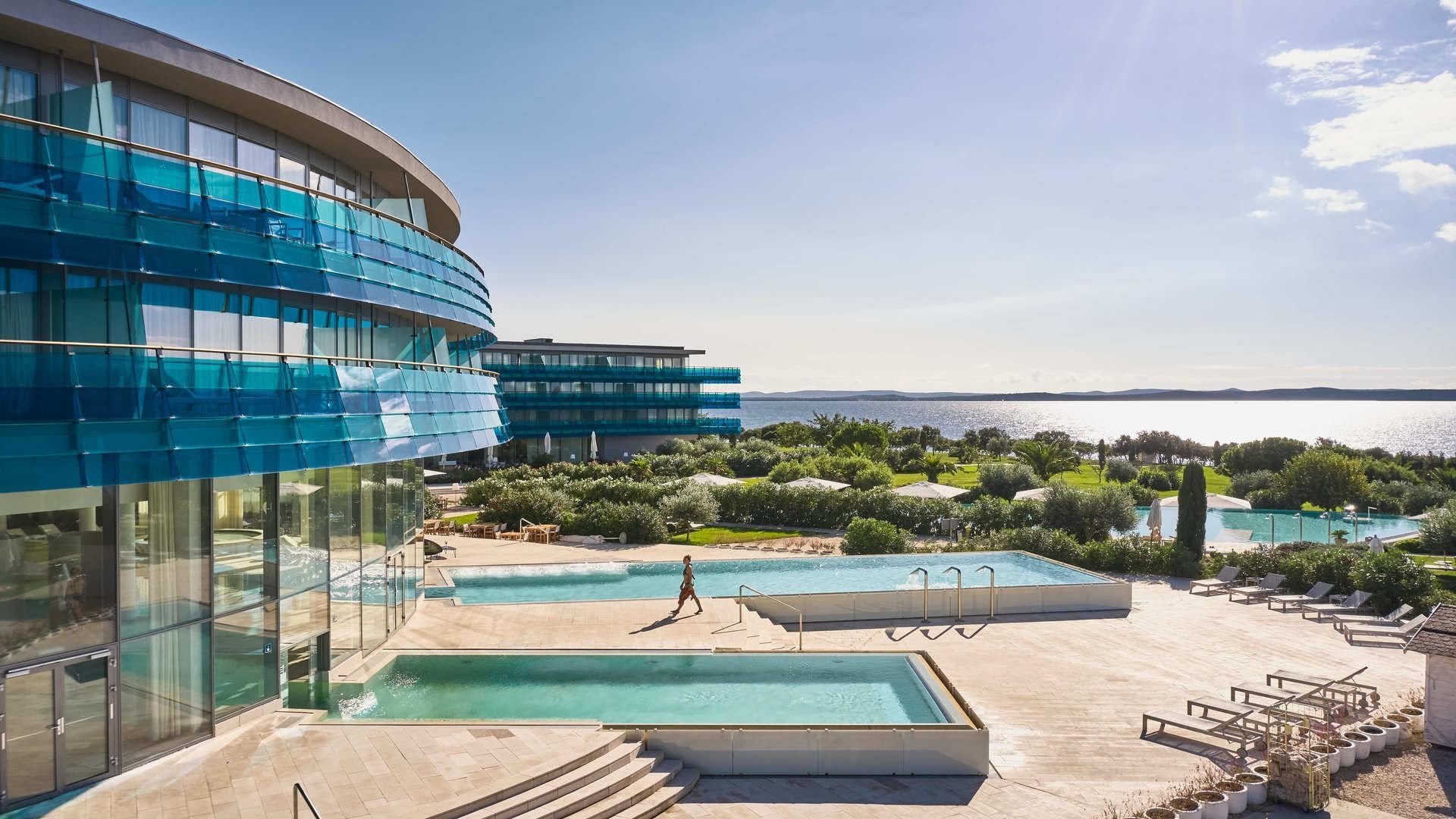
Zadar's accommodation market has diversified considerably. The Hyatt Regency Zadar represents the international brand tier, with the amenity infrastructure and loyalty programme access that segment expects. The Almayer Art and Heritage Hotel and Dépendance occupies a design-led boutique position, emphasising art programming alongside accommodation. The Falkensteiner Hotel and Spa Iadera sits outside the old town on the Puntamika peninsula, with a resort footprint that trades urban access for beach proximity and spa depth.
Bastion Heritage's position is distinct from all three: it is defined by its physical fabric rather than its brand affiliation or its amenity list. The MICHELIN Selected status signals that the property has been assessed against editorial criteria, service consistency, character, value within its category, rather than star-count criteria. That places it in the same evaluation framework as properties such as Lešić Dimitri Palace in Korčula and San Canzian Hotel and Residences in Buje, both heritage-integrated, both operating in the Adriatic premium independent tier.
Across Croatia more broadly, the independent heritage property category has produced some of the coast's most considered stays. Boutique Hotel Alhambra in Mali Lošinj and Hotel Kastel in Motovun illustrate how Istrian and Kvarner properties in this tier tend to prioritise architectural authenticity and local programme over international-brand amenity depth. Villa Nai 3.3 on Dugi Otok, an island visible from Zadar's waterfront, takes the same logic toward a more remote, design-led extreme.
Planning a Stay
Zadar operates on a compressed summer season, with July and August bringing the highest room rates and the most pressure on old-town restaurants and accommodation. The shoulder months, May, June, and September, offer meaningfully different conditions: fewer visitors in the Roman forum, shorter queues at the Sea Organ, and better availability at properties that sell out in peak weeks. For a heritage property with a limited room count, that seasonal dynamic matters more than at a large resort, where availability is rarely constrained until the last moment. Booking several weeks ahead for late June or early September is advisable; for the core summer period, earlier is more reliable.
The address at Bedemi Zadarskih Pobuna 13 sits on the landward side of the old town walls, within walking distance of the city's principal sites. Zadar's airport, around eight kilometres from the old town, is served by numerous European low-cost carriers as well as Croatia Airlines connections from Zagreb, making it one of the more accessible Adriatic cities for international arrivals without a car. Once inside the old town, the pedestrian core makes a car unnecessary and, given parking constraints, generally inadvisable.
Those extending their itinerary along the coast will find useful reference points at D-Resort Šibenik to the south, Grand Park Hotel Rovinj by Maistra Collection further north in Istria, and Le Méridien Lav Split for those continuing toward the Dalmatian capital. Island diversions from Zadar include options at LIOQA Resort on Ugljan, reachable by ferry in under thirty minutes, and Pomâlo Inn on Vis for those willing to commit to a longer crossing.
A Pricing-First Comparison
Comparable venues nearby, for context on price, style, and recognition.
| Venue | Price | Awards | Notes |
|---|---|---|---|
| Bastion HeritageThis venue (the venue you are viewing) | $200–300 | Michelin Selected | Not listed |
| Hyatt Regency Zadar | $300–500 | Michelin Selected | seafront, modern seafront repurposing of industrial site |
| Almayer Art & Heritage Hotel and Dépendance | Not listed | Michelin Selected | Zadar Old Town, Small family-run boutique in restored historic buildings with modern Mediterranean spirit. |
| Falkensteiner Hotel & Spa Iadera | Not listed | Michelin Selected · La Liste Top Hotels | Punta Skala, Contemporary luxury resort blending modern architecture with natural coastal beauty. |
| The Byron Dubrovnik | Not listed | Michelin Selected | Old Town, Renovated UNESCO heritage building blending historic charm with modern boutique luxury. |
| Imperial Valamar Collection Hotel | $200–300 | Michelin Selected | Rab Town, Elegant island heritage retreat with Victorian grandeur. |
Recognition history
Dated appearances from independent guides and award organizations, with the underlying list record or original source where available.
Michelin Selected
Michelin
Continue exploring
More in Zadar
Hotels in Zadar
All hotels in Zadar →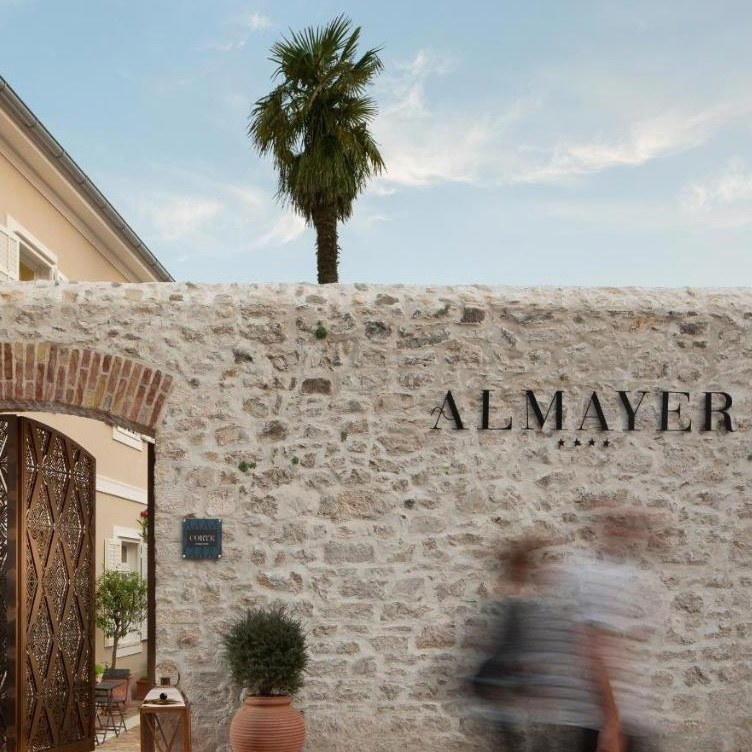
Bars in Zadar
Browse all →
Restaurants in Zadar
All restaurants in Zadar →
Wineries in Zadar
All wineries in Zadar →
Details
- Elegant
- Historic
- Intimate
- Sophisticated
- Romantic
- Romantic Getaway
- Anniversary
- Honeymoon
- Historic Building
- Terrace
- Wi Fi
- Spa
- Sauna
- Hot Tub
- Massage
- Restaurant
- Room Service
- Concierge
- Waterfront
- Street Scene
- Elevator
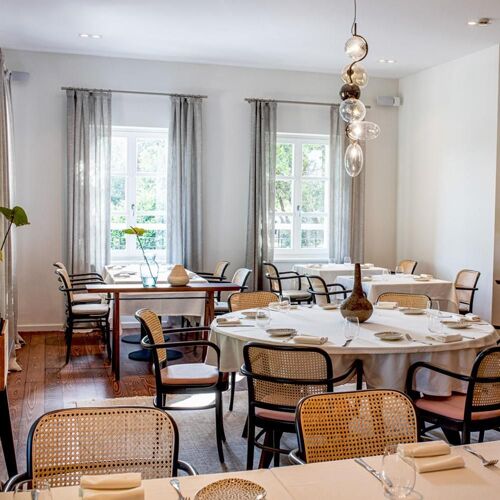
Elegant historical ambiance with exposed stone walls, neutral hues, polished teak flooring, and lavish fabrics creating a sophisticated and relaxing atmosphere.