On Tkalčićeva, Zagreb's most trafficked pedestrian strip, Curry Bowl occupies a position that says something about how the city's casual dining has shifted. Where the street once ran on grilled meats and local staples, South Asian spice-led cooking has carved out a genuine foothold. This is a venue that tracks a broader evolution in what Zagreb residents and visitors now expect from an affordable weekday meal.
Pearl is the En Primeur Club membership app — saves, bookings, and concierge access live there. Same editors, same standards.
- Address
- Ul. Ivana Tkalčića 42-44, 10000, Zagreb, Croatia
- Phone
- +385992728779
- Website
- srilankancurrybowl.com
- Directions
- Get directions
 Saves & bookings on Pearl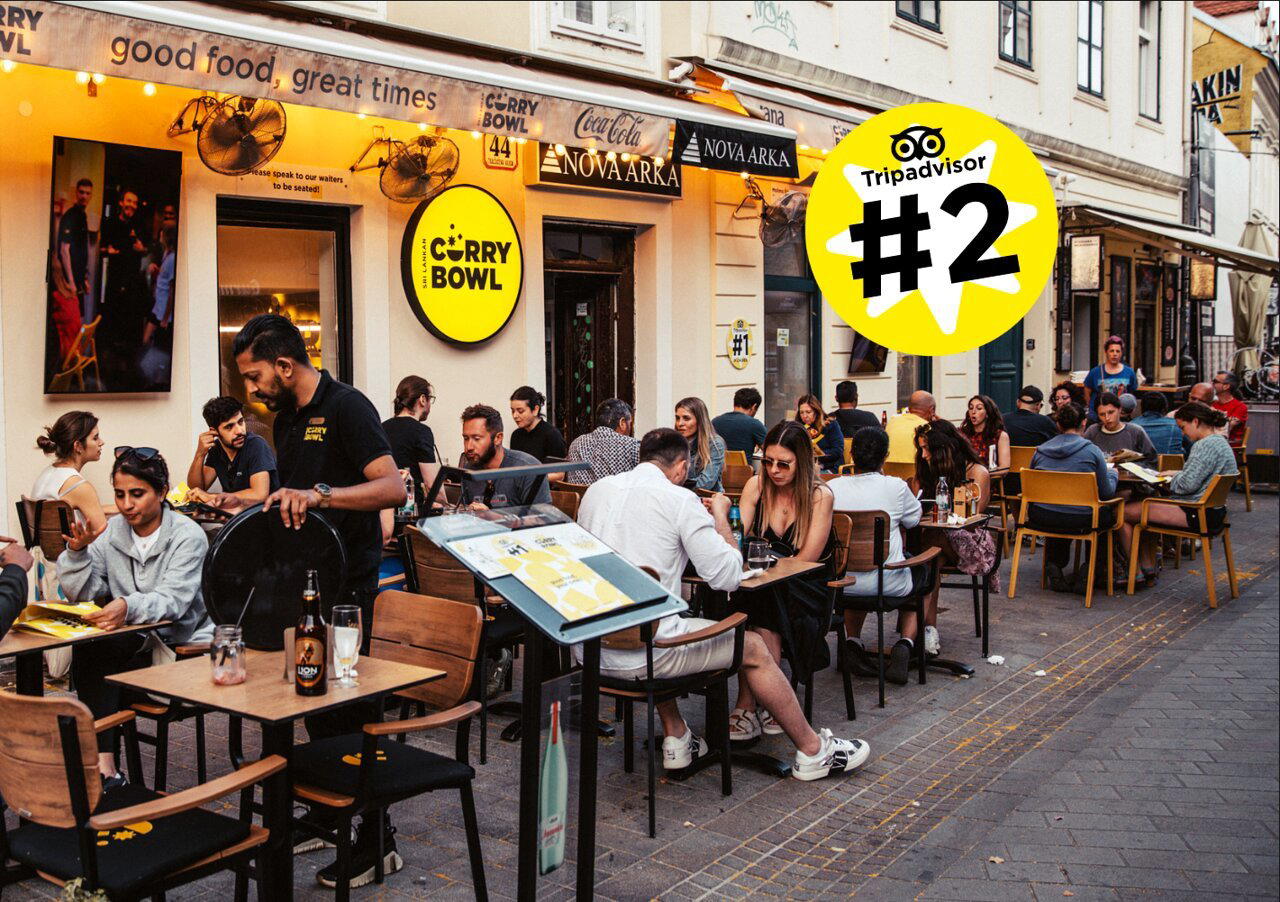
Tkalčićeva and the Slow Drift Toward Spice
Ulica Ivana Tkalčića is one of those streets that functions as a barometer for a city's dining confidence. Running along the base of Gornji Grad, it has for decades been the social spine of Zagreb's bar and café culture, where terraces fill by mid-afternoon regardless of season and the foot traffic is dense enough to sustain almost any concept. What has changed, notably in the past decade, is the composition of that concept. The grilled-meat-and-house-wine formula that once dominated the strip has been pressured by a generation of Zagreb diners with broader reference points and less patience for repetition. Into that gap, South and Southeast Asian kitchens have entered with real staying power. Curry Bowl, at number 42-44, is one of the addresses that sits inside this shift.
Zagreb's relationship with non-European cuisine has historically lagged behind capital cities of comparable size elsewhere in the region. The city's dining identity was built on Austro-Hungarian comfort eating, Dalmatian seafood brought north, and a strong café culture that prioritised drink over food. Ambitious cooking, when it arrived, came through French and Italian channels first. Indian and pan-Asian food arrived later, and for a long time occupied the bottom of the price ladder with little culinary ambition to match. The evolution visible now is different in character: spice-led kitchens are appearing in prime pedestrian locations, at price points that suggest confidence rather than default cheapness.
What the Location Signals
A Tkalčićeva address is not accidental. The street commands some of the highest footfall in Zagreb's upper town corridor, and operators who place themselves here are making a deliberate argument about where they sit in the city's dining order. Curry Bowl's position at 42-44 places it within walking distance of the Dolac market end of the street, where daytime energy is highest. This is not the fringe of Zagreb's food scene; it is the centre of its casual social dining.
For context on how the wider Zagreb scene is structured, the city now ranges from Michelin-tracked modern Croatian at venues like Noel (Modern Cuisine) and creative tasting formats at the leading, through mid-tier Mediterranean at Dubravkin Put (Mediterranean Cuisine), down to accessible single-cuisine specialists like Izakaya (Japanese Contemporary) and the bowl-format operations now competing on Tkalčićeva and surrounding streets. Curry Bowl operates in that last tier, where the competitive logic is about consistency, value legibility, and repeat visits rather than occasion dining. That is a different kind of pressure, and a different kind of reputation to build.
The Reinvention Happening Across the Category
The evolution of South Asian cooking in Central European capitals follows a recognisable arc. First-generation venues typically compressed the cuisine into a handful of crowd-safe dishes: butter chicken, naan, a token vegetarian option, all adjusted toward local palate tolerances. What comes next, as the category matures, is a divergence. Some venues double down on accessibility and volume. Others begin pulling toward regional specificity, sourcing harder-to-find spices, and distinguishing between, say, a Punjabi-style preparation and a South Indian one. Zagreb is not yet at the point where that divergence is fully mapped, but the arrival of named venues in prominent locations is the precondition for it.
The restaurant's name itself signals a format logic: the bowl as a unit of service has become one of the defining containers of affordable urban dining across Europe. It is practical, portion-legible, and adaptable to a rotating base of grains, proteins, and sauces. The format works well in high-footfall locations because it supports fast service and clear pricing, two things that matter on a street where lunchtime competition is immediate. Whether the restaurant has evolved its bowl format toward greater regional specificity over time is something the venue's own record would need to confirm.
Croatia's Dining Moment and Where Zagreb Fits
Croatia's fine dining conversation has largely been conducted on the coast. The venues drawing international attention, from Agli Amici Rovinj in Rovinj to Pelegrini in Sibenik, Restaurant 360 in Dubrovnik, and LD Restaurant in Korčula, are coastal addresses working with Adriatic produce and established wine regions. Inland fine dining, represented by Korak in Jastrebarsko and Boskinac in Novalja, sits in a different register entirely. Zagreb's contribution to Croatian dining ambition is more structural than scenographic: it is where the everyday dining culture evolves fastest, where new cuisine categories find their first urban foothold, and where format innovation tends to begin before moving to the coast.
In that context, a bowl-format South Asian venue on Tkalčićeva is not a sideshow. It represents Zagreb doing what capital cities do: absorbing and testing formats that have already proven themselves in larger European markets, and developing a local version of them. The question the city's dining evolution keeps raising is whether those formats will develop genuine local character or remain imports. Venues like Curry Bowl are part of the answer, one way or another.
For those mapping Zagreb's casual dining tier more broadly, Al Dente and Amfora represent the Italian-leaning side of the accessible mid-market, while Izakaya anchors the Japanese end of the city's non-European dining. For comparison against Croatia's broader restaurant range, Nebo by Deni Srdoč in Rijeka, Alfred Keller in Mali Lošinj, Krug in Split, and San Rocco in Brtonigla provide a useful sense of the range. Internationally, tasting-format benchmarks like Le Bernardin in New York City and Lazy Bear in San Francisco illustrate how far a cuisine-specific, format-disciplined restaurant can travel when it commits to a single direction.
Planning a Visit
The restaurant sits at Ul. Ivana Tkalčića 42-44 in Zagreb's upper town corridor, reachable on foot from the main Jelačić Square in under ten minutes. Tkalčićeva operates as a pedestrian street, so arrival by tram or on foot is the practical approach. The restaurant is walk-in friendly and open daily from 11 AM, with later service on Fridays and Saturdays. The address places it within the densest part of Zagreb's evening pedestrian circuit, which means walk-in access is possible but can depend on the day and season.
Credentials Lens
Comparable venues nearby, for context on price, style, and recognition.
| Venue | Cuisine | Price | Notes |
|---|---|---|---|
| Curry BowlThis venue — the venue you are viewing | Sri Lankan Street Food | $$ | Not listed |
| Gostionica Ficlek | Authentic Croatian / Zagreb Traditional | $$ | Gornji Grad - Medveščak |
| RESTORAN Maksimir | Traditional Croatian | $$ | Maksimir |
| SOL tapas na hrvatski | Croatian Tapas | $$ | centar |
| Batak Centar Cvjetni | Croatian Barbecue Grill | $$ | Centar Cvjetni |
| Pithos | Homemade Croatian | $$ | Zagreb |
Continue exploring
More in Zagreb
Restaurants in Zagreb
Browse all →
Bars in Zagreb
Browse all →
Hotels in Zagreb
Browse all →

At a Glance
- Lively
- Trendy
- Energetic
- Casual Hangout
- Late Night
- Open Kitchen
- Organic
- Street Scene
Current opening hours
- Monday
- 11 AM–11 PM
- Tuesday
- 11 AM–11 PM
- Wednesday
- 11 AM–11 PM
- Thursday
- 11 AM–11 PM
- Friday
- 11 AM–12 AM
- Saturday
- 11 AM–12 AM
- Sunday
- 11 AM–11 PM
Hours can change for holidays and private events. Last verified .
Lively and fun atmosphere reminiscent of Asian street markets, with young staff, open kitchen sounds, and aromas of toasted spices.