← Guides
Pommard’s new guard is trading hard extraction for organic farming, parcel work and Clayver vessels, without giving up cellar structure.
Pommard’s new guard is trading hard extraction for organic farming, parcel work and Clayver vessels, without giving up cellar structure.
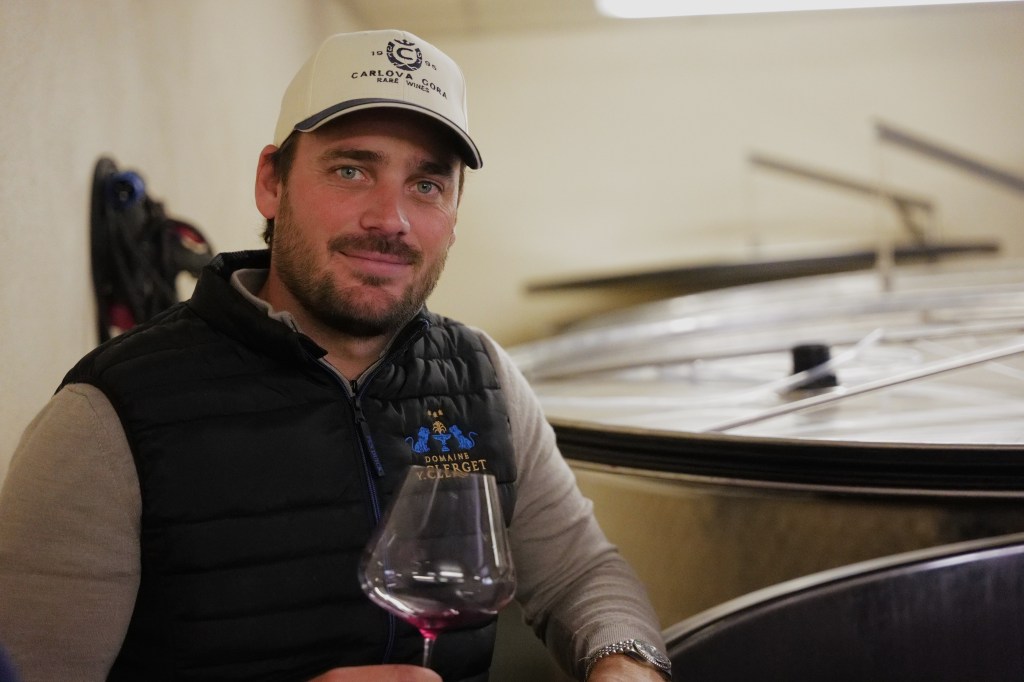
Domaine Yvon Clerget has not punched down since 2019, and that single cellar choice explains why Pommard is no longer confined to the collector who waits decades before pulling a cork. The Pommard winemaking renaissance is led by a new generation making wines with enough structure to age gracefully but texture and fruit clarity that reward early drinking. For a village long caricatured as Burgundy's 'bodybuilder', tannic, muscular, sometimes slow to speak, the shift is structural (Decanter1).
The argument is simple: Pommard's new guard is not softening the appellation into Volnay, but replacing hard extraction and blunt tannin with parcel discipline, organic farming, ceramic vessels, careful stems and a calmer hand in the vat. That makes Pommard more useful to the serious drinker. You can still cellar a leading bottles. You just no longer have to treat youth as a punishment.
Pommard has always carried weight in the Burgundy imagination. Its reputation was built on structure, substance and longevity, the opposite pole to neighboring Volnay's more openly expressive profile. That old comparison did Pommard no favors in a market that increasingly rewards transparency and early drinkability. A collector opening bottles at five, eight or ten years wants fruit clarity as well as architecture. A traveler tasting in the village wants to understand the wine before the next decade has done all the translating.
The older style had its loyalists, and it still has a place at the table, especially in mature bottles from the 1950s and 1960s that can still drink well. But the new generation has focused on a more precise question: how do you preserve Pommard's spine while making the first two decades of a bottle's life more pleasurable (Decanter1).
The answer is visible in cellar decisions rather than slogans. Thibaud Clerget relies on gentle pumping over instead of punching down. Joannès Violot-Guillemard splits maturation between ceramic Clayvers and barrel. Louis de Belleroche uses only the ripest stems at Domaine Lejeune and extracts more gently than the estate's former tannic style. At Domaine Georges Joillot, Jeanne Joillot, Grégoire Guidot and Simon Goutard ferment destemmed hand-picked grapes in concrete with minimal punching down before barrel ageing with a modest amount of new oak. These are not cosmetic changes. They determine texture.
For collectors, the timing is useful. The village now offers a set of producers whose wines can sit beside more famous Côte de Beaune addresses without demanding a seventy-year contract from your cellar. For travelers, Pommard has become a more revealing stop between Beaune and Volnay because you can taste the stylistic change across several domaines in one village, rather than reading about it as an abstract trend.
That personnel list matters because Pommard does not need marketing varnish. It needs exacting work with site, extraction and élevage. Domaine de la Commaraine's importance lies in its combination of old land and new attention. Early tastings with Paul Krug have shown both the quality of the terroir and his ability as a winemaker.
Château de Pommard gives the argument a larger stage. Founded in 1726, the estate was sold to American entrepreneur Michael Baum in 2014. Baum appointed Paul Négrerie as head winemaker in 2021, and Négrerie led the estate to organic and biodynamic certification. The estate's Clos Marey-Monge spans 20 hectares, a size that would be unwieldy if treated as one block. Négrerie and his team manage it in seven different parcels, following the outline of former consultants Claude and Lydia Bourguignon (Decanter1).
That seven-parcel approach is the heart of the matter. A 20-hectare clos in Pommard can easily become a broad estate wine with a famous address. Managed parcel by parcel, it becomes a study in internal variation. For the visitor, Clos Marey-Monge is a practical lesson in why a single vineyard name can still contain multiple decisions. For the collector, it is a reminder to read the cuvée and the winemaker, not only the village on the label.
Domaine Lejeune adds a third version of the same story. The family achieved organic certification in 2021 before selling to Louis de Belleroche and investors in 2023. De Belleroche trained with Jacques Devauges at Domaine des Lambrays, and his first vintage at Lejeune was 2023. The technical shift is clearly stated: he has moved away from the estate's former tannic style, uses only the ripest stems, and extracts more gently to deliver a modern Pommard profile (Decanter1).
None of these estates is abandoning Pommard's structure. They are asking it to arrive with better manners. That distinction separates a real appellation shift from a cosmetic change in oak or label design.
Thibaud Clerget, who took over Domaine Yvon Clerget in 2015, reduced the percentage of whole bunches in fermentation and has said he 'has not punched down since 2019'. Instead, he keeps the grapes moist by gentle pumping over. The result, in the wines described from the domaine, is a supple, velvety texture and an approachability in youth that has become central to his style.
Punching down is not the villain in every cellar, and Pommard's old reputation did not come from a single technique. But in a structured appellation, the choice to stop punching down is not a footnote. It changes how tannin enters the wine. It favors infusion over force. It lets the skins contribute without making the wine feel as though it has been engineered for a future owner rather than the person standing in front of the bottle.
Clerget's example carries extra force because the domaine is located in Pommard and its largest holding is in Pommard Rugiens premier cru, where it farms two parcels totaling almost a hectare. Many wines from the domaine come from Volnay, but the Pommard address and Rugiens holding put Clerget directly inside the village argument. If one of the young names associated with Pommard can make wines that are pleasurable young while retaining structure, the old binary begins to fail.
Joannès Violot-Guillemard, who took over from his father Thierry in 2015, pushes the conversation into vessels and whole-bunch choices. He began returning to his grandfather's whole-bunch fermentations while retaining his father's gentle extraction. He now matures half the wine in ceramic containers called Clayvers and half in barrel. That combination matters because it frames continuity as a technical conversation across generations, not a clean break from the past.
Clayver vessels appear again at Domaine AF Gros, whose wines still list a Pommard address even though they have been made for some time in Beaune. Mathias Parent and his sister Caroline now make the wines. In ripe years, there is no punching down, maceration is moderate, and maturation is split between barrels and ceramic Clayver vessels. The point is not novelty. The point is control: reducing extraction pressure in the warmest years and using vessel choice to shape texture without erasing Pommard's core.
Domaine Georges Joillot works from another angle. Based in the center of Pommard, the domaine includes Pommard premiers crus Les Charmots and Les Epenots among its selections. Since 2019, Jeanne Joillot, her husband Grégoire Guidot and her half-brother Simon Goutard have made the wines. They pick by hand, destem, ferment carefully in concrete with minimal punching down, then age the wines in barrels with a modest amount of new oak. Concrete, destemming, minimal punching down and restraint with new oak form a coherent style rather than a checklist.
Domaine Jeanson-Parigot, founded by Florent Jeanson and Anaïs Parigot in 2019, brings the village's newest-producer energy into the same pattern. The couple is based in Pommard, and their organic wines are made with moderate extraction and modest use of new oak to keep them approachable. The domaine is young, so the prudent collector should track the wines across several vintages rather than writing a finished verdict now. But the technique places Jeanson-Parigot squarely within the shift: gentler extraction, organic work and restraint in oak.
A stylistic change built only in the cellar can become fashion. Pommard's current movement has more weight because several of its leading examples anchor the change in farming and parcel reading. Château de Pommard's organic and biodynamic certification under Paul Négrerie is one visible case, partly because Clos Marey-Monge's 20 hectares demand subdivision. The seven-parcel management of that vineyard turns scale into analysis. Each parcel requires its own decision before fermentation begins.
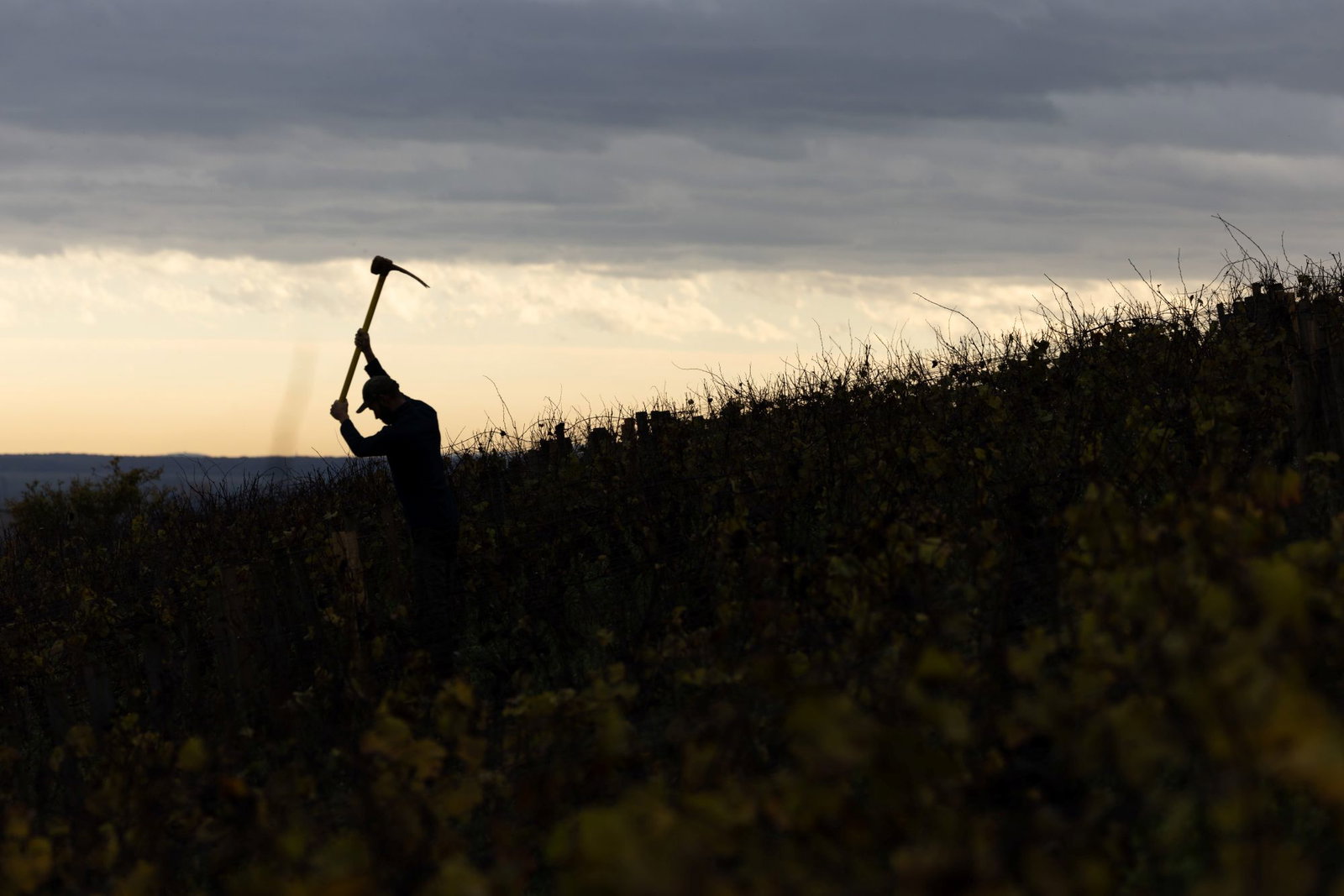
Domaine Lejeune's organic certification in 2021 gives another signal. The timing is important: the certification came before the 2023 sale to Louis de Belleroche and investors. De Belleroche did not inherit a blank page. He inherited a domaine already moved into organic farming, then adjusted the cellar direction with riper stems and gentler extraction. That sequence matters because it suggests stylistic change built on vineyard work rather than imposed by a new owner eager to make a quick mark.
Domaine Jeanson-Parigot also identifies its wines as organic, and the domaine's youth sharpens the point. Florent Jeanson and Anaïs Parigot founded it in 2019, not in a period when Pommard's old tannic image needed no defense, but at a moment when Burgundy drinkers increasingly ask how a wine was farmed and how its structure was extracted. Their moderate extraction and modest new oak use place drinkability inside a farming conversation rather than treating approachability as a cellar trick.
The strongest buying lesson is not to chase softness. Pommard should not taste like a different village. Strong reason to follow this group is that they treat structure as a shape to refine, not a problem to remove. Rugiens at Domaine Yvon Clerget, Clos Marey-Monge at Château de Pommard, Les Charmots and Les Epenots at Domaine Georges Joillot: these names carry enough site identity to make technique matter. Gentle extraction on indifferent fruit produces pleasant wine. Gentle extraction on serious Pommard terroir can produce a bottle that speaks before its twentieth birthday and still has somewhere to go.
For the traveler, this is also how to organize a tasting day. Ask less about a domaine's standard tour vocabulary and more about the mechanics: how much whole bunch, how much punching down, which vessels, what share of new oak, how parcels are separated. In Pommard right now, those questions lead directly to the glass. A cellar visit that compares Clayver and barrel at a domaine using both will teach you more than a generic flight built around village and premier cru hierarchy.
The strongest objection to this new enthusiasm is that old Pommard was never broken. The 'bodybuilder' style of former decades has its own charm, particularly in mature bottles from top names of the 1950s and 1960s that still drink well. Some collectors enjoy the slow unfurling, the austerity in youth, the eventual reward of a wine that took half a lifetime to show its range. That model should not be dismissed just because contemporary cellars have learned gentler ways to extract.
There is also a risk in overcorrecting the narrative. If Pommard becomes merely 'approachable', the appellation loses the trait that made it collectible. Structure is not the enemy. Tannin is not a flaw. The problem was not substance, but substance without enough expression in the early and middle years of the wine's life. A top Pommard should still hold its line at the table, especially with dishes that ask for grip and depth rather than perfume alone.
The new generation's best answer is that technique has changed without reducing ambition. Clerget's no-punch-down regime did not lead to casual wines; it produced a texture described as supple and velvety while retaining the appeal of youth. Violot-Guillemard's Clayver-and-barrel maturation does not reject the family line; it folds his grandfather's whole-bunch fermentations into his father's gentle extraction. Domaine Georges Joillot's concrete fermentation and modest new oak use do not chase aromatic flash at the expense of place; they keep the handling measured enough for Les Charmots and Les Epenots to remain the point.
The counterargument also misses the way Burgundy is actually consumed now. Many serious buyers still cellar, but fewer want to buy a case of wine that offers no grace for decades. Restaurants need bottles that can perform before full maturity. Travelers tasting at domaines want the young wine to communicate something beyond a promise. The new Pommard addresses that reality while keeping ageability in the frame. That is why this is not a dilution of the appellation. It is a correction in how power is delivered.
Pommard's new generation has made the village easier to recommend, not because the wines have become lighter in ambition, but because the winemaking now gives structure a more articulate voice.
Domaine de la Commaraine, Château de Pommard, Domaine Lejeune, Domaine Joannès Violot-Guillemard, Domaine Yvon Clerget, Domaine Georges Joillot, Domaine Jeanson-Parigot and Domaine AF Gros do not form a single style.
They share a direction: less force in extraction, more attention to farming and parcels, more willingness to use vessels such as ceramic Clayvers when the texture calls for it, and less patience for the idea that a serious Pommard must be mute in youth.
The collector's move is to add these names to the Burgundy watchlist by producer and technique, not just by appellation. Follow Paul Krug at Domaine de la Commaraine. Taste Paul Négrerie's parcel work from Clos Marey-Monge. Track Louis de Belleroche's post-2023 Domaine Lejeune vintages. Compare the Clayver-influenced textures at Joannès Violot-Guillemard and AF Gros with the no-punch-down approach at Yvon Clerget. In the village itself, listen for the questions winemakers answer most precisely: stems, extraction, vessel, parcel, certification.
The verdict is clear enough for the cellar and the itinerary: Pommard no longer asks you to wait seventy years to understand why it matters. The next chapter will be written in the first decade of these bottles, when the new guard has to prove that early pleasure and graceful ageing can live in the same glass.
Get the App
Take the shortlist into the En Primeur Club app for concierge access, saved places, and the next step after discovery.
Get Exclusive AccessMore from the editors