Madame Vo
Our verdict
Madame Vo occupies a specific tier in New York's Vietnamese dining conversation: a East Village address at 212 E 10th St that has drawn sustained attention for its approach to pho and Vietnamese-American cooking. Less theatrical than the city's tasting-menu circuit, it positions itself as a serious neighbourhood restaurant with a loyal, returning clientele and a reputation that has travelled well beyond its block.

Pearl is the En Primeur Club membership app, where members save venues, book tables and use the concierge.
East Village, Vietnamese, and the Question of Staying Power
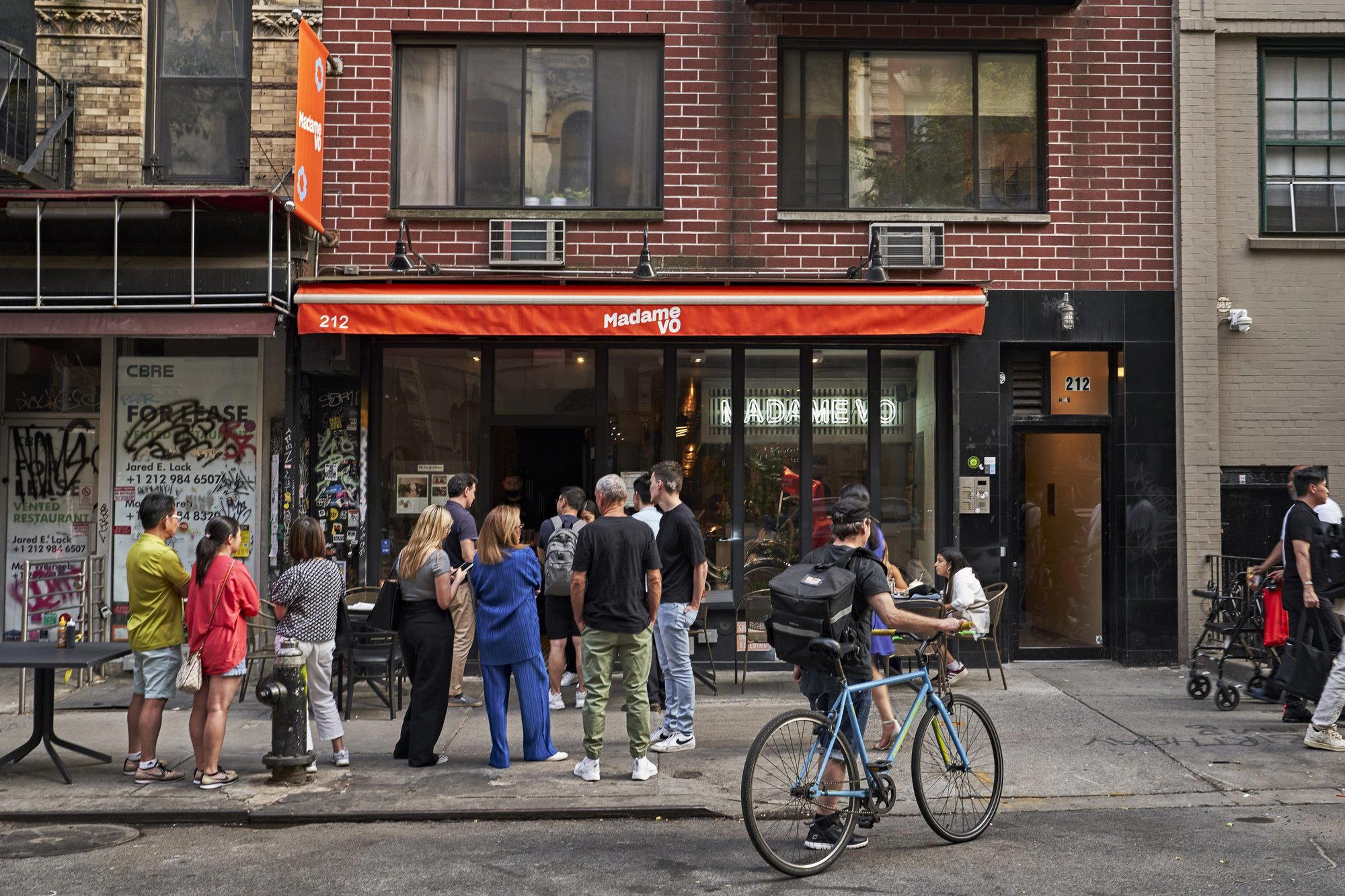
On East 10th Street, between the brunch queues and the wine bars that have colonised much of the East Village's ground floor, Madame Vo occupies a quieter register. The address, 212 E 10th St, sits in a stretch of the neighbourhood that rewards the kind of visitor who arrives with a specific destination in mind rather than one who is browsing. The room is compact in the way that most serious Manhattan restaurants are compact: not a flaw, but a fact that shapes how the kitchen operates and how guests relate to the food in front of them.
Vietnamese cooking in New York has long occupied an awkward middle ground. Pho shops and banh mi counters have served the city well, but the cuisine has historically been underrepresented at the tier where sustained critical attention and returning professional clientele converge. The past decade has seen that begin to shift, and Madame Vo sits at the intersection of that shift.
What the Evolution of Vietnamese Dining in New York Looks Like Here
The broader story of Vietnamese food in American cities follows a pattern familiar from other Southeast Asian cuisines: a long period of being associated almost exclusively with budget dining, followed by a generation of restaurateurs who chose to work within the tradition rather than transcend it into fusion territory. Madame Vo belongs to that second chapter. The approach here is not about repositioning Vietnamese food as something other than what it is, but about executing it with the rigour that the city's dining public now expects from cuisines it once filed under casual.
That evolution matters because it changes who the competition is. The competition is the mid-tier neighbourhood restaurant that earns its repeat business through consistency and depth rather than through spectacle. Staying power, in that context, is the credential.
New York's restaurant attrition rate is high enough that a venue on a fixed East Village block, sustaining a reputation over multiple years, is making a statement about operational discipline. Compare that to the turnover in similarly-priced slots across the neighbourhood and the longevity reads differently than it might in a city with lower overhead and lower scrutiny.
Pho as the Anchor Argument
In Vietnamese-American restaurants that have built reputations beyond their immediate community, pho tends to function as the proof-of-concept dish. It is the item that most diners order first on a debut visit, the one that critics reach for when assessing whether a kitchen is working from the bottom up or the leading down. At Madame Vo, the pho has been central to the restaurant's identity since its opening, and the consistency of that dish across years of service is the clearest signal of what the kitchen prioritises.
This matters editorially because pho is not a dish that benefits from shortcuts. The broth is a multi-hour project, and a kitchen that maintains its standard on that preparation under the commercial pressures of a busy East Village service is demonstrating something about its values. New York diners who eat across multiple Vietnamese spots in the city tend to return to Madame Vo specifically for this reason, not because the room is memorable, but because the bowl is reliable.
Where Madame Vo Sits in the Wider New York Dining Picture
New York's dining scene at the leading end is well-documented. Le Bernardin, Per Se, and Masa occupy a tier where the format, price, and cultural weight are all in alignment. Madame Vo does not compete in that register, nor does it try to. It operates instead in the middle tier that most New Yorkers eat in most of the time: the tier that makes or breaks a neighbourhood's food identity over a decade.
Across the United States, restaurants building reputations on regional or immigrant cuisines rather than classical European frameworks have faced a consistent structural challenge: being taken seriously without abandoning the traditions that make them worth taking seriously in the first place. You see this tension resolved in different ways at Providence in Los Angeles, where classical technique meets Pacific seafood traditions, and at Blue Hill at Stone Barns, where the farm-to-table framework has been pushed to an almost documentary level of specificity. Madame Vo's version of that resolution is quieter: stay close to the source, improve the execution, and let the repeat business make the argument.
The East Village location also does specific work. This is a neighbourhood with a long history of absorbing immigrant food cultures and then gradually pricing them out, a pattern visible across the city's food geography. A Vietnamese restaurant holding its ground on East 10th Street, in a block otherwise tilting toward higher-margin concepts, is making an implicit argument about what the neighbourhood is still capable of supporting.
For visitors building a broader New York itinerary, our full New York City restaurants guide covers the full range from the tasting-menu circuit to neighbourhood anchors like this one.
Planning a Visit
Madame Vo is located at 212 E 10th St in the East Village, easily reached from the L train at First Avenue or the 4/5/6 at 14th Street-Union Square. The restaurant is a neighbourhood spot rather than a destination dining room, which means it draws a mix of regulars and first-timers throughout the week. Given its size and the volume of attention it receives relative to its seat count, arriving with a reservation or visiting outside peak dinner hours is the more reliable approach. For the most current booking options, hours, and menu, checking directly with the restaurant is the practical step, as specifics shift seasonally.
Frequently asked questions
Where exactly is Madame Vo?
Madame Vo is located at 212 E 10th St, New York, NY 10003, New York City.
How does Madame Vo compare to other Vietnamese restaurants in New York City?
Madame Vo occupies a distinct position in New York City's Vietnamese dining picture: it brought the cuisine into a neighbourhood, the East Village, where the conversation around serious food had long centred on Italian, Japanese, and new-American formats. Rather than operating in or near an established Vietnamese community corridor, it made its case on a block where it had to earn a non-specialist audience. That context, a Vietnamese restaurant succeeding on its own terms in the East Village rather than by proximity to an existing community, is what separates it from most NYC peers.
What's the best thing to order at Madame Vo?
Pho is the dish that built Madame Vo's reputation in New York City, and it remains the strongest reason to visit. The restaurant's standing in the East Village rests substantially on how seriously that single bowl is treated, broth depth, noodle quality, and sourcing decisions that separate it from the neighbourhood's more casual offerings. Order it first before working through the broader menu.
Is Madame Vo reservation-only?
Madame Vo at 212 E 10th St draws consistent demand in a neighbourhood where competition for dinner-hour covers is real. Walk-ins are possible at off-peak times, but for weekend evenings or groups, booking ahead is the practical move. Check availability directly through the restaurant's current booking channel.
What's the defining dish or idea at Madame Vo?
Pho functions as the proof-of-concept at Madame Vo, the dish through which the restaurant makes its argument for Vietnamese cooking taken seriously in New York City. It is less a menu item and more a position: that Southeast Asian cuisine belongs in the same conversation as the other serious dining rooms that have reshaped the East Village over the past decade.
How does Madame Vo handle allergies?
Allergy accommodation specifics are best confirmed directly with Madame Vo at 212 E 10th St before your visit, as menu composition and kitchen protocols can change. Vietnamese cuisine frequently involves fish sauce, shellfish-based stocks, and gluten-containing soy products, so guests with relevant sensitivities should flag these at the time of booking or on arrival.
Is Madame Vo overpriced or worth every penny?
Madame Vo prices its menu in line with the East Village's mid-range dining tier, which sits well below the city's tasting-menu circuit but above the neighbourhood's legacy cheap-eat spots. For a Vietnamese restaurant in Manhattan operating at this level of intention, the pricing reflects the address and the approach rather than any inflation of prestige. Value judgement depends on what you're comparing it to.
A Minimal comparable set
Comparable venues nearby, for context on price, style, and recognition.
| Venue | Cuisine | Price | Awards | Notes |
|---|---|---|---|---|
| Madame VoThis venue (the venue you are viewing) | Modern Vietnamese | $30–50 | Not listed | Not listed |
| Bunker | Vietnamese Street Food | Not listed | Not listed | East Williamsburg, Vietnamese Street Food |
| Lucy's Vietnamese | Vietnamese Fusion with Smoked Meats | $20–30 | Not listed | Bushwick (East), Vietnamese Fusion with Smoked Meats |
| Phở Bằng | Phá» Bằng | Not listed | Not listed | Elmhurst, Phở Bằng |
| Cô Lac | Modern Central Vietnamese | $30–50 | Grub Street Best Food of 2026 (So Far) | East Village, Modern Central Vietnamese |
| Saigon Social | Modern Vietnamese Fusion | Not listed | Not listed | Lower East Side, Modern Vietnamese Fusion |