Löwenbräukeller at Stiglmaierplatz is one of Munich's most architecturally commanding beer hall complexes, occupying a 19th-century building that shaped the civic template for Bavarian communal drinking. While Munich's fine-dining scene clusters around Michelin-chased tasting menus, Löwenbräukeller operates in a different register entirely: large-format, tradition-anchored, and spatially unlike anything the city's modern restaurant stock offers.
Pearl is the En Primeur Club membership app — saves, bookings, and concierge access live there. Same editors, same standards.
- Address
- Stiglmaierplatz, Nymphenburger Str. 2, 80335 München, Germany
- Phone
- +4989998209185
- Website
- loewenbraeukeller.com
- Directions
- Get directions
 Saves & bookings on Pearl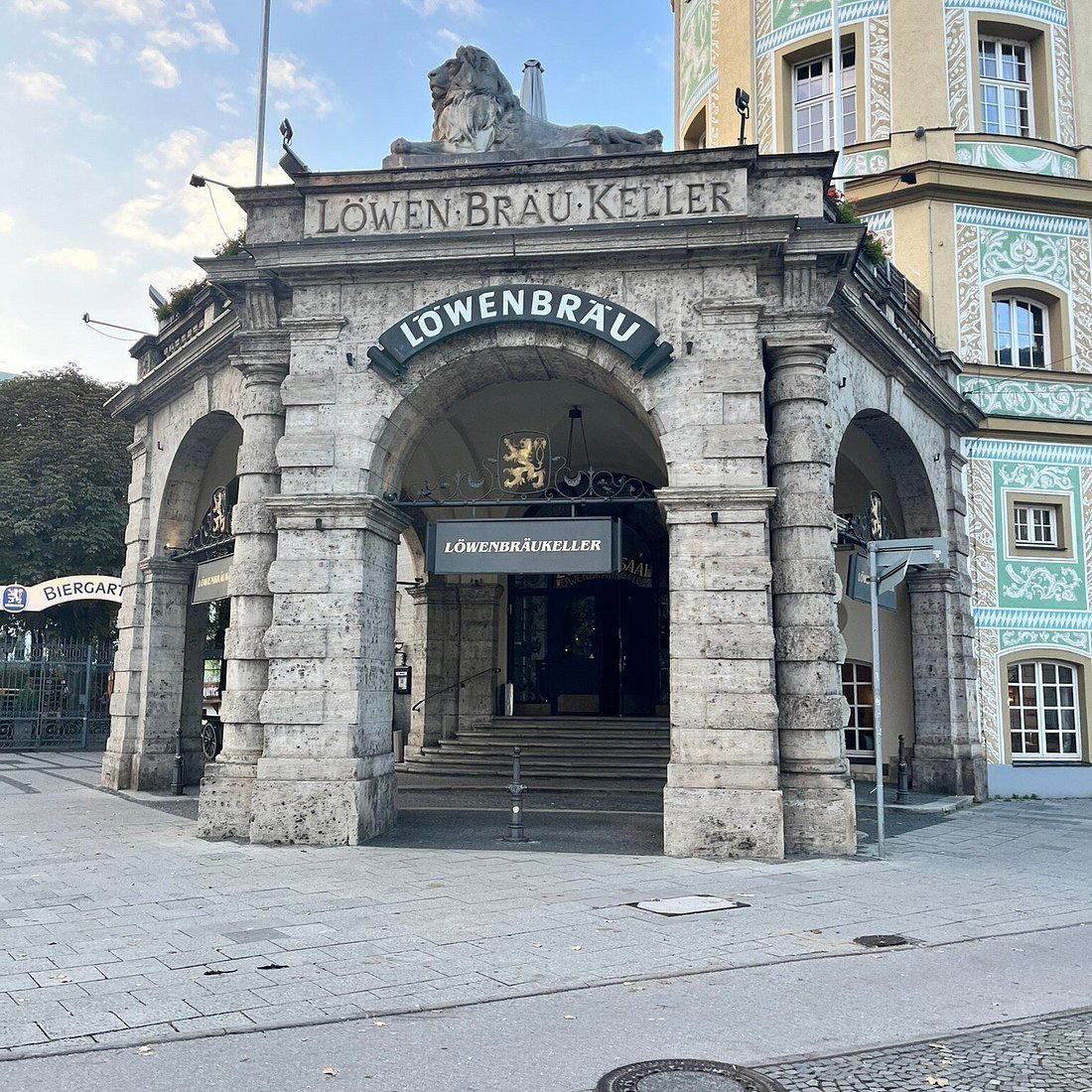
The Architecture of Communal Drinking in Munich
Approach Löwenbräukeller from Stiglmaierplatz and the building announces itself before you reach the door. The late-19th-century structure on Nymphenburger Strasse occupies a footprint that modern hospitality developers can no longer afford to replicate in European city centres. Broad facades, a terraced garden capable of holding hundreds, and interior hall volumes that dwarf the room proportions of any contemporary restaurant in Munich, the physical container here is the argument. It tells you immediately that the tradition it belongs to was never conceived around intimacy or exclusivity, but around civic scale and collective ritual.
That civic scale is worth understanding on its own terms. Munich's beer hall tradition developed through the 19th century as a form of urban infrastructure, not entertainment. Large brewing concerns required equally large retail venues, and the halls that resulted, Löwenbräukeller among them, became a physical expression of how the city organised public leisure. The spatial logic is particular: long shared tables (Biertische) that require strangers to sit together, ceiling heights that diffuse noise rather than concentrate it, and a service model designed for throughput rather than for the kind of attended pacing that defines modern fine dining.
How Löwenbräukeller Sits in Munich's Broader Eating Scene
Munich in 2024 runs two largely separate dining cultures in parallel. The first is the Michelin-facing fine-dining circuit, anchored by addresses like Tantris, Atelier, JAN, Alois - Dallmayr Fine Dining, and Tohru in der Schreiberei, each operating with small covers, tasting menu formats, and a competitive comparable set that extends well beyond Bavaria to houses like Aqua in Wolfsburg, Schwarzwaldstube in Baiersbronn, and Vendôme in Bergisch Gladbach. The second culture is the one Löwenbräukeller belongs to: traditional Bavarian hospitality at volume, where the point of the room is the room itself, the food is the supporting cast, and the experience is fundamentally communal.
These are not competing for the same guest on the same evening. A visitor who has secured a table at Atelier is not weighing that against Löwenbräukeller. The two venues exist in entirely different registers, and treating one as a substitute for the other misreads both. What Löwenbräukeller represents, within its own tradition, is the full-scale architectural expression of that tradition, a hall with the physical credibility to back up what it claims to be.
Interior Space: What the Room Actually Does
The editorial angle on Löwenbräukeller has to start with the rooms, because the rooms are the product. The main hall's ceiling height, the long parallel table runs, the weight of the wooden furniture, these are not decorative choices. They are a spatial grammar evolved over more than a century for a specific social function. Shared tables in a hall this size produce a particular acoustic environment: loud enough to feel alive, diffuse enough that private conversation remains possible at close range. This is not an accident of construction. It is a feature that a century of regular use has validated.
The beer garden, open in warmer months, adds another spatial layer. Gardens of this scale in a European city function as seasonal urban commons, large enough that no single group dominates the atmosphere, structured enough through table arrangements that the experience feels organised rather than chaotic. The garden's tree canopy, typical of the Bavarian beer garden format, provides shade during the afternoon hours when outdoor drinking is most appealing. This is not a terrace appended to a restaurant. It is a distinct outdoor room with its own character and capacity.
Against this backdrop, it becomes clear why the hall format declined sharply across Europe during the latter half of the 20th century, then staged a partial recovery as experiential dining grew in cultural prominence. The cost of maintaining large-footprint historic buildings in city centres, combined with shifting preferences toward intimate dining formats, made the economics difficult. Halls that survived did so either through institutional status, tourist volume, or both. Löwenbräukeller holds an address at Stiglmaierplatz that gives it practical accessibility, the square connects to Munich's U-Bahn network, which matters for a venue that depends on consistent footfall across a large number of covers.
Bavarian Food in a Traditional Hall Context
The food at a venue of this type serves the ritual before it serves the palate. Bavarian beer hall cooking, Obatzda, pretzels, roast pork, weisswurst with sweet mustard, potato dishes, is not attempting to compete with the creative output of Germany's fine-dining circuit. Comparisons to what CODA Dessert Dining in Berlin or ES:SENZ in Grassau are doing with German ingredients would be a category error. The hall kitchen is calibrated for consistency at scale, for dishes that hold well across a service that might turn the same table multiple times.
What matters more than the individual dishes is the rhythm of ordering and eating in this context. The service model at traditional beer halls is faster and more informal than at table-service restaurants. Masskrüge (litre steins) arrive before food in many cases. The meal is structured around the drink, not the reverse. Regulars tend to anchor on the classics: roast pork with crackling, pork knuckle, and the weisswurst protocol, consumed before noon, peeled from the skin, eaten with pretzel and sweet mustard, is a Bavarian convention that the hall format preserves with more fidelity than most modern interpretations.
Planning a Visit: Practical Orientation
Löwenbräukeller sits at Stiglmaierplatz, directly accessible by Munich's U1 line. Löwenbräukeller fits logically as a contrast experience rather than a replacement. Afternoon visits, particularly on weekends, give access to the beer garden at its most active. Evening visits inside the hall carry a different energy, particularly in the weeks surrounding Oktoberfest when the venue draws its highest seasonal traffic.
Restaurant Haerlin in Hamburg, Schanz in Piesport, Bagatelle in Trier, and Waldhotel Sonnora in Dreis each represent German hospitality traditions operating in distinct regional registers. And for readers whose itineraries extend further, Victor's Fine Dining by Christian Bau in Perl or international comparators like Le Bernardin in New York City and Atomix in New York City illustrate how differently national traditions in hospitality can resolve when they reach their respective upper tiers.
The Minimal Set
Comparable venues nearby, for context on price, style, and recognition.
| Venue | Cuisine | Price | Notes |
|---|---|---|---|
| LöwenbräukellerThis venue — the venue you are viewing | Not listed | $$ | Not listed |
| Wirtshaus im Schichtl | Not listed | $$ | Theresienwiese, Traditional Bavarian Organic |
| Wildmosers Restaurant-Cafe am Marienplatz - München | Altstadt, Traditional Bavarian | $$ | Not listed |
| Café Frischhut | Not listed | $$ | Isarvorstadt, Traditional Bavarian Pastry Café |
| Café Ludwig | Milbertshofen, German Café | $$ | Not listed |
| Klinglwirt | Haidhausen, Organic Bavarian Tavern | $$ | Not listed |
At a Glance
- Lively
- Classic
- Well Known
- Rustic
- Energetic
- Group Dining
- Casual Hangout
- Celebration
- Private Event
- Family
- Historic Building
- Garden
- Live Music
- Private Dining
- Standalone
- Beer Program
- Garden
- Street Scene
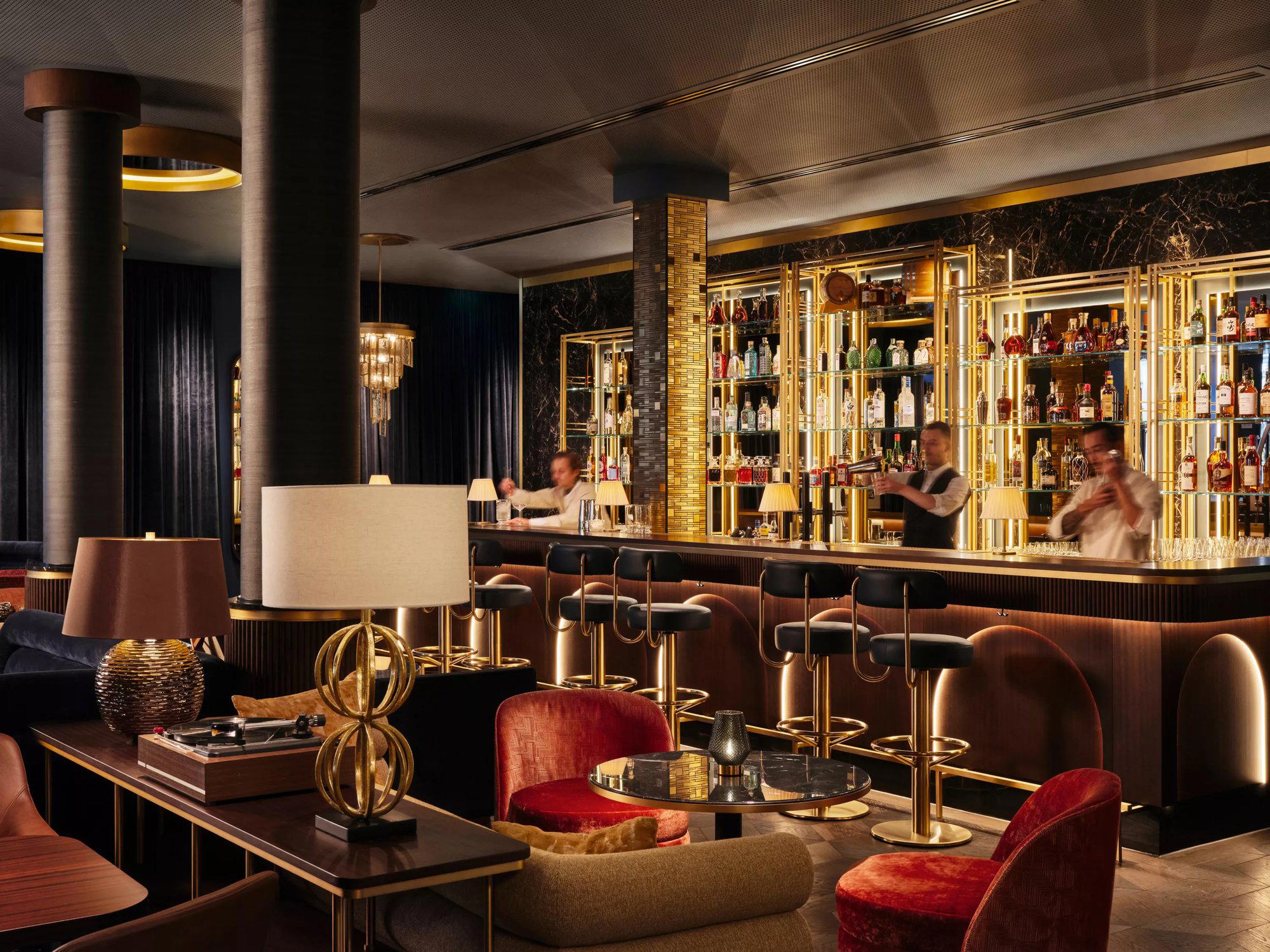
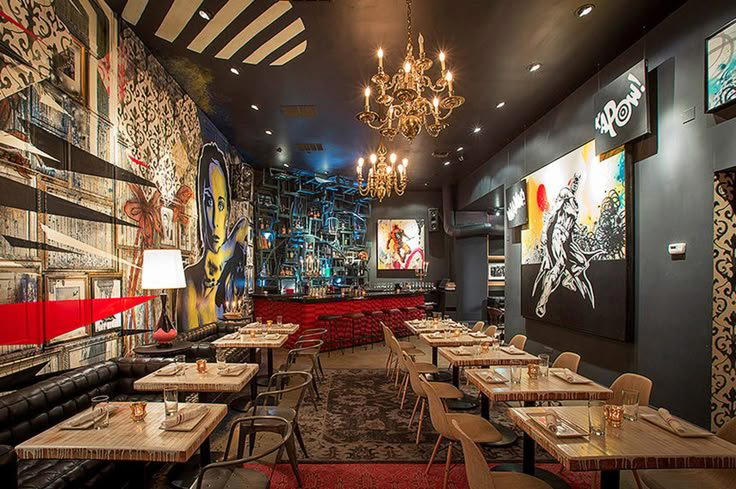
Traditional Bavarian beer-hall atmosphere under restored vaulted ceilings, described as cozy, lively, bright, and full of life, with both rustic public bar areas and more elegant dining spaces.