Lutie's

Michelin Plate
Our verdict
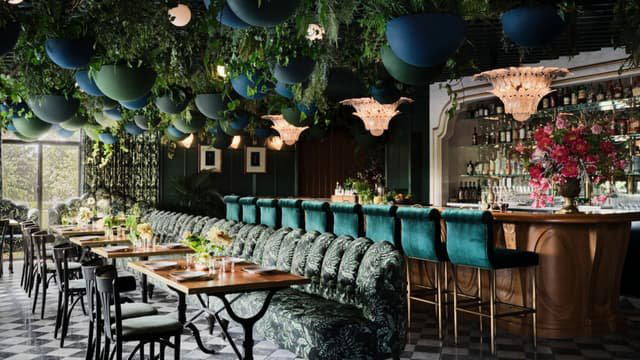
Set within the Commodore Perry Estate on Red River Street, Lutie's is Austin's most considered garden-restaurant, earning consecutive Michelin Plate recognition in 2024 and 2025. The American menu draws on the property's heritage gardens and the city's farm-driven supply networks, placing it inside Austin's tighter circle of sourcing-led dining alongside Dai Due and Emmer & Rye..

Pearl is the En Primeur Club membership app — saves, bookings, and concierge access live there. Same editors, same standards.
- Address
- Located at Commodore Perry Estate, Auberge Collection, 4100 Red River St, Austin, TX 78751
- Phone
- (512) 675-2517
- Hours
- Mon–Fri 5–10 PMSat–Sun 11 AM–3 PM, 5–10 PM
- Website
- auberge.com
- Directions
- Get directions
- Booking
- Book on OpenTable
The menu
What to order
- Estate Bread with Brown Butter
- Yonderway Pork and Butter Beans
- Mt. Lassen Trout with House-Smoked Trout Roe
- Kouign-amann Ice Cream with Caramel Sauce
Estate Grounds, Sourced Table
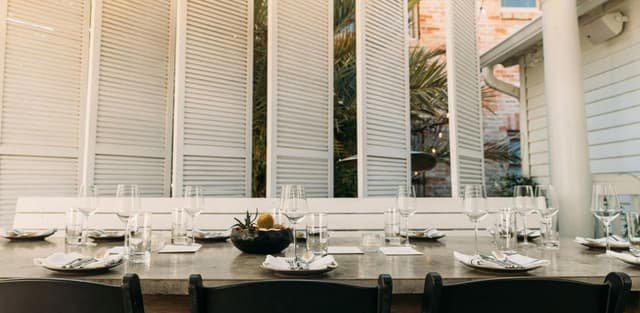
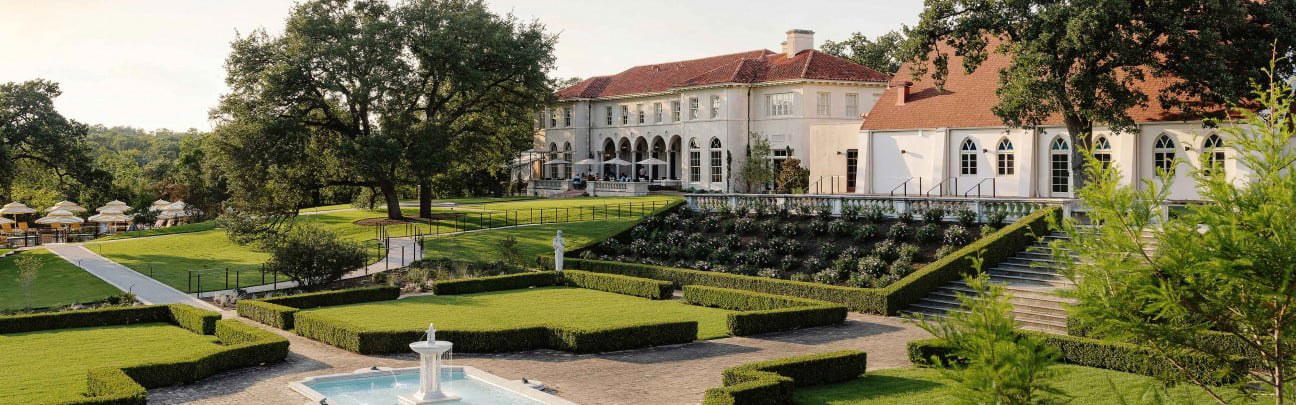
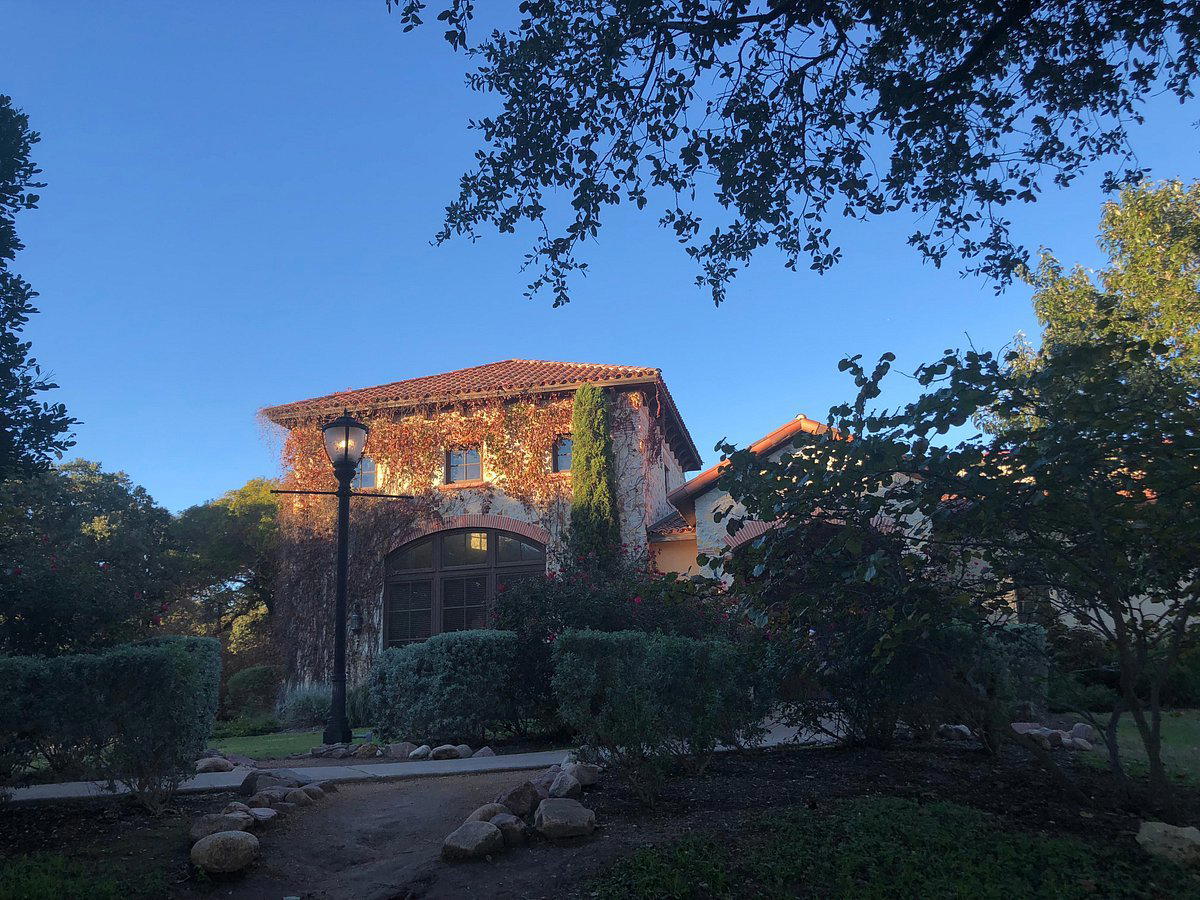
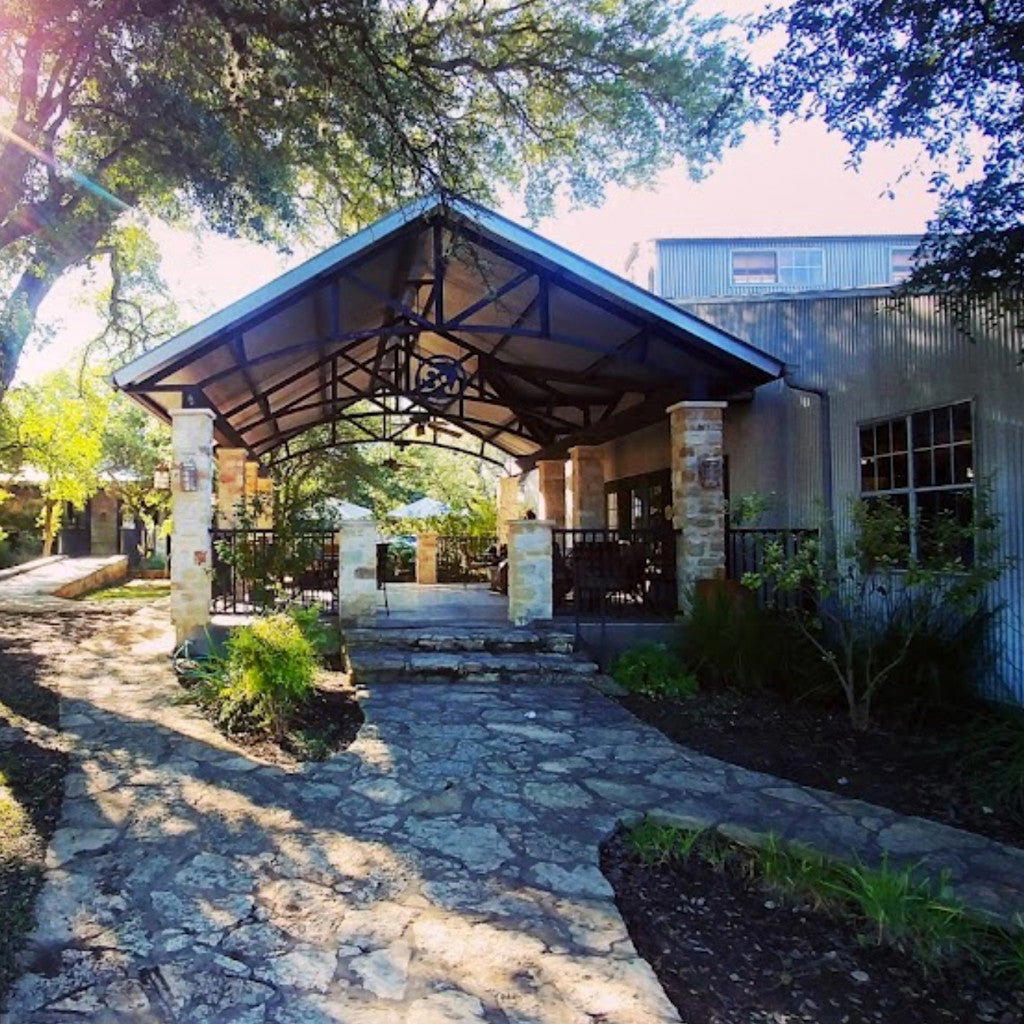
Approaching Lutie's along the tree-lined drive of the Commodore Perry Estate at 4100 Red River Street, the shift in register is immediate. Austin's midtown density drops away, replaced by mature oaks, clipped hedgerows, and the low limestone architecture of a property that predates the city's current growth cycle by decades. The restaurant sits within that estate setting rather than simply occupying a room inside a hotel building, and the effect on the dining experience is structural: you are outside the usual urban rhythm before you have read a single menu line.
That environmental grammar matters more than it might at an ordinary hotel restaurant, because Lutie's has built its culinary identity around what the grounds and the surrounding region can actually supply. In an American dining moment when sustainability has fractured into two distinct registers — performative branding at one end, disciplined sourcing practice at the other — this kitchen lands closer to the latter, a positioning confirmed by two consecutive Michelin Plate recognitions in 2024 and 2025.
Where Lutie's Sits in Austin's Sourcing-Led Scene
Austin has developed one of the more coherent farm-to-table networks of any mid-sized American city, partly because the Hill Country and Central Texas agricultural corridor sits close enough to make direct supplier relationships viable at scale. Dai Due has operated on a strict local-and-seasonal mandate since its farmers' market origins. Emmer & Rye built a model around heritage grains and whole-animal utilization that influenced a generation of Austin cooks. Barley Swine applies similar principles through a New American tasting format at the $$$$ tier.
Lutie's occupies a slightly different position within that cohort. Its estate context gives it access to on-property kitchen gardens, which narrows the supply chain to an unusual degree for a city restaurant. Where most sourcing-led kitchens in Austin work through aggregated farm relationships, a restaurant with growing land attached can organize a portion of the menu around what is ready that week rather than what was ordered three days prior. That distinction is subtle in execution but significant in principle, and it aligns Lutie's with a wider American movement, represented nationally by properties like Single Thread Farm in Healdsburg, where estate agriculture and restaurant kitchen operate as a single system rather than as separate businesses with a handshake agreement.
The Michelin Signal and What It Means Here
Michelin entered Austin in its Texas guide with a set of recognitions that mapped the city's dining tiers with reasonable precision. A Plate designation, awarded consecutively to Lutie's in 2024 and 2025, signals a kitchen cooking at a consistent standard without the concentration of technique or ingredient ambition that drives a star conversation. In practical terms, that places Lutie's in good company: reliable, considered American cooking at the $$$ price range, with a setting that most comparably priced urban restaurants cannot replicate.
The distinction between Plate and starred recognition matters in one specific way for the reader deciding where to invest a dinner. Starred Austin restaurants, and there are now several, including Garrison, demand a higher commitment in both cost and format intensity. Lutie's at $$$ sits at a point where the sourcing credentials and estate atmosphere deliver above-tier value relative to the spend, which is its competitive position. For comparison, Craft Omakase and the $$$$-tier options require meaningfully larger per-person outlays for a very different dining format.
Sustainability as Structure, Not Marketing
The more interesting question for any estate restaurant is whether the garden is a genuine operational input or a decorative talking point. Across American hotel dining, the latter is far more common: a small raised-bed plot photographs well on Instagram and reassures guests without materially affecting what arrives on the plate. The properties where kitchen gardens shift from garnish supplier to menu driver tend to share certain structural features: sufficient growing acreage, a kitchen team with genuine preservation and fermentation capacity to handle seasonal surpluses, and a menu format flexible enough to absorb week-to-week variation in what the garden yields.
Estate-rooted American restaurants that have taken this seriously, The French Laundry in Napa with its across-the-road garden, Lazy Bear in San Francisco with its forage and fermentation program, treat preservation as a year-round kitchen discipline rather than a seasonal flourish. Austin's heat and growing season create different parameters than Northern California, but the principle holds: a kitchen serious about waste reduction operates pickling, curing, and stock programs that absorb what the garden oversupplies.
The broader Austin dining community has rewarded this direction. Guests who review hotel restaurants negatively do so with unusual candor; a sustained 4.4 suggests repeat visits and deliberate returns from non-hotel diners, the clearest measure of a restaurant that has broken out of its property context.
Planning Your Visit
Lutie's is located within the Commodore Perry Estate at 4100 Red River Street, in Austin's Hyde Park-adjacent midtown corridor. The estate sits far enough from the Sixth Street and Rainey Street entertainment districts that it functions as a deliberate departure rather than an easy add-on to a bar evening. Reservations are strongly recommended given the estate's limited dining capacity and the restaurant's consistent Michelin recognition; booking in advance is the reliable approach for a specific date, though the property's context means shoulder-hour seats may occasionally be available for more flexible planners. The $$$ price range positions it as a mid-upper spend by Austin standards, comparable to Olamaie in the Southern fine-casual tier and meaningfully below the $$$$ bracket occupied by Jeffrey's and Barley Swine.
For visitors building a broader Austin itinerary, our [full Austin restaurants guide]() maps the city's dining tiers in detail. The [Austin hotels guide]() covers the estate accommodation context, and the [Austin bars guide](), [Austin wineries guide](), and Austin experiences guide complete the picture for a multi-day visit.
For American restaurant context outside Texas, the farm-estate model shows up at different price points and formats: Le Bernardin in New York City represents the high end of sourcing-disciplined American fine dining, Emeril's in New Orleans the regional American tradition, and Hilda and Jesse and Selby's the California interpretation of accessible American format. Each sits in a different tier; Lutie's earns its place in that conversation through the specificity of its estate context and the consistency its Michelin recognition implies.
Frequently asked questions
What style of cooking does Lutie's do?
What awards or recognition does Lutie's have?
Lutie's has received recognition including: Michelin Plate (2025); Michelin Plate (2024).
What do regulars order at Lutie's?
The estate setting at the Commodore Perry Estate shapes the sourcing approach, so regulars tend to gravitate toward whatever reflects the current season and garden yield. Asking your server what's coming directly from the estate grounds is the practical move.
Is Lutie's expensive?
Pricing at Lutie's is listed as $$$.
Where do I go for Lutie's?
Lutie's is located at Located at Commodore Perry Estate, Auberge Collection, 4100 Red River St, Austin, TX 78751, Austin.
Do I need a reservation for Lutie's?
Given its position inside the Commodore Perry Estate, an Auberge Collection property on Austin's Red River Street, Lutie's draws both hotel guests and outside diners — a combination that compresses table availability, particularly on weekends. Back-to-back Michelin Plate recognition in 2024 and 2025 has further increased demand. Booking ahead is strongly advised; same-day walk-in availability is limited.
A Credentials Check
| Venue | Cuisine | Price | Awards | Notes |
|---|---|---|---|---|
| Lutie'sThis venue — the venue you are viewing | Modern American Farm-to-Table | $100–150 | Michelin Plate | Not listed |
| Barley Swine | Modern American Fine Dining | $100–150 | 1 Michelin Star · James Beard Award Semi Finalist | New American, Contemporary |
| la Barbecue | Texas Barbecue | $50–100 | 1 Michelin Star · James Beard Award Semi Finalist | Barbecue |
| Olamaie | Modern Southern | $100–150 | 1 Michelin Star | Southern |
| Jeffrey's | Modern American Steakhouse | $150–200 | Michelin Plate · Wine Spectator Best of Award of Excellence | Not listed |
| Kemuri Tatsu-ya | Japanese-Texas BBQ Izakaya | $50–100 | Michelin Bib Gourmand | Not listed |
Recognition history
Dated appearances from independent guides and award organizations, with the underlying list record or original source where available.
Michelin Plate
Michelin
Full recognition history (2 entries)
Michelin Plate
Michelin