Lumdee Te Khuadang

Lumdee Te Khuadang, a Michelin Plate-recognised restaurant in San Sai District, seats 200 across a Lanna-inspired wooden structure, air-conditioned dining room, VIP room, and terrace beside a distinctive red bridge landmark. The kitchen turns out home-style Northern Thai cooking to order, with fermented pork prepared to biotechnology-certified hygiene standards and stir-fried termite mushrooms among the more-ordered plates.
Pearl is the En Primeur Club membership app — saves, bookings, and concierge access live there. Same editors, same standards.
- Address
- Q2XM+97J, San Phranet, San Sai District, Chiang Mai 50210, Thailand
- Phone
- +66 86 688 3688
- Website
- facebook.com
- Directions
- Get directions
 Saves & bookings on Pearl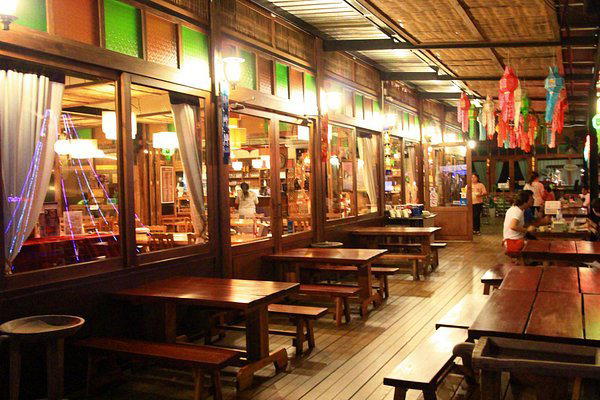
Sticky Rice Country: Northern Thai Cooking in San Sai District
In Northern Thailand, the meal does not begin when the first dish arrives. It begins when the bamboo steamer of sticky rice lands at the table. Glutinous rice, or khao niao, is the anchor grain of the north, distinct from the jasmine rice that dominates central Thai cooking. Where jasmine rice is served loose and scooped, sticky rice is pulled from the basket by hand, rolled into a small ball, and pressed against whatever is on the plate. The grain is not a side. It is the instrument through which the meal is eaten, and the character of the kitchen is often read through how well it performs that function, whether the steam has been timed right, whether the rice coheres without turning gluey, whether each refill arrives before the previous basket has gone cold.
San Sai District, on Chiang Mai's eastern edge, sits in that Northern Thai grain belt where this rice tradition is not a point of distinction but an assumed baseline. Restaurants here operate for locals who know the repertoire and families who arrive in groups. Lumdee Te Khuadang, the name translates loosely as "delicious at the red bridge", occupies a Lanna-style wooden structure at that bridge, which bears a loose visual resemblance to San Francisco's Golden Gate Bridge and serves as both a neighbourhood reference point and an after-dark dining terrace. The setting has the scale of a venue built for community gatherings: 200 covers spread across the main air-conditioned room, a VIP room, and the open terrace. A Michelin Plate recognition in 2025 places it in the company of restaurants worth tracking in this tier of the city's Northern Thai scene.
The Northern Thai Table and What It Demands
Northern Thai cooking is structured around contrast and fermentation in ways that distinguish it from the cuisine found further south. The cooking draws heavily on foraged and seasonal ingredients, het mushrooms from the forests around Chiang Mai, fresh herbs that shift with the months, and fermented proteins that carry an intensity no fresh ingredient can replicate. Naem, the fermented pork that appears in several preparations here, is produced through a biotechnology-certified process that applies controlled fermentation standards, resulting in a product the kitchen uses across multiple dishes with a consistency that would be difficult to achieve through traditional open-air fermentation alone.
That fermented pork matters because it connects to one of the core flavour pillars of Northern Thai food: the sour-saline depth that cuts through fattier preparations and forces the meal into balance. Across Chiang Mai's Northern Thai restaurants, from Huen Muan Jai to Huan Soontaree, fermented pork appears in various guises, but the production method and resulting flavour profile can vary considerably. The biotechnology approach at Lumdee Te Khuadang represents a deliberate technical position on food safety and consistency in a dish where those qualities are difficult to standardise.
What the Menu Signals
The stir-fried termite mushrooms with aromatic herbs and the saep pork ribs are the plates most frequently cited. Stir-fried termite mushrooms, het kon in Northern Thai, are a seasonal product that arrives in the rainy season, roughly mid-year, when foragers bring them in from surrounding areas. Their texture is meatier than cultivated mushrooms, with an earthiness that takes well to the high-heat stir-fry technique and the aromatic herb profile common to Northern Thai cooking. The saep pork rib carries the seasoning style the word saep promises: a combination of fish sauce, lime, toasted chilli, and aromatics that reads as bright and immediate rather than slow-building.
The menu is home-style, cooked to order, and served piping hot. For visitors comparing options in this part of the city, the scale here differs from the tighter format of somewhere like Gongkham or the more curated approach at Busarin Cuisine, but the Michelin Plate recognition suggests the kitchen maintains a standard that holds across that scale.
Northern Thai in Wider Context
Chiang Mai functions as the reference point for Northern Thai cooking in much the same way Osaka functions for Kansai-style Japanese cuisine: the city is understood as the source, but its restaurants range from strictly traditional to freely interpretive. The Michelin Plate tier here, which also includes names like Chum in Saraphi, represents kitchens recognised for cooking quality without the tasting-menu format and price point associated with starred operations. For Northern Thai specifically, that tier tends to favour restaurants where the cooking is grounded in regional technique rather than adapted for international palates.
Across Thailand, Northern Thai cooking has attracted growing Michelin attention, Sorn in Bangkok holds two stars for Southern Thai, while Northern Thai traditions are increasingly documented at both the fine dining level and the community restaurant level. Lumdee Te Khuadang sits in the community restaurant category, but the Plate recognition positions it in the tier where cooking quality is the lead credential rather than format or service design. For travellers already exploring the broader Northern Thai dining circuit, Huen Lamphun in Bangkok's Taling Chan and Khao Soi Thai Yai in Udon Thani offer useful reference points for how Northern Thai cooking travels and adapts outside its home region.
Planning a Visit
The restaurant is located in San Sai District at the address Q2XM+97J, San Phranet, a roughly 15 to 20-minute drive from Chiang Mai's old city by car or rideshare, depending on traffic. The venue accommodates groups comfortably across its multiple seating areas, and the family-and-group orientation of the space means it handles larger parties without the friction that tighter restaurants impose. The terrace beside the red bridge is the atmospheric choice for evening visits, when the structure is lit and the temperature drops enough to make outdoor dining comfortable. The ฿฿ price bracket places it in the middle tier of Chiang Mai's Northern Thai options, making it accessible for most budgets without the cost concerns that come with the city's higher-end addresses.4 across 1,402 ratings.
Comparable Spots
Comparable venues nearby, for context on price, style, and recognition.
| Venue | Cuisine | Price | Notes |
|---|---|---|---|
| Lumdee Te KhuadangThis venue — the venue you are viewing | Northern Thai | $$ | Not listed |
| Kang | Southern Thai, Indonesian & Malaysian Flavors | $$ | Mueang Chiang Mai |
| Krua Phech Doi Ngam | Northern Thai (Lanna) | $ | Mueang Chiang Mai |
| Sukjai by Pata Obasan | Authentic Vegetarian Thai | $$ | Mueang Chiang Mai |
| Larb Duang Dee Mee Sook | Northern Thai Larb Specialist | $$ | Mueang Chiang Mai |
| Baan Suan Mae Rim | Northern Thai | $$ | Mae Rim |
Recognition history
Dated appearances from independent guides and award organizations, with the underlying list record or original source where available.
Michelin Plate
Michelin
Michelin Plate
Michelin
Michelin Plate
Michelin
Continue exploring
More in Chiang Mai
Restaurants in Chiang Mai
Browse all →
Bars in Chiang Mai
Browse all →
At a Glance
- Rustic
- Cozy
- Family
- Group Dining
- Casual Hangout
- Terrace
- Open Kitchen
- Local Sourcing
Current opening hours
- Monday
- 10:30 AM–9 PM
- Tuesday
- 10:30 AM–9 PM
- Wednesday
- 10:30 AM–9 PM
- Thursday
- 10:30 AM–9 PM
- Friday
- 10:30 AM–9 PM
- Saturday
- 10:30 AM–9 PM
- Sunday
- 10:30 AM–9 PM
Hours can change for holidays and private events. Last verified .
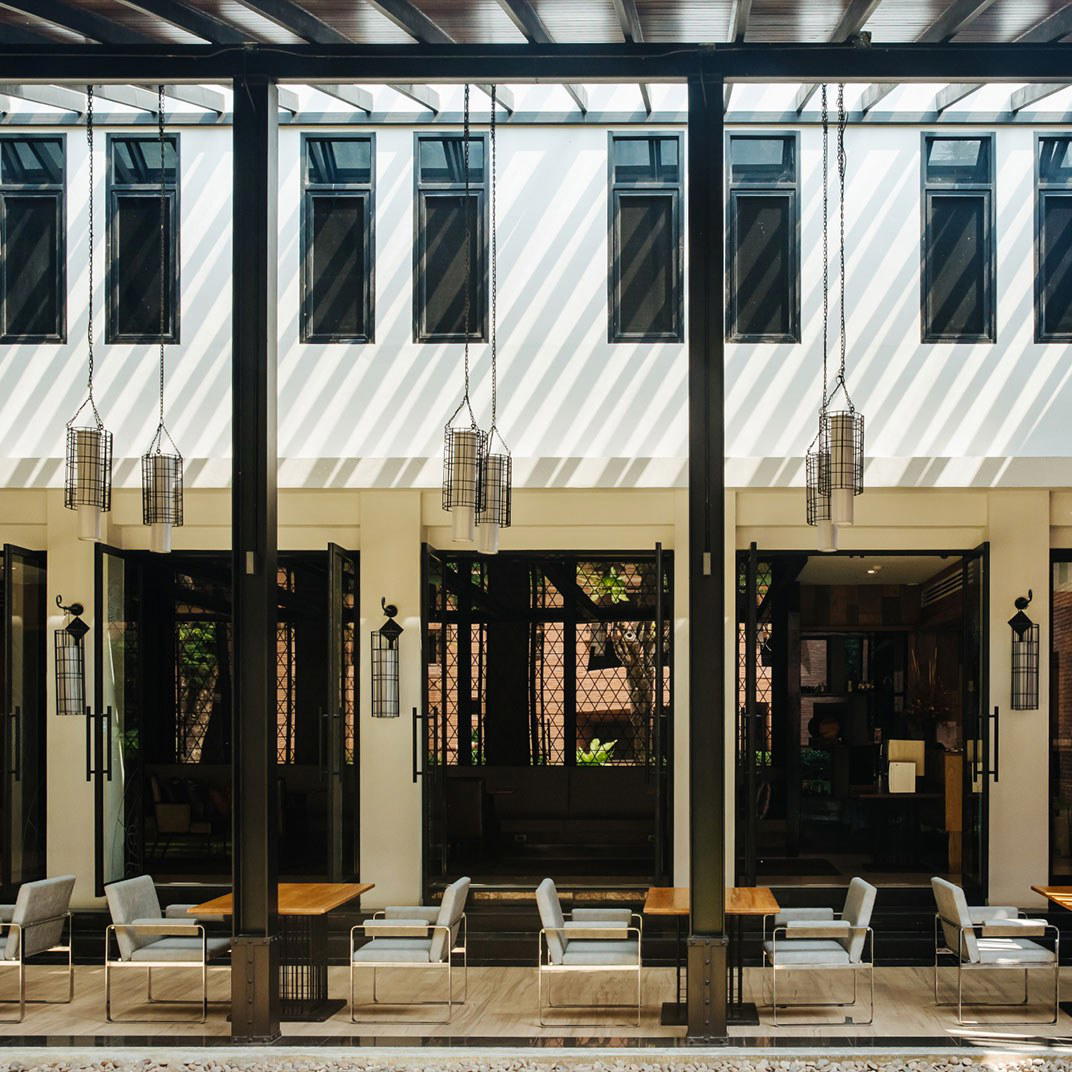
Relaxed and welcoming with a rustic Lanna-inspired wooden structure, air-conditioned indoor room, outdoor terrace near the red bridge, and a playground for families.