
Michelin Plate
Our verdict
Huen Lamphun brings the fermented, herb-forward cooking of northern Thailand to Bangkok's Taling Chan district, earning consecutive Michelin Plate recognition in 2024 and 2025. Every dish draws on organic vegetables grown on the premises, and regulars return specifically for the grilled pork in banana leaf and Makwan-marinated chicken. At single-baht price points, it represents the accessible end of Bangkok's award-recognised northern Thai dining.

Pearl is the En Primeur Club membership app, where members save venues, book tables and use the concierge.
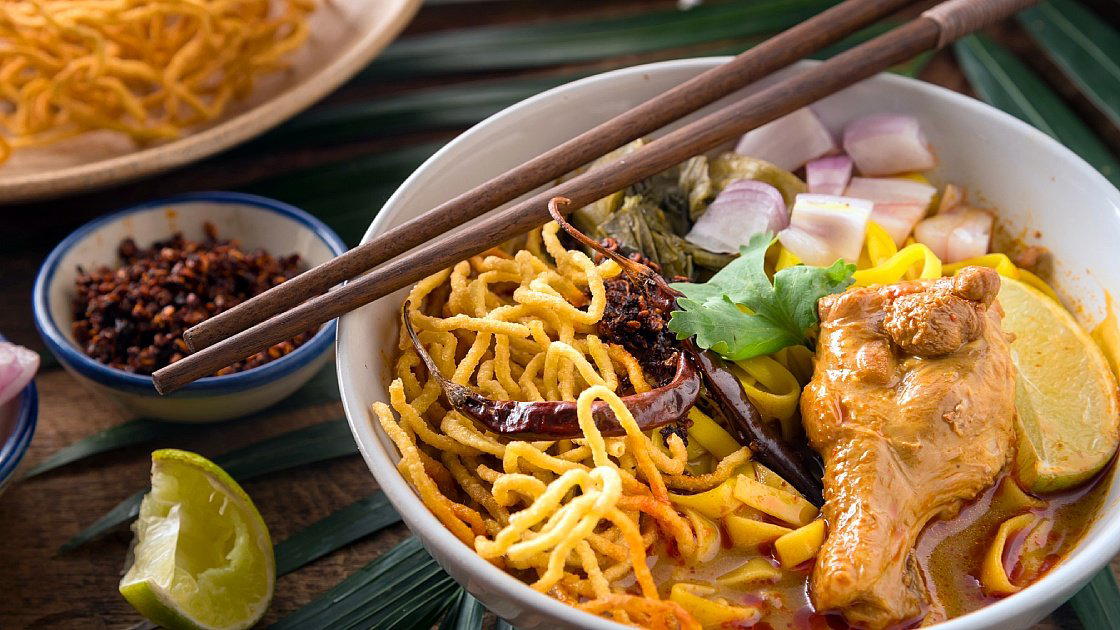
The menu
What to order
- Makwan-marinated grilled chicken
- Grilled fermented northern Thai pork in banana leaf
Northern Thai cooking, transplanted and uncompromised
The western bank of Bangkok's Chao Phraya river operates at a different tempo from the Sukhumvit corridor or the old city. Taling Chan is canal country, a district where weekend floating markets still draw neighbourhood crowds and the food culture skews local rather than tourist-facing. Arriving at 64/233 Thanon Suan Phak, the setting is immediately domestic in scale: this is not a formal dining room dressed for international visitors, but a space that reads as an extension of the community it feeds. Large groups from the surrounding neighbourhood return regularly, which is the kind of endorsement that matters more than most.
That loyalty is the first signal that something specific is happening here. Northern Thai cuisine, rooted in the traditions of Chiang Mai, Lamphun, and the broader Lanna region, travels badly. The fermented pastes, the bitter herbs, the assertive chilli profiles, and the particular sourness that defines dishes like nam prik ong or sai ua are not things most Bangkok kitchens attempt with any seriousness. When they do, the results are often softened for a southern palate. Huen Lamphun, as the name signals, does not soften.
The flavour architecture of the north
Northern Thai cooking is built around a set of techniques and ingredients that diverge sharply from the central Thai repertoire that most visitors associate with the country. Fermentation is central: pork is cured and fermented in ways that produce deep, funky bass notes rather than sweetness. Banana leaf wrapping concentrates aromatics during grilling, creating a steamed interior and a charred exterior that carries smoke into every layer of the meat. The dish that draws the most consistent attention here is the grilled, fermented northern Thai pork in banana leaf, described as exploding with chilli and garlic. That language is not hyperbole for anyone familiar with the northern style, where heat and allium are structural rather than decorative.
The Makwan-marinated grilled chicken represents a different register. Makwan, the small round green aubergine used extensively in northern cooking, brings a mild bitterness and herbal complexity that sits alongside rather than underneath the chilli. The result is a peppery, aromatic dish with the kind of layered herbal quality that is almost impossible to replicate without the right source ingredients. The kitchen's decision to grow its own organic vegetables on the premises is not incidental to this: northern Thai flavour depends on varieties and freshness standards that Bangkok's central markets rarely supply in the right form.
The on-site garden as a culinary position
The fact that every dish uses organic vegetables grown on the property places Huen Lamphun in a specific position relative to Bangkok's broader northern Thai dining scene. Farm-to-table rhetoric is common across Bangkok's higher price brackets, where restaurants like Baan Tepa (Thai contemporary) at the Michelin two-star level make ingredient sourcing a central part of their identity. At single-baht pricing, the decision to grow rather than buy is not a marketing position but a practical commitment to flavour integrity. The bitter greens, the fresh herbs, and the small aubergines that northern cooking requires simply perform differently when they have not been in transit.
This approach connects Huen Lamphun to a broader pattern visible across Thailand's regional cooking scene. In Chiang Mai, restaurants like Aeeen, Busarin Cuisine, and Chum (Saraphi) represent the northern tradition on home soil. Bringing that tradition to Bangkok with the same ingredient discipline is a different challenge, and the Michelin Plate recognition in both 2024 and 2025 confirms that the execution meets a standard reviewers found worth marking.
Bangkok's regional Thai spectrum
Bangkok's award-recognised Thai dining now spans the full regional spectrum at radically different price points. At the formal end, Sorn (Southern Thai) applies a three-Michelin-star framework to the southern tradition, and Baan Tepa (Thai contemporary) holds two stars for its ingredient-led interpretation of the broader Thai canon. These are destination restaurants with price ranges to match. Huen Lamphun operates at the opposite end of that spectrum, where the single ฿ price marker indicates accessible everyday pricing, yet the Michelin recognition places it in the same critical conversation about what serious Thai regional cooking looks like.
That contrast is worth understanding before choosing where to eat. The northern Thai style does not map onto a tasting menu format or a luxury service model, and Huen Lamphun is not attempting either. The value is in the specificity: a cuisine that Bangkok rarely presents at this level of authenticity, at prices that reflect its neighbourhood roots rather than its critical standing. For those exploring Bangkok's wider dining range, Maan Muang, Maze, and North offer additional reference points across different parts of the city's offer.
Getting there and planning your visit
Taling Chan sits west of central Bangkok, and the address at Thanon Suan Phak places the restaurant in a residential pocket that requires deliberate navigation rather than a passing visit. The most practical approach is by car or rideshare; the area is well outside BTS and MRT coverage. Given the restaurant's strong local following, groups from the neighbourhood arriving without notice fill the space on a regular basis. Arriving early or checking ahead on capacity is advisable, particularly at weekends.
The price range, marked at a single ฿, puts this among Bangkok's most accessible Michelin-recognised addresses. No phone or website is listed in the public record, which reinforces the local, community-facing character of the operation. That absence is itself information: this is a restaurant running on reputation and repeat custom rather than online discoverability. For those travelling across Thailand and building a regional picture of the country's cooking, Huen Lamphun connects to a wider network of northern Thai specialists worth tracking, from Aeeen in Chiang Mai to AKKEE in Pak Kret, while the broader Thai culinary map extends south to PRU in Phuket and beyond.
For a full picture of Bangkok's dining, drinking, and hotel options, see our full Bangkok restaurants guide, our full Bangkok bars guide, our full Bangkok hotels guide, our full Bangkok wineries guide, and our full Bangkok experiences guide. For regional Thai dining context outside Bangkok, Angeum in Phra Nakhon Si Ayutthaya and Agave in Ubon Ratchathani represent the breadth of provincial cooking across the country, while The Spa in Lamai Beach extends the map to the south.
Frequently asked questions
What's the signature dish at Huen Lamphun (Taling Chan)?
Two dishes draw the most consistent attention. The grilled, fermented northern Thai pork wrapped in banana leaf is built around chilli and garlic at an intensity that reflects the Lanna tradition rather than a Bangkok-softened version of it. The Makwan-marinated grilled chicken offers a contrasting herbal and peppery profile, drawing on the small round aubergine characteristic of northern cooking. Both dishes use organic vegetables grown on the premises, which is a material factor in the flavour rather than a decorative claim. Michelin Plate recognition in 2024 and 2025 confirms the kitchen's consistency across both dishes.
Do I need a reservation for Huen Lamphun (Taling Chan)?
No phone number or website booking system is publicly listed for the restaurant, which operates primarily on a walk-in basis with a strong local following. Given its single ฿ price range and neighbourhood reputation, the restaurant fills regularly with returning groups from the Taling Chan area. Arriving at off-peak hours reduces the risk of a wait. The address in Taling Chan requires a car or rideshare from central Bangkok, making the journey itself a logistical consideration worth factoring into timing. The accessible pricing and Michelin Plate standing make it worth the planning.
Where It Fits
| Venue | Cuisine | Price | Awards | Notes |
|---|---|---|---|---|
| Huen Lamphun (Taling Chan)This venue (the venue you are viewing) | Northern Thai | $20–30 | Michelin Plate | Not listed |
| Sorn | Fine Southern Thai | $200–300 | 3 Michelin Stars · World's 50 Best #12 | Southern Thai, ฿฿฿฿ |
| Côte by Mauro Colagreco | Riviera Mediterranean Fine Dining | $200–300 | 2 Michelin Stars · World's 50 Best #91 | Mediterranean, Modern Cuisine, ฿฿฿฿ |
| Baan Tepa | Creative Thai Fine Dining | $150–200 | 2 Michelin Stars · World's 50 Best #53 | Thai contemporary, ฿฿฿฿ |
| Gaa | Modern Indian Fine Dining with Thai Influences | $150–200 | 2 Michelin Stars · World's 50 Best #95 | Modern Indian, Indian, ฿฿฿฿ |
| Sühring | Modern German Fine Dining | $200–300 | 3 Michelin Stars · World's 50 Best #18 | German, ฿฿฿฿ |
Recognition history
Dated appearances from independent guides and award organizations, with the underlying list record or original source where available.
Michelin Plate
Michelin
Full recognition history (3 entries)
Michelin Plate
Michelin
Michelin Plate
Michelin
Continue exploring
More in Bangkok
Restaurants in Bangkok
All restaurants in Bangkok →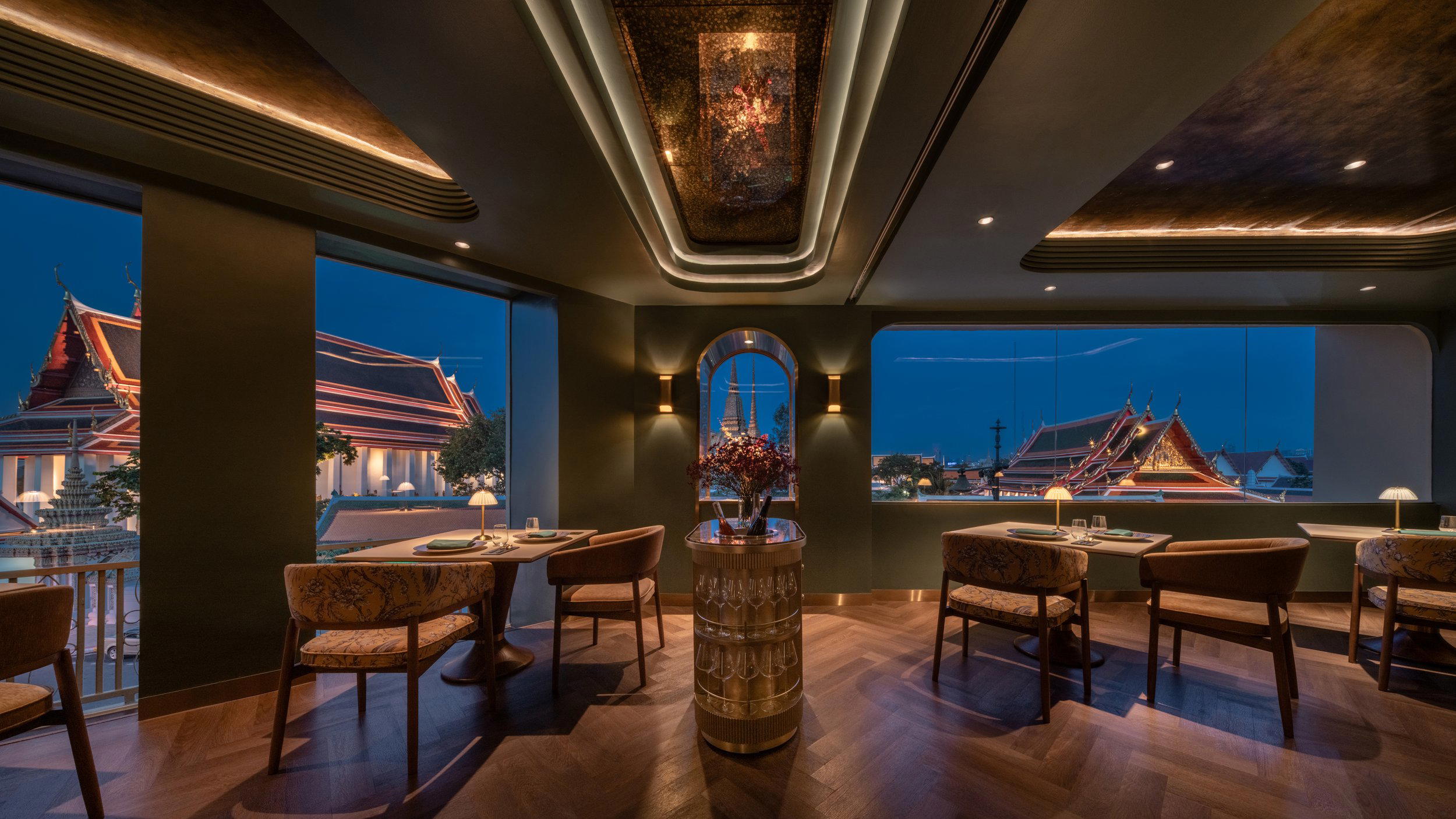
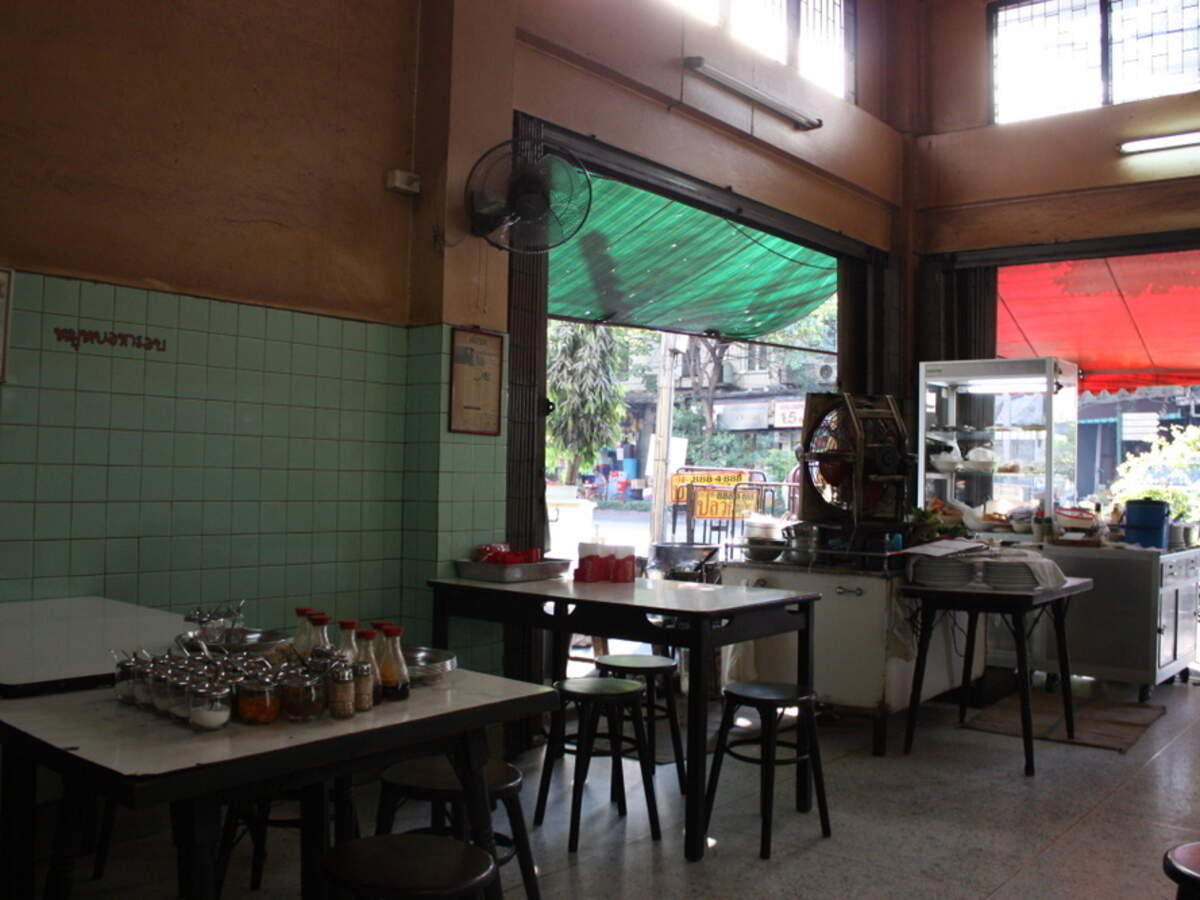
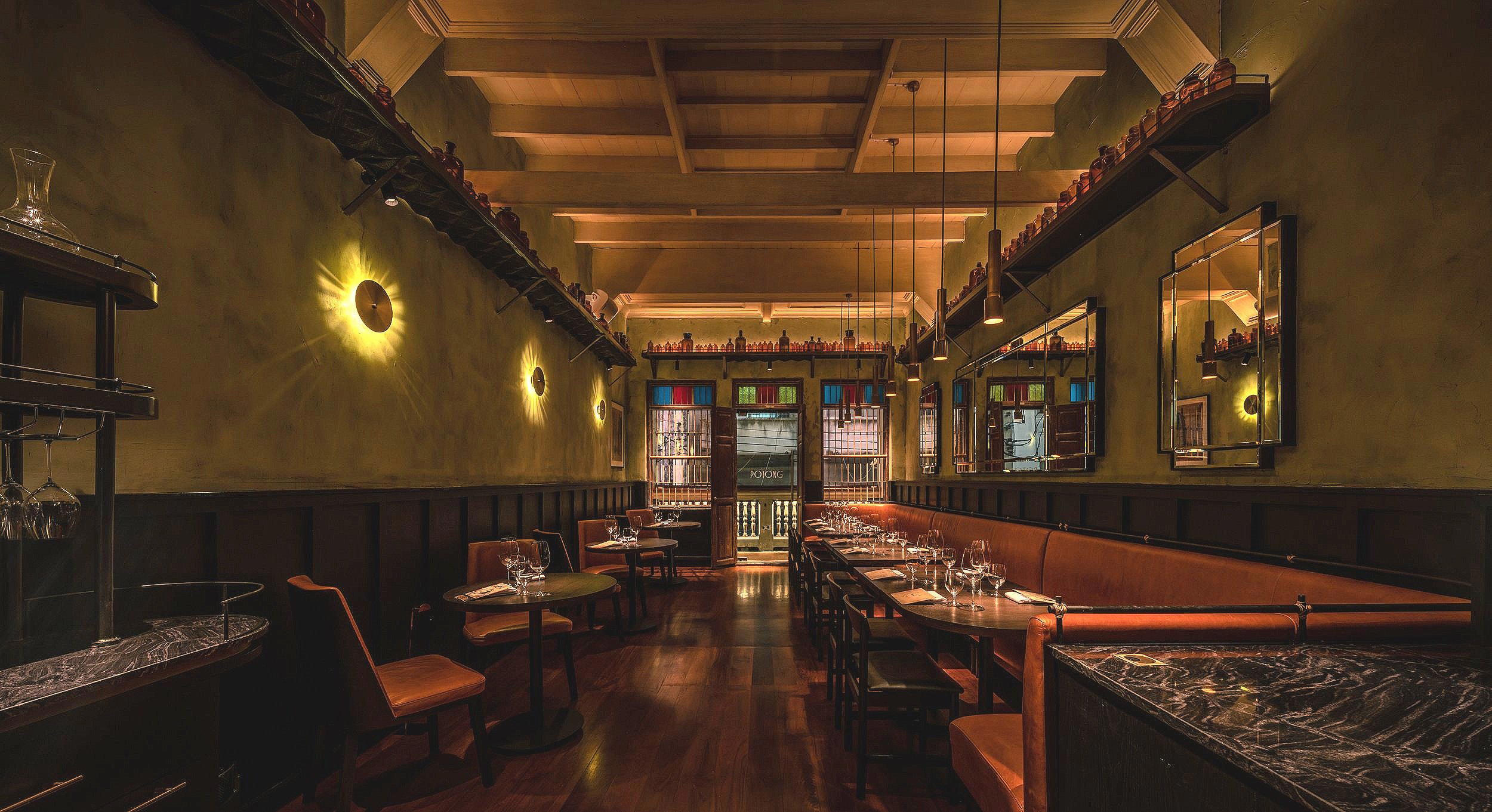
Bars in Bangkok
All bars in Bangkok →
Details
- Rustic
- Cozy
- Scenic
- Elegant
- Family
- Group Dining
- Casual Hangout
- Garden
- Organic
- Local Sourcing
- Garden
- A La Carte
- Vegetarian Friendly
Current opening hours
- Monday
- Closed
- Tuesday
- 9 AM–9 PM
- Wednesday
- 9 AM–9 PM
- Thursday
- 9 AM–9 PM
- Friday
- 9 AM–9 PM
- Saturday
- 9 AM–9 PM
- Sunday
- 9 AM–9 PM
Hours can change for holidays and private events. Hours as of .
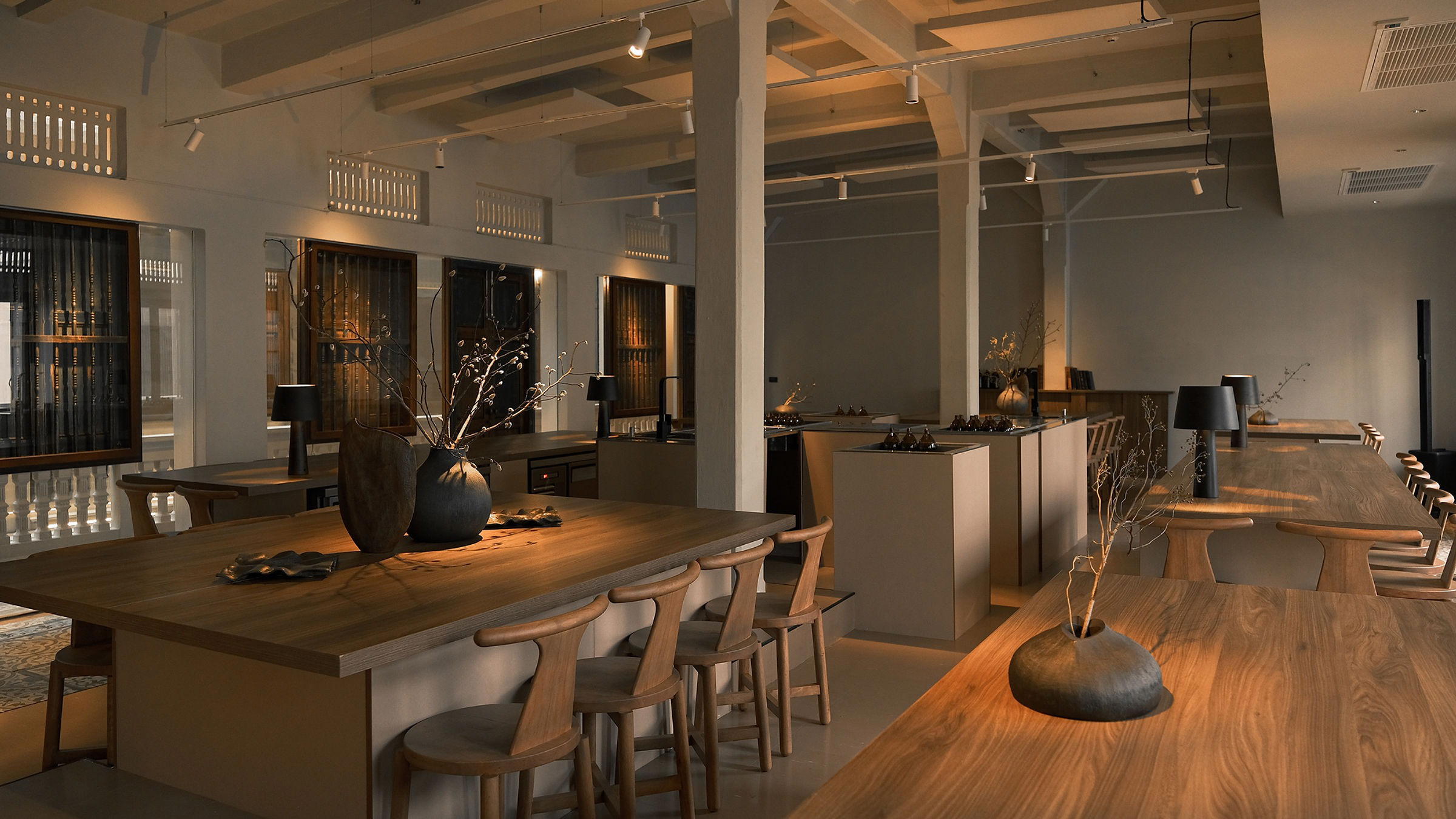
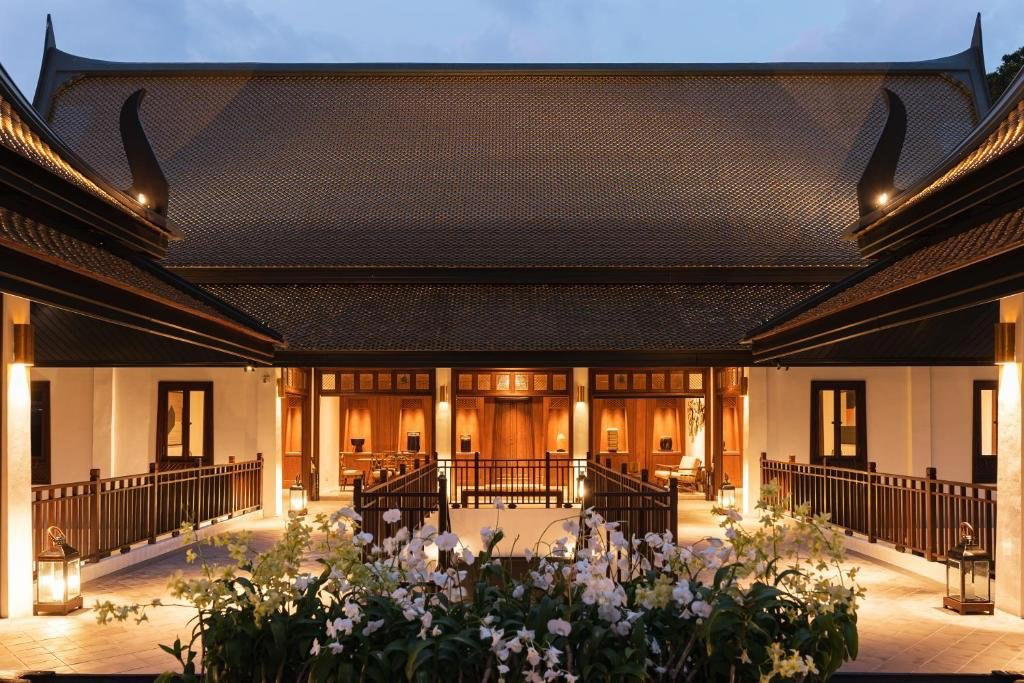
Warm contemporary Thai design with natural wood, open grills, and garden views creating a refined yet relaxed atmosphere.