Loveurth
.png)
Loveurth brings Italian-Korean plant-based cooking to Busan's Suyeong-gu district, earning consecutive Michelin Bib Gourmand recognition in 2024 and 2025. Chef Daniele Galliazzo's vegan menu sits at the accessible end of Busan's dining spectrum, making it one of the few places in the city where ethical-sourcing principles and rigorous technique converge at a single-₩ price point. A 4.8 Google rating across 74 reviews reflects a following built on repeat visits rather than occasion dining.

Where Busan's Plant-Based Dining Has Landed
Busan's restaurant culture has long been defined by its proximity to the sea: grilled mackerel at Jagalchi, pork bone soup in Seomyeon, naengmyeon counters that open before most offices. The city's relationship with vegetables has historically been supporting-cast rather than lead. That context makes Loveurth's position in Suyeong-gu worth examining. The neighbourhood sits between the Gwangalli waterfront and the residential density of Millak-dong, a stretch that has accumulated enough independent restaurants and café-bars to register as a dining corridor without the self-consciousness of a formal dining district. Approaching the address on Gwangan-ro 49 beon-gil, you are in a mid-rise residential zone where dining spaces tend to be compact and owner-operated, a setting that favours the kind of quiet seriousness that vegan cooking, at its most considered, requires.
The broader shift in Korean dining is relevant here. Seoul has developed a credible plant-based tier in the last several years — Légume in Seoul sits at one end of that range, while temple-food traditions explored at places like Baegyangsa Temple in Jangseong-gun represent the cultural lineage that makes Korean vegetable cookery philosophically coherent, not merely trend-adjacent. Busan has been slower to develop this layer. Loveurth's consecutive Michelin Bib Gourmand awards in 2024 and 2025 suggest the city now has at least one address that can hold that conversation seriously.
The shortlist, unlocked.
Hard-to-book tables, cellar releases, and concierge-planned trips.
Get Exclusive Access →The Sustainability Logic Behind a Single-₩ Vegan Counter
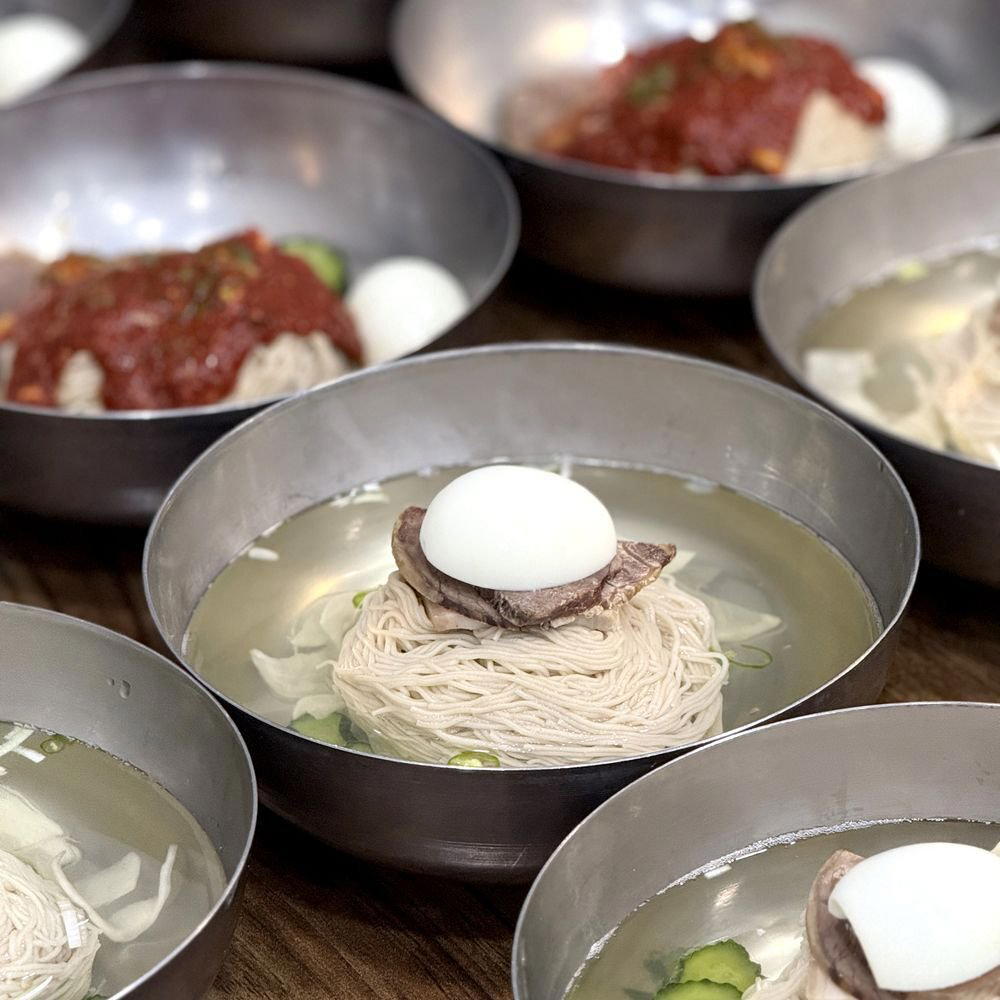
Vegan restaurants in major cities have split into two commercial registers: high-ticket tasting menus that use plant-based constraints as a creative platform, and accessible everyday formats where the sustainability argument is embedded in low margins and high turnover. Globally, the latter is harder to sustain with consistent quality. Loveurth operates at a single-₩ price point — the most accessible tier in Busan's restaurant spectrum, sitting at the same band as 100.1.Pyeongnaeng's naengmyeon counter , and has still attracted Michelin attention twice in succession. That combination is not common.
The Bib Gourmand designation is specifically awarded for good cooking at moderate prices, which makes it structurally distinct from a star award. For a vegan restaurant at this price level, the recognition implies that the kitchen is producing food with discipline and intention rather than leaning on novelty. The comparison set for vegan restaurants earning Bib Gourmand internationally includes addresses like KLE in Zurich and Plates London, where the environmental and ethical commitments are carried through in sourcing decisions that affect cost and menu structure. At Loveurth, those commitments operate within a price bracket that keeps the food accessible to a local audience rather than positioning sustainability as a premium product.
Chef Daniele Galliazzo's presence in Busan is itself a data point about how plant-based cooking travels. Italian culinary training has an established grammar for working with vegetables , the soffritto-building patience, the emphasis on texture layering, the refusal to treat the main ingredient as an afterthought , and that grammar applied to Korean produce and context produces a cross-referencing that does not read as fusion in the diluted sense. It reads as a chef working seriously with what is around them. That approach tends to reduce food miles and seasonal waste, not as a marketing claim but as a practical consequence of cooking with whatever the local market produces well.
How Loveurth Sits in Busan's Current Restaurant Tier
Busan's Michelin-recognised dining has expanded in recent years, and the city now carries entries across several categories and price bands. Palate operates in the ₩₩ contemporary bracket, while Mori represents the ₩₩₩ Japanese tier and Born and Bred sits at the ₩₩₩₩ steakhouse end. Loveurth's single-₩ position means it occupies the most accessible price band with Michelin recognition, which is a relatively rare combination. The 4.8 Google rating across 74 reviews adds a further signal: at that review count, a 4.8 average reflects a consistently performing kitchen rather than a statistical outlier driven by a handful of responses.
For those mapping Loveurth against the broader Korean dining picture, the relevant comparators are not Busan-only. Mingles in Seoul and Gaon in Seoul represent what Korean fine dining looks like when operating at a different altitude, while ARP in Busan and Kwon Sook Soo in Gangnam-gu mark different points on the investment-and-formality axis. Loveurth's contribution to this picture is specifically its proof that plant-based cooking in Korea can earn recurring institutional recognition at a price point that does not require a special occasion to justify the visit.
Planning a Visit
Loveurth is located at 32-1 Gwangan-ro 49 beon-gil in Suyeong-gu, within reach of the Gwangalli beach area. At the single-₩ price tier, the financial commitment is low enough that a lunch visit during a broader Busan itinerary makes direct sense , the kind of meal you factor into a day rather than plan a day around. Given the Bib Gourmand profile and the 4.8 average, the restaurant draws a following that extends beyond the immediate neighbourhood, so arriving early or checking capacity before committing to timing is advisable, though specific hours and booking method are not published in available records. No dress code applies at this price and format level. If you are constructing a Busan restaurant sequence, Loveurth covers the vegan and sustainability angle cleanly, leaving the rest of the itinerary open for the city's seafood and meat traditions. For broader planning, our full Busan restaurants guide, Busan hotels guide, Busan bars guide, Busan wineries guide, and Busan experiences guide cover the surrounding territory. If you are continuing south or looking at island options, The Flying Hog in Seogwipo on Jeju is a reasonable point of reference for a different register of Jeju dining.
The shortlist, unlocked.
Hard-to-book tables, cellar releases, and concierge-planned trips.
Get Exclusive Access →Frequently Asked Questions
Recognition Snapshot
A quick peer snapshot; use it as orientation, not a full ranking.
| Venue | Awards | Cuisine | Notes |
|---|---|---|---|
| Loveurth | Bib Gourmand | Vegan | This venue |
| Palate | Michelin 1 Star | Contemporary | Contemporary, ₩₩ |
| Mori | Michelin 1 Star | Japanese | Japanese, ₩₩₩ |
| Born and Bred | World's 50 Best | Steakhouse | Steakhouse, ₩₩₩₩ |
| 100.1.Pyeongnaeng | Naengmyeon | Naengmyeon, ₩ | |
| Anmok | Dwaeji-gukbap | Dwaeji-gukbap, ₩ |
Need a table?
Our members enjoy priority alerts and concierge-led booking support for the world's most difficult tables.
Get Exclusive AccessThe shortlist, unlocked.
Hard-to-book tables, cellar releases, and concierge-planned trips.
Get Exclusive Access →