Louvain d'Anvers
Louvain d'Anvers sits on Naamsesteenweg in Oud-Heverlee, a quiet municipality south of Leuven where Belgian dining culture moves at a considered pace. The address places it within reach of both Leuven's academic community and the broader Flemish-Brabant dining circuit, a region that rewards visitors willing to look beyond the obvious city-centre stops.
Pearl is the En Primeur Club membership app — saves, bookings, and concierge access live there. Same editors, same standards.
- Address
- Naamsesteenweg 20, 3052 Oud-Heverlee, Belgium
- Phone
- +32472313725
- Website
- louvaindanvers.com
- Directions
- Get directions
 Saves & bookings on Pearl
The Village South of Leuven and What It Asks of a Restaurant
Oud-Heverlee occupies an unusual position in the Belgian dining conversation. Administratively folded into a quiet stretch of Flemish Brabant, roughly five kilometres south of Leuven, it sits close enough to a university city to draw an informed, food-literate crowd, yet far enough from Brussels and Antwerp that restaurants here operate outside the usual metropolitan hype cycle. That distance is a filter: venues that succeed in this kind of municipality tend to do so on consistency and local reputation rather than press-driven foot traffic. Louvain d'Anvers, addressed at Naamsesteenweg 20, occupies that context.
Belgium's dining geography has always rewarded this kind of dispersal. The country's most discussed tables, from Hof van Cleve in Kruishoutem to Boury in Roeselare and Willem Hiele in Oudenburg, are rarely in city centres. Belgian food culture has long operated on the logic that a serious kitchen can sustain itself in a village if what it does is specific enough and well-executed enough. Naamsesteenweg, running south out of Leuven toward Namur, is precisely the kind of road where that logic plays out.
A Name That Carries Cultural Weight
The name Louvain d'Anvers deserves a moment of attention. Louvain is the French rendering of Leuven, the Flemish university city whose name has been contested and dual for centuries, a product of Belgium's linguistic fault line between Dutch-speaking Flanders and French-speaking Wallonia. Anvers, meanwhile, is the French name for Antwerp. A venue that folds both into its name, in a municipality that sits precisely at the edge of Flemish Brabant, is making a quiet statement about the cultural registers Belgium holds simultaneously.
That linguistic duality is not incidental to how Belgian cuisine works. The country's strongest cooking tradition draws from both the French classical inheritance, the saucing, the braising, the precision, and a Flemish directness that privileges ingredient quality and season over elaboration. The kitchens at places like Bozar Restaurant in Brussels and Le Chalet de la Forêt in Uccle have navigated that tension for decades. At the village level, that negotiation is less formal but no less present.
Oud-Heverlee in the Wider Flemish Brabant Dining Circuit
The restaurants that have built reputations in Flemish Brabant's smaller municipalities typically share a few characteristics: tighter menus, stronger relationships with local producers, and a format built around regulars rather than destination tourists. The comparison set for a restaurant on this stretch of road is not the multi-starred destination houses of West Flanders or Antwerp, such as Zilte or Bartholomeus, but rather the mid-tier Belgian tables where a regional cuisine is practiced with care and where the room is likely to be filled with people who live within twenty minutes of the address.
That is a different kind of ambition, and not a lesser one. Belgium has a density of quality cooking at the non-destination tier that most comparable European countries do not. The infrastructure, the producers, the ingredient supply chains built for a culture that takes lunch seriously, is present even at the local level. Restaurants like Castor in Beveren, De Jonkman in Sint-Kruis, and La Durée in Izegem each represent variants of this model across different Flemish provinces.
Within Oud-Heverlee itself, the dining options are narrow. Spaans Dak and Vers Namur represent the other publicly visible addresses in the municipality. For a comprehensive picture of what the area offers, our full Oud-Heverlee restaurants guide maps the options in context.
The Cultural Logic of Belgian Regional Dining
Understanding why a restaurant like Louvain d'Anvers exists in a village rather than a city requires some sense of how Belgian dining culture is structured. Belgium does not have a single dominant food capital in the way France has Paris or Spain has San Sebastián. Brussels is important, but Ghent, Bruges, Antwerp, and Liège all have meaningful culinary identities. Below that tier, the provincial and municipal level supports a class of restaurant that in most countries would struggle to survive outside a metropolitan centre.
The reasons are partly economic: Belgian consumers across income levels spend a higher proportion of disposable income on eating out than their northern European neighbours. They are also partly cultural: the Belgian table is a social institution, not merely a transaction, and that holds in a village on the Naamsesteenweg as much as on the Grand Place. The French-language side of the border adds another layer, with Walloon and Brabançon cooking traditions feeding into what appears on plates across the linguistic frontier. Further south, L'air du Temps in Liernu, La Table de Maxime in Our, and d'Eugénie à Emilie in Baudour each illustrate how Wallonia sustains serious cooking at the rural and small-town level.
For context beyond Belgium's borders, the village-restaurant model that Belgium has refined finds international parallels at places like Le Bernardin in New York or Atomix, in the principle that a kitchen's seriousness of purpose is not determined by its postcode.
Planning a Visit
Oud-Heverlee is accessible from Leuven by car in under ten minutes, and from Brussels the drive along the E40 and connecting roads takes roughly thirty minutes depending on traffic. The restaurant is recommended for reservations, and smart casual dress is appropriate.
Budget Reality Check
Comparable venues nearby, for context on price, style, and recognition.
| Venue | Cuisine | Price | Awards | Notes |
|---|---|---|---|---|
| Louvain d'AnversThis venue — the venue you are viewing | Not listed | $$ | Not listed | Not listed |
| Vers Namur | Blanden, Belgian Seasonal Bistro | $$ | Not listed | Not listed |
| Spaans Dak | Oud-Heverlee, Modern Creative Belgian | $$$$ | Michelin Plate | Not listed |
| Barbavin | La Hulpe, French-Belgian Bistro | $$ | Not listed | Not listed |
| Belle Lurette | Not listed | $$ | Not listed | Saint-Gilles, Modern French-Belgian Bistro |
| Temps Des Cerises | Old Namur, Traditional Walloon Bistro | $$ | Not listed | Not listed |
Continue exploring
More in Oud-Heverlee
Restaurants in Oud-Heverlee
Browse all →
Bars in Oud-Heverlee
Browse all →
At a Glance
- Cozy
- Classic
- Date Night
- Special Occasion
- Historic Building
- Local Sourcing
Current opening hours
- Monday
- 6:30–11 PM
- Tuesday
- Closed
- Wednesday
- 11:30 AM–2:30 PM, 6:30–11 PM
- Thursday
- 11:30 AM–2:30 PM, 6:30–11 PM
- Friday
- 11:30 AM–2:30 PM, 6:30–11 PM
- Saturday
- 6:30–11 PM
- Sunday
- Closed
Hours can change for holidays and private events. Last verified .
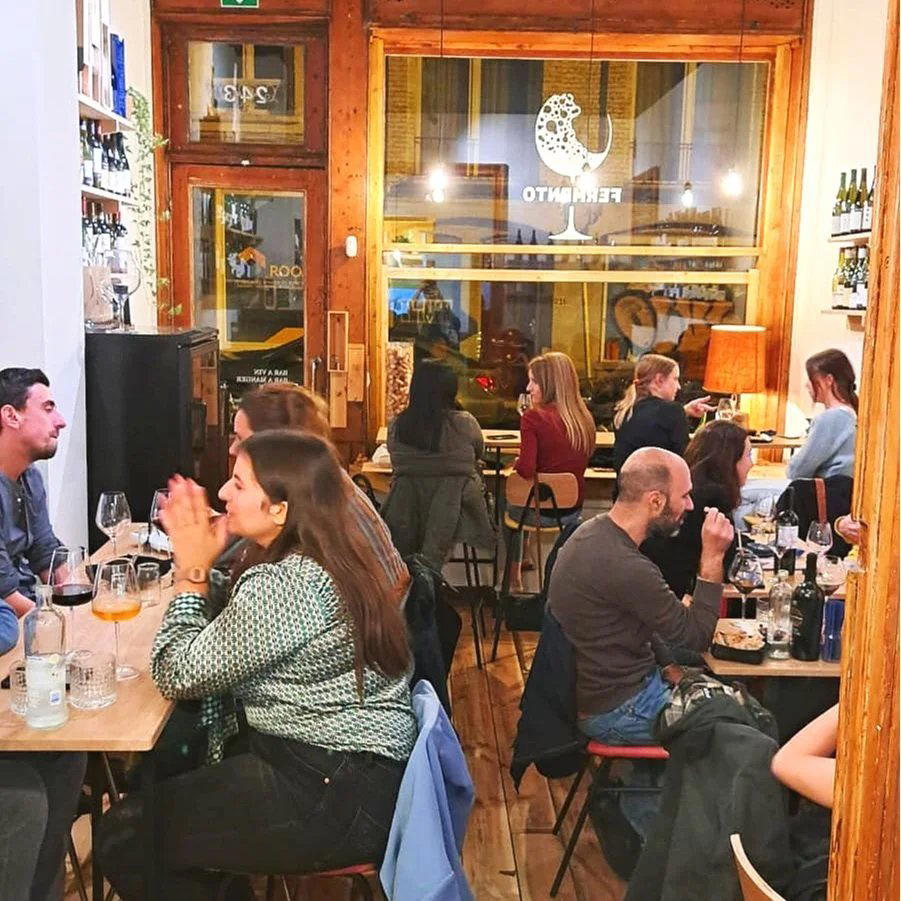
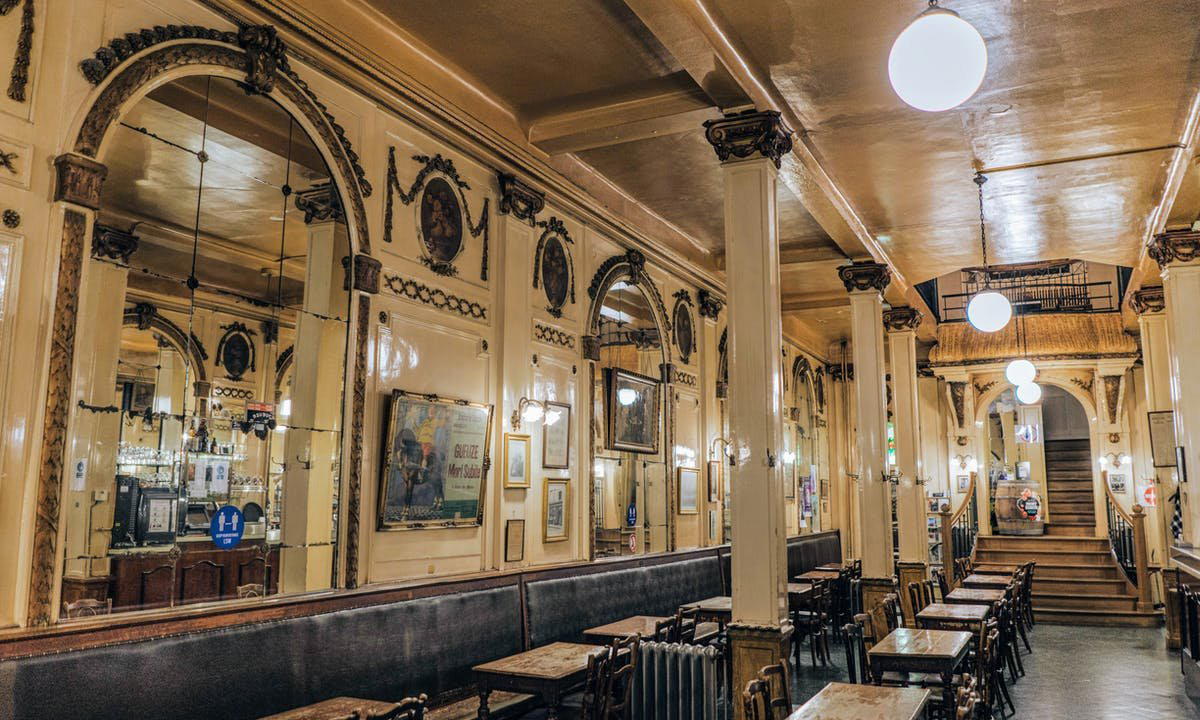
Warm and casual atmosphere in a historic setting.