Lo Famo Sano
Our verdict
In the industrial satellite town of Pomigliano d'Arco, just east of Naples, Lo Famo Sano occupies a telling position in the Campanian tradition of no-frills cooking built on local ingredient integrity. The name itself, roughly translating to 'we make it healthy' in Neapolitan dialect, signals a kitchen philosophy grounded in what the land and surrounding area produce. A practical entry point into the region's grassroots dining culture.

Pearl is the En Primeur Club membership app, where members save venues, book tables and use the concierge.
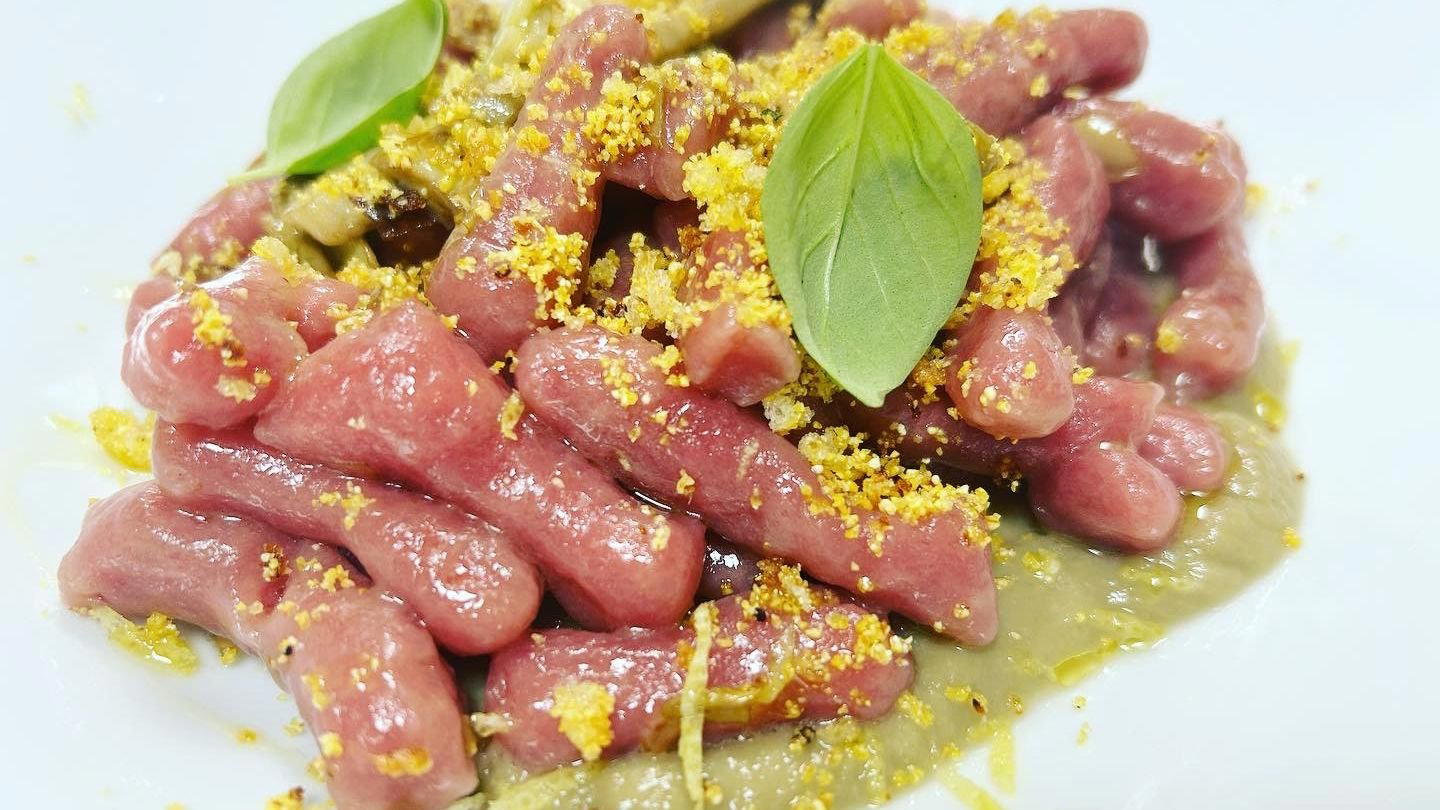
What Eating in Pomigliano d'Arco Actually Looks Like
The towns that ring Naples tend to get filed under 'not Naples' in most travel writing, which means they get skipped. Pomigliano d'Arco, a working industrial comune roughly 15 kilometres northeast of the city centre, sits firmly in that overlooked bracket. It is a place built around the Alfa Romeo and Alenia Aermacchi plants, not around tourism, and its restaurants exist to feed people who live there rather than to perform southern Italy for visitors. That distinction matters when thinking about what ingredient sourcing looks like at a place like Lo Famo Sano: the supply chain answers to a local clientele with generational knowledge of what tomatoes, buffalo dairy, and cured meat from this specific zone of Campania should actually taste like.
The address on Via Nazionale delle Puglie places Lo Famo Sano on one of the main arterial roads cutting through the Vesuvian plain, a corridor that connects Naples to the interior towns and runs through some of the most agriculturally productive land in southern Italy. The volcanic soils of the Somma-Vesuvius system have underwritten Campanian food culture for centuries: the San Marzano tomato, the Annurca apple, fior di latte from the surrounding countryside, and the earthy legumes that form the backbone of cucina povera all come from this strip of territory. A restaurant on this road, with a name that foregrounds wholesomeness and local substance over elaboration, is making a statement about which tradition it belongs to.
The Campanian Ingredient Tradition and Where Lo Famo Sano Sits Within It
Italian regional cooking has always been a sourcing argument before it is a technique argument. Campania is no different, and its culinary identity is unusually tied to a small number of protected-designation ingredients that carry legal geographic specificity: Pomodoro San Marzano dell'Agro Sarnese-Nocerino DOP, Mozzarella di Bufala Campana DOP, Provolone del Monaco DOP from the Monti Lattari slopes. These are not marketing categories. They represent controlled production zones and legal traceability requirements that distinguish a product grown or made within designated coordinates from generic versions sold under the same names elsewhere.
The grassroots dining scene in the towns east of Naples, Pomigliano, Acerra, Nola, Marigliano, has historically been where these ingredients appear in their least mediated form. No reduction sauces, no modernist plating, no tasting menus built around chef interpretation. The context is direct: local produce, traditional preparation, and a room full of people who grew up eating this food. That is a harder competitive environment for sourcing integrity than any fine dining kitchen, because the audience has no patience for substitution. Comparison with the multi-starred northern Italian establishments listed elsewhere in our coverage, from Le Calandre in Rubano to Osteria Francescana in Modena, underlines the point: those kitchens operate at the interpretive end of Italian cuisine, where ingredient provenance supports a creative vision. The Pomigliano tradition that Lo Famo Sano operates within is less about vision and more about fidelity.
That is not a lesser ambition. The distinction between elaboration-led cuisine and fidelity-led cuisine is a genuine fork in how Italian food culture has developed. Restaurants like Dal Pescatore in Runate and Enoteca Pinchiorri in Florence have built international reputations on the former. The latter, at its finest, is what keeps regional food cultures alive.
Reading the Name as a Sourcing Signal
Lo Famo Sano translates from Neapolitan dialect as something close to 'we make it healthy' or 'we do it right.' That kind of name signals a kitchen that positions itself explicitly against shortcuts. In a region where the local food industry includes both extraordinary raw-material quality and a well-documented market for inferior substitutes, the assertion of making things properly is a sourcing claim as much as a culinary one. It locates the restaurant within a tradition of cucina casareccia, home-style cooking made from scratch, that prioritises the quality of what goes in over the complexity of what comes out.
Within southern Italy's wider dining map, Campania's grassroots trattoria and ristorante culture has produced some genuinely significant cooking that rarely surfaces in international coverage. For context on what Campanian coastal fine dining looks like at its most awarded, Quattro Passi in Marina del Cantone holds Michelin recognition and draws on the same Vesuvian plain ingredients from a very different register. The contrast between that coastal register and the inland, working-town setting of Pomigliano illustrates how wide the Campanian table actually is. Further afield, Reale in Castel di Sangro and Uliassi in Senigallia show how southern and central Italian kitchens have built international credibility from regional ingredient specificity, each in a different idiom.
Placing Lo Famo Sano in the Wider Italian Dining Picture
Italy's most decorated restaurants, including Piazza Duomo in Alba, Enrico Bartolini in Milan, Da Vittorio in Brusaporto, Villa Crespi in Orta San Giulio, and La Pergola in Rome, operate at the apex of a formal system where awards and price signal position. Lo Famo Sano, with no publicised awards, no tasting menu format, and an address in an industrial suburb rather than a historic centre, sits entirely outside that system. The more relevant comparison set is the category of neighbourhood-anchored Campanian restaurants that serve a local lunch and dinner trade, where reputation travels by word of mouth within a specific postal code rather than via guidebook listing. That is a different kind of trust signal, and in many ways a more demanding one. For internationally minded readers cross-referencing Italian dining at the level of Atelier Moessmer Norbert Niederkofler in Brunico or Casa Perbellini 12 Apostoli in Verona, Lo Famo Sano represents the ground-level register of the same food culture those kitchens eventually grew from.
For further reference across the EP Club Italy coverage, see our full Pomigliano d'Arco restaurants guide. For context on how Campanian ingredient traditions compare to international benchmarks at the highest level, Le Bernardin in New York City and Atomix in New York City illustrate what sourcing-led cuisine looks like when filtered through entirely different culinary frameworks. And within Italy's south, Gambero Rosso in Marina di Gioiosa Ionica offers a Calabrian counterpoint to the Campanian register.
Planning a Visit
Lo Famo Sano sits at Via Nazionale delle Puglie, 73 in Pomigliano d'Arco. The town is reachable from Naples via the Circumvesuviana railway line, with Pomigliano d'Arco among the stops on the Naples-Baiano route, placing it within practical range for a lunch visit from the city.
Frequently asked questions
Can I bring kids to Lo Famo Sano?
Pomigliano d'Arco is a working Campanian town, and neighbourhood restaurants here are built around family dining as a baseline rather than a policy. Lo Famo Sano sits on Via Nazionale delle Puglie, a main road serving a local residential trade, which reinforces that profile. Expect a room accustomed to mixed-age tables rather than one calibrated for destination dining.
What should I expect atmosphere-wise at Lo Famo Sano?
The address on Via Nazionale delle Puglie, 73 places Lo Famo Sano firmly in the everyday commercial fabric of Pomigliano d'Arco rather than on any visitor circuit. At this tier and in this town, that typically means a room with regulars, functional décor, and a pace set by the kitchen rather than the clock. The Neapolitan name, translating roughly as 'we do it right' or 'we make it healthy', points toward a kitchen with a stated sourcing or preparation ethos, which often shapes a no-frills, ingredient-forward room.
Is Lo Famo Sano accessible by public transport from Naples?
Pomigliano d'Arco is served by the Circumvesuviana railway line, which runs east from Naples Porta Nolana and Piazza Garibaldi. The town is one of the closer stops on that route, making Lo Famo Sano reachable without a car, a practical consideration given that the Circumvesuviana also connects the Vesuvian sites. Via Nazionale delle Puglie, where the restaurant sits at number 73, is one of the town's main arteries and walkable from the station.
What dish is Lo Famo Sano famous for?
The name signals a kitchen philosophy around clean, honest preparation rather than a single marquee plate. Ordering whatever is local and seasonal is the more reliable approach than seeking a single signature item.
A Quick Peer Check
Comparable venues nearby, for context on price, style, and recognition.
| Venue | Cuisine | Price | Awards | Notes |
|---|---|---|---|---|
| Lo Famo SanoThis venue (the venue you are viewing) | Modern Vegetarian Italian | $20–30 | Not listed | Not listed |
| Meridiò Bistrot | Traditional Southern Italian Bistro | $20–30 | Not listed | Acquario |
| Ristorante Da Giannino dal 1988 | Traditional Italian Trattoria | $30–50 | Not listed | Pianillo |
| Criscito'S | Neapolitan Pizza | $20–30 | Not listed | Praiano |
| Bro. | Modern Neapolitan Pizza | $20–30 | 50 Top Pizza Italia #23 | Mercato |
| Ciro a Santa Lucia | Neapolitan Pizza & Fresh Seafood | $30–50 | Not listed | San Ferdinando |
Details
- Cozy
- Intimate
- Modern
- Date Night
- Family
- Extensive Wine List
- A La Carte
- Vegetarian Friendly
- Vegan Options
Current opening hours
- Monday
- Closed
- Tuesday
- Closed
- Wednesday
- 7:30–11 PM
- Thursday
- 7:30–11 PM
- Friday
- 7:30–11 PM
- Saturday
- 7:30–11 PM
- Sunday
- 12:30–3:30 PM
Hours can change for holidays and private events. Hours as of .
Warm, curated atmosphere with careful details, cozy and intimate setting.