Little Basil
Little Basil sits at 153 E 26th St in the Gramercy-Flatiron corridor, a neighborhood where Thai cooking has quietly built one of New York's more coherent Southeast Asian dining pockets. The restaurant draws a regular local crowd alongside visitors working through the area's mid-range dining options. For a meal structured around fresh herb-driven flavors and aromatic curries, it represents a credible neighborhood anchor.
Pearl is the En Primeur Club membership app — saves, bookings, and concierge access live there. Same editors, same standards.
- Address
- 153 E 26th St, New York, NY 10010
- Phone
- +12126891444
- Website
- littlebasil.com
- Directions
- Get directions
 Saves & bookings on Pearl
Thai Cooking in the Gramercy Pocket: How a Neighborhood Anchors a Cuisine
The stretch of Lexington and Third avenues between 23rd and 30th streets has, over the past two decades, quietly accumulated one of Manhattan's more consistent concentrations of Thai cooking. This is not the tourist-facing density of Ninth Avenue or the chef-driven ambition of Midtown's tasting-counter circuit, venues like Le Bernardin or Per Se occupy a different register entirely. What the Gramercy-Flatiron corridor has built instead is something harder to manufacture: a neighborhood dining rhythm where residents return repeatedly rather than pilgrimaging once. Little Basil, at 153 E 26th St, has been part of that rhythm long enough to function as a local reference point rather than a discovery.
That positioning matters in a city where Thai restaurants occupy a wide spectrum, from street-food-casual storefronts to the more architecture-forward Thai formats that have appeared in Midtown and the West Village in recent years. Little Basil sits in the mid-register of that spectrum, a space where the cooking does the orienting rather than the room design or the concept framing.
The Arc of a Meal: Thinking Through the Progression
Thai cuisine, at its structural core, is designed around contrast sequencing rather than escalation. A meal that opens with a bright, herb-driven larb or a som tam built on green papaya acidity is establishing a palate baseline, sharp, clean, vegetal, before the kitchen moves into the heavier aromatic registers of coconut-enriched curries or slow-braised proteins. This is a different logic from the European tasting-menu tradition, where courses build toward a protein peak before resolving into dessert. Thai multi-course eating moves laterally as much as it builds vertically, with hot, sour, salty, and sweet arriving in overlapping waves across the table rather than in strict sequence.
That structure rewards ordering with some intentionality. A table that arrives and orders reflexively, a green curry, a pad thai, a spring roll, will eat well enough, but misses the more interesting architecture available when the first courses are chosen to establish contrast. In the broader Thai dining tradition, the meal's opening defines its entire register: a fiery larb signals one kind of evening; a delicate steamed dumpling or a clear broth signals another. The kitchen's range, and how a diner chooses to move through it, shapes the experience more than any single dish.
This is the kind of cooking context that separates neighborhood Thai anchors from their more formulaic competitors. The leading neighborhood Thai restaurants in New York, and the Gramercy corridor has a few, have menus that reward repeat visits precisely because the sequencing possibilities are wide. First-time visitors tend to benchmark against familiar dishes; regulars use those benchmarks as a starting point and build outward.
Neighborhood Position and Peer Context
The 26th Street address places Little Basil at the northern edge of the Flatiron district, equidistant from the lunch-driven Midtown South office corridors and the more residential blocks of Gramercy proper. This geography shapes who the restaurant serves and when. Weekday lunch traffic in this zone tends toward efficiency; weekend evenings attract a slower, neighborhood-first crowd. Thai restaurants in this position typically build their regulars from the residential catchment rather than the office belt, which in turn shapes the menu's comfort register, familiar dishes executed reliably rather than a rotating seasonal program.
Compared to the Korean-forward dining that has defined much of the city's high-end conversation in recent years, venues like Atomix and Jungsik New York operate at a different price tier and with a different ambition, neighborhood Thai at the Gramercy mid-register is not competing for critical column inches. It is competing for weekly return visits, and that is a different and more demanding performance metric. A restaurant that a critic visits once can coast on a strong night; a restaurant that a neighborhood returns to twice a month has to be consistent across seasons and staffing cycles.
That consistency test is what neighborhood anchors in New York's mid-tier Thai segment either pass or fail quietly. The ones that persist do so because the kitchen holds a baseline that regulars can rely on, particularly through the autumn and winter months when aromatic curries and warming broths earn their keep. For the Gramercy corridor specifically, the cooler-weather months from October through March tend to be when this style of cooking, coconut milk curries, galangal-heavy soups, slow-simmered proteins, finds its most receptive audience.
How Little Basil Compares Across American Regional Dining
The neighborhood Thai format is not distinctive to New York, but the city's density gives it a particular competitive pressure that other markets don't replicate. A Thai restaurant in this position in New York is contending with more direct competitors within walking distance than the same restaurant would face in, say, Atlanta or San Diego, where comparable mid-tier dining anchors like Bacchanalia or Addison operate in thinner competitive fields. The New York filter is merciless in a way that concentrates quality at every price tier, restaurants that don't earn their repeat visits tend not to last.
That same pressure has shaped how tasting-format and progression-driven dining has evolved across American cities. The structured multi-course model that drives destination restaurants like Alinea in Chicago, Lazy Bear in San Francisco, or Single Thread Farm in Healdsburg filters, in diluted form, into how diners at every tier now think about meal structure. Even at a neighborhood Thai restaurant in Gramercy, the expectation that a meal should move through a considered arc, opening, middle, close, reflects a dining culture shaped partly by what the city's upper-tier restaurants have normalized. The French Laundry, Blue Hill at Stone Barns, and internationally, venues like Alain Ducasse at Louis XV, have all contributed to a broader cultural literacy around sequenced eating that trickles into how diners approach even casual neighborhood meals.
Planning Your Visit
The restaurant is located at 153 E 26th St, New York, NY 10010, in the Gramercy-Flatiron corridor. The address is walkable from the 23rd Street subway stations on the 6, N, and R lines. For visitors building a wider New York itinerary around the city's Thai dining options or the Gramercy neighborhood specifically, autumn and winter evenings offer one natural fit with the aromatic, warming cooking this style delivers.
Same-City Peers
Comparable venues nearby, for context on price, style, and recognition.
| Venue | Cuisine | Price | Notes |
|---|---|---|---|
| Little BasilThis venue — the venue you are viewing | Authentic Thai | $$ | Not listed |
| Pure Thai Cookhouse | Authentic Thai Noodle Shophouse | $$ | Hell's Kitchen |
| Thai Cafe | Thai | $$ | Greenpoint |
| Sage | Thai | $$ | East Williamsburg |
| Lemongrass | Halal Thai & Asian Fusion | $$ | Carroll Gardens-Cobble Hill-Gowanus-Red Hook |
| Chim Chim | Thai Pastry and Desserts | $$ | Gramercy |
Continue exploring
More in New York City
Restaurants in New York City
Browse all →
Bars in New York City
Browse all →
Hotels in New York City
Browse all →





At a Glance
- Cozy
- Romantic
- Casual Hangout
- Date Night
- Standalone
Current opening hours
- Monday
- 11 AM–9 PM
- Tuesday
- 11 AM–9 PM
- Wednesday
- 11 AM–9 PM
- Thursday
- 11 AM–9 PM
- Friday
- 11 AM–9 PM
- Saturday
- 11:30 AM–9:30 PM
- Sunday
- 11:30 AM–9:30 PM
Hours can change for holidays and private events. Last verified .
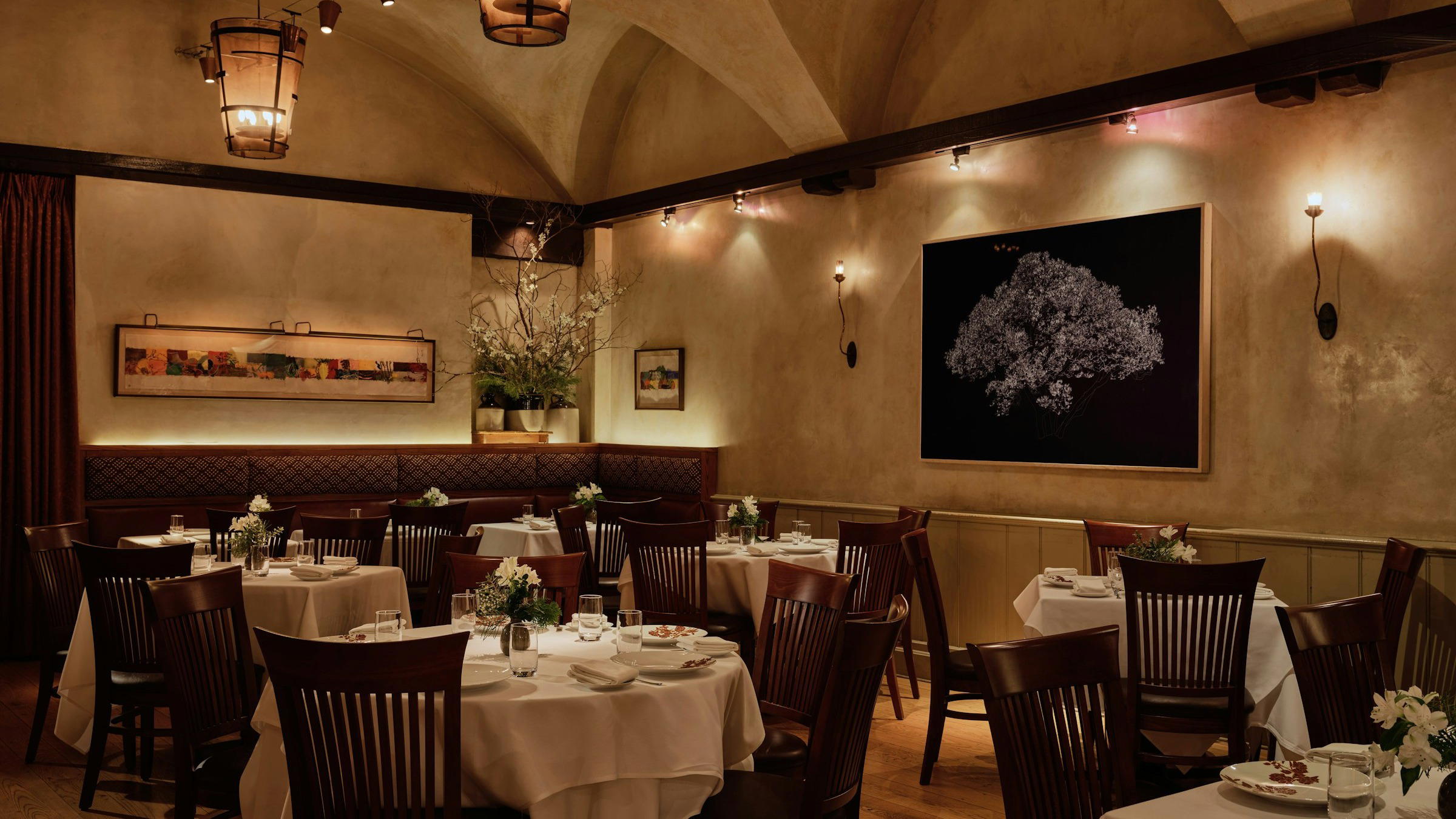
Candlelight, elegant curtains creating a romantic and peaceful hideaway vibe.