Thai Cafe
Our verdict
Thai Cafe on Manhattan Avenue sits in the heart of Greenpoint, Brooklyn's most ingredient-conscious neighbourhood, where proximity to independent importers and ethnic grocery networks shapes what ends up in the kitchen. The restaurant occupies a price tier accessible to the neighbourhood it serves, distinguishing it from the high-end Thai dining moving through Manhattan. Booking details and hours are best confirmed directly with the venue.

Pearl is the En Primeur Club membership app, where members save venues, book tables and use the concierge.
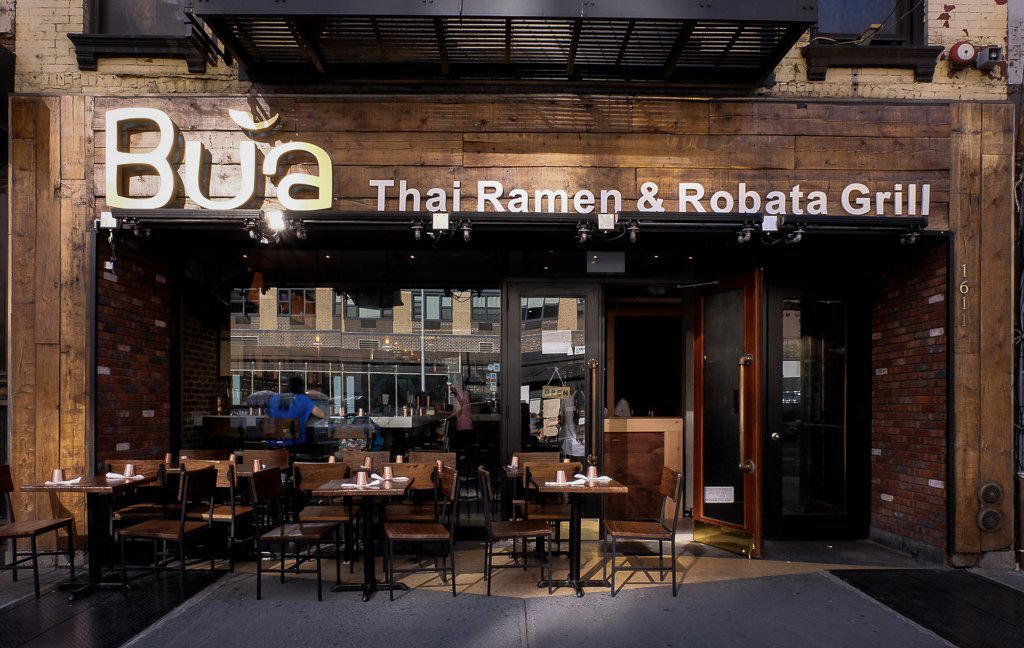
Greenpoint's Thai Table and Where the Ingredients Come From
Manhattan Avenue in Greenpoint runs through one of Brooklyn's most supply-rich corridors for Southeast Asian cooking. The street and its immediate cross blocks are lined with Polish delis, international grocery importers, and a network of small-scale vendors whose stock shifts with what's actually arriving from growing regions rather than what a broadline distributor has warehoused. For a Thai kitchen at 925 Manhattan Ave, that geography is meaningful. Ingredient sourcing in Thai cooking is not incidental to the cuisine, it is the cuisine. The difference between a lemongrass-heavy broth built from stalks that traveled two weeks in a refrigerated container and one made from fresher, more volatile aromatics is a difference the dish registers immediately.
Thai cooking's aromatic backbone, galangal, kaffir lime leaf, Thai basil, fresh turmeric, bird's eye chili, degrades in ways that European pantry staples do not. Galangal loses its medicinal, piney sharpness within days of being cut. Kaffir lime leaf, when dried or old, flattens from a citrus-floral note into something closer to generic herb. These are not refinements visible only to trained palates. They are the difference between a dish that reads as complete and one that tastes assembled. Brooklyn's import networks, which feed Thai, Vietnamese, and Lao kitchens across the borough, generally offer better access to these aromatics than most of midtown Manhattan's supply chains, simply because the demand density is higher and the turnover faster.
Brooklyn Thai Against the Manhattan Tier
New York's Thai dining sits across a wide price and format range. At one end, midtown and downtown Manhattan have seen occasional attempts at premium Thai positioning, with tasting-menu formats and beverage programs priced to compete with the city's broader fine-dining tier, the territory occupied by restaurants like Le Bernardin, Per Se, and Masa. Progressive Korean restaurants such as Atomix and Jungsik New York have demonstrated that Asian cuisines can anchor the city's leading price tier when paired with technical ambition and sourcing discipline. Thai cooking has not established the same density of high-end representation in New York, which means the majority of serious Thai kitchens in the city operate closer to the neighbourhood-restaurant model.
Thai Cafe on Manhattan Avenue belongs to that neighbourhood model. Its Greenpoint address places it outside the tourist and expense-account circuits that drive covers at restaurants in the full New York City dining scene. That positioning is not a limitation, it is a different contract with the diner, one where the kitchen's priority is the food rather than the room design or the beverage margin. Neighbourhood Thai in Brooklyn tends to keep menus wide and prices accessible, covering the canon of regional Thai dishes rather than editing toward a particular regional identity or chef statement.
What Thai Sourcing Actually Requires
The farms-to-kitchen sourcing model that has reshaped American fine dining, seen in places like Blue Hill at Stone Barns in Tarrytown, Single Thread Farm in Healdsburg, or The French Laundry in Napa, relies on temperate-climate relationships between kitchen and farm. Thai cooking's sourcing requirements are structurally different. Many of the key aromatics are tropical or subtropical and cannot be grown locally in New York at meaningful scale. The supply chain is therefore necessarily import-dependent, which puts a premium on which importers a kitchen uses, how frequently stock turns over, and whether the kitchen sources whole, fresh aromatics or accepts dried and frozen substitutes.
This is a real distinction among Thai kitchens in New York, and it is rarely visible from the menu or the storefront. Restaurants with strong import relationships, whether through direct importer accounts or through proximity to ethnic grocery hubs like those on and around Manhattan Avenue, can produce dishes with aromatic accuracy that kitchens on less well-supplied blocks cannot match at equivalent price points. The same argument applies to fish sauce, shrimp paste, and palm sugar: the variance in quality across brands and sources is substantial, and a kitchen that selects carefully produces a different baseline than one treating these as interchangeable commodities.
How Greenpoint Fits Into New York's Broader Food Geography
Greenpoint sits at the northern tip of Brooklyn, adjacent to Long Island City in Queens and separated from the rest of Brooklyn by McCarren Park and the BQE corridor. Its food geography is shaped by its long Polish community, its newer population of younger residents, and a set of independent food businesses that have accreted around both demographics. The neighbourhood lacks the density of Thai restaurants found in Jackson Heights, Queens, which remains the city's primary Thai and Southeast Asian dining corridor. But its supply infrastructure overlaps with what a conscientious Thai kitchen needs, and its rent structure, still below comparable retail space in Manhattan, allows neighbourhood restaurants to price their food for the people who live nearby.
For diners comparing experiences across the broader American farm-to-table and ingredient-focused dining circuit, restaurants like Providence in Los Angeles, Addison in San Diego, Lazy Bear in San Francisco, Alinea in Chicago, Emeril's in New Orleans, Bacchanalia in Atlanta, or The Inn at Little Washington, Thai Cafe occupies a completely different tier and register. The comparison is instructive not to rank one against another but to show how ingredient sourcing operates differently across cuisine types and price points. At those higher-investment restaurants, sourcing is foregrounded as part of the dining proposition. At a neighbourhood Thai cafe in Greenpoint, sourcing quality shows in the food itself rather than in the narrative around it.
Planning Your Visit
Thai Cafe is located at 925 Manhattan Ave, Brooklyn, NY 11222, in the Greenpoint neighbourhood. Getting there: The G train to Greenpoint Ave is the closest subway stop, a short walk along Manhattan Avenue. Reservations: Dress: Neighbourhood casual. Budget: Pricing is consistent with Greenpoint's neighbourhood restaurant tier; formal price-range data is not confirmed, but expect mid-range casual Thai pricing. Timing: Weekday visits reduce likely wait times if the restaurant operates on a first-come basis.
Frequently asked questions
at Thai Cafe?
What is relevant is that Thai cooking's most ingredient-sensitive preparations, dishes built around fresh aromatics like lemongrass, galangal, and kaffir lime leaf, tend to separate kitchens with strong supply relationships from those working from dried or frozen alternatives. In a neighbourhood with active import infrastructure, as Greenpoint has, the curry and soup-based preparations that depend most on aromatic freshness are worth prioritising to assess a kitchen's sourcing quality. For a wider view of what New York's serious restaurants are doing at the leading end, the EP Club New York City guide covers the full spectrum, from Atomix to Le Bernardin.
Do I need a reservation for Thai Cafe?
Neighbourhood Thai restaurants in Brooklyn at this price tier typically operate on a walk-in basis, though this can vary. If you are planning a group visit or arriving on a weekend evening, contacting the restaurant directly beforehand is advisable. By comparison, New York's higher-demand restaurants, including Masa and Per Se, require advance reservations weeks or months out, which reflects a different capacity and demand profile than a Greenpoint neighbourhood cafe at an accessible price point.
How does Thai Cafe compare to other Thai restaurants in Brooklyn and Queens?
Brooklyn's Thai restaurant density is lower than Jackson Heights in Queens, which functions as New York's primary corridor for Thai and broader Southeast Asian dining and where competition among kitchens has driven sourcing and preparation standards up over time. A restaurant at 925 Manhattan Ave in Greenpoint serves a different neighbourhood catchment, with less direct competition from other Thai kitchens nearby. For diners who have eaten through Jackson Heights and want to explore Brooklyn's more scattered Thai options, Greenpoint's supply infrastructure, shaped by its proximity to import-oriented grocery networks, gives a kitchen here better access to fresh aromatics than many Manhattan addresses at a comparable price point. Internationally, the sourcing discipline that defines the leading Thai restaurants globally is examined through a different lens at Michelin-recognised addresses like 8½ Otto e Mezzo Bombana in Hong Kong or Alain Ducasse at Louis XV in Monte Carlo, but the underlying principle, that supply chain access determines what a kitchen can actually produce, holds across every price tier.
Booking and Cost Snapshot
Comparable venues nearby, for context on price, style, and recognition.
| Venue | Cuisine | Price | Notes |
|---|---|---|---|
| Thai CafeThis venue (the venue you are viewing) | Thai | $20–30 | Not listed |
| Nora Thai | Southern Thai with Modern Twist | $30–50 | Williamsburg, Southern Thai with Modern Twist |
| V{IV} | Modern Thai Street Food | $30–50 | Hell's Kitchen, Modern Thai Street Food |
| Lil Chef Mama | Authentic Thai Street Food | $20–30 | Financial District-Battery Park City, Authentic Thai Street Food |
| Kitchen 79 | Southern Thai | $30–50 | Jackson Heights, Southern Thai |
| Chao Thai | Authentic Regional Thai | $20–30 | Elmhurst, Authentic Regional Thai |
Continue exploring
More in New York City
Restaurants in New York City
All restaurants in New York City →
Bars in New York City
All bars in New York City →
Details
- Casual Hangout
- A La Carte