Our verdict
At Norway's southernmost tip, Lindesnes Havhotell sits where the North Sea and the Skagerrak converge, giving it one of the most geographically distinct addresses in Scandinavian hospitality. The property's dining draws from the waters and coastline immediately around it, placing it within a broader movement of hyper-local Norwegian coastal cooking that has drawn serious international attention to this remote stretch of the Vest-Agder coastline.

Pearl is the En Primeur Club membership app, where members save venues, book tables and use the concierge.
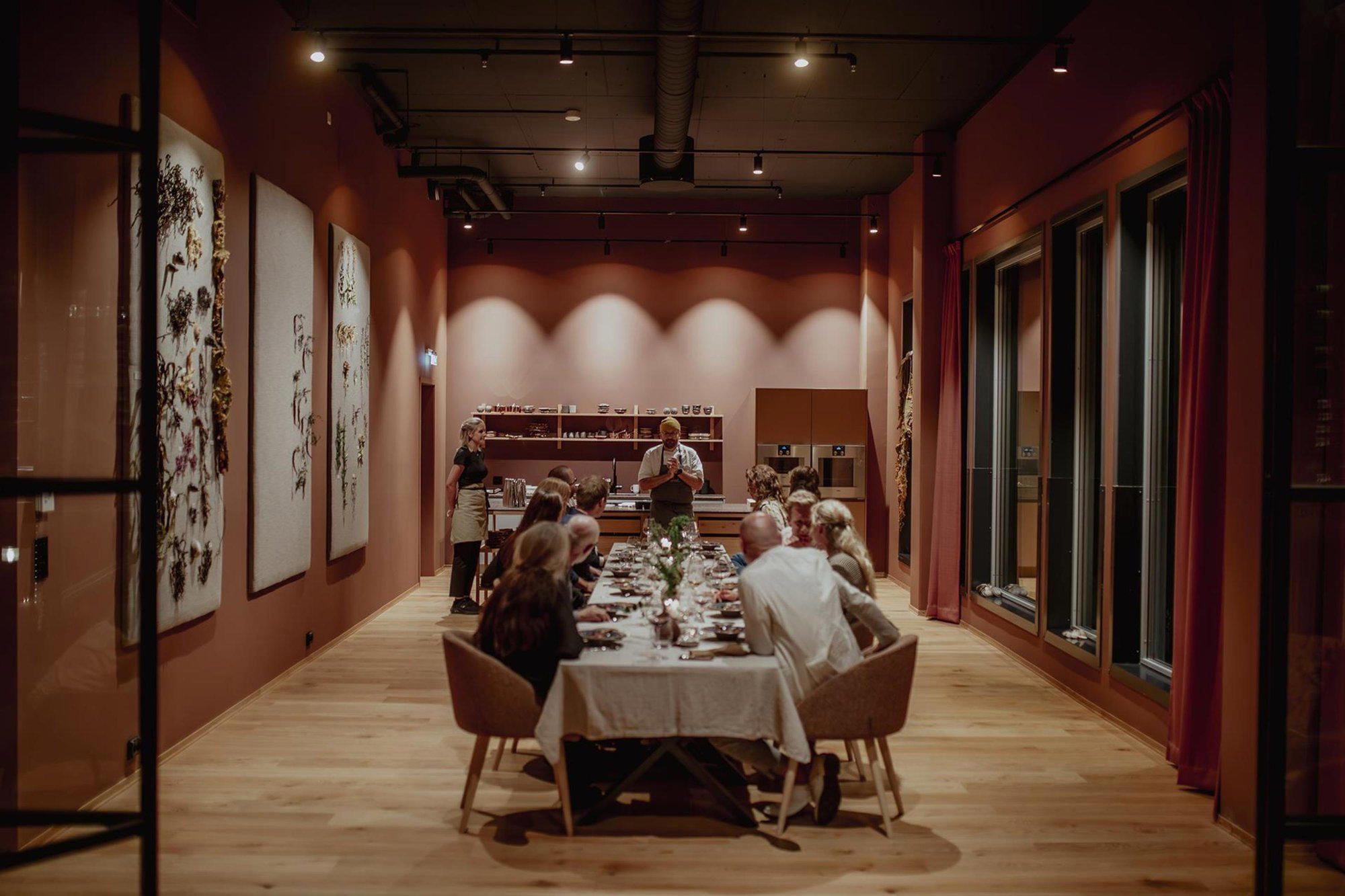
Where the Waters Converge: Coastal Dining at Norway's Southern Edge
The southernmost point of mainland Norway is not a comfortable place. The wind at Lindesnes comes from two directions at once, the North Sea pressing in from the west, the Skagerrak from the east, and the landscape reflects that duality: low, salt-scraped rock shelving into grey-green water, with the red-and-white lighthouse standing as the one fixed point in a scene that otherwise feels in constant motion. Lindesnes Havhotell sits within this environment, not apart from it. The physical setting is the first thing to understand about dining here, because it is also the most important thing to understand about what ends up on the plate.
This stretch of the Norwegian coast has become, over the past decade, one of the more closely watched addresses in Scandinavian food culture. The arrival of Under, the semi-submerged restaurant that sits on the seabed just along the coast, drew the kind of international coverage that redrew how food writers and travellers thought about this region. Under's success established Lindesnes not as a detour from Norway's culinary mainstream but as a destination in its own right. Havhotell operates in that same geography, serving guests who have already committed to making the journey south from Kristiansand, roughly 80 kilometres away.
The Sourcing Logic of a Coastline
Norwegian coastal cooking at this level is defined by a single discipline: the shortest possible line between water and kitchen. The Lindesnes coastline produces some of the country's most consistent shellfish, with the cold, clean currents that converge at the cape creating conditions that favour both flavour concentration and year-round availability. Lobster caught in these waters carries a different character than farmed equivalents, firmer, less sweet, with a mineral depth that comes from the temperature and salinity of the surrounding sea. The same logic applies to the fish: cod, haddock, and the various flatfish species that move through these waters seasonally are primary materials, not supporting ingredients.
This sourcing philosophy has precedent across Norway's coastal dining scene. Anita's Sjomat in Lofoten built its reputation on cod processed within metres of where it was landed. Fiskekrogen in Henningsværr has long anchored its menu to the seasonal rhythms of the Vestfjorden catch. At Havhotell, the same principle applies, but at a latitude where the sourcing geography is determined less by a single dominant catch and more by the variable yield of a coastline where two sea systems meet. The menu shifts accordingly, making temporal flexibility a practical requirement rather than a marketing position.
Further along Norway's coastline, venues like Underhuset Restaurant in Reine and Karoline Restaurant in Ramberg have demonstrated that hyper-local coastal sourcing can anchor a serious dining proposition even in locations that require genuine travel effort from guests. Havhotell follows that model in southern Norway.
Positioning Within Norway's Fine Dining Tier
Norway's upper dining tier is anchored by a handful of Michelin-recognised addresses: Maaemo in Oslo holds three stars and operates at the country's highest price point. RE-NAA in Stavanger carries two stars and has positioned Stavanger as a serious food city in its own right. FAGN in Trondheim has brought the same level of ambition to central Norway. These restaurants share a commitment to Nordic produce frameworks and a cooking approach that prioritises restraint and seasonal specificity over technique for its own sake.
Havhotell sits outside the Michelin-starred bracket based on current available data, which places it in a different competitive conversation, closer to venues like Hardanger House in Jondal or Gaptrast in Bergen, where the draw is the combination of setting, produce quality, and a regional cooking identity rather than the formal credentials of a starred programme. The property's immediate neighbour, Bålyveien 48, shares the same address and adds another dimension to what has become a concentrated dining cluster at this southern point.
The broader international reference point for this kind of coastal-sourcing-led fine dining is instructive. Le Bernardin in New York City built a decades-long argument that seafood-focused cooking could occupy the highest tier of any city's dining hierarchy. Atomix in New York City has demonstrated that a rigorous tasting format can sustain sustained recognition without relying on conventional luxury signals. Havhotell's version of this argument is more environmental than formal: the case for dining here rests substantially on geography.
Seasonal and Logistical Considerations
Lindesnes is a genuine commitment. The drive from Kristiansand takes approximately 90 minutes along coastal roads that become slower in winter conditions. The cape itself receives more weather than most of Norway's southern coast, and the character of the sea changes significantly between summer and the darker months. Summer arrivals get extended daylight and calmer water; winter visits involve a different register entirely, with the lighthouse operating in conditions that made it necessary in the first place. Both versions of Lindesnes are coherent travel propositions, but they are not the same experience. For an overview of the broader dining options in the area, see our full Lindesnes restaurants guide.
For guests travelling further afield along Norway's coast, the dining network stretches north through Aurora Restobar in Kirkenes, Brasserie 8622 in Mo i Rana, and Umami Harstad in Harstad, each anchoring a coastal dining proposition in a different latitude and a different sourcing context. Lindesnes sits at the southern end of that chain, which makes Havhotell a logical starting or ending point for a Norwegian coastal eating itinerary built around how the country's coastline actually produces food.
Frequently asked questions
Can I bring kids to Lindesnes Havhotell?
Lindesnes Havhotell sits at Norway's southernmost mainland point, a remote coastal setting reached via approximately 90 minutes of coastal roads from Kristiansand. That geography shapes the visit: this is not a resort built around children's facilities, and the journey itself requires planning. Families who travel to Lindesnes typically do so for the landscape and the coastal experience rather than dedicated children's programming, so consider your group's appetite for wind-exposed, end-of-the-road Norway before booking.
What kind of setting is Lindesnes Havhotell?
The hotel occupies the coastline at Lindesnes, Norway's southernmost point, where the North Sea and the Skagerrak meet, meaning weather comes from multiple directions and the terrain is open and exposed. The address at Bålyveien 50 places it well outside any town centre, in a working coastal environment rather than a polished resort strip. Guests arrive for the raw edge-of-continent atmosphere, not for proximity to urban amenities.
How far in advance should I book a stay at Lindesnes Havhotell, and are there seasonal considerations?
Lindesnes is a destination that rewards advance planning: the coastal roads from Kristiansand, roughly 90 minutes away, slow considerably in winter, and the exposed position at Norway's southern tip means weather conditions vary sharply by season. Summer months bring the most accessible conditions and the longest daylight, which are also the periods when demand along Norway's coast peaks. Booking several weeks ahead for summer visits, and verifying current availability directly with the property, is advisable given the hotel's remote location at Bålyveien 50, Lindesnes.
What should I order at Lindesnes Havhotell?
What the Lindesnes coastline consistently produces is cold-water seafood, the sourcing logic of Norway's southern shore points toward fish and shellfish pulled from nearby waters. Ask staff what has come in that day; at a property of this type and location, the daily catch is the most reliable guide to what is worth ordering.
Where is Lindesnes Havhotell in Lindesnes?
Lindesnes Havhotell is located at Bålyveien 50, 4521 Balveï, Norway, Lindesnes.
How It Stacks Up
| Venue | Cuisine | Price | Awards | Notes |
|---|---|---|---|---|
| Lindesnes HavhotellThis venue (the venue you are viewing) | Seasonal Norwegian Seafood | $50–100 | Not listed | Not listed |
| Maaemo | New Nordic Fine Dining | $300–500 | 3 Michelin Stars · World's 50 Best #47 | New Nordic, Modern Cuisine |
| RE-NAA | Modern Nordic Coastal Tasting Menu | $500+ | 3 Michelin Stars · La Liste Top Restaurants | New Nordic, Creative |
| Kontrast | Modern Nordic Fine Dining | $200–300 | 2 Michelin Stars · La Liste Top Restaurants | New Nordic, Scandinavian |
| FAGN | Modern Nordic Fine Dining | $200–300 | 1 Michelin Star · Star Wine List | Nordic, Modern Cuisine |
| Speilsalen | Contemporary Norwegian Seafood Fine Dining | $200–300 | 1 Michelin Star · Star Wine List | Nordic, Contemporary |
Continue exploring
More in Lindesnes
Restaurants in Lindesnes
All restaurants in Lindesnes →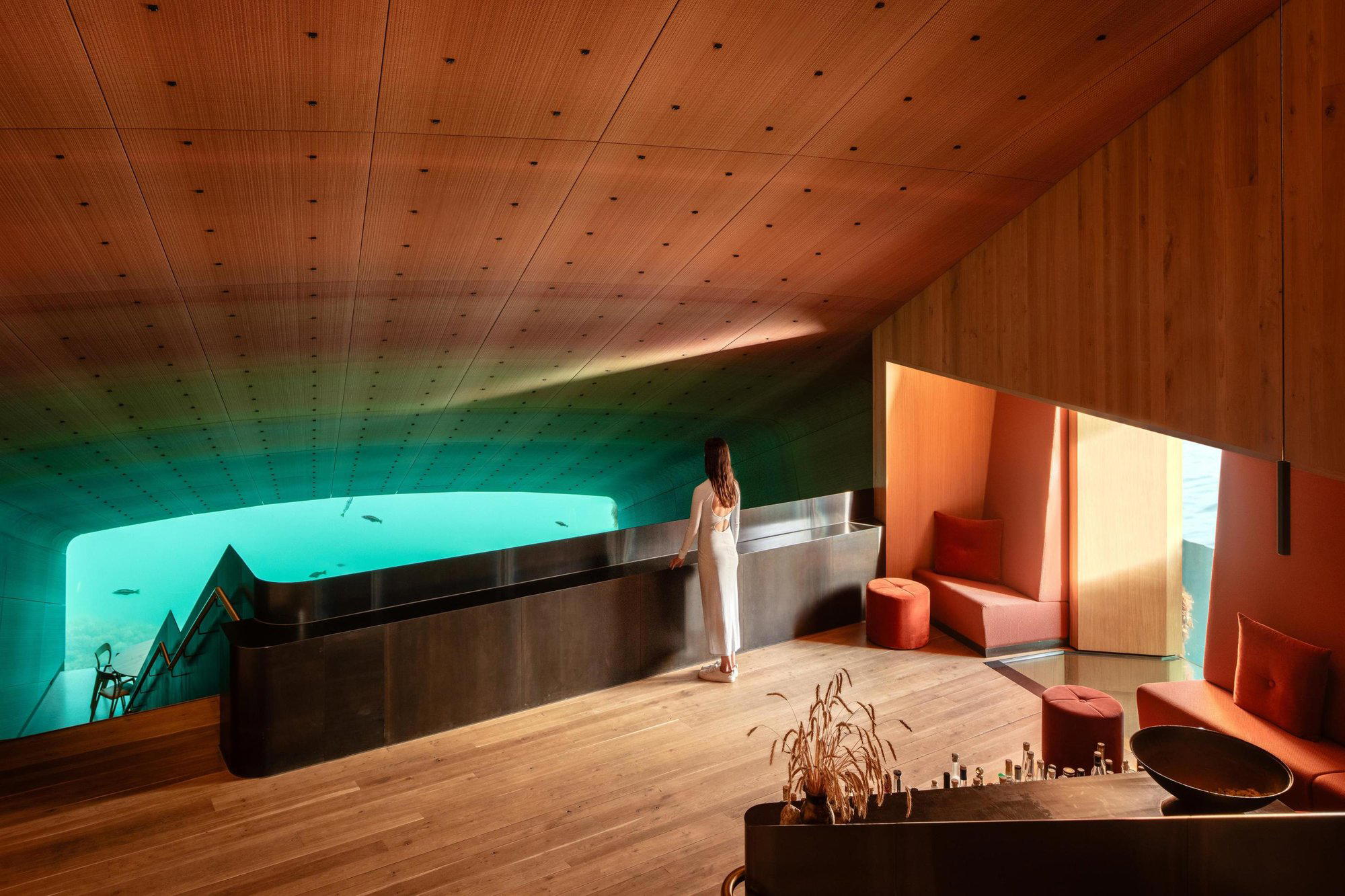
Details
- Scenic
- Modern
- Elegant
- Special Occasion
- Date Night
- Waterfront
- Hotel Restaurant
- Terrace
- Beer Program
- Local Sourcing
- Sustainable Seafood
- Waterfront
- A La Carte
- Vegetarian Friendly
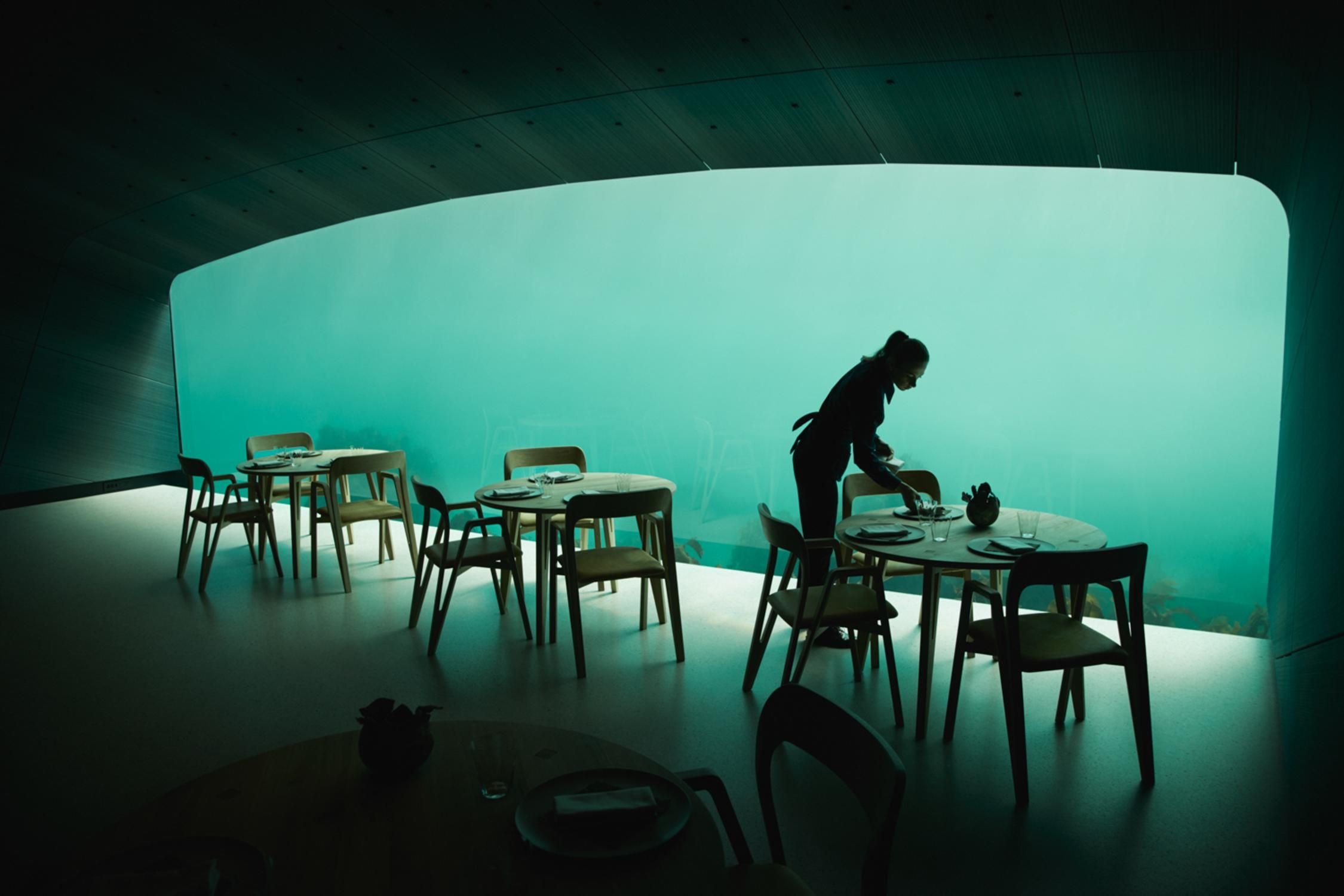
Modern and scenic with impressive panoramic water views, creating an elegant coastal atmosphere.