Limbyungjoo Sandong Kalguksu

Michelin Bib Gourmand
Our verdict
Open since 1988, Limbyungjoo Sandong Kalguksu holds a 2025 Michelin Bib Gourmand for hand-cut noodle soup that has anchored Seocho District for nearly four decades. The clam broth kalguksu and Pyeongyang-style dumplings represent the kind of disciplined, single-focus cooking that earns long queues and repeat visits. Priced at ₩, this is Seoul's affordable end of Michelin recognition.

Pearl is the En Primeur Club membership app, where members save venues, book tables and use the concierge.
The menu
What to order
- Son kalguksu
- Pyeongyang wang mandu
Where Seocho Meets the Steam
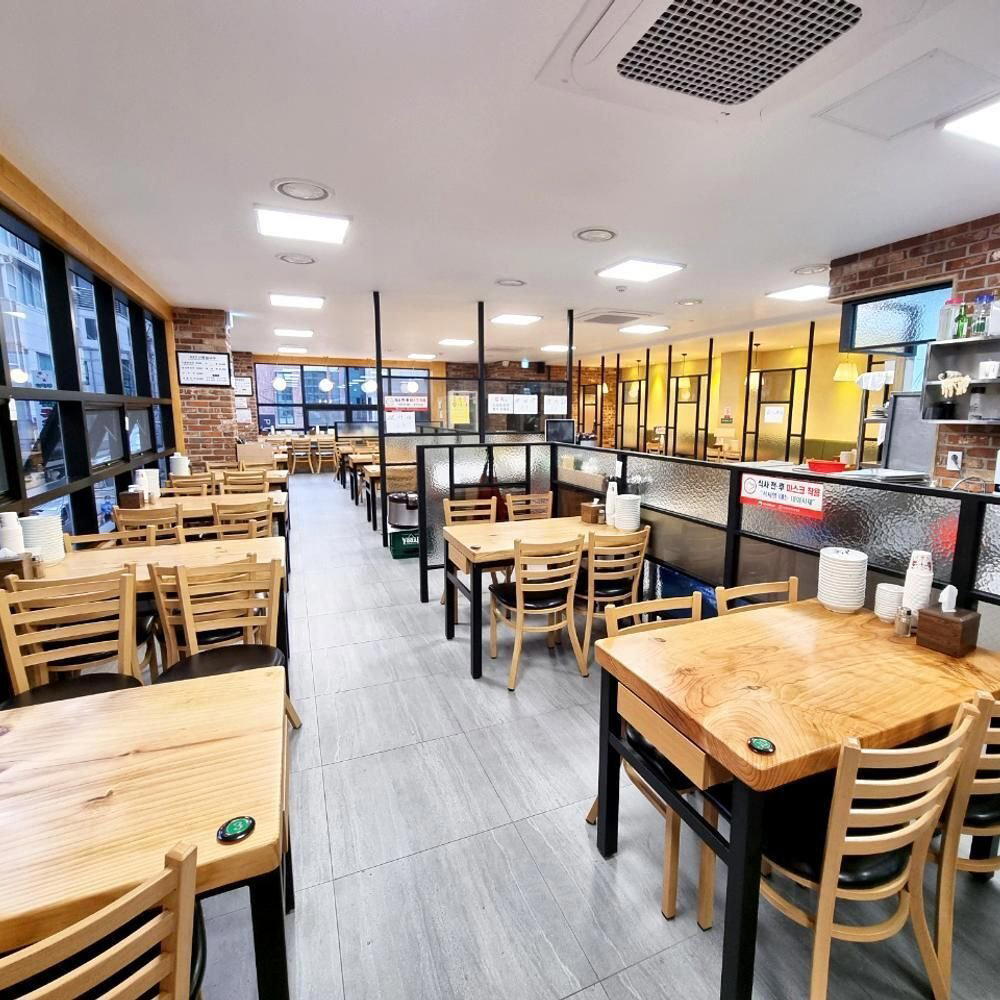
Step off Gangnam-daero and into the side streets of Seocho District and the register shifts quickly. The glass towers thin out, the lunch crowds move faster, and the smell of broth drifts from doorways before you see the signs. This part of Seoul has long sustained the kind of restaurants that office workers return to weekly and out-of-towners seek on purpose: places where the cooking is narrow, practiced, and genuinely good. Limbyungjoo Sandong Kalguksu, at 65 Gangnam-daero 37-gil, sits inside that tradition. The room is not designed to impress. It is designed to feed people efficiently and well, which in the kalguksu category is exactly the right priority.
The Ritual of the Bowl
Kalguksu dining has its own pacing that sits apart from Seoul's tasting-menu culture. There is no amuse-bouche, no parade of small plates, no sommelier pass. You sit, you order, and you wait for a bowl that arrives hot enough to matter and full enough to constitute a meal. The ritual is compression: the cook's skill is concentrated into a single vessel, and the diner's job is to eat it at the right temperature, which means promptly.
At Limbyungjoo Sandong Kalguksu, that bowl has been arriving in essentially the same form since 1988. The hand-cut noodles are prepared daily from scratch, giving them a texture that machine-cut noodles do not replicate: slightly irregular, with enough surface area to carry the broth rather than simply float in it. The broth itself is built around clams, which contribute a natural sweetness that distinguishes it from the heavier pork or anchovy bases common elsewhere in the category. Eating it is a direct act that rewards attention rather than analysis.
The Pyeongyang-style jumbo dumplings extend the ritual without complicating it. Pyeongyang mandu are larger and more delicate-skinned than the pan-fried dumplings common in Seoul's street food tier, with fillings that lean toward subtlety. Ordering them alongside the kalguksu is less about addition and more about completing the meal's logic. The cold soybean noodles (kongguksu) offer a seasonal counterpoint, though the clam broth version remains the reference dish.
Thirty-Seven Years of the Same Answer
Seoul's dining scene has undergone several transformations since 1988. The han-shik fine dining movement produced restaurants like Gaon in Seoul and Kwon Sook Soo in Gangnam-gu, which reframe Korean culinary heritage through high-spend tasting formats. Contemporary Korean cooking at venues like Mingles and Jungsik has attracted international attention. Innovative formats at alla prima have pushed the conversation further. None of that displacement has touched what Limbyungjoo Sandong Kalguksu does, because what it does is not in competition with those formats.
The 2025 Michelin Bib Gourmand places it in a specific recognition category: cooking that delivers quality clearly above its price point, without the infrastructure or ambition of starred venues. That framing fits. A single-digit price point for a bowl that has held consistent standards across nearly four decades is a statement about discipline, not limitation.
Kalguksu in the Context of Seoul's Noodle Tradition
Seoul's hand-cut noodle tradition sits within a broader Korean noodle culture that spans makguksu (buckwheat), naengmyeon (cold), and the soba-adjacent soba variants found in the city's Japanese-influenced districts. Kalguksu occupies the warm, wheat-noodle register: accessible, filling, and deeply seasonal in its broth variations. The leading versions in the city tend to cluster around long-established addresses rather than newer entrants, because the cooking rewards repetition and calibration more than innovation.
Hwangsaengga Kalguksu and Myeongdong Kyoja represent the category's other established addresses in Seoul, each with their own broth logic and loyal constituencies. The kalguksu scene in Busan follows different regional conventions: Cha Ae Jeon Halmae Kalguksu in Busan demonstrates how coastal ingredients shift the broth character further toward the sea. Limbyungjoo Sandong Kalguksu's clam-forward approach places it closer to that coastal sensibility than to the chicken-based variants more common in the city's inland tradition.
For context across Korea's broader temple and regional cuisine traditions, the cooking at Baegyangsa Temple in Jangseong-gun and Mori in Busan shows how different institutional and regional settings shape what a bowl can mean. At Limbyungjoo Sandong Kalguksu, the setting is simply a neighbourhood restaurant with decades of practice. That is its own kind of credential.
How It Fits the Seocho Dining Pattern
Seocho District sits south of the Han River and carries a different dining character from Gangnam's louder luxury corridor. The area sustains a mix of long-running neighbourhood specialists and corporate lunch destinations, with less of the nightlife-driven bar dining that defines parts of Itaewon or Hongdae. For a visitor planning a broader Seoul dining itinerary, the district rewards a midday visit, when the kalguksu format is at its most natural: a focused lunch rather than an extended evening.
Those extending their Seoul exploration across categories will find contextual reference in our full Seoul restaurants guide, alongside our full Seoul hotels guide, our full Seoul bars guide, our full Seoul wineries guide, and our full Seoul experiences guide. For those mapping the full range of the city's cooking ambition, the distance between Limbyungjoo Sandong Kalguksu and, say, the Korean-French tasting formats in Gangnam is navigable in a single day. That contrast is part of what makes Seoul's dining scene worth the attention.
For international reference points on what Michelin recognition across price tiers can mean, the difference between Bib Gourmand and starred recognition is worth holding in mind. Venues like Le Bernardin in New York City or Atomix in New York City operate at the opposite end of the investment and format spectrum. Limbyungjoo Sandong Kalguksu's recognition lands in different territory, where the argument is about value and consistency rather than ambition and technique.
Know Before You Go
- Address: 65 Gangnam-daero 37-gil, Seocho District, Seoul, South Korea
- Cuisine: Kalguksu (hand-cut noodle soup)
- Price range: ₩ (low end of Seoul dining)
- Recognition: Michelin Bib Gourmand 2025
- Open since: 1988
- Reference dishes: Clam broth kalguksu, Pyeongyang jumbo dumplings, cold soybean noodles
- Booking: No booking information available; walk-in with potential queue during peak lunch hours
- Hours: Not confirmed; check on arrival or via local listings
Frequently asked questions
What's the must-try dish at Limbyungjoo Sandong Kalguksu?
The clam broth kalguksu is the reference dish, confirmed by Michelin's Bib Gourmand citation, which specifically notes the hand-cut noodles and clam-based broth. The Pyeongyang-style jumbo dumplings are the secondary order, noted in the same citation as a house standout. Both dishes have been on the menu since the restaurant opened in 1988, which is as close to a proof of concept as the category offers. If you are ordering for the first time, the broth noodles first, dumplings alongside, is the logical sequence.
Price Lens
| Venue | Cuisine | Price | Awards | Notes |
|---|---|---|---|---|
| Limbyungjoo Sandong KalguksuThis venue (the venue you are viewing) | Hand-made Kalguksu Noodles | $10–20 | Michelin Bib Gourmand | Not listed |
| 7th Door | Modern Korean Fermentation Fine Dining | $100–150 | 1 Michelin Star · World's 50 Best #49 | Korean, Contemporary |
| Solbam | Contemporary Neo-Classical Korean | $200–300 | 1 Michelin Star · World's 50 Best #55 | Contemporary |
| Onjium | Modern Korean Royal Court Cuisine | Not listed | 1 Michelin Star · World's 50 Best #14 | Korean |
| L'Amitié | Classic French Fine Dining | $100–150 | 1 Michelin Star · La Liste Top Restaurants | French |
| Zero Complex | Modern French Neo-Bistro | $100–150 | 1 Michelin Star · La Liste Top Restaurants | Korean-French, Innovative |
Recognition history
Dated appearances from independent guides and award organizations, with the underlying list record or original source where available.
Michelin Bib Gourmand
Michelin
Full recognition history (3 entries)
Michelin Bib Gourmand
Michelin
Michelin Bib Gourmand
Michelin
Continue exploring
More in Seoul
Restaurants in Seoul
All restaurants in Seoul →
Bars in Seoul
All bars in Seoul →
Details
- Cozy
- Classic
- Casual Hangout
- Family
- Local Sourcing
- A La Carte
Current opening hours
- Monday
- Closed
- Tuesday
- 11 AM–9:30 PM
- Wednesday
- 11 AM–9:30 PM
- Thursday
- 11 AM–9:30 PM
- Friday
- 11 AM–9:30 PM
- Saturday
- 11 AM–9 PM
- Sunday
- 11 AM–9 PM
Hours can change for holidays and private events. Hours as of .
Traditional Korean noodle house atmosphere focused on comforting, home-style meals.