La Rotonde has anchored the corner of Boulevard du Montparnasse since the early twentieth century, when the brasserie served as a gathering point for artists, writers, and exiles who shaped Parisian intellectual life. Today it remains a working neighbourhood institution rather than a preserved relic, drawing a clientele that returns for the classic brasserie format and the particular rhythm of a room that has changed little in decades.
Pearl is the En Primeur Club membership app — saves, bookings, and concierge access live there. Same editors, same standards.
- Address
- 105 Bd du Montparnasse, 75006 Paris, France
- Phone
- +33 1 43 26 48 26
- Website
- larotonde-montparnasse.fr
- Directions
- Get directions
 Saves & bookings on Pearl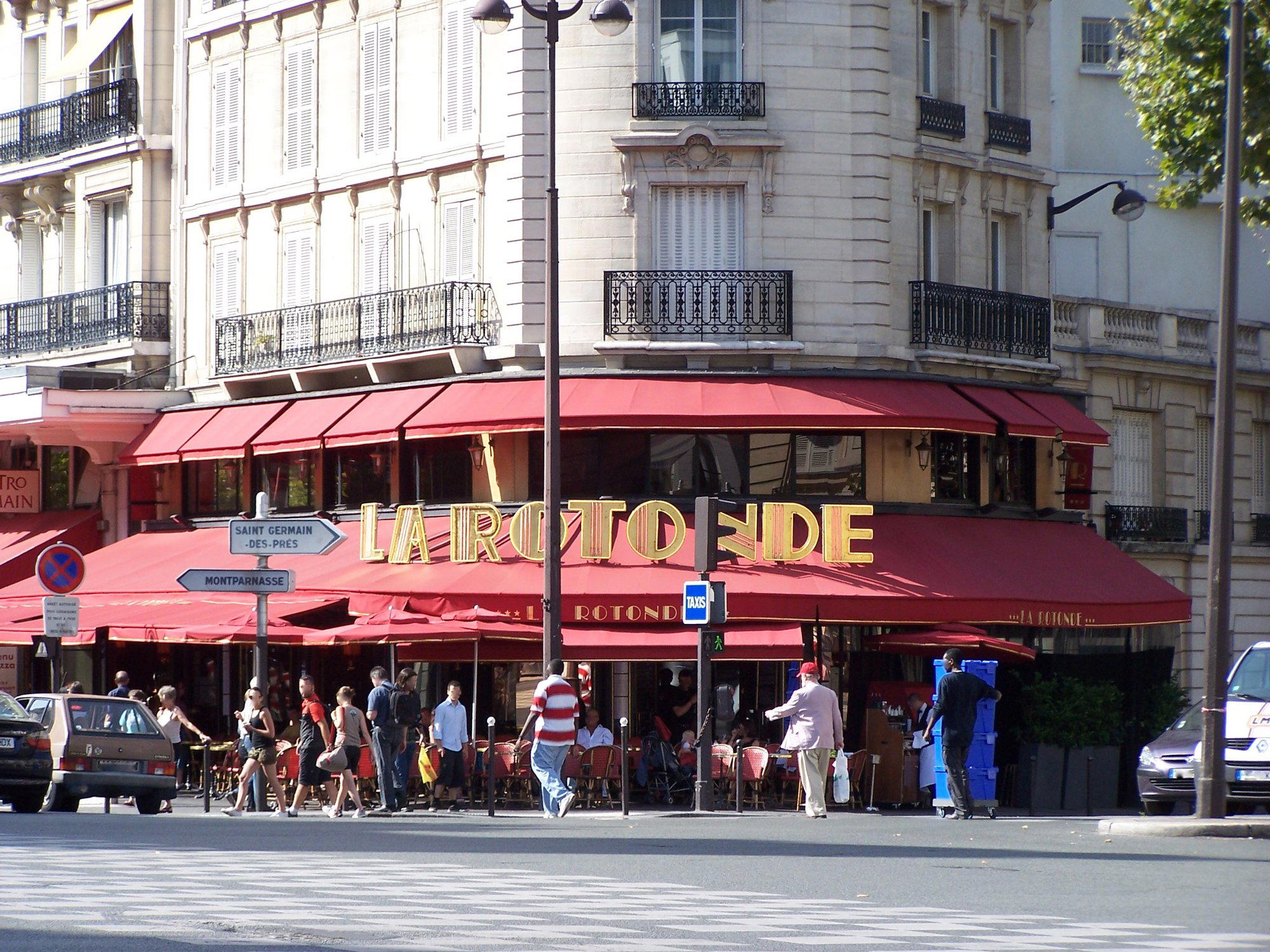
The Corner That Montparnasse Keeps Coming Back To
There is a particular quality to a Parisian brasserie that has survived long enough to become part of the street itself. The facade at 105 Boulevard du Montparnasse has that quality. The terrace curves around the corner where Boulevard Raspail meets Montparnasse, and the room beyond it carries the specific weight of a place that regulars treat as an extension of their own living arrangements. The red banquettes, the brass fittings, the waiters moving between tables with the efficiency that comes from years of repetition: this is the grammar of the classic Parisian brasserie, and La Rotonde delivers it without apology.
Montparnasse has a particular relationship with its brasseries. In the early decades of the twentieth century, the neighbourhood functioned as an informal republic of artists, writers, and political exiles. La Rotonde, Le Dôme, La Closerie des Lilas, and Le Select formed the corners of that republic, each acquiring its own clientele and mythology. The names attached to those tables, Hemingway, Picasso, Modigliani, Trotsky, belong to the historical record. What matters now is not the mythology but the residue it left: a district that still expects its brasseries to function as civic spaces rather than tourist attractions.
What the Regulars Are Actually There For
The clientele at a brasserie like La Rotonde tells you more about the place than any description of its decor. The room divides between neighbourhood residents who treat it as a reliable fixture, visitors who understand what the address represents, and the occasional table of out-of-towners working from a list. The first group is the one that matters most to the institution's character. They arrive at predictable hours, occupy the same sections of the room, and order with the ease of people who stopped reading the menu some years ago.
The brasserie format in Paris operates on a set of unwritten agreements between the house and its regulars. The kitchen stays open across hours when most restaurant kitchens close. Steak frites appears on every table eventually. Seafood plateaux, oysters ordered by the half-dozen, a carafe of wine rather than a bottle: these are the patterns that define the category. At the restaurant, as at the other historic Montparnasse brasseries, the point is not novelty but continuity. The menu does not chase trends; it maintains the dishes that the room has always served, which is precisely what keeps certain tables booked by the same people for decades.
This is a different calculus from the one operating at Paris's contemporary fine-dining tier. Restaurants such as Alléno Paris au Pavillon Ledoyen, Arpège, and Kei compete on innovation, seasonal precision, and tasting-menu architecture. The brasserie competes on something harder to manufacture: accumulated atmosphere and the social function of a room that people return to because it never surprises them. L'Ambroisie on the Place des Vosges and Le Cinq at the Four Seasons George V represent the formal grand-restaurant tradition; the restaurant represents something older and less codified.
The Brasserie as a French Institution
To understand the restaurant's position in Paris dining, it helps to place the brasserie format in its broader context. The classic Parisian brasserie emerged from Alsatian traditions brought to the capital in the nineteenth century: long hours, beer on tap, shellfish platters, and a democratic seating policy that mixed workers with writers. The format spread through the city and acquired distinct neighbourhood characters. Montparnasse brasseries developed a bohemian association that the grands boulevards brasseries never shared.
That tradition connects outward to the whole of French gastronomic identity. Across France, institutions that have maintained their format and clientele across generations carry a specific authority. Paul Bocuse's Auberge du Pont de Collonges in Lyon, Auberge de l'Ill in Illhaeusern, Troisgros in Ouches, and Georges Blanc in Vonnas each belong to a generation of French restaurants where longevity itself has become part of the credential. The brasserie operates in a different register, less formal, less destination-focused, but the same principle applies: a room that has served the same function for long enough acquires a kind of institutional weight that newer openings cannot replicate.
Further afield, houses like Bras in Laguiole, Les Prés d'Eugénie in Eugénie-les-Bains, and Auberge du Vieux Puits in Fontjoncouse demonstrate how deeply the French restaurant tradition rewards continuity over reinvention. Mirazur in Menton and Flocons de Sel in Megève show what happens when that tradition is pushed toward the contemporary end. The restaurant occupies a different point on that spectrum entirely, closer in spirit to a neighbourhood anchor than to a destination restaurant. For international reference, the commitment to format and room character over novelty finds parallels at Le Bernardin in New York, where the discipline of a defined cuisine sustains decades of relevance, and contrasts sharply with the chef-driven theatrics of places like Lazy Bear in San Francisco.
Planning Your Visit
The restaurant sits at the junction of Boulevard du Montparnasse and Boulevard Raspail in the 6th arrondissement, easily reached from the Vavin metro station on line 4. The address puts it at the heart of the historic brasserie quarter, within a short walk of Luxembourg Gardens and the main Montparnasse axis. The brasserie format means the kitchen operates across the full day, which matters if you are planning around museum visits or an afternoon that runs later than expected. It is open daily from 8 AM to 12 AM, and reservations are recommended. Booking ahead is advisable for the terrace during warmer months and for weekend evenings when the neighbourhood draws larger crowds. Similarly, those planning a wider French itinerary that includes La Table du Castellet in the south will find the contrast between regional fine dining and the Parisian brasserie tradition instructive.
Cuisine and Credentials
Comparable venues nearby, for context on price, style, and recognition.
| Venue | Cuisine | Price | Notes |
|---|---|---|---|
| La RotondeThis venue — the venue you are viewing | Classic French Brasserie | $$$ | Not listed |
| Abstinence | Modern French Bistro | $$$ | 15th Arrondissement |
| La Fontaine de Mars | Traditional French Bistro | $$$ | 7ème arrondissement |
| Babille | Festive French Brasserie | $$$ | Grands Boulevards |
| Bistrot du 8ème | French Crêperie Bistro | $$$ | 8ème arrondissement |
| La Table des Ternes | Traditional French Bistro | $$$ | Ternes |
Continue exploring
More in Paris
Restaurants in Paris
Browse all →
Bars in Paris
Browse all →
Hotels in Paris
Browse all →



At a Glance
- Classic
- Well Known
- Elegant
- Brunch
- Late Night
- Historic Building
- Street Scene
Current opening hours
- Monday
- 8 AM–12 AM
- Tuesday
- 8 AM–12 AM
- Wednesday
- 8 AM–12 AM
- Thursday
- 8 AM–12 AM
- Friday
- 8 AM–12 AM
- Saturday
- 8 AM–12 AM
- Sunday
- 8 AM–12 AM
Hours can change for holidays and private events. Last verified .
Velvet red decor with wood paneling, chic and traditional brasserie lighting evoking early 20th-century artistic charm.