Les Enfants de Cœur
Our verdict
In the quiet residential stretch of Croissy-sur-Seine, Les Enfants de Cœur occupies a considered position in the western Île-de-France dining scene, sitting at 9 Avenue du Maréchal Foch. The address places it well outside the Parisian restaurant orbit, serving a local clientele that values neighbourhood permanence over destination spectacle. For visitors approaching from central Paris, it represents a different register of French dining entirely.

Pearl is the En Primeur Club membership app — saves, bookings, and concierge access live there. Same editors, same standards.
- Address
- 9 Av. du Maréchal Foch, 78290 Croissy-sur-Seine, France
- Phone
- +33139764880
- Hours
- Mon–Tue ClosedWed–Thu 12–2 PM, 7–9:15 PMFri–Sat 12–2 PM, 7–9:30 PMSun 12–2:30 PM
- Website
- lesenfantsdecoeur.fr
- Directions
- Get directions
The menu
What to order
- Chou (giant cream puff with hazelnut and caramel)
- Tartare de poissons aux fruits exotiques
- Poulet fermier à l'estragon
- Côte de veau sauce girolles
A Suburb That Keeps Its Own Counsel
The western suburbs of Paris have never competed on the same terms as the capital's arrondissement dining circuit. Towns like Croissy-sur-Seine operate on a different logic: restaurants here serve communities rather than destination seekers, and longevity tends to carry more weight than critical buzz. That dynamic shapes what you find at Les Enfants de Cœur on Avenue du Maréchal Foch — a table embedded in its residential setting rather than positioned against it.
This is the broader pattern across the Île-de-France periphery. While Paris concentrates its top-tier creative energy in houses like Alléno Paris au Pavillon Ledoyen and pursues formal innovation at addresses where a meal can anchor an entire evening's itinerary, the suburban tier functions as the connective tissue of French restaurant culture. It is where the classical foundations of French cooking — market sourcing, seasonal adjustment, regional loyalty, persist without the pressure of international attention or tasting-menu theatre.
Croissy-sur-Seine sits along the Seine's western loop, roughly equidistant between Versailles and the La Défense edge of the capital. The town's scale and pace belong firmly to the Île-de-France commuter belt, and restaurants here read accordingly: neighbourhood anchors that earn their place through consistency rather than spectacle. For context on the full Croissy-sur-Seine restaurants guide, the local scene rewards those willing to look past the obvious Paris draw.
Ingredient Sourcing and the French Provincial Reflex
French cuisine at the suburban and provincial level has always derived its credibility from sourcing discipline rather than technique showmanship. The tradition running from Bras in Laguiole to Auberge de l'Ill in Illhaeusern is grounded in a fierce regional specificity, what is grown or raised nearby, what is seasonal, what arrives from producers with names and postcodes. That instinct does not evaporate in suburban Paris; it adapts to the proximity of Île-de-France market networks, the Rungis wholesale infrastructure, and the seasonal rhythms of the Seine valley.
For a restaurant in Croissy-sur-Seine, the practical sourcing logic points toward the major markets serving the western suburbs, supplemented by direct relationships with producers in the wider Île-de-France basin. This is the same geographic sourcing logic that underpins houses operating further afield, Georges Blanc in Vonnas draws on Bresse's specific terroir; Christopher Coutanceau in La Rochelle anchors a menu to Atlantic catch, but in the Île-de-France context, terroir is less romantic and more pragmatic: a function of what the regional agriculture and distribution network can reliably deliver.
That pragmatism is not a diminishment. French suburban restaurants often display a sharper seasonal awareness than their urban counterparts precisely because they have less insulation from supply variation. A kitchen operating at this scale and in this market position cannot paper over gaps with imported exotica or luxury substitutes. The menu follows what is available, and availability follows the season.
French fine dining in the greater Paris region has fragmented significantly over the past decade. The capital itself concentrates the highest-density cluster of multi-starred addresses in the world, with houses at the level of Mirazur in Menton or Assiette Champenoise in Reims representing the formal pinnacle of French regional ambition. But the vast majority of French restaurant life happens at a different register: neighbourhood bistros, brasseries with serious wine lists, and places like Les Enfants de Cœur that occupy the middle ground between casual and ceremonial.
In the Île-de-France suburban context, that middle ground carries real cultural weight. These are the restaurants where families mark anniversaries, where local professionals hold working lunches, where the rhythms of French social eating, long, unhurried, structured around a sequence of courses, play out most naturally. The comparison set is not Paris's starred circuit but rather the constellation of serious suburban tables across the western departments: restaurants in Saint-Germain-en-Laye, Maisons-Laffitte, and the Seine loop communes that serve the upper-middle band of local dining without chasing Parisian visibility.
Internationally, the French provincial restaurant model has influenced houses well beyond France's borders. The sequenced-course format, the wine-pairing architecture, and the sourcing philosophy visible at places from La Marine in Noirmoutier-en-l'île to Le Bernardin in New York City all trace lineage back to the French classical kitchen. Even more contemporary addresses like Atomix in New York City engage with French technique as a structural reference point, even while building menus from entirely different culinary traditions.
The Case for Dining Outside the Capital
There is a reasonable argument, one that France's provincial restaurant culture has always made implicitly, that the leading expression of French cooking happens away from the competitive performance pressure of central Paris. Houses like Troisgros in Ouches, Paul Bocuse in Collonges-au-Mont-d'Or, and L'Oustau de Baumanière in Les Baux built their reputations precisely by being rooted in place rather than proximate to the capital's critical apparatus. The provincial or suburban table answers to its immediate community first.
For visitors to the greater Paris area, that logic translates into a practical decision. Booking at a suburban address like Les Enfants de Cœur in Croissy-sur-Seine trades the density and spectacle of central Paris for a more locally inflected experience: a restaurant whose clientele is predominantly French, whose seasonal menu follows what is available in the Île-de-France market rather than what reads well on a destination-dining card, and whose pace belongs to Sunday afternoon rather than Saturday-night theatre. The RER A and road access from central Paris make the western Seine loop direct to reach; the journey west from the capital takes roughly 30 to 40 minutes depending on origin point.
For a broader map of France's restaurant depth, from Auberge du Vieux Puits in Fontjoncouse to Au Crocodile in Strasbourg to AM par Alexandre Mazzia in Marseille and Flocons de Sel in Megève, the pattern is consistent: serious French cooking does not require a Paris postcode, and the suburban tier has always carried more of the country's actual dining culture than the international spotlight suggests.
Planning Your Visit
Les Enfants de Cœur is located at 9 Avenue du Maréchal Foch, 78290 Croissy-sur-Seine. Croissy-sur-Seine is accessible from Paris by car via the A13 or by suburban rail connections to the western Seine valley; the town is a short distance from the RER A corridor.
Frequently asked questions
Can I bring kids to Les Enfants de Cœur?
The address at 9 Avenue du Maréchal Foch places this squarely in a residential quarter of Croissy-sur-Seine, the kind of setting where neighbourhood restaurants routinely serve families across multiple generations at the same table. That said, specific family policies are not confirmed, so a call ahead is advisable before booking with young children.
What's the vibe at Les Enfants de Cœur?
The Croissy-sur-Seine address, a residential avenue in the western suburbs of Paris, points toward a local dining room rather than a destination showcase.
Is Les Enfants de Cœur a good option for French cooking away from the Paris tourist circuit?
Croissy-sur-Seine sits in the Yvelines department west of Paris, outside the arrondissement dining circuit where covers turn fast and rooms are priced accordingly. A table at 9 Avenue du Maréchal Foch puts you in a residential suburb where the cooking tends to answer to local regulars rather than guidebook traffic, which is precisely the condition under which French provincial cooking has historically been at its most direct.
What should I eat at Les Enfants de Cœur?
In the French suburban dining tradition that Croissy-sur-Seine represents, menus at this register tend to follow seasonal Île-de-France market availability rather than fixed signature courses, making it worth checking directly with the restaurant for current offerings.
Comparable Venues
Comparable venues nearby, for context on price, style, and recognition.
| Venue | Cuisine | Price | Notes |
|---|---|---|---|
| Les Enfants de CœurThis venue — the venue you are viewing | Modern French Bistro with Exotic Influences | $20–30 | Not listed |
| Bistro Dupleix | Authentic French Bistro | $20–30 | 15th Arr. - Vaugirard |
| La Cantine de Samuel | French Bistro | $20–30 | Ternes |
| L'Alsace | Alsatian Brasserie | $30–50 | 8th Arr. |
| Inform Café | Modern French Brunch Café | $50–100 | 17th arrondissement (Acacias location) / 18th arrondissement (Orsel location) |
| Le Bouillon des Vignes | Traditional French Bistro | $20–30 | Batignolles |
Continue exploring
More in Croissy Sur Seine
Restaurants in Croissy Sur Seine
Browse all →

Bars in Croissy Sur Seine
Browse all →
Hotels in Croissy Sur Seine
Browse all →
Wineries in Croissy Sur Seine
Browse all →
Details
- Cozy
- Classic
- Elegant
- Family
- Business Dinner
- Celebration
- Casual Hangout
- Terrace
- Waterfront
- Standalone
- Beer Program
- Local Sourcing
- Waterfront
- A La Carte
- Set Menu
- Wine
- Beer
- Vegetarian Friendly
Current opening hours
- Monday
- Closed
- Tuesday
- Closed
- Wednesday
- 12–2 PM, 7–9:15 PM
- Thursday
- 12–2 PM, 7–9:15 PM
- Friday
- 12–2 PM, 7–9:30 PM
- Saturday
- 12–2 PM, 7–9:30 PM
- Sunday
- 12–2:30 PM
Hours can change for holidays and private events. Last verified .
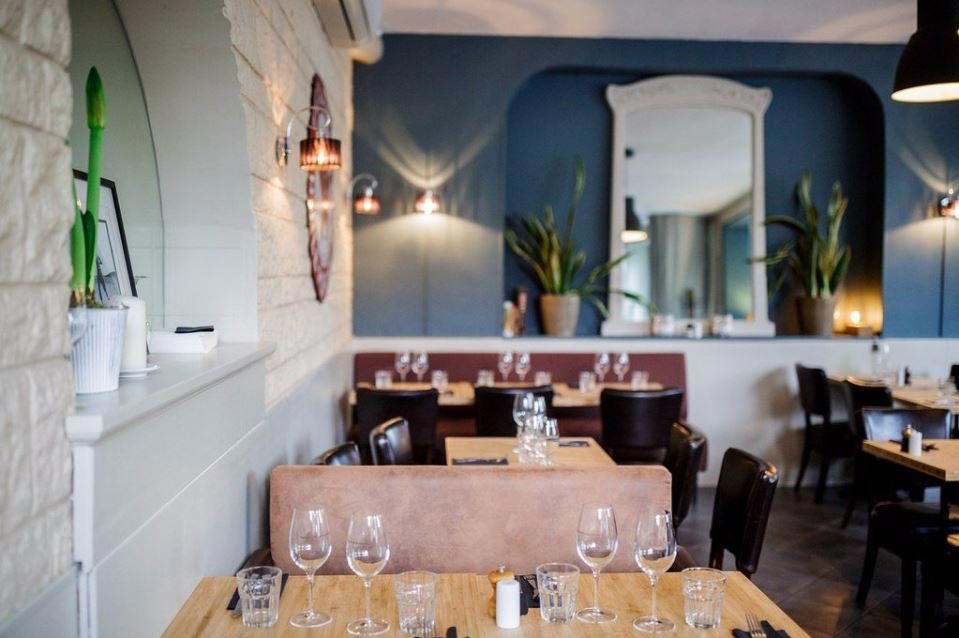
Simple yet refined setting with warm and welcoming atmosphere; summer terrace overlooking the Seine provides a pleasant dining environment.