





1 Michelin Star · World's 50 Best #46 · La Liste Top Restaurants
Our verdict
L'Astrance occupies a storied address on Rue de Longchamp in the 16th arrondissement, where Pascal Barbot's contemporary French kitchen draws on Asian influences and a deep commitment to produce. The glass wine cellar, selected by maître d' Christophe Rohat, has become as much a reason to book as the food itself. Ranked in the World's 50 Best Restaurants every year from 2006 to 2017, this is one of Paris's most credentialled creative tables.

Pearl is the En Primeur Club membership app, where members save venues, book tables and use the concierge.
The menu
What to order
- Foie gras galette with mushrooms
- Langoustines
A Room With History, and a Cellar Worth the Journey
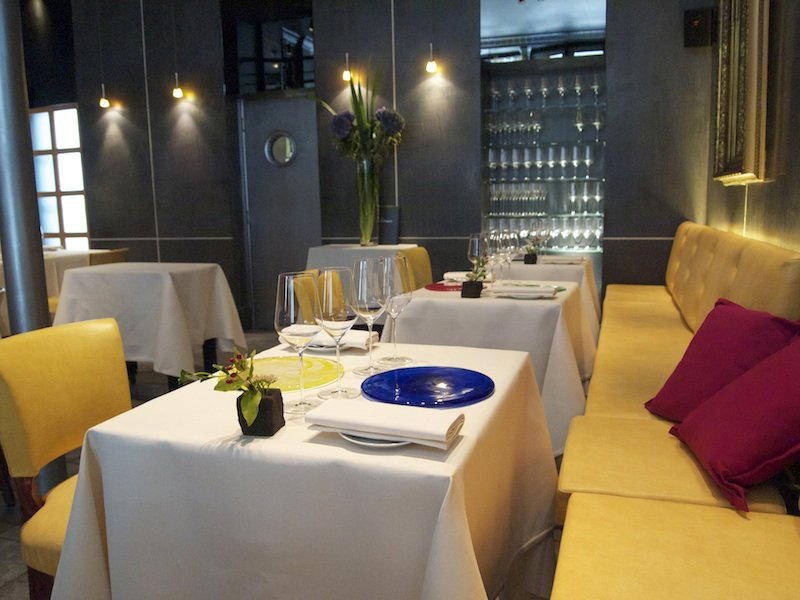
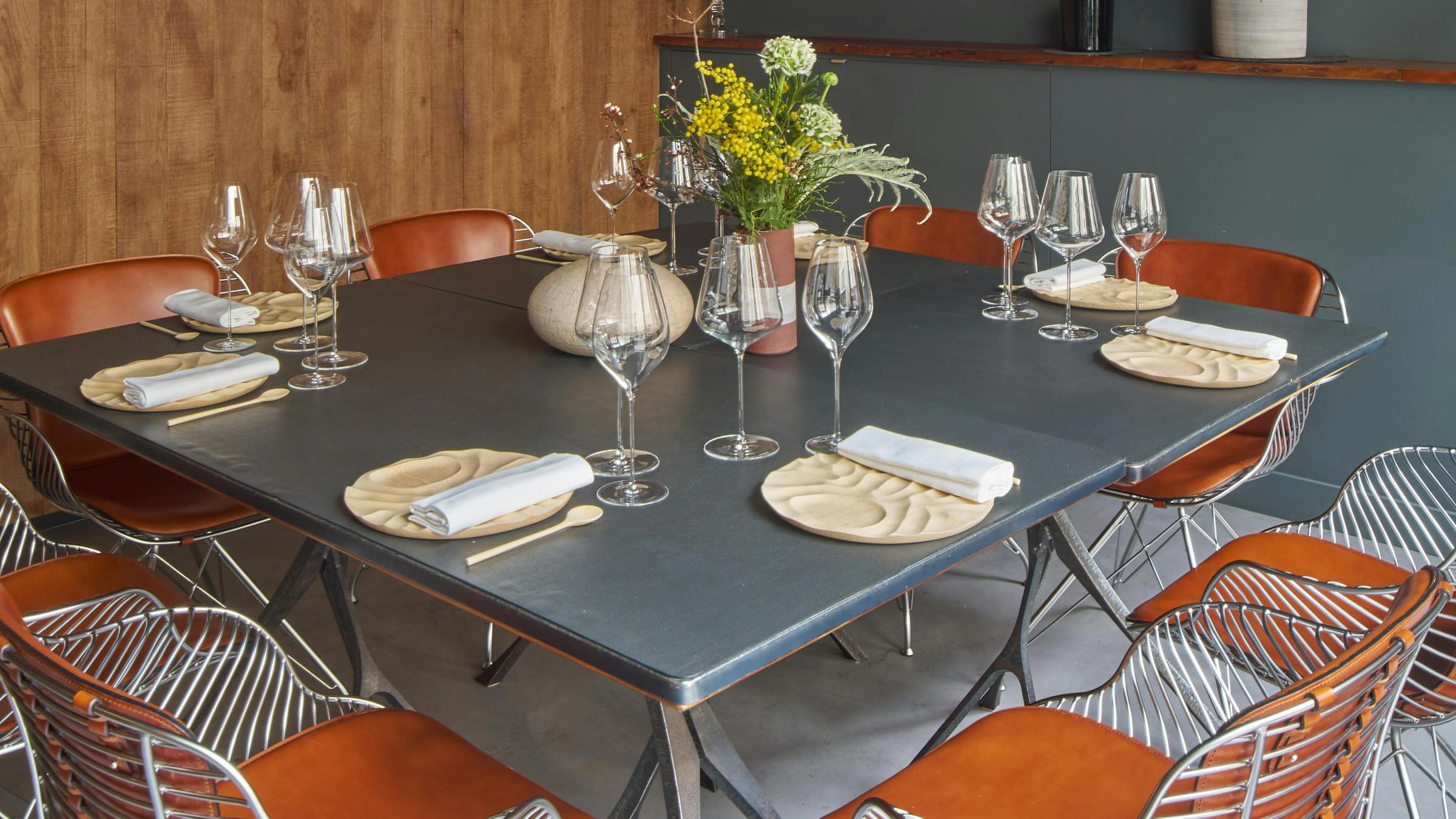
The 16th arrondissement is not Paris's most fashionable dining postcode, but 32 Rue de Longchamp commands a specific kind of gravity. This address housed Joël Robuchon's Jamin, where he earned three Michelin stars in the 1980s and cemented a reputation that would define French haute cuisine for a generation. When Pascal Barbot and Christophe Rohat took the space, they did not erase that history. The room now called the Salon Joël acknowledges the lineage while the rest of the dining room reads as contemporary and uncluttered. Walking in, you are aware of both what the space once was and what it has become: a deliberate statement about continuity and departure in French fine dining.
That tension between tradition and forward movement is precisely where L'Astrance has always operated. In the mid-2000s, when the restaurant first appeared on the World's 50 Best Restaurants list, the Paris scene was still largely organised around classical French technique and formal service codes. L'Astrance arrived as something different: produce-obsessive, technically precise, and openly interested in Asian ingredients and plant-forward thinking at a time when neither was standard in the city's prestige tier. It ranked as high as 11th globally in 2008 and 2009, placing it alongside a very small group of European restaurants redefining what creative French cooking could mean.
The Wine Program as Editorial Statement
In Paris's €€€€ creative tier, the wine program is often treated as secondary to the food concept. At L'Astrance, the cellar functions as an equal argument for the reservation. The restaurant's glass wine cellar is architecturally visible from the dining room, a deliberate choice that signals the seriousness of the offer. Christophe Rohat's role as maître d' extends to wine stewardship, and the combination of formal hospitality and deep vintage knowledge is what distinguishes his floor work from more transactional service models.
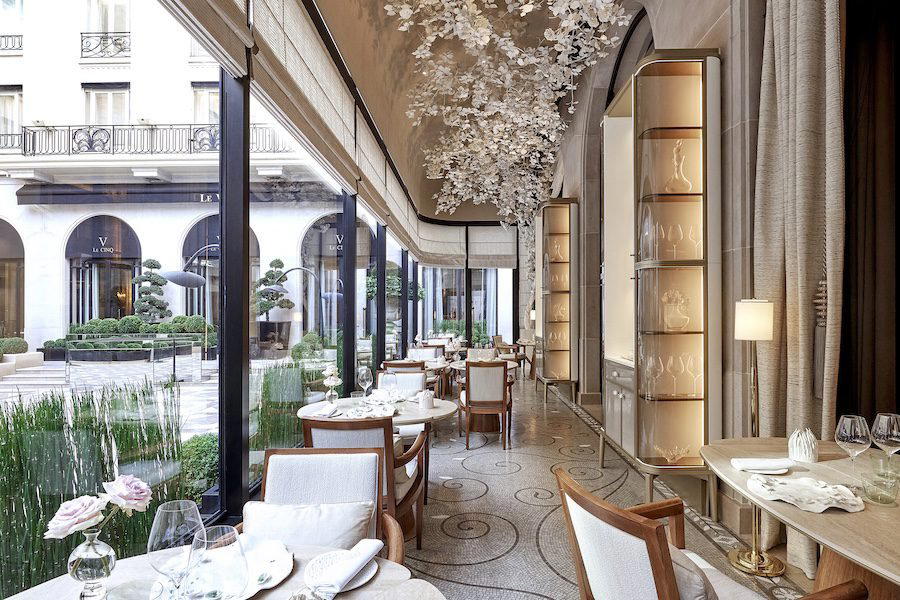
Comparing the wine propositions across Paris's prestige creative tables clarifies L'Astrance's position. Alléno Paris au Pavillon Ledoyen and Le Cinq at the Four Seasons Hôtel George V operate cellars scaled to large covers and international clientele, with extensive Bordeaux and Burgundy depth driven by volume purchasing. Le Clarence, backed by the Domaine Clarence Dillon estate, structures its list around its own Bordeaux holdings. L'Astrance's approach is different: smaller, more curated, and oriented toward pairing rather than trophy bottle display. The described search for "rare pearls among the vintages" points to a selection philosophy built on discovery rather than prestige label accumulation. For guests whose interest runs to unusual producers or undervalued appellations, that distinction matters considerably.
In the broader French fine dining context, this kind of sommelier-as-guide model has become more common, but L'Astrance was practising it before it became fashionable. Mirazur in Menton and Flocons de Sel in Megève have each developed wine programs that reflect regional terroir and producer relationships rather than generic prestige collecting. L'Astrance sits in that same orientation, though from a Paris base where the temptation toward safe, high-recognition labels is stronger.
The Kitchen: Produce, Asia, and a Dish That Defines a Career
Pascal Barbot's cooking sits in a specific position within contemporary French cuisine. The technique base is classical, the sourcing rigour is high, and the willingness to draw on Asian ingredients and fermentation ideas sets it apart from more orthodox French creative tables. That openness was less common when L'Astrance opened than it is now, when Paris has seen a significant increase in cross-cultural creative restaurants. Toyo and Restaurant H represent the more recent wave of Paris addresses where Asian technique is primary rather than incidental. Barbot's kitchen treats it as one creative tool among several, which produces a different kind of dish than a restaurant built entirely around a single culinary tradition.
The button mushroom millefeuille with foie gras marinated in verjuice has become the kitchen's most discussed preparation, cited in the restaurant's own award materials as a signature that has persisted on the menu. In a city where tasting menus change seasonally and chefs resist being defined by a single dish, the retention of this preparation carries meaning. It suggests confidence in the concept rather than anxiety about novelty, and it gives first-time visitors a reference point in an otherwise market-driven, variable menu.
The plant-based emphasis in Barbot's cooking, noted across multiple award citations, connects to a broader shift in French haute cuisine. Restaurants like Bras in Laguiole built reputations partly on the primacy of vegetables decades before the approach became mainstream. Troisgros in Ouches and Auberge de l'Ill in Illhaeusern represent the more classically anchored end of the spectrum. L'Astrance occupies a middle position: rooted in classical training and produce discipline, but genuinely pluralist in its creative references.
Awards and Competitive Position
L'Astrance currently holds one Michelin star, a reduction from the three it carried during its peak ranking years. The Opinionated About Dining Classical in Europe ranking placed it at 129th in 2025 and 184th in 2024, indicating upward movement in that specific survey's methodology. La Liste scored the restaurant at 83 points in 2025 and 77 points in 2026. These data points collectively position L'Astrance as a restaurant with significant historical credibility and continuing critical recognition, operating below the three-star tier where peers like Alléno Paris, Pierre Gagnaire, Kei, L'Ambroisie, and Le Cinq now sit.
For guests comparing Paris creative tables at the €€€€ price level, that Michelin gap is real and affects booking pressure and pricing dynamics. La Dame de Pic and L'Oiseau Blanc represent other creative-contemporary addresses at the same price tier with their own award profiles. The case for L'Astrance specifically rests on the wine program, the historical weight of the address, and a cooking style that has remained personally consistent rather than trend-chasing. For those tracking the longer arc of French creative cooking, the restaurant's World's 50 Best trajectory from 2006 to 2017, including years inside the global top 15, provides context that current star counts do not capture. Paul Bocuse's Auberge du Pont de Collonges offers a useful parallel: a restaurant whose cultural and historical significance exceeds what any current ranking system fully accounts for.
For guests exploring the contemporary French creative category more broadly across the country, Le Neuvième Art in Lyon and Les Morainières in Jongieux represent the regional expression of the same broad tradition. See also our full Paris restaurants guide, Paris hotels guide, Paris bars guide, Paris wineries guide, and Paris experiences guide for broader context on the city's offer.
Planning Your Visit
L'Astrance operates Tuesday through Friday for both lunch and dinner, with lunch service running 12:00 PM to 2:00 PM and dinner from 7:30 PM to 9:30 PM. The restaurant is closed Saturday and Sunday. That schedule is narrower than many Paris prestige tables and means availability is limited across the week.
Peer Comparison at a Glance
| Restaurant | Michelin Stars | Price Range | Style | Notable Differentiator |
|---|---|---|---|---|
| L'Astrance | 1 | €€€€ | Contemporary French, Creative | Cellar, Asian-inflected produce cooking |
| Alléno Paris au Pavillon Ledoyen | 3 | €€€€ | Creative | Grand Champs-Élysées setting, sauces focus |
| Pierre Gagnaire | 3 | €€€€ | French, Creative | Abstract, maximalist composition style |
| L'Ambroisie | 3 | €€€€ | French, Classic Cuisine | Place des Vosges location, classical anchor |
| Kei | 3 | €€€€ | Contemporary French, Modern Cuisine | Japanese-French fusion at three-star level |
What Dish Is L'Astrance Famous For?
The preparation most consistently associated with Pascal Barbot's kitchen at L'Astrance is the button mushroom millefeuille with foie gras marinated in verjuice. The dish appears in the restaurant's own award documentation and has remained on the menu across multiple seasons, which is notable for a kitchen that otherwise follows market availability and seasonal produce. It sits at the intersection of classical French technique and Barbot's sensitivity to acidity and fermented flavours, and it gives first-time visitors a fixed reference point in an otherwise variable tasting format. The restaurant's broader reputation, built across eleven consecutive years in the World's 50 Best Restaurants between 2006 and 2017, and reinforced by Le Clarence and other 16th arrondissement peers as a defining address of the neighbourhood's creative fine dining identity, rests on Barbot's produce-first philosophy and his integration of Asian ingredients into a French classical framework.
Price and Recognition
| Venue | Cuisine | Price | Awards | Notes |
|---|---|---|---|---|
| L'AstranceThis venue (the venue you are viewing) | Modern French Fine Dining | $150–200 | 1 Michelin Star · World's 50 Best #46 | Not listed |
| Alléno Paris au Pavillon Ledoyen | Modern French Fine Dining | $150–200 | 3 Michelin Stars · World's 50 Best #79 | Creative |
| Kei | Modern French with Japanese Influences | $300–500 | 3 Michelin Stars · World's 50 Best #93 | Contemporary French, Modern Cuisine |
| L'Ambroisie | Classic French Haute Cuisine | $300–500 | 2 Michelin Stars · World's 50 Best #23 | French, Classic Cuisine |
| Le Cinq - Four Seasons Hôtel George V | Modern French Fine Dining | $300–500 | 3 Michelin Stars · World's 50 Best #24 | French, Modern Cuisine |
| Plénitude | Modern French Sauce-Led Fine Dining | $300–500 | 3 Michelin Stars · World's 50 Best #14 | Contemporary French |
Recognition history
Dated appearances from independent guides and award organizations, with the underlying list record or original source where available.
Michelin 1 Star
Michelin
World's 50 Best Restaurants #46
World's 50 Best
La Liste Top Restaurants
La Liste
Opinionated About Dining Classical in Europe Ranked #91
Opinionated About Dining
Gault & Millau Prestige Restaurant
Gault & Millau
Full recognition history (21 entries)
La Liste Top Restaurants
La Liste
Michelin 1 Star
Michelin
Opinionated About Dining Classical in Europe Ranked #129
Opinionated About Dining
The Best Chef Two Knives
The Best Chef
Michelin 1 Star
Michelin
Opinionated About Dining Classical in Europe Ranked #184
Opinionated About Dining
World's 50 Best Restaurants #36
World's 50 Best
World's 50 Best Restaurants #38
World's 50 Best
World's 50 Best Restaurants #23
World's 50 Best
World's 50 Best Restaurants #18
World's 50 Best
World's 50 Best Restaurants #13
World's 50 Best
World's 50 Best Restaurants #16
World's 50 Best
World's 50 Best Restaurants #11
World's 50 Best
World's 50 Best Restaurants #11
World's 50 Best
World's 50 Best Restaurants #21
World's 50 Best
World's 50 Best Restaurants #22
World's 50 Best
Continue exploring
More in Paris
Restaurants in Paris
All restaurants in Paris →
Bars in Paris
All bars in Paris →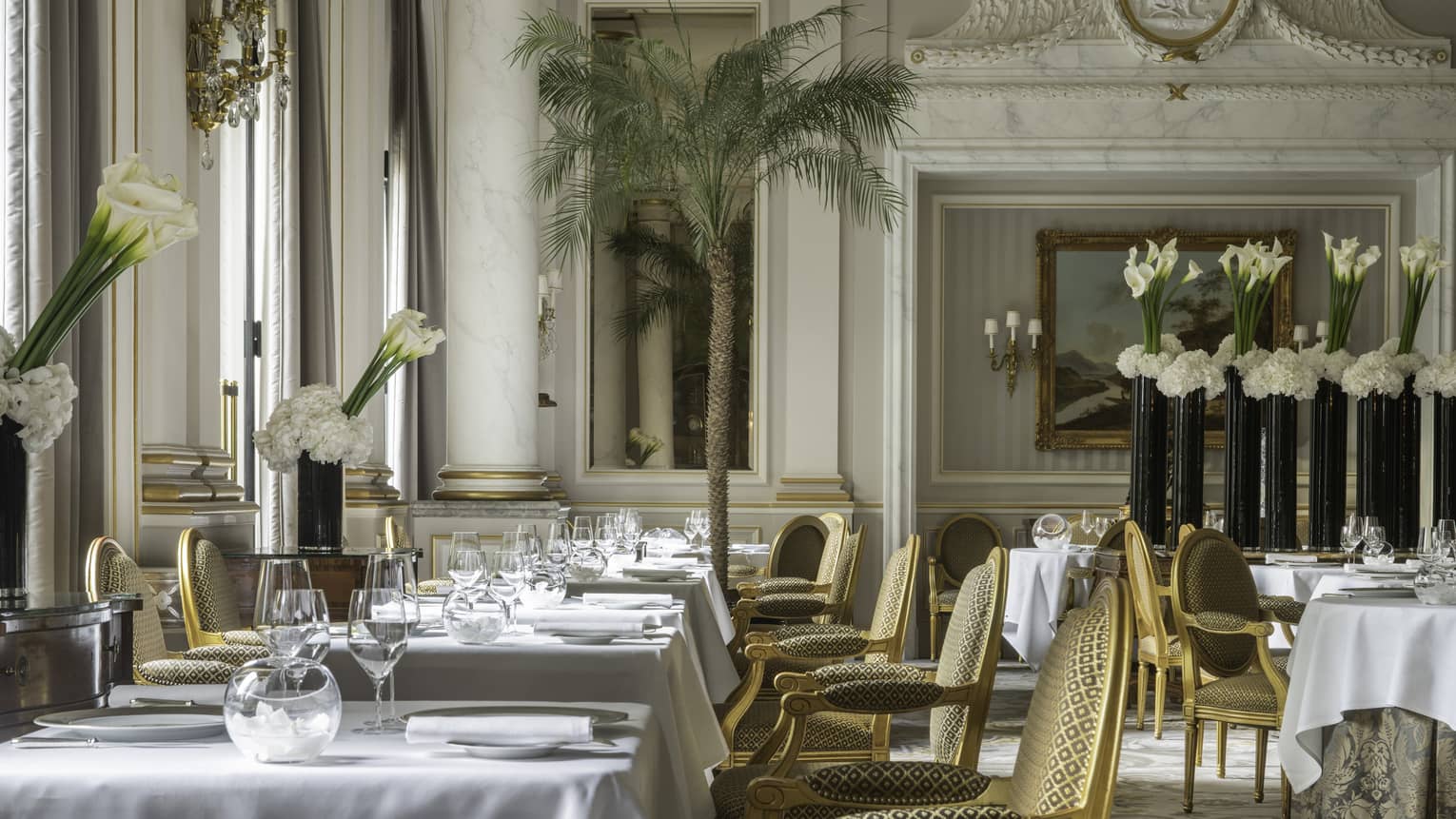
Details
- Elegant
- Intimate
- Sophisticated
- Special Occasion
- Date Night
- Business Dinner
- Open Kitchen
- Extensive Wine List
- Sommelier Led
- Tasting Menu
Current opening hours
- Monday
- 12–2 PM, 7:30–9:30 PM
- Tuesday
- 12–2 PM, 7:30–9:30 PM
- Wednesday
- 12–2 PM, 7:30–9:30 PM
- Thursday
- 12–2 PM, 7:30–9:30 PM
- Friday
- 12–2 PM, 7:30–9:30 PM
- Saturday
- Closed
- Sunday
- Closed
Hours can change for holidays and private events. Hours as of .
Elegant and cozy with comfortable temperature, professional yet relaxed service in an intimate setting.