Our verdict
On Rue de Bellechasse in the 7th arrondissement, Le Vin de Bellechasse occupies a quieter register than the starred houses a few streets away, yet sits squarely in the neighbourhood's tradition of serious, wine-led dining. Compared with the high-ceiling formality of nearby €€€€ rooms, it pitches closer to the informed-local end of the 7th's dining spectrum, the kind of address that rewards planning over impulse.
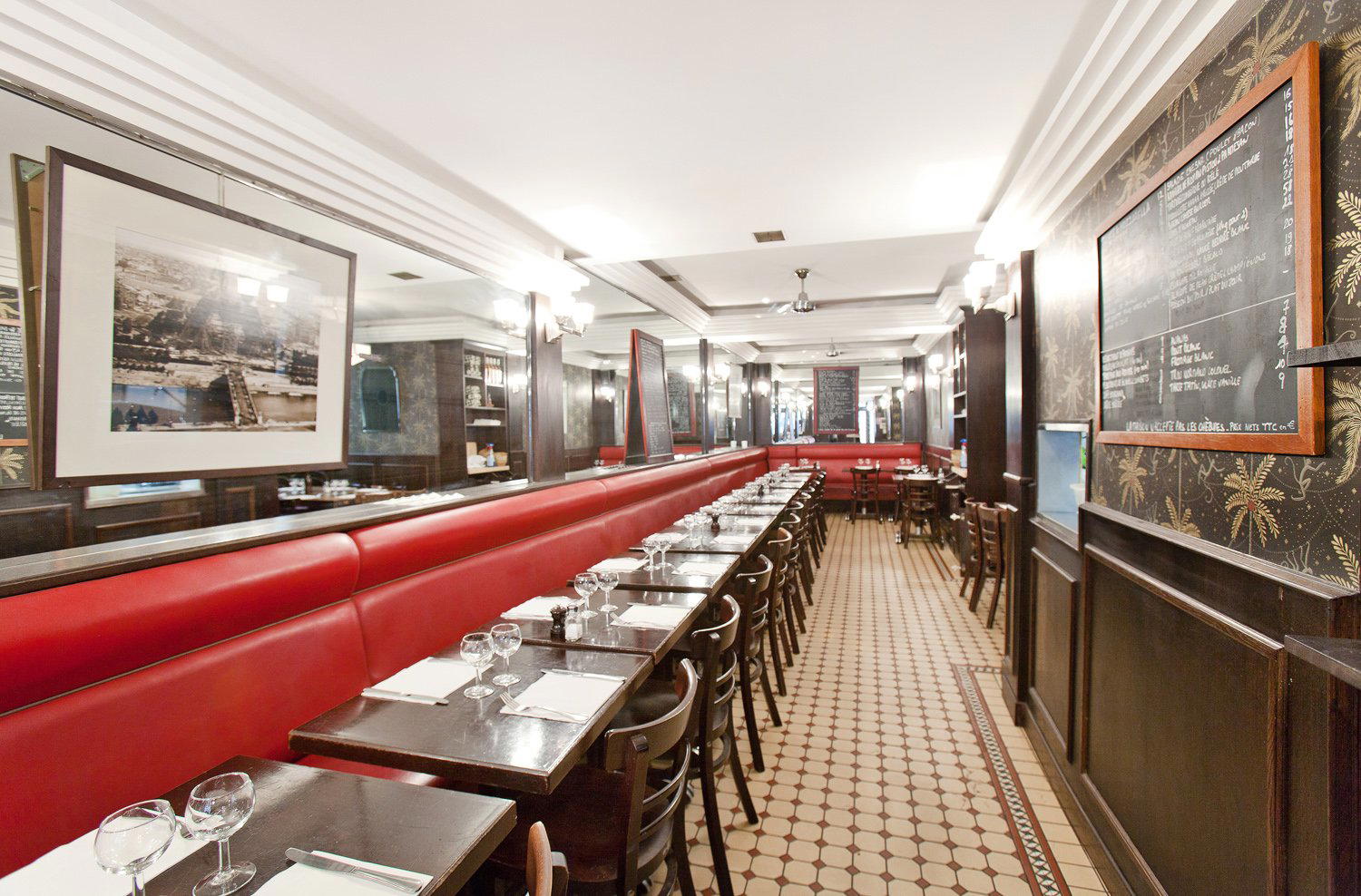
The menu
What to order
- Côte de boeuf
- Entrecôte
A Street That Sets Its Own Tempo
The 7th arrondissement runs two distinct dining tracks. One is the grand-room circuit: high ceilings, tableside ceremony, the kind of address where a reservation is a statement. The other is quieter, a tier of wine-led, neighbourhood-conscious tables that the 7th's civil-servant and diplomatic residents have long preferred for Tuesday dinners rather than anniversary occasions. Rue de Bellechasse sits on the eastern flank of this arrondissement, a short walk from the Musée d'Orsay and the Seine embankment, and Le Vin de Bellechasse at number 20 belongs firmly to the second track.
The street itself gives little away. It runs south from the quai toward Saint-François-Xavier, lined with the kind of Haussmann facades that have absorbed a century of restaurant openings and closings without much visible change. Arriving here, the sense is less of destination dining and more of discovery, which, in a city where the most-discussed tables are often the most-booked and least-accessible, can itself be a reason to pay attention.
Where Le Vin de Bellechasse Sits in the 7th's Dining Tier
Paris's 7th arrondissement contains a denser concentration of serious tables per square kilometre than most European cities can claim across their entire restaurant stock. At the top of that stack sit addresses like Arpège, where Alain Passard's vegetable-centred tasting format has held three Michelin stars for decades, and L'Ambroisie on Place des Vosges, which operates at the upper register of French classic cuisine. These rooms set the ceiling. Below them, the 7th supports a broader ecosystem of addresses that trade in serious cooking and considered wine without the ceremony, or the booking difficulty, that defines the starred tier.
Le Vin de Bellechasse operates in this middle register. The name signals its priorities: wine is foregrounded, the address is the identity, and the format reads as the kind of place where the list is as much a reason to visit as the plate. In the broader Paris context, that positions it alongside a cohort that includes bistrot-de-luxe formats and wine-bar dining rooms where the sommelier's knowledge shapes the experience as much as the kitchen does. For a comparative read on how the city's leading end looks, Alléno Paris au Pavillon Ledoyen and Le Cinq at the Four Seasons George V represent the grand-room, €€€€ ceiling of the city's French modern dining. Kei, with its Franco-Japanese syntax, shows how the contemporary French room has expanded its reference points. Le Vin de Bellechasse is not in competition with those formats, it occupies a different register by design.
The Booking Experience: What Planning Looks Like Here
The editorial angle of this piece is worth stating plainly: in Paris, the gap between a table that is easy to book and one that rewards effort is not always as wide as the city's reputation for difficulty suggests. The hardest tables, three-Michelin-star counters, tasting-menu-only rooms with twelve seats, require planning horizons of two to three months, sometimes more. Rooms like Arpège and L'Ambroisie operate in that window. At the other end, walk-in culture still exists in Paris, particularly at wine bars and neighbourhood bistros, but those rooms rarely offer the depth that a wine-led address like Le Vin de Bellechasse is positioned to provide.
For France's most demanding reservations, addresses like Mirazur in Menton, Flocons de Sel in Megève, or Troisgros in Ouches, the planning window extends to several months and often requires contact in French. Le Vin de Bellechasse sits well below that threshold of difficulty. The broader French restaurant tradition, from Paul Bocuse's Auberge du Pont de Collonges to Bras in Laguiole and Auberge de l'Ill in Illhaeusern, involves regional pilgrimage and considerable advance planning. Paris addresses, by contrast, tend to be more accessible simply because the city's dining volume creates more supply. Still, wine-led rooms with a following fill up, and the 7th's proximity to government and cultural institutions means lunch service in particular can book quickly.
Context Across France and Beyond
Understanding where Le Vin de Bellechasse fits requires a brief look at how France's wine-dining format has evolved. The bistrot à vins tradition, a room where the list precedes the menu in priority, has a longer history in Lyon and Burgundy than in Paris, but the capital absorbed and formalised it over the past two decades. Addresses now exist on a spectrum from pure wine bar (small plates, natural-leaning list, communal seating) to something closer to a full restaurant with a wine program that would shame many starred rooms. Le Vin de Bellechasse's name places it in this tradition without specifying exactly where on that spectrum it lands. The address and neighbourhood suggest a room that leans toward the dining end rather than the bar end.
For those planning a broader French dining trip, the regional counterparts worth considering include Les Prés d'Eugénie in Eugénie-les-Bains, Georges Blanc in Vonnas, and Auberge du Vieux Puits in Fontjoncouse, each representing a different regional expression of the serious French table. The Paris-based Kei shows how the city's mid-to-upper tier has absorbed international influence. For international comparisons at the wine-and-dining intersection, Le Bernardin in New York and Lazy Bear in San Francisco each represent how French culinary training translates into non-French contexts. And for a southern French counterpart at a different price tier, La Table du Castellet in the Var offers useful contrast. The full EP Club Paris restaurants guide maps this tier more completely.
Know Before You Go
- Address: 20 Rue de Bellechasse, 75007 Paris, France
- Arrondissement: 7th, near the Musée d'Orsay and the Seine embankment
- Nearest Metro: Solférino (Line 12) or Assemblée Nationale (Line 12)
- Booking window: One to two weeks ahead recommended for midweek; longer for weekends and peak Paris calendar periods
- Dress code: Not confirmed; the 7th arrondissement dining norm leans toward smart-casual for wine-led rooms at this tier
Frequently asked questions
Where exactly is Le Vin de Bellechasse?
Le Vin de Bellechasse is located at 20 Rue de Bellechasse, 75007 Paris, France, Paris.
Is Le Vin de Bellechasse a good choice for a solo diner in Paris's 7th arrondissement?
The bistrot à vins format, which shapes how addresses like Le Vin de Bellechasse operate in the 7th arrondissement, is structurally compatible with solo dining, counter seating and smaller rooms are common in this category, and the wine-first ethos tends to attract a conversation-friendly atmosphere rather than a formal dining-room one. The Rue de Bellechasse location, on a quieter Left Bank street, reinforces that neighbourhood-tavern character. Confirm seating arrangements directly with the venue at 20 Rue de Bellechasse, 75007 Paris.
What's the must-try dish at Le Vin de Bellechasse?
The bistrot à vins format that defines addresses like this one in the 7th arrondissement typically anchors around market-driven plates built to complement the wine list. check the venue's official channels via their address at 20 Rue de Bellechasse for the current card.
How far ahead should I plan for Le Vin de Bellechasse?
In Paris's 7th arrondissement, wine-led tables with a neighbourhood following tend to fill midweek slots several days out and weekends further in advance. A booking window of one to two weeks is a reasonable baseline for a small room like this; Friday and Saturday evenings warrant earlier action. Booking directly via the venue is advisable to confirm current availability.
What has Le Vin de Bellechasse built its reputation on?
Le Vin de Bellechasse operates within the bistrot à vins tradition, a format that positions the wine list as the structural logic of the meal rather than an afterthought to the kitchen. In the 7th arrondissement, which holds one of the densest concentrations of serious tables in Paris, that positioning marks a deliberate identity choice. The address on Rue de Bellechasse places it in a residential stretch of the Left Bank where repeat custom from a local clientele carries more weight than passing tourist traffic.
What if I have allergies at Le Vin de Bellechasse?
For a small bistrot-format room in Paris, the most reliable approach is to contact the venue at 20 Rue de Bellechasse, 75007 Paris, ahead of your reservation to discuss requirements directly with the team.
At a Glance
| Venue | Cuisine | Price | Awards | Notes |
|---|---|---|---|---|
| Le Vin de BellechasseThis venue (the venue you are viewing) | Classic French Bistro | Not listed | Not listed | Not listed |
| Alléno Paris au Pavillon Ledoyen | Modern French Fine Dining | $150–200 | 3 Michelin Stars · World's 50 Best #79 | Creative |
| Kei | Modern French with Japanese Influences | $300–500 | 3 Michelin Stars · World's 50 Best #93 | Contemporary French, Modern Cuisine |
| L'Ambroisie | Classic French Haute Cuisine | $300–500 | 2 Michelin Stars · World's 50 Best #23 | French, Classic Cuisine |
| Le Cinq - Four Seasons Hôtel George V | Modern French Fine Dining | $300–500 | 3 Michelin Stars · World's 50 Best #24 | French, Modern Cuisine |
| Pierre Gagnaire | Avant-Garde French Fine Dining | $200–300 | 3 Michelin Stars · World's 50 Best #17 | French, Creative |
Continue exploring
More in Paris
Restaurants in Paris
All restaurants in Paris →
Bars in Paris
All bars in Paris →
Details
- Classic
- Cozy
- Intimate
- Date Night
- Casual Hangout
- Standalone
- Extensive Wine List
- A La Carte
- Wine
- Vegetarian Friendly
Dimly lit dining room with red banquettes, tiled floors, vintage photos, and distinctive monkey-print wallpaper creating a classic yet dramatic brasserie feel.