Le Parisien
Le Parisien on East 33rd Street sits in a corner of Midtown Manhattan where French bistro tradition meets New York's appetite for sourcing-forward cooking. The address places it within walking distance of Murray Hill's residential density, positioning it as a neighbourhood anchor rather than a destination-driven trophy restaurant. For French cuisine at this address level, the comparison set includes the upper reaches of the city's formal French dining tier.
Pearl is the En Primeur Club membership app — saves, bookings, and concierge access live there. Same editors, same standards.
- Address
- 163 E 33rd St, New York, NY 10016
- Phone
- +12128895489
- Website
- leparisiennyc.com
- Directions
- Get directions
 Saves & bookings on Pearl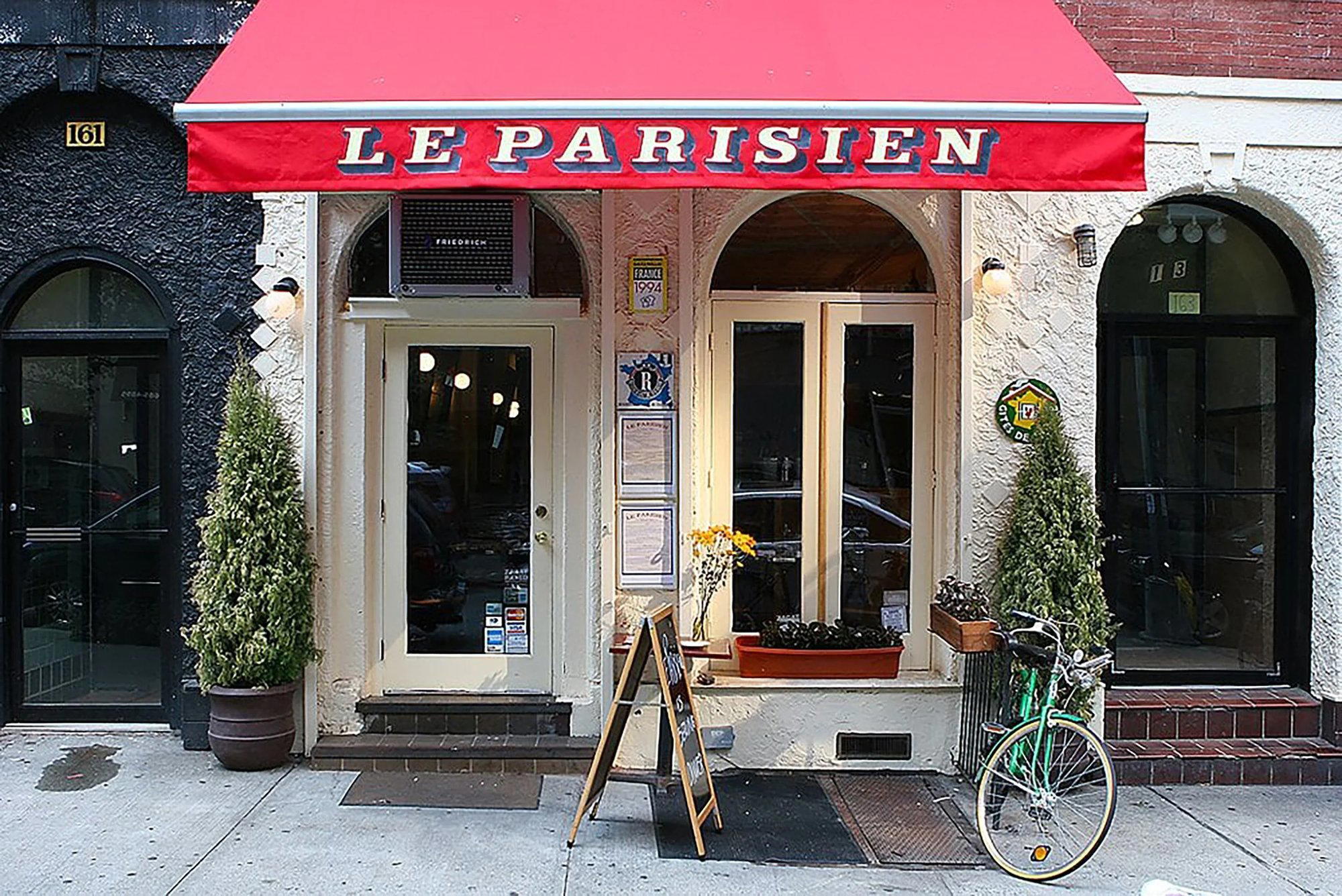
French Bistro Tradition in Midtown's Murray Hill Quarter
Le Parisien is a classic French bistro in New York City. That tension has shaped which French establishments survive on Manhattan's relentless commercial real estate terms, and how they differentiate themselves in a market where Le Bernardin sets the formal seafood benchmark and Per Se occupies the tasting-menu apex. Le Parisien, at 163 East 33rd Street, operates in a different register entirely: the Murray Hill address is residential-dense and less saturated with destination-dining competition than Midtown West or the West Village, which gives a French venue here a neighbourhood anchor role that the trophy addresses cannot claim.
East 33rd Street has historically attracted a working lunch crowd and evening regulars rather than out-of-town visitors calibrating against Zagat lists. That geography matters. French cooking in this context is not asked to compete on spectacle or on the prestige economy that drives reservations at Masa or Atomix. It is asked to be reliable, correctly seasonal, and honest about where its ingredients originate, the quieter, harder test.
Where French Sourcing Traditions Land in New York
The sourcing argument inside French cuisine has been live for decades. Classic French cooking was always, in principle, a market-driven tradition: the chef goes to the producer, the season dictates the menu, and the kitchen's skill is demonstrated in how it handles what arrives that morning rather than what it can engineer year-round. The challenge in New York is that this principle has to be rebuilt from scratch against a supply chain that looks nothing like the Loire Valley or Brittany.
American analogues do exist, and the serious French restaurants in New York have learned to use them. The Hudson Valley functions for Northeastern kitchens somewhat as Normandy functions for Paris: dairy, poultry, and produce of genuine character, close enough for consistent weekly delivery. The farm-to-table movement that reshaped how places like Blue Hill at Stone Barns in Tarrytown operate has set a standard that any French restaurant with sourcing ambitions now has to at least acknowledge. In California, The French Laundry in Napa and Single Thread Farm in Healdsburg have made ingredient provenance so central to the guest proposition that they effectively redefined what a premium American-French kitchen looks like. That influence has migrated east.
The question for a French address in Murray Hill is how much of that sourcing discipline carries through to the plate when the restaurant is not operating at the stratospheric price points of Alinea in Chicago or Providence in Los Angeles. The honest answer is that ingredient sourcing at the neighbourhood level is about relationships maintained over time: the same fishmonger, the same greenmarket vendor, the same Hudson Valley egg producer. It is less audacious than a headline and more durable than a seasonal menu reprint.
The Broader French Dining Arc in American Cities
French restaurants in American cities have gone through a protracted recalibration since the 1990s. The white-tablecloth formality that once defined the category has bifurcated: at one end, a small number of houses maintain full classical service and price accordingly; at the other, a much larger cohort of bistro and brasserie formats has adopted a looser, more ingredient-expressive approach that owes as much to contemporary American cooking as it does to Lyon or Bordeaux.
This pattern holds across the country. Bacchanalia in Atlanta built a reputation precisely on rejecting the old prestige formulas. Emeril's in New Orleans took French classical training and routed it through regional Louisiana produce. Addison in San Diego and The Inn at Little Washington both demonstrate that French-influenced fine dining outside the obvious coastal metros can carry genuine critical weight. The thread connecting all of them is a shift away from imported prestige signifiers toward locally grounded material.
In New York, the French dining tier below the Michelin summit is large and competitive. Korean fine dining, represented by Jungsik New York, now occupies price points and critical attention that were once reserved for French or Continental formats, which has compressed the space available to mid-tier French restaurants without a clear differentiation narrative. Against that backdrop, a French address that can articulate a coherent sourcing position, however unglamorous the supply chain story, holds a more defensible identity than one that competes on classical technique alone.
The transatlantic conversation on this continues. In Monte Carlo, Alain Ducasse at Louis XV built its three-star reputation partly on championing Provençal market sourcing at a moment when classical French cooking was retreating into luxury ingredient formulas. In Hong Kong, 8½ Otto e Mezzo Bombana shows how a European fine-dining sensibility transplanted to a different city can sustain its identity through ingredient discipline rather than through nostalgic replication. The lesson transfers: sourcing clarity is more portable than style.
Visiting Le Parisien: Practical Framing
The restaurant sits at 163 East 33rd Street in Murray Hill, reachable from the 6 train at 33rd Street or the crosstown bus lines along 34th Street. The surrounding blocks are residential and office-heavy, meaning the lunch window tends toward purposeful midweek visits and the dinner trade draws local regulars alongside guests arriving from elsewhere in Manhattan.
As with most French restaurants in this part of Midtown, peak demand falls on Thursday and Friday evenings, and weekend dinner in a neighbourhood with limited dining competition can fill earlier than expected. Midweek lunch, where the format is typically faster and the room less full, offers an easier entry point for a first visit.
The Minimal Set
Comparable venues nearby, for context on price, style, and recognition.
| Venue | Cuisine | Price | Notes |
|---|---|---|---|
| Le ParisienThis venue — the venue you are viewing | Not listed | $$ | Not listed |
| Cafe Un Deux Trois | Not listed | $$ | Midtown-Times Square, Classic French Brasserie |
| The Consulate Midtown | Not listed | $$$ | Midtown-Times Square, French-American Brasserie |
| Match 65 | Not listed | $$$ | Upper East Side-Carnegie Hill, French Brasserie |
| Le Gratin | Tribeca-Civic Center, Lyonnais Bouchon | $$$ | Not listed |
| Petite Boucherie | West Village, Classic French Bistro | $$$ | Not listed |
Continue exploring
More in New York City
Restaurants in New York City
Browse all →
Bars in New York City
Browse all →
Hotels in New York City
Browse all →




At a Glance
- Cozy
- Classic
- Lively
- Brunch
- Date Night
- Casual Hangout
- Standalone
- Extensive Wine List
Current opening hours
- Monday
- 5–10 PM
- Tuesday
- 5–10 PM
- Wednesday
- 5–10 PM
- Thursday
- 5–10 PM
- Friday
- 5–10:30 PM
- Saturday
- 12–2:30 PM, 5–10:30 PM
- Sunday
- 12–2:30 PM, 5–9:30 PM
Hours can change for holidays and private events. Last verified .
Rustic with worn wooden furniture, vintage French ads on walls, painted tin ceiling, and wine bottles by the entrance, creating a lively yet unmistakably French vibe.