Cafe Un Deux Trois
Our verdict
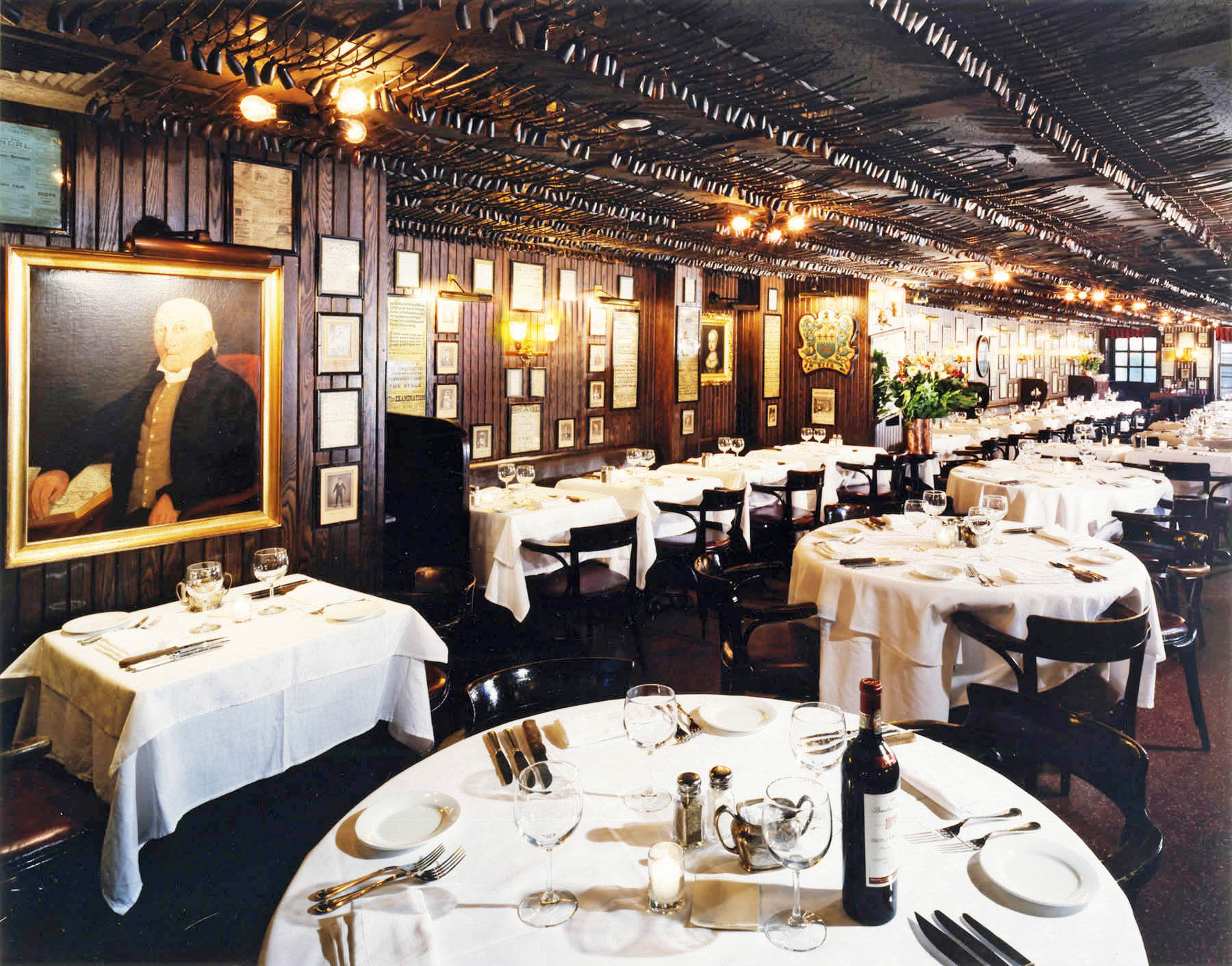
Cafe Un Deux Trois occupies a storied address on West 44th Street, placing it squarely in the Theatre District corridor where pre-curtain dining has shaped Midtown's hospitality identity for decades. The room sits within a French brasserie tradition that prizes generosity and pace over ceremony, making it a counterpoint to the tasting-menu formalism that defines much of New York's upper dining tier.

The menu
What to order
- Steak Tartare
- Quiche Lorraine
- Steak-Frites
- French Onion Soup
- Lobster Bisque
- Rotisserie Chicken
- Chocolate Mousse
Midtown's French Brasserie Tradition and Where Cafe Un Deux Trois Sits Within It
West 44th Street has long functioned as a kind of informal hospitality spine for Midtown Manhattan. The Theatre District concentration means restaurants here operate under constraints that few other New York dining rooms face: a pre-curtain window that compresses service into a tight band, a clientele that arrives with a hard exit time, and a room that must perform at volume without losing coherence. The French brasserie format, with its legible menu structure, confident wine list, and calibrated pace, has historically answered that brief better than most. Cafe Un Deux Trois, at 123 W 44th St, sits within that tradition and is leading understood through it rather than apart from it.
The broader French brasserie category in New York occupies a middle register that the city's dining culture sometimes undervalues. At the upper end, rooms like Le Bernardin and Per Se operate on tasting-menu logic, where the wine list is curated to match a fixed progression and the sommelier's role is essentially choreographic. At the other end, neighbourhood bistros keep cellar depth deliberately shallow. The brasserie tier in between is where wine list philosophy gets genuinely interesting: the room must satisfy a guest ordering a single glass before a show and another ordering a bottle to carry through a full meal, often simultaneously.
The Wine Argument at a Theatre District Brasserie
In a French-coded dining room on this block, the wine list carries particular weight as an editorial signal. A brasserie that takes its French identity seriously will typically anchor its cellar in recognisable regional logic: Burgundy and Bordeaux as the spine, Loire and Alsace as the more considered choices, with Champagne available by the glass at a price point that doesn't require a special occasion. That structure serves the Theatre District diner well because it allows rapid, confident decision-making under time pressure.
The more instructive comparison is with how New York's upper-tier rooms approach the same challenge. Eleven Madison Park and Atomix both maintain deep cellars, but they're designed around a single tasting format where pacing is controlled by the kitchen. A brasserie wine list has to work harder in a different direction: breadth over depth, accessibility over rarity, and a by-the-glass program substantial enough to function as a standalone offering. Getting that balance right in a Theatre District room is a practical discipline, not just an aesthetic one.
Across the broader American dining scene, the wine programs that have attracted the most sustained attention tend to be those that reflect a genuine point of view rather than a generic price-tier selection. Frasca Food and Wine in Boulder built its reputation partly on sommelier-led Friulian depth. Single Thread Farm in Healdsburg aligns its cellar with hyper-local and Japanese natural wine logic. Even The French Laundry in Napa uses its wine list as a statement about California's place in the global hierarchy. For a Midtown brasserie, the equivalent statement is quieter but no less deliberate: the list should reflect French regional literacy without becoming a reference document.
The Theatre District Timing Problem and How Brasseries Solve It
Pre-theatre dining in New York has its own economy. Guests typically arrive between 5:30 and 6:30 p.m. and need to be clear of the table by 7:45 at the latest for an 8 p.m. curtain. That window shapes everything: menu structure, table pacing, staffing ratios, and the by-the-glass wine program. Rooms that handle it well tend to have a prix-fixe or set-menu option that removes decision latency, a floor team that can read the room's exit pressure without hovering, and a drinks list that rewards quick choices without punishing them.
This is a context worth keeping in mind when comparing Theatre District brasseries to destination rooms elsewhere in the city. The operational demands are categorically different from, say, Masa, where the omakase format absorbs as much time as the kitchen requires. A brasserie on 44th Street is solving a logistics problem as much as a culinary one, and the rooms that do it gracefully earn a specific kind of loyalty from a specific kind of regular.
For comparison across the country, the venue that perhaps solves a similar problem most elegantly is Smyth in Chicago, which maintains fine-dining ambition within a format that doesn't demand the full tasting-menu commitment from every table. Lazy Bear in San Francisco goes the opposite direction, leaning into a communal format that makes the fixed experience part of the draw. A Midtown brasserie sits closer to the Smyth model: serious without being rigid.
Planning Your Visit
Cafe Un Deux Trois is at 123 W 44th Street, between Sixth Avenue and Broadway, a short walk from the major Broadway houses and accessible from Times Square-42nd Street station. For Theatre District visits, the pre-curtain window fills earliest on Wednesday, Friday, and Saturday evenings, when multiple shows run simultaneously. Arriving at 5:30 p.m. on those nights gives the most comfortable margin. The neighbourhood's density of theatres and hotels means walk-in availability is genuinely unpredictable on performance nights; if a specific show is on the itinerary, planning the dinner around it rather than the reverse is the more reliable approach. For a broader orientation to what New York's dining scene offers across price tiers and cuisines, the EP Club New York City restaurants guide covers the full range.
For those extending a New York trip into longer domestic itineraries, the EP Club also covers Blue Hill at Stone Barns in Tarrytown, an hour north, as well as Providence in Los Angeles, Emeril's in New Orleans, Addison in San Diego, and The Inn at Little Washington for those routing through the mid-Atlantic. For European context in the French tradition, Dal Pescatore in Runate and Atelier Moessmer Norbert Niederkofler in Brunico represent the more formal end of continental dining for comparison.
Frequently asked questions
What's Cafe Un Deux Trois's location?
Cafe Un Deux Trois is located at 123 W 44th St, New York, NY 10036, New York City.
Is Cafe Un Deux Trois a good option for dinner before a Broadway show on West 44th Street?
Its location at 123 W 44th Street places it within a short walk of several major Broadway houses, making the logistics straightforward for pre-show diners. French brasseries, by their format, are built for reliable turnover and consistent execution, which aligns with the strict timing demands of pre-theatre dining in New York City. Reservations in advance of busy performance nights are the practical move.
What should I order at Cafe Un Deux Trois?
That said, French brasseries at this address historically anchor around classics: steak frites, onion soup, and roast chicken. The pre-theatre window shapes the menu logic here, so expect dishes designed for confident, predictable pacing rather than elaborate multi-course construction.
Do they take walk-ins at Cafe Un Deux Trois?
Between 5:30 and 6:30 p.m. when the pre-theatre rush compresses demand on West 44th Street, walk-in availability is likely tighter than at off-peak hours. check the venue's official channels at 123 W 44th St, New York, NY 10036 to confirm same-day availability.
What's the defining dish or idea at Cafe Un Deux Trois?
The defining idea is timing as hospitality: a French brasserie format calibrated to the Broadway schedule, where the kitchen turns tables reliably before 7:45 p.m. curtains. This is not incidental to the concept but central to it. The brasserie tradition suits that constraint well, given its roots in consistent, service-forward cooking rather than elaborate tasting sequences.
Peers in This Market
| Venue | Cuisine | Price | Awards | Notes |
|---|---|---|---|---|
| Cafe Un Deux TroisThis venue (the venue you are viewing) | Classic French Brasserie | Not listed | Not listed | Not listed |
| Le Bernardin | French Seafood Fine Dining | $300–500 | 3 Michelin Stars · World's 50 Best #13 | French, Seafood |
| Atomix | Modern Korean Tasting Menu | $300–500 | 2 Michelin Stars · World's 50 Best #7 | Modern Korean, Korean |
| Per Se | French Fine Dining Tasting Menu | $300–500 | 3 Michelin Stars · World's 50 Best #40 | French, Contemporary |
| Masa | Traditional Japanese Omakase | $500+ | 2 Michelin Stars · World's 50 Best #27 | Sushi, Japanese |
| Eleven Madison Park | Contemporary Plant-Based Fine Dining | $300–500 | 3 Michelin Stars · World's 50 Best #4 | French, Vegan |