Guillaume Scheer - Les Plaisirs Gourmands

A Michelin-starred address in Strasbourg's city centre, Guillaume Scheer - Les Plaisirs Gourmands earned its star in 2024 under a chef trained at Pavillon Ledoyen and 1741. The kitchen works with Charolais beef, Breton blue lobster, and squab, underpinned by rich sauces and precise technique. Service is attentive and the format is compact: sittings run Wednesday through Saturday at lunch and dinner.
Pearl is the En Primeur Club membership app — saves, bookings, and concierge access live there. Same editors, same standards.
- Address
- 21 Quai Mullenheim, 67000 Strasbourg, France
- Phone
- +33 3 88 83 55 55
- Website
- guillaume-scheer.fr
- Directions
- Get directions
 Saves & bookings on Pearl
Alsace's Fine Dining Tradition, Reframed for the City Centre
The Alsace region carries one of France's densest concentrations of Michelin-starred cooking outside Paris. That tradition is rooted in long-established family houses, Auberge de l'Ill in Illhaeusern being one documented example, where classical technique and local produce have been refined across generations. What has shifted in recent years is the geography: serious cooking no longer anchors exclusively to village auberges. Strasbourg's city centre and its immediate surroundings, including the commune of Schiltigheim, have drawn a newer cohort of chef-owners whose training cuts across French fine dining at the highest level, and who are now building rooms that reflect that ambition without the institutional weight of a historic maison.
Guillaume Scheer - Les Plaisirs Gourmands is a one-Michelin-star restaurant in Strasbourg, with a price point around $65 per person. Located at 21 Quai Mullenheim, the restaurant earned a Michelin star in 2024, recognition that placed it within the recognised tier of Alsatian fine dining and confirmed the kitchen's technical consistency. At the €€€€ price point, it competes within the same bracket as restaurants drawing on comparable classical French training across the country, from Assiette Champenoise in Reims to AM par Alexandre Mazzia in Marseille. In the Strasbourg market, that positioning is significant: it signals a kitchen operating at ingredient and execution standards that go well beyond regional comfort cooking.
The Kitchen's Reference Points
French fine dining at this level draws its authority from a traceable lineage. The chef's background includes time at Pavillon Ledoyen in Paris, a three-Michelin-star address now operating as Alléno Paris au Pavillon Ledoyen, and at 1741 in Strasbourg. Those two postings represent a specific kind of formation: one in the high-pressure, technically exacting environment of a Parisian palace-adjacent kitchen, and one in a regionally rooted Alsatian fine dining context. The combination produces a cook whose frame of reference spans both the broader French canon and the particular produce and sensibility of the northeast.
That lineage matters as context for understanding what the kitchen is attempting. Across France's recognised one-star restaurants, from Bras in Laguiole to Flocons de Sel in Megève, the common denominator is not a single cuisine style but a commitment to sourcing discipline and technical precision. Michelin's Inspectors note squab, blue lobster from Brittany, and Charolais beef fillet among the kitchen's primary materials. These are premium-tier French ingredients with defined provenance: blue lobster from Brittany carries the same sourcing logic as the product choices you find at Mirazur in Menton or Troisgros - Le Bois sans Feuilles in Ouches, where the ingredient itself is a statement about kitchen values before any technique is applied.
What the Michelin Assessment Tells You
Michelin's published commentary on Les Plaisirs Gourmands describes rich sauces and jus alongside precisely cooked dishes, a phrase that, in the Inspectors' language, points to classical French sauce-work executed without shortcuts. That tradition, running from the grandes maisons of Lyon through the palace kitchens of Paris, remains one of the defining technical markers of French fine dining, and it is not universal even at the starred level. Many contemporary one-star kitchens have moved toward lighter, more acidic or fermentation-driven profiles. A kitchen that invests in sauce reduction and jus construction is making a deliberate statement about where it places itself within the current spectrum of French cooking.
At that volume and score, the consistency is not in question. Guests across nearly nine hundred visits are reporting the same experience, which at the €€€€ level reflects both kitchen reliability and service calibre. Michelin's note on attentive service aligns with this. The husband-and-wife structure of the room, the chef and Charlotte Scheer operating the space together, is a model found frequently in France's more personal fine dining addresses, where front-of-house and kitchen are integrated rather than separately managed. For the diner, this typically translates into a pace and attention that larger brigade restaurants cannot replicate.
The Room and the Format
The quai address puts the restaurant along Strasbourg's waterfront axis, within a city-centre setting that is a material shift from the more peripheral locations often associated with Alsatian fine dining. For visiting diners, this means the restaurant is accessible without significant travel from central Strasbourg, and it sits within a neighbourhood context that is urban rather than rural. For context on other options in the area, Côté Lac and L'Imaginaire.
Operating format is deliberately compressed. The restaurant opens Wednesday through Saturday, with a single lunch sitting from noon to 1:00 PM and dinner from 7:00 PM to 8:30 PM. Monday, Tuesday, and Sunday are closed. That structure, common among chef-driven fine dining rooms in France, limits covers and concentrates the kitchen's focus. It is a format signal as much as a logistical one: restaurants that operate four days a week and restrict sitting windows are making a choice to prioritise execution over throughput. Diners should plan reservations accordingly, particularly for dinner service, where the 7:00 PM start and 8:30 PM last entry suggest a relatively tight window for walk-in or same-week bookings.
Placing Les Plaisirs Gourmands Within the Broader French Starred Context
Within France's starred dining ecosystem, the one-star category has diversified considerably over the past decade. The tier now encompasses everything from highly experimental tasting-menu formats to precisely executed classical rooms, and the Michelin Guide has become more willing to star kitchens that demonstrate clear technical command across a defined idiom, rather than rewarding novelty alone. Les Plaisirs Gourmands falls into the classical-with-premium-product category: the Inspectors' language around sauces, jus, and named luxury ingredients places it in a tradition rather than positioning it as a format innovator. That is not a limitation; it is a clarity of purpose that many contemporary diners actively seek when the alternative is yet another tasting menu built around progressive textures and unexpected ferments.
For diners who track the starred dining circuit across France and internationally, the kitchen's Pavillon Ledoyen connection provides a useful calibration point. That Paris house, operating at the three-star level, represents one of the more technically demanding kitchens in the country. Chefs who pass through it carry a specific kind of formation that tends to show in sauce work, temperature control, and protein cookery, exactly the elements Michelin's Inspectors flag here. Comparable trajectories, where chefs trained in three-star Parisian or international kitchens establish regional starred rooms, have produced particularly interesting dining in France outside the capital. Paul Bocuse - L'Auberge du Pont de Collonges in Collonges-au-Mont-d'Or represents an earlier generation of that model; more recent iterations, such as those in Scandinavia through addresses like Frantzén in Stockholm or its international extension FZN by Björn Frantzén in Dubai, demonstrate how classical French formation continues to anchor fine dining ambition well beyond France's borders.
Planning Your Visit
Les Plaisirs Gourmands operates at 21 Quai Mullenheim in Strasbourg, with service Wednesday through Saturday only. Lunch runs from noon to 1:00 PM; dinner from 7:00 PM, with last entry at 8:30 PM. At the €€€€ price point and with a Michelin star awarded in 2024, demand for tables is real, the compressed sitting format means the restaurant has limited covers per service, and booking ahead is advisable rather than optional.
Price Lens
Comparable venues nearby, for context on price, style, and recognition.
| Venue | Cuisine | Price | Awards | Notes |
|---|---|---|---|---|
| Guillaume Scheer - Les Plaisirs GourmandsThis venue — the venue you are viewing | Schiltigheim, Modern French Fine Dining | $$$$ | Michelin 1 Star | Not listed |
| Brasserie Michel DEBUS | Not listed | $$ | Not listed | Schiltigheim, Traditional Alsatian Brasserie |
| Côté Lac | Not listed | $$$ | Michelin Plate | Espace Européen de l'Entreprise, Modern French Gastronomic |
| L'Imaginaire | Not listed | $$$ | Michelin Plate | Schiltigheim, Contemporary French Gastronomic |
| Gourmand | Schiltigheim, Traditional French Bistro | $$$ | Michelin Plate | Not listed |
| Les Complices | Not listed | $$ | Not listed | Schiltigheim, French Meat & Smokehouse Bistro |
Recognition history
Dated appearances from independent guides and award organizations, with the underlying list record or original source where available.
Michelin 1 Star
Michelin
Michelin 1 Star
Michelin
Continue exploring
More in Schiltigheim
Restaurants in Schiltigheim
Browse all →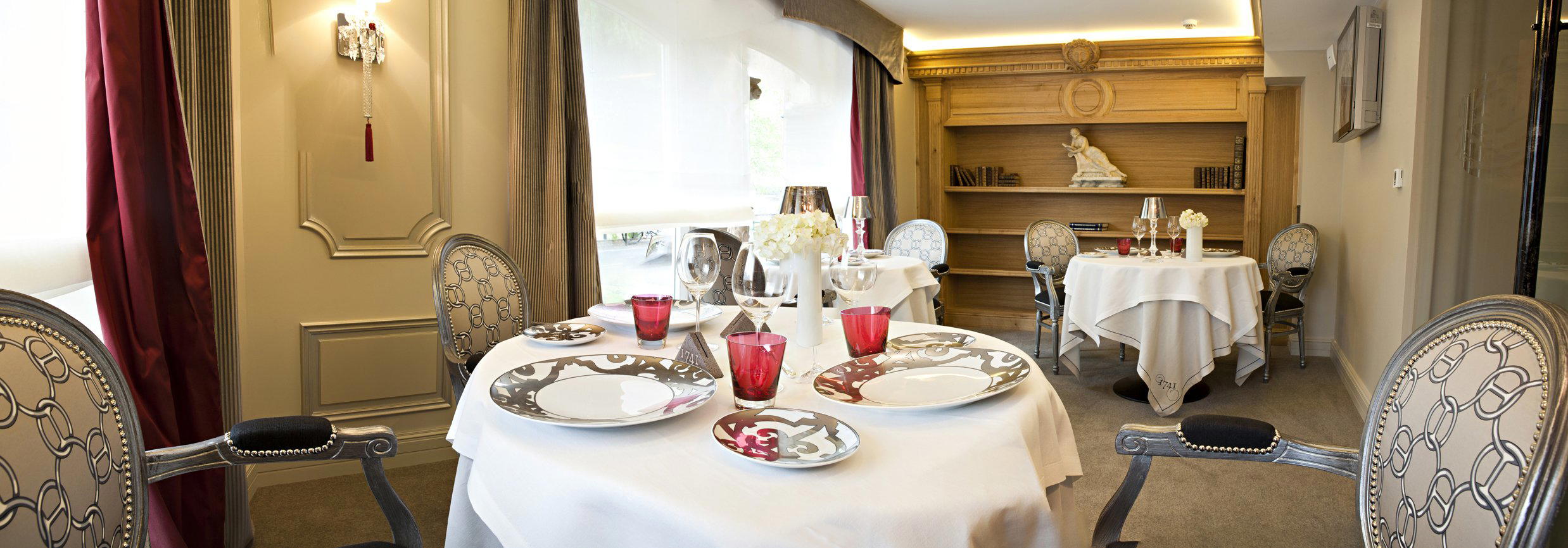

Bars in Schiltigheim
Browse all →


Hotels in Schiltigheim
Browse all →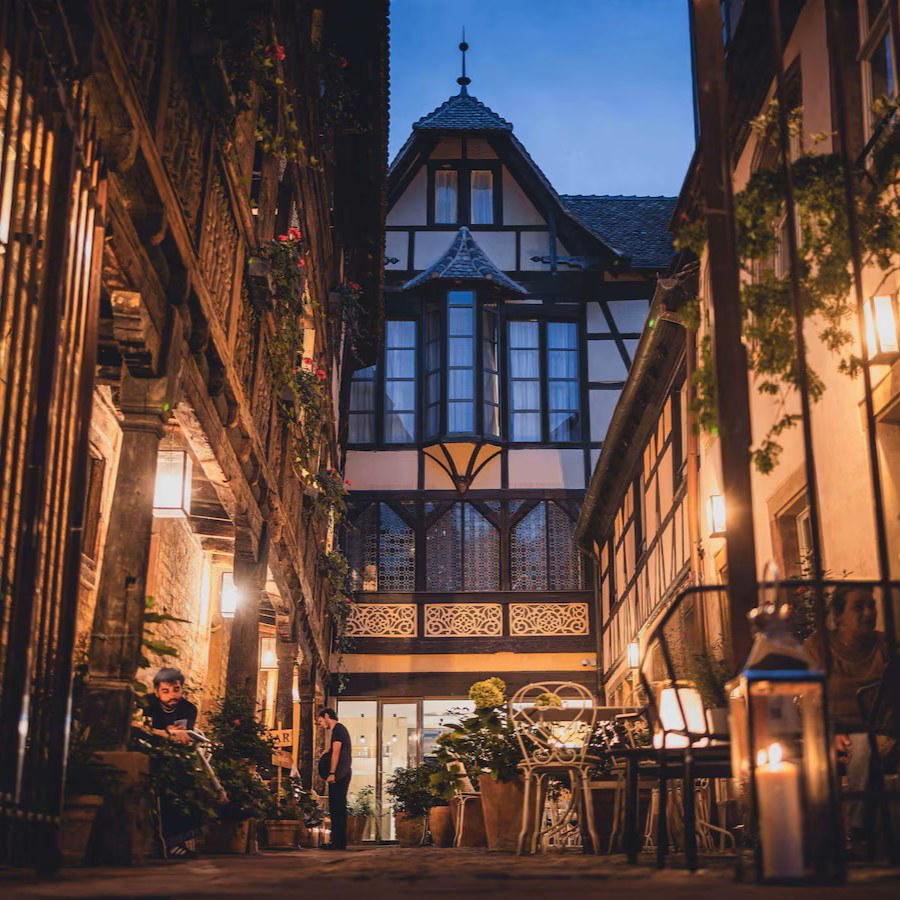
At a Glance
- Elegant
- Intimate
- Sophisticated
- Quiet
- Date Night
- Special Occasion
- Business Dinner
- Terrace
- Garden
- Private Dining
- Extensive Wine List
- Sommelier Led
- Local Sourcing
- Garden
Current opening hours
- Monday
- Closed
- Tuesday
- Closed
- Wednesday
- 12–1 PM, 7–8:30 PM
- Thursday
- 12–1 PM, 7–8:30 PM
- Friday
- 12–1 PM, 7–8:30 PM
- Saturday
- 12–1 PM, 7–8:30 PM
- Sunday
- Closed
Hours can change for holidays and private events. Last verified .
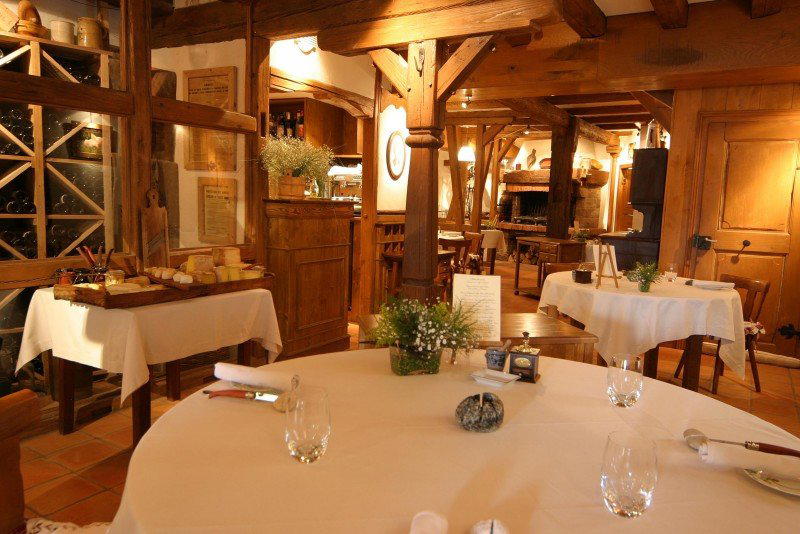
Warm and hushed atmosphere with soft, natural tones, taupe carpeting, and subdued lighting that transforms from naturally lit during the day to a discrete, intimate space in the evening.