Our verdict
On Rue Américaine in Ixelles, Le Bout de Gras occupies a stretch of Brussels where bistro culture and serious cooking have long coexisted without ceremony. The name itself signals an ethos: the best part, the richest cut, the end worth waiting for. For those tracing Belgium's ingredient-led dining scene beyond the Michelin-polished rooms, this address deserves attention.
- Address
- Rue Américaine 89, 1050 Ixelles, Belgium
- Phone
- +32 488 16 00 12
- Directions
- Get directions
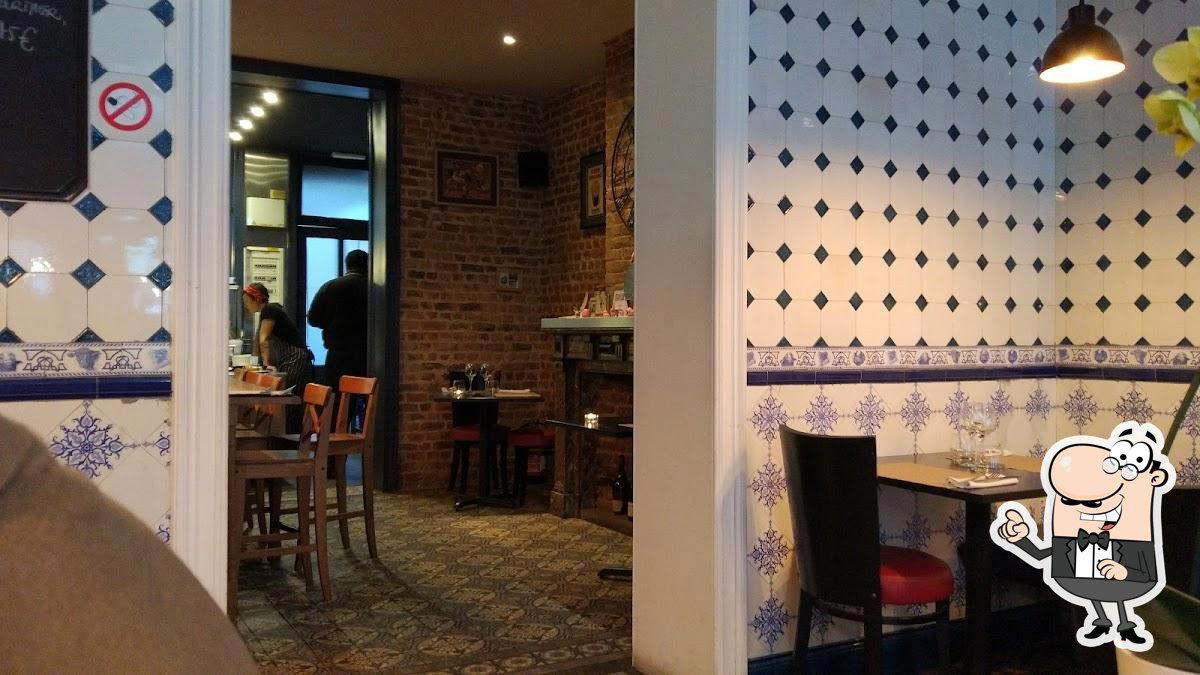
The menu
What to order
- Cassoulet
Ixelles and the Ingredient-Led Bistro Tradition
Rue Américaine cuts through one of Brussels' most culinarily literate neighbourhoods. Ixelles has long sat between two registers: the grand brasserie formality of the city centre and the looser, produce-driven cooking that defines how many Belgians actually prefer to eat. In that context, Le Bout de Gras fits a pattern worth understanding before you arrive. Across Belgium's serious dining scene, from Boury in Roeselare to Vrijmoed in Gent, the defining tension has shifted from technique to sourcing. The question is no longer only what a kitchen can do to an ingredient, but where that ingredient came from and why it was chosen. Le Bout de Gras enters that conversation at street level, without the tasting-menu formality of those rooms, but with a name that announces its priorities plainly.
"Bout de gras" in French refers to the fatty end, the richest portion of a cut. It is a butcher's term, a market term, language that belongs to the supplier relationship rather than the dining room. That framing is relevant to how ingredient-focused kitchens in this part of Europe communicate their identity: not through abstraction, but through the vocabulary of the source.
What the Ixelles Address Signals
Rue Américaine 89 places Le Bout de Gras inside a residential-commercial corridor that has, over recent years, accumulated a density of serious eating addresses without becoming a destination strip in the tourist sense. The neighbourhood draws a local crowd: professionals from the nearby EU quarter, students from the universities along Avenue de la Couronne, and the kind of regular who measures a restaurant by whether the plat du jour changes with the week's market, not the quarter's menu reprint. That audience is self-selecting and calibrated. It expects provenance to be visible on the plate and in conversation, not just listed on a chalkboard as an afterthought.
Belgium's broader dining identity has always had a dual register. But the country also sustains a culture of bistro and brasserie cooking where the sourcing discipline is just as rigorous, even if the room and price point are not. La Paix in Anderlecht is the obvious reference for how a Brussels address can operate at the intersection of neighbourhood loyalty and serious ingredient work. Le Bout de Gras draws from that same tradition.
The Sourcing Frame: Why It Matters Here
In kitchens built around ingredient sourcing, the menu is a record of decisions made at the farm, the abattoir, and the market stall before anything reaches the pass. Belgium's position in northern Europe gives it access to a specific larder: North Sea catch, Ardennes game and charcuterie, Flemish vegetables and dairy, and a patchwork of small producers across Wallonia and the Brussels periphery who supply restaurants with the specificity that larger wholesalers cannot. The best of these relationships are long-term and based on trust in both directions: the kitchen commits to volumes that give the producer stability, and the producer delivers with a consistency that gives the kitchen confidence to keep a dish on the menu.
That kind of sourcing infrastructure is not accidental. It takes time to build and requires a kitchen with enough credibility in the local supplier network to be taken seriously. Addresses in Brussels that operate this way, from Bozar Restaurant to smaller neighbourhood rooms, have typically spent years cultivating those relationships. For a visitor, the practical implication is that what arrives on the plate reflects choices made well upstream of the kitchen, and the menu at any given time is partly a function of what was available and worth using that week.
Comparable sourcing-led kitchens across Belgium, such as Willem Hiele in Oudenburg or De Jonkman in Sint-Kruis, have made the supplier relationship central to how they are understood critically. At a neighbourhood level in Brussels, the same logic applies, just without the ceremony. The room may be smaller and the service less choreographed, but the sourcing rigour that defines the better end of Belgian cooking is present in the same form.
Placing Le Bout de Gras in the Broader Scene
Belgian dining at the serious end has grown more internationally legible over the past decade. The Michelin footprint is dense relative to country size, and addresses like Le Chalet de la Forêt in Uccle or Ralf Berendsen in Neerharen sit in a tier that competes with the leading rooms in France and Scandinavia for technical ambition. But the majority of good eating in Brussels happens below that register, in rooms that carry none of those signals and rely instead on neighbourhood reputation, word of mouth, and a consistent relationship with a returning crowd.
Le Bout de Gras is positioned in that second tier, not as a consolation to the fine dining above it, but as a different kind of proposition. The name suggests an address that has opinions about what is worth eating and why, and that those opinions originate in the supply chain rather than in the dining room. That is a coherent editorial stance for a kitchen in 2024, when the origin story of an ingredient carries as much weight with a certain audience as the technique applied to it. For comparison, rooms like La Table de Maxime in Our or d'Eugénie à Emilie in Baudour have carved out identity through exactly this kind of producer-first positioning.
Internationally, the model has clear analogues. Lazy Bear in San Francisco built its identity around a direct relationship with producers and a communal format that foregrounded that transparency. At the opposite end of the formality range, Le Bernardin in New York City has long made sourcing the public justification for its prices. In Brussels, the same principle operates at a different price point and register, but the logic is consistent: the sourcing relationship is the argument, and the food is its evidence.
Planning Your Visit
Ixelles is accessible by tram and metro from the city centre, with the Louise and Flagey areas both within walking distance of Rue Américaine. The neighbourhood's restaurant density means that booking ahead for Le Bout de Gras is the sensible approach, particularly on Thursday through Saturday evenings when the local crowd is at its thickest. For those building a broader Brussels itinerary, our full Bascule restaurants guide maps the city's dining scene across neighbourhoods and price tiers. Addresses like Cuchara in Lommel, Castor in Beveren, or La Durée in Izegem offer useful reference points for how ingredient-led cooking operates across different parts of the country.
Frequently asked questions
Is Le Bout de Gras suitable for children?
The Rue Américaine address in Ixelles suggests a residential-neighbourhood setting where families are part of the local fabric, but kitchens built around ingredient sourcing and market-driven menus tend to operate at a pace and register more suited to adult diners.
Is Le Bout de Gras better for a quiet night or a lively one?
Rue Américaine 89 sits in a residential-commercial corridor in Ixelles, a neighbourhood that tilts toward considered dining rather than high-energy venues. The bistro format implied by the ingredient-led sourcing approach typically produces an atmosphere closer to focused and convivial than loud or celebratory. It reads as a room for conversation, not a room for a party.
How does Le Bout de Gras fit into the wider Brussels dining scene for visitors looking beyond Michelin-listed addresses?
Brussels' Michelin footprint is dense relative to its size, which means serious cooking frequently surfaces outside starred addresses. Le Bout de Gras on Rue Américaine in Ixelles sits in a neighbourhood that has accumulated a concentration of credible eating over recent years, making it a useful reference point for visitors wanting to move past the city's more publicised restaurant corridor and into where Brussels' more locally-oriented food culture operates.
What do regulars order at Le Bout de Gras?
In kitchens where sourcing decisions precede menu composition, the dishes that develop loyal followings are usually those that reflect the kitchen's most consistent supplier relationships — seasonal cuts, market vegetables, or preserved items that shift with availability rather than anchoring a fixed card.
Fast Comparison
| Venue | Cuisine | Price | Awards | Notes |
|---|---|---|---|---|
| Le Bout de GrasThis venue — the venue you are viewing | French-Creole Bistro | Not listed | Not listed | Not listed |
| Boury | Creative French Fine Dining | $300–500 | 3 Michelin Stars · La Liste Top Restaurants | Modern Frlemish, Creative French |
| Comme chez Soi | Classic French Fine Dining | $200–300 | 1 Michelin Star · World's 50 Best #49 | French - Belgian, Classic Cuisine |
| Vrijmoed | Creative Modern Fine Dining | Not listed | 2 Michelin Stars · La Liste Top Restaurants | Modern Flemish, Creative |
| La Durée | Modern French Fine Dining | $150–200 | 2 Michelin Stars · La Liste Top Restaurants | French-Belgian, Creative |
| Cuchara | Modern Creative Cuisine with Asian Influences | $200–300 | 2 Michelin Stars · La Liste Top Restaurants | Modern European, Creative |
Continue exploring
More in Bascule
Restaurants in Bascule
Browse all →
Bars in Bascule
Browse all →
Hotels in Bascule
Browse all →
Wineries in Bascule
Browse all →
Details
- Cozy
- Intimate
- Elegant
- Date Night
- Special Occasion
- Open Kitchen
- Natural Wine
- Natural Wine
- A La Carte
- Tasting Menu
- Natural Wine
Cozy and intimate atmosphere with a warm, friends-table vibe.