On a quiet street in the 16th arrondissement, Le Bistrot des Vignes positions itself at the intersection of classic Parisian bistro format and serious wine curation. The address on Rue Jean Bologne places it in one of the city's most residential quarters, where the clientele tends toward neighbourhood regulars rather than tourists chasing tasting menus. For those who read wine lists before menus, this is a reference point worth knowing.
Pearl is the En Primeur Club membership app — saves, bookings, and concierge access live there. Same editors, same standards.
- Address
- 1 Rue Jean Bologne, 75016 Paris, France
- Phone
- +33145277664
- Website
- bistrotdesvignes.fr
- Directions
- Get directions
 Saves & bookings on Pearl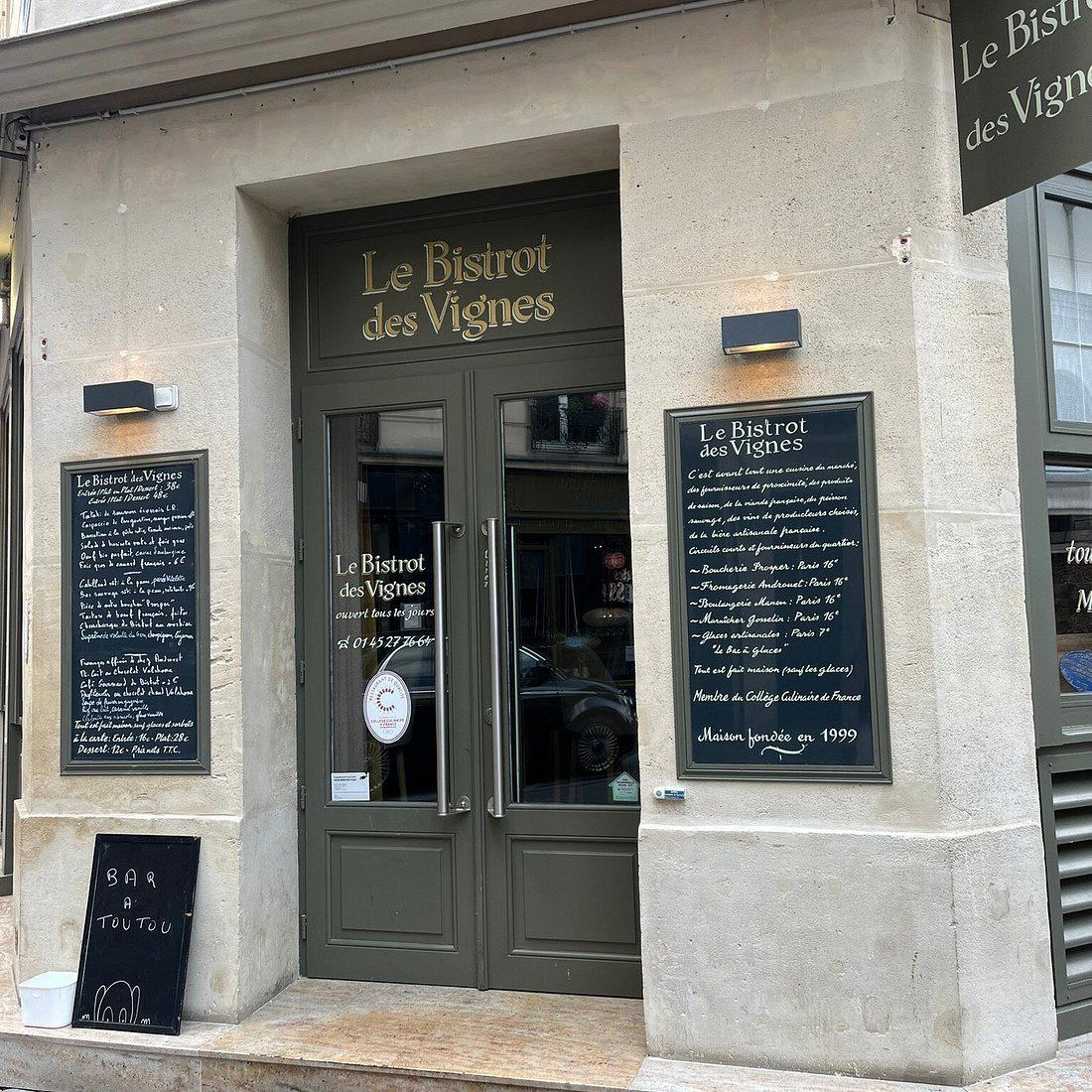
The 16th's Approach to the Bistro-Cave Tradition
Paris has long maintained a distinction between restaurants that treat wine as an accompaniment and those that treat it as the organizing principle of the meal. The latter category, sometimes called cave-bistros or vignerons' tables, has expanded over the past decade as wine culture pushed sommeliers and wine-focused operators toward opening their own rooms. The 16th arrondissement, traditionally associated with formal dining rooms and conservative wine lists, has been slower to absorb this shift than Saint-Germain or Pigalle. Le Bistrot des Vignes, at 1 Rue Jean Bologne, occupies the kind of address where that tension between tradition and a more producer-led approach to the glass is most legible.
Rue Jean Bologne is a short, residential street in Passy, one of the 16th's quieter sub-neighbourhoods. The area draws a primarily local crowd, which tends to mean longer meals, less turnover pressure, and a clientele that knows what it wants from a bottle. That demographic context matters when reading a wine-forward bistro in this part of the city: the room is not performing for tourists or expense-account tables, which typically shapes the list toward genuine depth over label recognition.
Wine as the Editorial Frame
In Paris bistros that take wine seriously, the list tends to function as a document with its own internal argument. Particularly coherent examples organize their selections around a geographic or philosophical thesis, Burgundy-heavy rooms with producer-level specificity, Loire-centric natural lists with grower annotations, or Rhône-anchored programs that trace the divide between appellation convention and artisan production. Where Le Bistrot des Vignes situates itself within that spectrum is the operative question for any visit planned around the cellar.
The name itself signals intent. "Bistrot des Vignes" translates directly as the bistro of the vines, a framing that positions wine not as a menu category but as the room's conceptual anchor. Paris has several restaurants operating under similar naming logic, and the better ones treat that framing as a commitment: the list should have range across regions, price accessibility across tiers, and enough producer diversity to reward a guest who returns multiple times in a year.
For comparison, the major Parisian tables known for cellar depth, such as Le Cinq at the Four Seasons Hôtel George V, operate at the €€€€ tier with lists that run to thousands of references and dedicated sommelier teams. L'Ambroisie on the Place des Vosges has long maintained a Bordeaux and Burgundy cellar calibrated to its classical French kitchen. These are reference points for institutional wine programs. A neighbourhood bistro like Le Bistrot des Vignes operates in a different register, where the argument is about accessibility, curation intelligence, and the relationship between glass price and kitchen price rather than sheer volume of references.
Situating the Kitchen
French bistro cooking in this arrondissement has historically meant market-driven plats du jour, classical saucing technique, and a short menu that changes with produce availability. The 16th has fewer of the boundary-pushing creative kitchens that characterize the work at Alléno Paris au Pavillon Ledoyen or the Franco-Japanese precision of Kei in the 1st. The neighbourhood's dining identity is quieter, more domestic in register, and the better rooms there tend to compete on consistency and depth rather than innovation.
That context makes the wine list the primary differentiator for a bistro at this address. The kitchen supports the bottle; the bottle is the reason for the table. This is a different editorial proposition from the Michelin-starred rooms where the food carries the experience and the sommelier's role is to amplify it. At a vignes-oriented bistro, the sequence often reverses: you arrive knowing what you want to drink, and you order food that will hold the wine's attention across the meal.
France's Broader Bistro-Cave Context
To understand what a wine-led bistro in Paris is competing against, it helps to look at what France's most committed restaurant-wine programs look like at the summit tier. The cellars at Auberge de l'Ill in Illhaeusern and Troisgros in Ouches represent multigenerational wine investment tied to kitchen programs with decades of Michelin recognition. Bras in Laguiole pairs its terroir-driven cooking with a list that emphasizes southern French producers at serious depth. Paul Bocuse's Auberge du Pont de Collonges in Collonges-au-Mont-d'Or carries Rhône and Burgundy verticals that reflect the restaurant's half-century of accumulation. These are the institutional registers against which any French wine program is implicitly measured.
A Passy bistro is not competing in that tier, nor should it. The more useful comparison set includes the better cave-bistros of the 11th and the wine-forward neighbourhood rooms of the 14th and 15th, where the argument is about curation-per-euro rather than depth of vertical. By that measure, the relevant question is whether the list rewards a guest who reads it carefully, and whether the by-the-glass program reflects genuine selection intelligence rather than a default toward the commercial producer in each appellation. Internationally, the Franco-European standard for bistro wine curation finds an interesting transatlantic comparison in the wine programs at places like Le Bernardin in New York, where sommelier-led curation at the neighborhood scale has become its own category of prestige.
Planning a Visit
The restaurant is located at 1 Rue Jean Bologne in the 16th arrondissement. The address is a short walk from the Seine and from the Trocadéro area, which makes it a plausible option for guests staying on the Right Bank's western side.
For those whose France trip extends beyond Paris, the wine-focused regional tables include Flocons de Sel in Megève, Mirazur in Menton, Assiette Champenoise in Reims, Au Crocodile in Strasbourg, Auberge du Vieux Puits in Fontjoncouse, and AM par Alexandre Mazzia in Marseille, each of which pairs serious kitchen credentials with a wine program shaped by its regional terroir.
Comparable Spots, Quickly
Comparable venues nearby, for context on price, style, and recognition.
| Venue | Cuisine | Price | Notes |
|---|---|---|---|
| Le Bistrot des VignesThis venue — the venue you are viewing | Traditional French Bistro | $$$ | Not listed |
| Saturne | Modern French with Nordic Influences | $$$ | 2nd Arrondissement |
| Chez Françoise | Traditional French Bistro | $$$ | 7e Arr. - Palais-Bourbon |
| Mollard | Traditional French Brasserie with Seafood | $$$ | 8th arrondissement |
| La Coupole | Classic French Brasserie | $$$ | Montparnasse |
| Aux Dés Calés 18 - Moreau | French Bistronomic Bistro | $$$ | Butte-Montmartre |
Continue exploring
More in Paris
Restaurants in Paris
Browse all →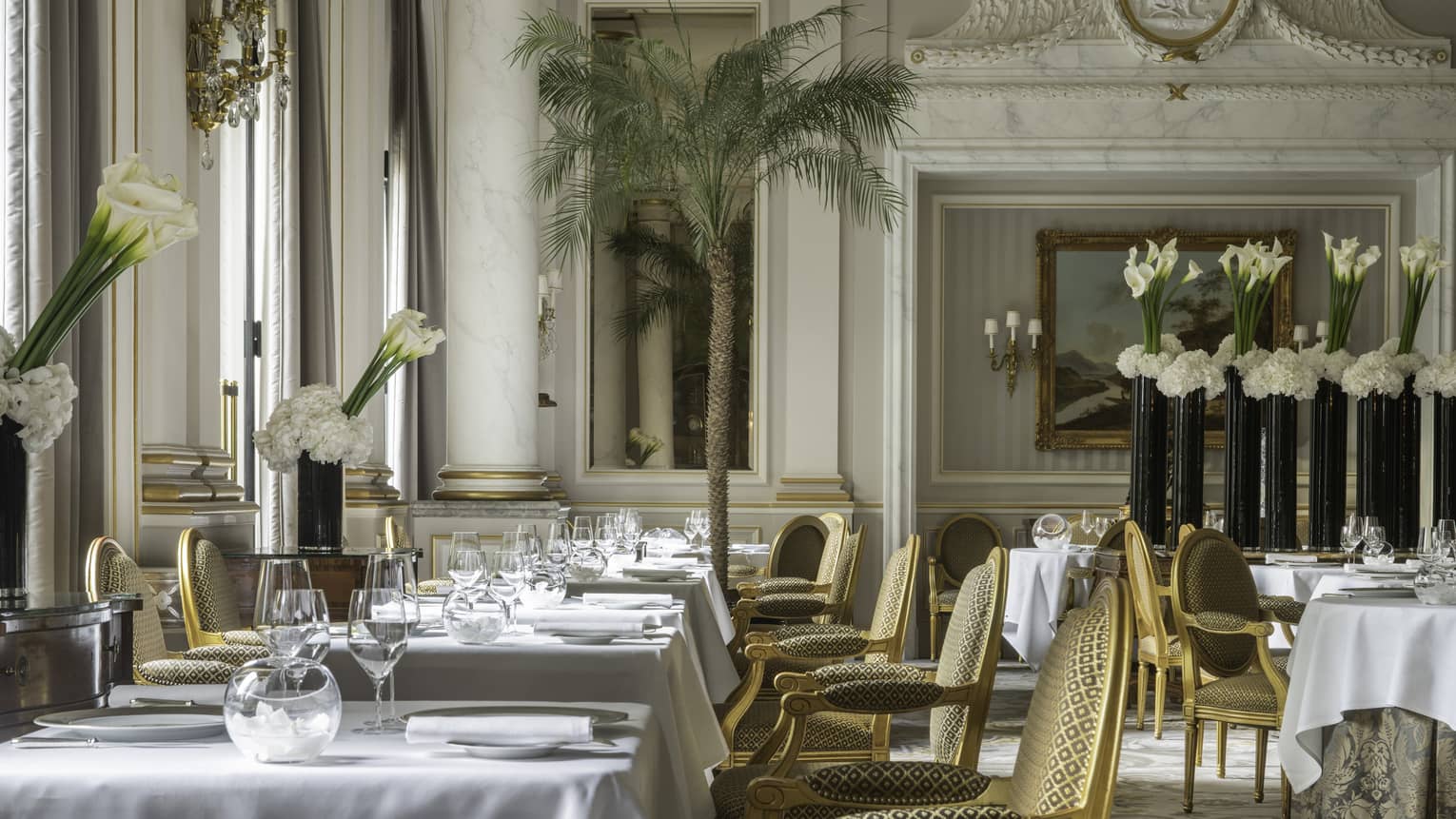
Bars in Paris
Browse all →
Hotels in Paris
Browse all →



At a Glance
- Cozy
- Classic
- Intimate
- Date Night
- Casual Hangout
- Terrace
- Extensive Wine List
- Local Sourcing
Current opening hours
- Monday
- 12–2:30 PM, 7–10 PM
- Tuesday
- 12–2:30 PM, 7–10 PM
- Wednesday
- 12–2:30 PM, 7–10 PM
- Thursday
- 12–2:30 PM, 7–10 PM
- Friday
- 12–2:30 PM, 7–10 PM
- Saturday
- 12–2:30 PM, 7–10 PM
- Sunday
- 12–2:30 PM, 7–10 PM
Hours can change for holidays and private events. Last verified .
Bright and airy dining room with cheery artwork, crayon-colored chairs, and a convivial, warm atmosphere.