Located on Rue Amélie in Paris's 7th arrondissement, Chez Françoise occupies a neighbourhood where classic French dining tradition runs deep. The address places it among the 7th's quieter dining rooms, away from the tourist circuits of Saint-Germain, making it a reference point for those tracking the divide between Paris's institutional lunch culture and its more formal evening service.
Pearl is the En Primeur Club membership app — saves, bookings, and concierge access live there. Same editors, same standards.
- Address
- 10 Rue Amélie, 75007 Paris, France
- Phone
- +33147054903
- Website
- chezfrancoise.com
- Directions
- Get directions
 Saves & bookings on Pearl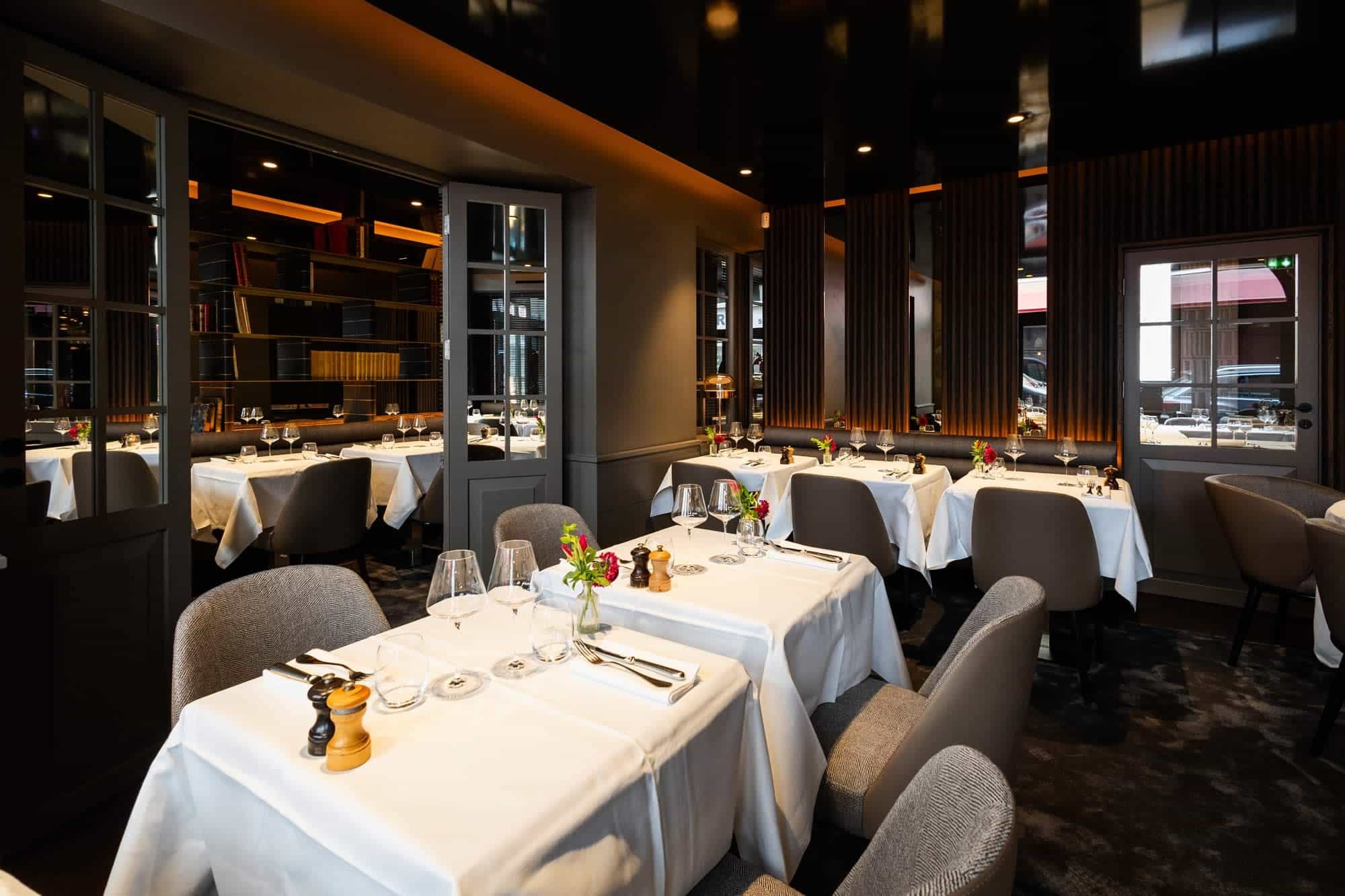
Rue Amélie and the 7th's Dining Character
The 7th arrondissement has always operated at a remove from Paris's more theatrical dining scenes. Unlike the brasserie density of the 6th or the chef-driven ambition clustered around the 8th, the 7th runs on a quieter register: government ministries, foreign embassies, residential streets that empty after 9pm. Rue Amélie sits inside this logic, a narrow residential corridor where the dining rooms tend toward the undemonstrative, and where a regular clientele, local, returning, unhurried, defines the atmosphere more than any particular menu philosophy. Chez Françoise, at number 10, belongs to this fabric. The address tells you something before the food does.
This part of the 7th positions itself between the grand institutional tables along the Seine, where Arpège has held three Michelin stars for decades, and the more accessible neighbourhood rooms that serve the area's working population at lunch. That gap between registers, between occasion dining and everyday French cooking, is where the 7th's most interesting spaces tend to operate, and it shapes how a room like Chez Françoise reads depending on the hour you arrive.
The Lunch and Dinner Divide
In Paris, the lunch-dinner divide is not simply a matter of timing. It determines format, mood, and often the value calculus entirely. The city's institutional dining culture was built around the long midday meal: the formule at a fixed price, the carafe of house wine, a table held without pressure for ninety minutes. Evening service, by contrast, carries different expectations, more deliberate pacing, longer menus, guests arriving later and sitting longer into the night.
The 7th arrondissement makes this divide particularly visible. At lunchtime, the neighbourhood fills with civil servants, embassy staff, and residents who treat the midday meal as a structural part of the day rather than a special occasion. Rooms that might feel formal in the evening loosen considerably at noon. Conversation carries across tables. The pace quickens slightly. The price point typically drops.
By evening, the 7th quiets faster than most Paris arrondissements. The government offices close, the foot traffic thins, and the remaining diners tend to be residents or those who have specifically sought out the address. Dinner here is less spontaneous than in the Marais or Oberkampf, it requires intention, and the mood in the room reflects that. Tables are set for longer stays. The wine list gets more serious attention.
For a room on Rue Amélie, this divide matters practically. Visitors who arrive at lunch will find a different proposition than those who return for dinner, not necessarily a different menu, but a different social atmosphere and a different relationship to the clock. Paris's classic French dining tradition, whether at neighbourhood scale or at the level of places like L'Ambroisie on Place des Vosges or Le Cinq at the George V, has always encoded this dual identity into its service rhythms.
Classic French Dining in the 7th: The Broader Context
The 7th is home to particularly consequential addresses in French gastronomy. Arpège under Alain Passard operates at the summit of the market, with a vegetable-led tasting menu that repositioned the address's identity in the late 1990s and has sustained three Michelin stars since. Further along the Seine, Alléno Paris au Pavillon Ledoyen represents the creative end of French fine dining, with a focus on sauces and fermentation that pushes classical tradition forward rather than preserving it. These are destination tables with international recognition and booking windows that stretch months ahead.
Neighbourhood rooms operate in a different economy. They serve the same arrondissement but answer to different pressures: the need for consistency across many covers, the pull of a local clientele that returns weekly rather than annually, the expectation of value that places the formule at the centre of the offer. France's classic bistro and restaurant culture, the same tradition that produced institutions like Paul Bocuse's Auberge du Pont de Collonges at regional scale and places like Auberge de l'Ill in Alsace, sustains itself through this dual structure: grandes tables at the leading, working rooms below, and a set of shared expectations about service, produce, and technique running through both.
Paris's contemporary dining scene has complicated this picture. The arrival of Kei, which brought Japanese technique into a classic French framework and earned three Michelin stars in doing so, signals how the category has expanded. French-trained chefs returning from abroad have introduced new reference points. But in the 7th, and specifically on streets like Rue Amélie, the gravitational pull of the traditional French lunch room remains strong. The formule, the plat du jour, the half-bottle of Burgundy, these are not nostalgic affectations here. They are the operating logic of the neighbourhood.
How to Approach a Visit
For visitors arriving from outside the arrondissement, a few practical realities shape the decision. The 7th's restaurant density is lower than in the Marais, Saint-Germain, or the 9th, which means fewer fallback options if a specific room is full. Lunch reservations at neighbourhood-scale rooms in this part of Paris are often easier to secure than dinner slots, a pattern that inverts the logic at the grands établissements, where dinner tends to book first and lunch remains the more accessible entry point.
The arrondissement's geography also rewards those willing to walk. The nearest Metro options (La Tour-Maubourg and Invalides on the 8 and 13 lines, Varenne on the 13) place Rue Amélie within ten minutes of the Eiffel Tower and Musée Rodin, making a meal here a natural extension of a day spent in the western half of the Left Bank rather than a detour from it. Those building a wider Paris itinerary around serious eating should cross-reference our full Paris restaurants guide for context on how the 7th fits into the city's broader dining geography.
France's most awarded regional tables, from Mirazur in Menton to Flocons de Sel in Megève, operate at a different scale and ambition. Paris's neighbourhood rooms serve a different function, daily life rather than occasion. But they carry the same underlying commitment to French produce and classical technique that defines the country's dining culture at every price point, from Bras in Laguiole to Georges Blanc in Vonnas. Understanding that continuity is part of what makes a lunch on Rue Amélie legible, and worth the detour.
Quick reference: Chez Françoise, 10 Rue Amélie, 75007 Paris. Nearest Metro: La Tour-Maubourg (line 8) or Varenne (line 13). No pricing, hours, or booking data currently available; contact directly for current service details.
Budget Reality Check
Comparable venues nearby, for context on price, style, and recognition.
| Venue | Cuisine | Price | Notes |
|---|---|---|---|
| Chez FrançoiseThis venue — the venue you are viewing | Not listed | $$$ | Not listed |
| Le Huitième Arrt | Not listed | $$$ | Quartier de l'Europe, French Brasserie with Corsican Accents |
| Le Voltaire | Not listed | $$$ | 7e Arr. – Palais Bourbon, Classic French Brasserie |
| Le Buci | Not listed | $$$ | Saint-Germain-des-Prés, Traditional French Brasserie |
| Un jour à Peyrassol | Vivienne, Provençal Truffle Bistro | $$$ | Not listed |
| Vaudeville | Not listed | $$$ | 2nd arrondissement, Classic French Brasserie |
Continue exploring
More in Paris
Restaurants in Paris
Browse all →
Bars in Paris
Browse all →
Hotels in Paris
Browse all →

At a Glance
- Classic
- Elegant
- Cozy
- Intimate
- Business Dinner
- Special Occasion
- Family
- Terrace
- Historic Building
- Extensive Wine List
- Street Scene
Current opening hours
- Monday
- 12–2:30 PM, 6–10:30 PM
- Tuesday
- 12–2:30 PM, 6–10:30 PM
- Wednesday
- 12–2:30 PM, 6–10:30 PM
- Thursday
- 12–2:30 PM, 6–10:30 PM
- Friday
- 12–2:30 PM, 6–10:30 PM
- Saturday
- 12–2:30 PM, 6–10:30 PM
- Sunday
- 12–2:30 PM, 6–10:30 PM
Hours can change for holidays and private events. Last verified .
Calm and pleasant setting with white tablecloths, small sidewalk terrace, and a cozy, professional atmosphere.