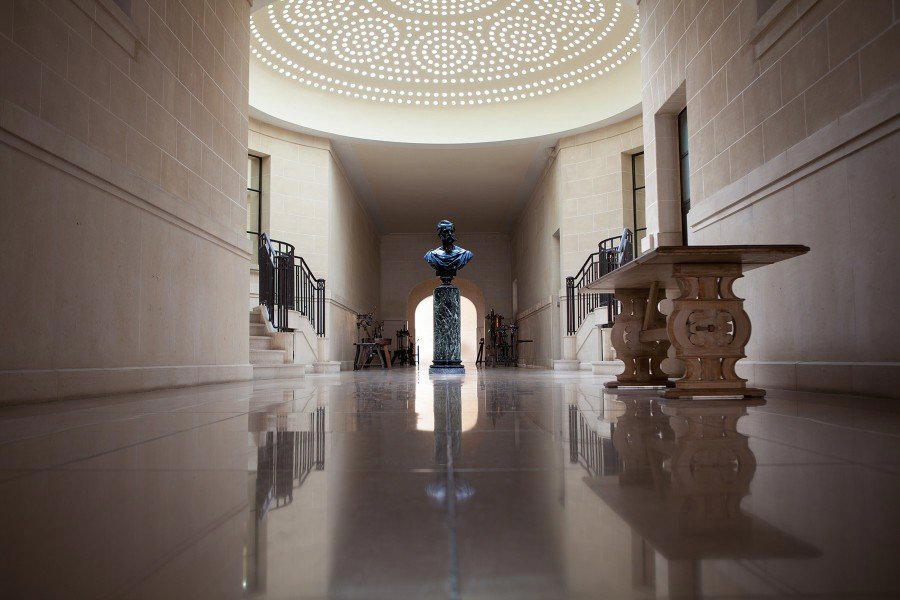
Mollard at 115 Rue Saint-Lazare sits inside one of Paris's most architecturally intact Belle Époque brasserie rooms, its original mosaic tilework and mirrored salons placing it squarely within a tradition that predates the modern restaurant category. The address puts it steps from Gare Saint-Lazare, making it a reference point for the 8th arrondissement's working brasserie heritage rather than its haute cuisine circuit.
Pearl is the En Primeur Club membership app — saves, bookings, and concierge access live there. Same editors, same standards.
- Address
- 115 Rue Saint-Lazare, 75008 Paris, France
- Phone
- +33143875022
- Website
- mollard.fr
- Directions
- Get directions
 Saves & bookings on Pearl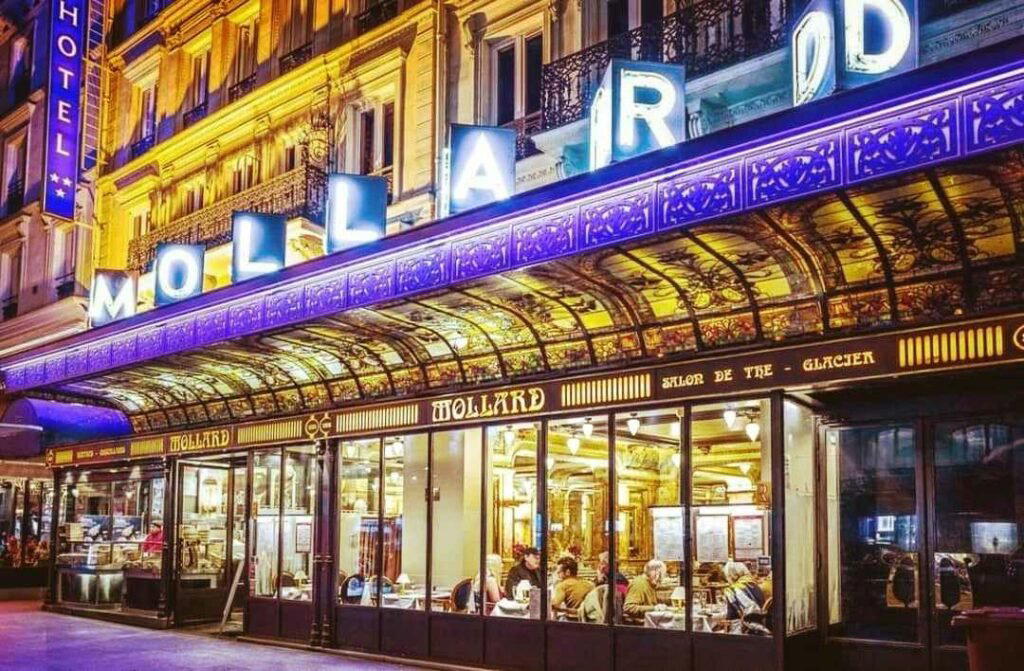
A Belle Époque Room in a City That Keeps Tearing Them Down
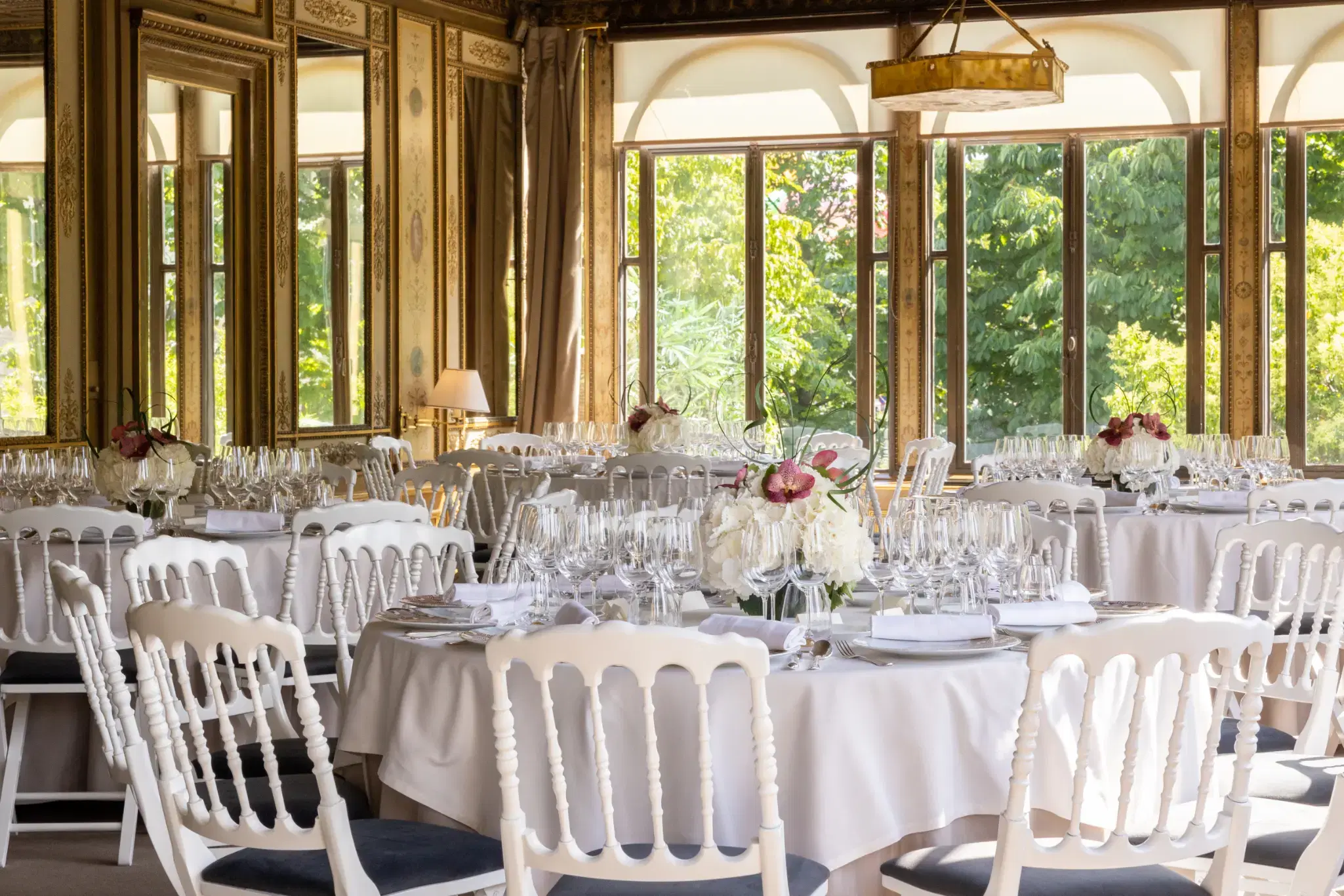
Paris loses a brasserie dining room every few years to renovation, repositioning, or conversion into something with lower overheads and higher margins. The Belle Époque interiors that survived into the twenty-first century carry a particular weight precisely because so few of them did. The fin-de-siècle brasserie format, with its long zinc counters, hand-laid mosaic floors, carved mahogany panels, and painted-glass ceilings, was the dominant dining vernacular of a specific twenty-year window in French urban life. Most of it is gone. What remains tends to fall into two categories: the heavily restored and slightly theme-park, and the genuinely continuous. Mollard, at 115 Rue Saint-Lazare, belongs to the second category.
The Rue Saint-Lazare address locates it precisely within Paris's working-city geography. This is not the 6th arrondissement's literary brasseries, nor the grands boulevards' tourist-facing institutions. The 8th arrondissement pocket around Gare Saint-Lazare has historically served a different function: feeding commuters, rail passengers, and the commercial district's daytime population. That context matters because it shaped the format. Brasseries in this orbit were built for volume and continuity, not occasion dining, and the architecture reflects that. High ceilings accommodate noise. Deep rooms seat large parties efficiently. The décor signals permanence rather than exclusivity. Mollard was built within that logic, and the room reads accordingly.
The Brasserie Tradition and What Sustainability Actually Means for It
The sustainability conversation in French dining tends to orbit the three-Michelin-star circuit, where producers get named, supply chains get audited, and vegetable-forward menus attract press coverage. Houses like Bras in Laguiole, which built its identity around plateau terrain and hyper-local sourcing decades before the concept had a marketing category, or Mirazur in Menton with its biodynamic kitchen garden, represent one version of environmentally conscious cooking: the ambitious, capital-intensive, chef-as-auteur model.
Brasserie format represents a different, older, and more structurally durable version of the same idea. Brasseries were built around seasonal rotation, whole-animal use, and regional produce not as ideology but as economic necessity. The classic brasserie menu, with its choucroute garnie, its plateau de fruits de mer, its confit and offal preparations, encodes forms of waste reduction that predate the term. Shellfish served on ice rather than cooked minimises energy use. House-made terrines and rillettes convert secondary cuts. Daily specials absorb surplus. These practices were embedded in the format before sustainability became a framework. The question for any operating brasserie today is whether that original logic survives in the actual kitchen, or whether it has been replaced by centralised supply and portion-controlled convenience products, as happened to much of the brasserie tier during the 1990s and 2000s.
For the broader brasserie category, the properties that held their format integrity through that period, keeping made-from-scratch standards and direct supplier relationships, now occupy a different competitive position than those that cut costs and lost credibility. The Auberge de l'Ill in Illhaeusern represents the rural auberge version of that continuity. Troisgros in Ouches represents the multi-generational family house that evolved rather than compromised. The Parisian brasserie that has maintained genuine kitchen standards through the same period is rarer than the exterior suggests.
Where Mollard Sits in the Paris Dining Hierarchy
The 8th arrondissement's upper dining tier is occupied by a set of addresses with sustained critical recognition and international clientele. Le Cinq at the Four Seasons Hôtel George V operates at the summit of the hotel-dining bracket. Alléno Paris au Pavillon Ledoyen represents the creative end of the arrondissement's offer. These are three-star operations pricing into a comparable set that competes globally, alongside institutions like Le Bernardin in New York City in terms of the clientele they attract and the expectations they carry.
Mollard does not occupy that tier and does not attempt to. Its competitive set is the city's working brasseries, a category that runs from the genuinely historic to the industrially managed. Within that set, the architectural integrity of the room is the first differentiator. The mosaic tilework, the carved woodwork, and the painted panels at Mollard represent a level of original material that most brasserie competitors cannot match, whether because the rooms were renovated beyond recognition or were never this elaborate to begin with. That physical asset places it alongside the city's other landmark brasserie interiors, a short list by any count.
At the other end of Paris's dining range, the creative and contemporary French houses, like Kei with its Franco-Japanese precision, Arpège with its vegetable-led kitchen, or L'Ambroisie on the Place des Vosges, operate on entirely different axes: tasting menus, controlled seatings, and format discipline that the brasserie model structurally cannot and should not replicate. The comparison is instructive less for what it reveals about quality than for what it clarifies about format. A brasserie is not a simplified version of a haute cuisine house. It is a different service model with different strengths.
The Gare Saint-Lazare Context
Gare Saint-Lazare is the busiest terminus in France by passenger volume, and the dining ecosystem that surrounds it reflects that function. The immediate radius is dominated by transactional food: chain café formats, quick-service operations, and hotel dining calibrated for early checkouts and late arrivals. Against that backdrop, a room with Mollard's architectural presence reads as a significant counterpoint. French regional houses like Au Crocodile in Strasbourg or Auberge du Vieux Puits in Fontjoncouse anchor their identity in landscape and regional specificity. Paris's historic brasseries anchor theirs in the city itself, in the specific sociology of neighbourhoods that shaped them. The Gare Saint-Lazare orbit shaped Mollard as much as any kitchen decision ever could.
Planning Your Visit
Mollard is located at 115 Rue Saint-Lazare, 75008 Paris, directly accessible from Gare Saint-Lazare. The room's scale makes it more accommodating for walk-in dining than smaller Parisian addresses, though weekday lunch draws a consistent local professional clientele. Reservations are recommended, and the restaurant is open daily from 12 PM to 12:20 AM. The address is on the 8th arrondissement boundary with the 9th, a few minutes' walk from the major department stores of Boulevard Haussmann. The address is on the 8th arrondissement boundary with the 9th, a few minutes' walk from the major department stores of Boulevard Haussmann.
Quick reference: 115 Rue Saint-Lazare, 75008 Paris. Nearest major transport: Gare Saint-Lazare (multiple metro lines, RER, mainline rail).
What It’s Closest To
Comparable venues nearby, for context on price, style, and recognition.
| Venue | Cuisine | Price | Notes |
|---|---|---|---|
| MollardThis venue — the venue you are viewing | Traditional French Brasserie with Seafood | $$$ | Not listed |
| BANG | Contemporary French Bistro | $$$ | Place-Vendôme |
| Maison 28 | Modern French Bistro | $$$ | 1er arrondissement |
| Les Fables de La Fontaine | Modern French Seafood Fine Dining | $$$ | 7th Arrondissement |
| Hébé | Modern French-Mediterranean Fusion | $$$ | Quartier Latin |
| Vent d'Armor | Traditional French Seafood | $$$ | Quartier Latin |
Continue exploring
More in Paris
Restaurants in Paris
Browse all →
Bars in Paris
Browse all →
Hotels in Paris
Browse all →



At a Glance
- Classic
- Elegant
- Well Known
- Historic
- Business Dinner
- Group Dining
- Special Occasion
- Historic Building
Current opening hours
- Monday
- 12 PM–12:20 AM
- Tuesday
- 12 PM–12:20 AM
- Wednesday
- 12 PM–12:20 AM
- Thursday
- 12 PM–12:20 AM
- Friday
- 12 PM–12:20 AM
- Saturday
- 12 PM–12:20 AM
- Sunday
- 12 PM–12:20 AM
Hours can change for holidays and private events. Last verified .
Far-reaching Art Nouveau interior featuring sea green frescos, marble columns, ancient mosaics, and a reconstructed glass roof, creating a historic and elegant Parisian atmosphere.