Le 11
Le 11 sits on Avenue du Passous in Agon-Coutainville, a small resort town on the Manche coast of Normandy where the tidal flats and market gardens define what ends up on the plate. The Cotentin peninsula's reputation for notable shellfish, salt-meadow lamb, and Isigny dairy products makes this stretch of coastline one of France's more compelling sourcing territories, and Le 11 works within that tradition.
Pearl is the En Primeur Club membership app — saves, bookings, and concierge access live there. Same editors, same standards.
- Address
- 11 Av. du Passous, 50230 Agon-Coutainville, France
- Phone
- +33233470633
- Directions
- Get directions
 Saves & bookings on Pearl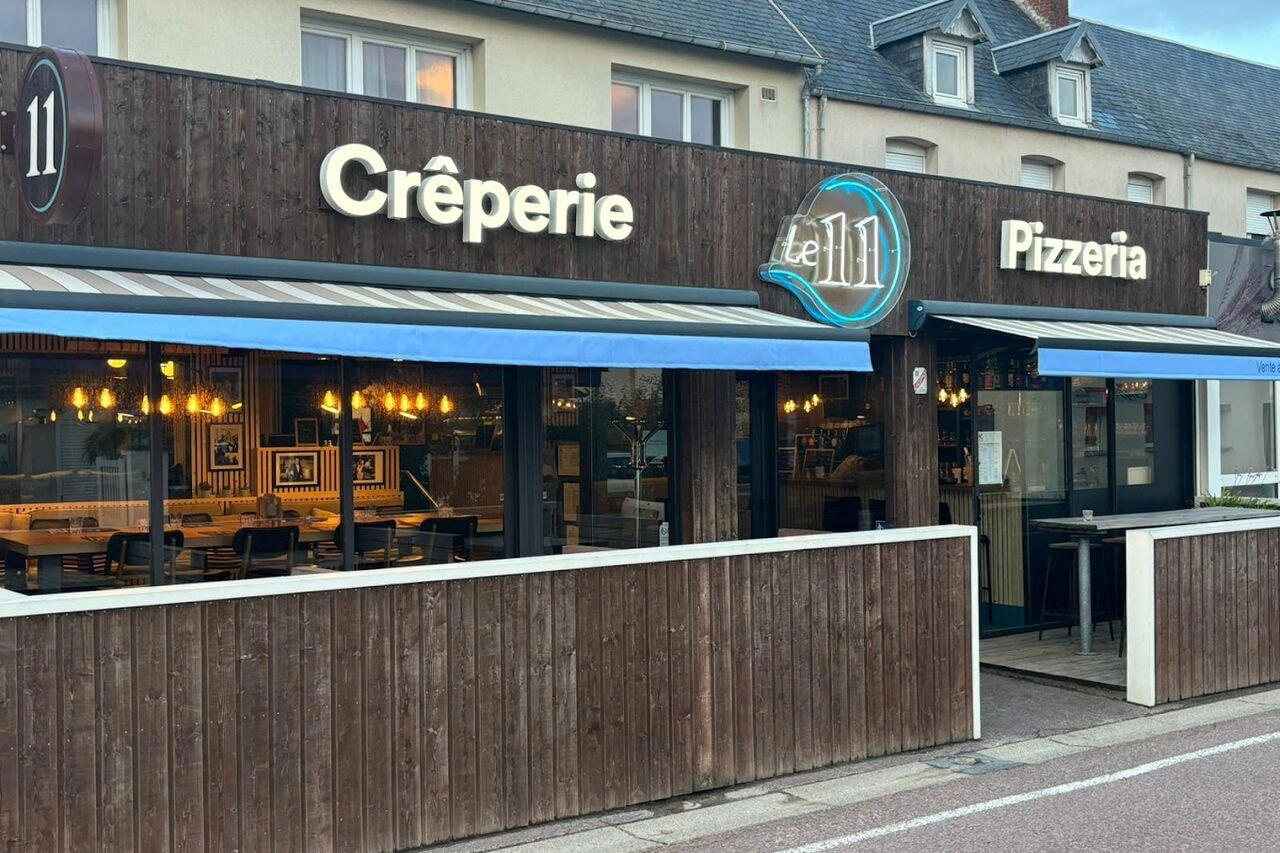
Cotentin Coast, on the Plate
Agon-Coutainville sits at the edge of a peninsula where the Atlantic and the English Channel meet in long, flat tidal exchanges. The town itself is a low-key seaside resort, popular with Parisian families in summer and largely quiet the rest of the year. What it lacks in metropolitan bustle it more than compensates for in raw material. The Cotentin is one of France's most consequential sourcing territories: salt-meadow lamb grazed on coastal grass already salted by sea spray, oysters and clams from beds worked by families across generations, cream and butter from the Isigny appellation that has protected-designation status, and market vegetables grown in the mild, damp microclimate inland. The address is unglamorous; the sourcing context is not.
What the Normandy Coast Brings to the Table
To understand what a restaurant on this coastline is working with, it helps to think about ingredient geography. The Cotentin peninsula is bracketed by water on three sides, and that geography shapes everything from protein to dairy. Pré-salé lamb here carries a flavour distinction that has no direct equivalent elsewhere in France: the animals graze on grass seasoned by coastal salt spray, and the result is meat with a minerality that needs no augmentation at the table. Chefs at places like Christopher Coutanceau in La Rochelle have built reputations around similarly coast-tied sourcing further south, and La Marine in Noirmoutier-en-l'île has demonstrated for years that a small Atlantic island's produce can sustain serious culinary ambition. The Cotentin operates in the same logic, just further north.
Shellfish from the bays around the peninsula arrive with the kind of iodine clarity that only comes from cold, fast-moving water. Isigny cream, produced a short distance to the east along the Calvados coast, has held its AOP designation since 1986, a benchmark for quality that kitchens across France use as a reference point. These are not incidental details. They define the cooking range available to any serious kitchen operating in this region.
The Physical Address and What to Expect
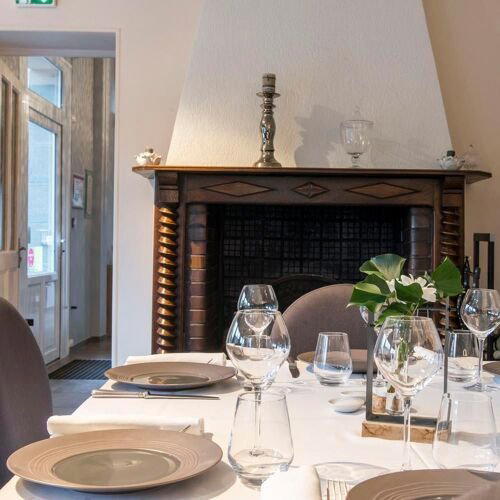
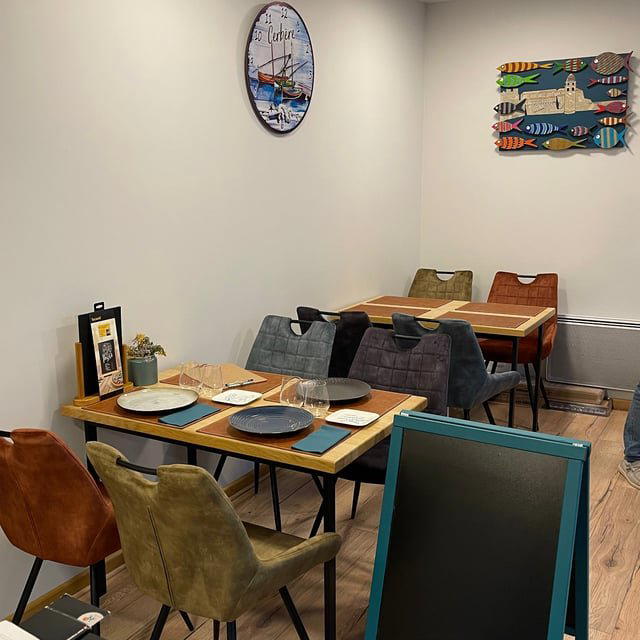
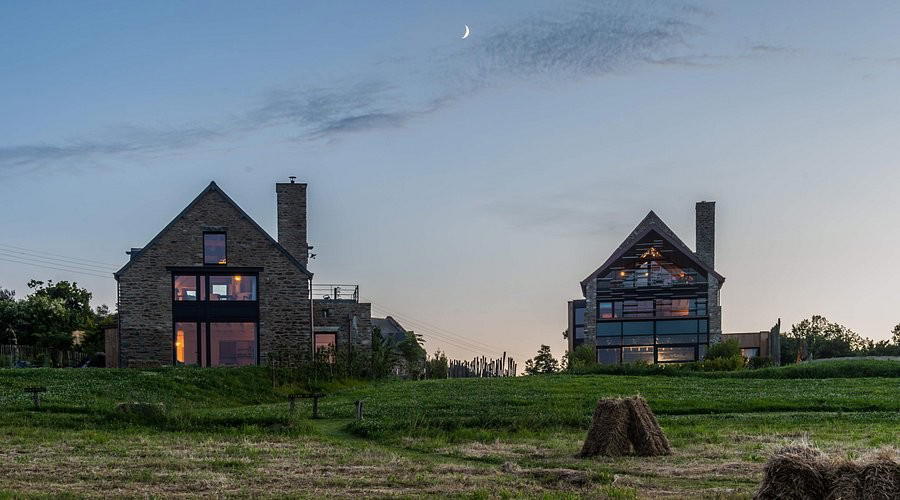
The approach along Avenue du Passous is characteristic of the Norman coast in this part of the Manche: modest scale, low buildings, the sense that the sea is closer than it looks. Le 11 occupies a position in the kind of town where dining options tend toward the casual, the seasonal, and the local, which is not a limitation so much as a filter. The restaurants that endure in places like Agon-Coutainville do so because they are genuinely connected to where they sit, not because they are replicating a style imported from elsewhere.
Visitors arriving from Paris, Caen, or Cherbourg should plan for a destination stay rather than a passing stop. Agon-Coutainville is not on the way to somewhere else. That deliberateness shapes the clientele and, in turn, the tone. The room at Le 11 reflects the address: not the vaulted formality of Alléno Paris au Pavillon Ledoyen or the theatrical scale of Paul Bocuse's Auberge du Pont de Collonges, but something with a lower centre of gravity, closer to the ground it stands on.
Normandy Dining in Regional Frame
French regional cooking at serious level has never been purely a Paris concern. The institutional weight sits in the capital, where tables like Alléno Paris operate at the summit of a dense, competitive market, but the sourcing story often begins somewhere like the Cotentin. Houses further afield, from Bras in Laguiole to Auberge du Vieux Puits in Fontjoncouse, have proved that deep rootedness in a specific territory can generate cooking that has nothing to prove against urban competition. Mirazur in Menton made the garden its primary argument. Flocons de Sel in Megève built a mountain sourcing identity that defines the menu's architecture. The Cotentin has comparable raw material depth; the question for any kitchen working here is whether it commits to that argument or hedges toward generic bistro safety.
Normandy's own culinary reputation has historically centred on dairy, apples, and the sea, a triad that has produced distinctive regional dishes from sole normande to tarte fine aux pommes. The region has not historically generated the same density of high-recognition tables as Burgundy, Alsace, or the Basque Country, but individual restaurants from Auberge de l'Ill in Illhaeusern or Assiette Champenoise in Reims demonstrate the pattern that excellence in France tends to be geographically distributed rather than concentrated. A focused kitchen on the Cotentin coast has the ingredients to make a genuine case for itself.
Planning a Visit
Agon-Coutainville is most accessible by car: the D route from Coutances takes under fifteen minutes, and Coutances itself connects to Cherbourg and Caen by train. Summer, when the town fills with holiday visitors, brings the broadest dining hours across the area, while the shoulder seasons offer a quieter experience with the same coastal produce at or near peak quality. Autumn on this coast, when oyster season hits its stride and the lamb from the summer's grazing comes to market, is a credible argument for an off-season visit. Prospective guests should note that the restaurant is recommended for reservations and is open Monday, Tuesday, Friday, Saturday, and Sunday from 11:30 AM to 2 PM and 6 to 10 PM; it is closed Wednesday and Thursday.
For the wider context of ambitious French coastal cooking, La Marine in Noirmoutier-en-l'île and Christopher Coutanceau in La Rochelle represent the benchmark of what Atlantic France can achieve when sourcing and technique are fully aligned. Tables like AM par Alexandre Mazzia in Marseille, Georges Blanc in Vonnas, L'Oustau de Baumanière in Les Baux, Au Crocodile in Strasbourg, and Troisgros in Ouches show the range of what territory-rooted ambition looks like across France. Internationally, Le Bernardin in New York City and Atomix in New York City illustrate how ingredient sourcing and precision cooking translate across different contexts and cuisines.
Comparison Snapshot
Comparable venues nearby, for context on price, style, and recognition.
| Venue | Cuisine | Price | Notes |
|---|---|---|---|
| Le 11This venue — the venue you are viewing | French Crêperie & Pizzeria | $ | Not listed |
| Le Signal 2108 | Bistronomic French with Regional Specialties | $$ | Signal Mountain |
| Bistrot Marcel | Classic French Bistro | $ | Rezé |
| Paris-New York | French Fusion | $$ | Centre-ville |
| Tête d'ail | Contemporary French Bistrot | $$ | centre-ville |
| L'Arbalaise | Traditional French Bistro | $$ | centre-ville |
Continue exploring
More in Agon Coutainville
Restaurants in Agon Coutainville
Browse all →
Bars in Agon Coutainville
Browse all →
At a Glance
- Cozy
- Casual
- Rustic
- Family
- Casual Hangout
- Group Dining
- Terrace
- Waterfront
- Local Sourcing
Current opening hours
- Monday
- 11:30 AM–2 PM, 6–10 PM
- Tuesday
- 11:30 AM–2 PM, 6–10 PM
- Wednesday
- Closed
- Thursday
- Closed
- Friday
- 11:30 AM–2 PM, 6–10 PM
- Saturday
- 11:30 AM–2 PM, 6–10 PM
- Sunday
- 11:30 AM–2 PM, 6–10 PM
Hours can change for holidays and private events. Last verified .
Charming and welcoming atmosphere with pleasant décor, natural lighting, and a convivial setting that feels both comfortable and lively during peak hours.