On a residential stretch of Rue de Fougères in northern Rennes, Paris-New York sits at the intersection its name implies: the transatlantic dialogue between French culinary tradition and American energy. The address alone signals a restaurant operating at a remove from the tourist-facing centre, drawing a local crowd that already knows where to go. Expect a meal structured as a considered progression, not a casual drop-in.
Pearl is the En Primeur Club membership app — saves, bookings, and concierge access live there. Same editors, same standards.
- Address
- 276 Rue de Fougères, 35700 Rennes, France
- Phone
- +33223211571
- Website
- paris-ny-restaurant.com
- Directions
- Get directions
 Saves & bookings on Pearl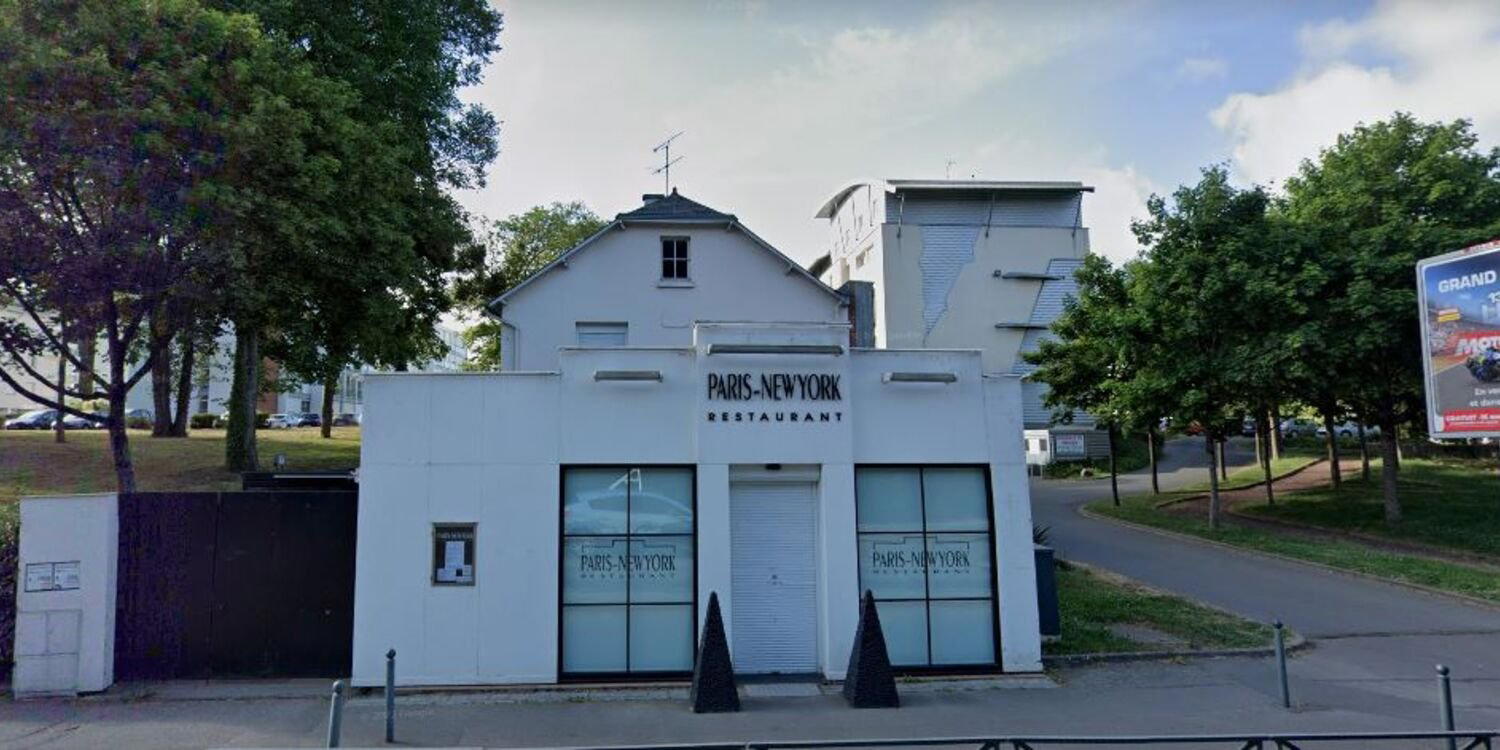
Between Two Cities, On One Plate
Rennes has developed a dining identity that rewards the traveller willing to move past the medieval quarter and into its residential neighbourhoods. On Rue de Fougères, a long artery running north through the 35700 arrondissement, the city's appetite for transatlantic reference points finds its most literal expression: a restaurant called Paris-New York, trading on the productive tension between two food cultures that have spent decades borrowing from each other. That name is not decoration. It signals a kitchen somewhere in the conversation between French classicism and the American appetite for directness, informality, and bold primary flavours.
This kind of transatlantic framing has become a meaningful strand in French provincial dining over the past decade. Where earlier generations of ambitious French regional restaurants looked almost exclusively to Paris or Lyon for validation, a younger cohort has drawn lines across the Atlantic. The result is a style that may retain classical technique while pushing portion generosity, smoke, or ingredient provenance in directions that feel distinctly non-Parisian. Paris-New York sits in that current, at 276 Rue de Fougères, at a sufficient distance from the city centre to suggest a restaurant that earns its clientele on reputation rather than footfall.
The Arc of the Meal
In restaurants that operate under a transatlantic premise, the structure of a meal often carries as much meaning as individual dishes. The French tasting format, with its deliberate sequencing and long gaps for conversation, finds a counterweight in the American instinct to keep things moving, to make each course feel like the point rather than a step toward one. The better kitchens in this register manage both: they build across the meal without losing the energy of any individual plate.
A progression at Paris-New York would reasonably expect to open with something that stakes out the territory, a signal of technique and reference points before the kitchen commits fully. In France's established transatlantic restaurants, this often means an early course that is visually spare but flavourally direct, a single protein or vegetable treated with enough classical precision to demonstrate intent. The middle courses in this format carry intellectual weight, where the dialogue between culinary traditions becomes most audible. The close tends toward comfort rather than provocation, a recognition that endings in dining should resolve rather than challenge.
For a comparative sense of what high-ambition multi-course sequencing looks like elsewhere in France, the range is considerable. The progression at Mirazur in Menton is organised around garden and altitude; at Bras in Laguiole, the arc runs through terroir at near-abstract intensity. Closer to Rennes in spirit, if not geography, AM par Alexandre Mazzia in Marseille has made the short, succession-based format its own, where accumulation of small gestures replaces the traditional weight of a grand main course. Paris-New York draws from a different reference point, but the question of sequencing remains central to how a meal here should be read.
Where Paris-New York Sits in Rennes
Rennes punches above its provincial weight on the restaurant front, partly because of its student population and partly because Brittany's larder, shellfish, buckwheat, dairy, coastal vegetables, gives ambitious cooks genuinely strong material to work with. The city's dining scene spreads across a price range from the single-euro crêpe to serious tasting menus, and the restaurant occupies the middle distance of that spectrum, at enough remove from the entry-level to attract considered diners without the full formality of Rennes' most serious tables.
Within that context, the restaurant sits alongside a small peer group of addresses that have moved Rennes' reputation forward. Ima operates at the €€€€ tier with a creative format. Alphonse has built a following at the more casual end. Bombance occupies a modern cuisine position, while Breizh Café Rennes has consolidated the Breton format into a bankable address. Benèze rounds out the mid-range with its own editorial point of view. The restaurant in this field is positioned less as a representative of Breton tradition and more as a restaurant with a stated ambition to look outward, which in a city this self-aware about its regional identity is itself a positioning decision.
For visitors calibrating their Rennes itinerary, the full picture is covered in our full Rennes restaurants guide.
The Transatlantic Reference in French Dining
The Paris-to-New York axis in gastronomy has a documented history. New York's French restaurant tradition runs through names with verifiable depth: Le Bernardin in New York City has held three Michelin stars for decades and remains the definitive expression of French technique applied to American seafood culture. Atomix in New York City shows how tasting-menu discipline can absorb multiple culinary traditions without losing internal logic. On the French side, houses like Alléno Paris au Pavillon Ledoyen and Assiette Champenoise in Reims demonstrate how rigorous classical training expresses itself at the formal end.
Naming a restaurant after this axis, as the restaurant does, is a claim that deserves scrutiny in execution. The restaurants in France that have made the transatlantic reference count, rather than merely decorative, tend to do so through specific ingredients, sourcing decisions, or technique combinations that require both vocabularies to be legible. Smoked elements, American whiskey in sauces, burger-format courses within a tasting menu, or simply the portion logic of American cooking applied to French product: these are the moves that give the concept substance. Whether the restaurant does this, and through which specific moves, would require a table rather than a report from the outside.
Getting There and Planning Your Visit
Rue de Fougères puts the restaurant in the northern residential quarter of Rennes, accessible by car or a short taxi ride from the city centre or Rennes' TGV station, which connects to Paris Montparnasse in around 1 hour 25 minutes. The address suggests a neighbourhood restaurant rather than a tourist-circuit stop, which has implications for booking lead times: residential regulars in French cities tend to lock tables early in the week for weekend slots, and a restaurant on this trajectory in a city of Rennes' dining awareness is unlikely to have open tables on short notice for Friday and Saturday evenings. Booking several days ahead is sensible; for weekend visits, a week or more is a reasonable assumption.
For broader context on how the French regional tasting-menu format has evolved, addresses like Flocons de Sel in Megève, Troisgros - Le Bois sans Feuilles in Ouches, Auberge de l'Ill in Illhaeusern, Au Crocodile in Strasbourg, and Paul Bocuse - L'Auberge du Pont de Collonges in Collonges-au-Mont-d'Or each offer reference points for how tradition and ambition coexist across France's provinces. The restaurant is a younger, less documented entry in that conversation, but on a street that suggests it is building its audience methodically rather than chasing visibility.
How Paris-New York Rennes compares with similar nearby venues.
| Venue | Cuisine | Price |
|---|---|---|
| Essentiel | Modern Cuisine | €€ |
At a Glance
- Elegant
- Intimate
- Sophisticated
- Date Night
- Business Dinner
- Special Occasion
- Private Dining
- Extensive Wine List
- Local Sourcing
Current opening hours
- Monday
- 12–1:30 PM, 7:30–9:15 PM
- Tuesday
- 12–1:30 PM, 7:30–9:15 PM
- Wednesday
- 12–1:30 PM, 7:30–9:15 PM
- Thursday
- 12–1:30 PM, 7:30–9:15 PM
- Friday
- 12–1:30 PM, 7:30–9:45 PM
- Saturday
- 7:30–9:45 PM
- Sunday
- Closed
Hours can change for holidays and private events. Last verified .
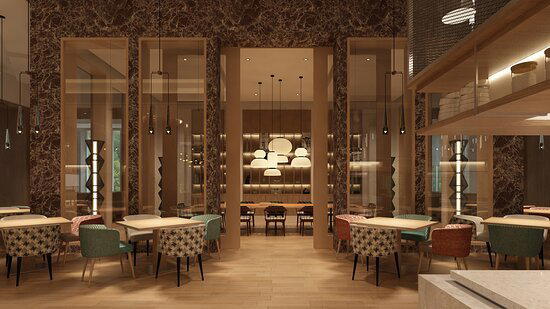
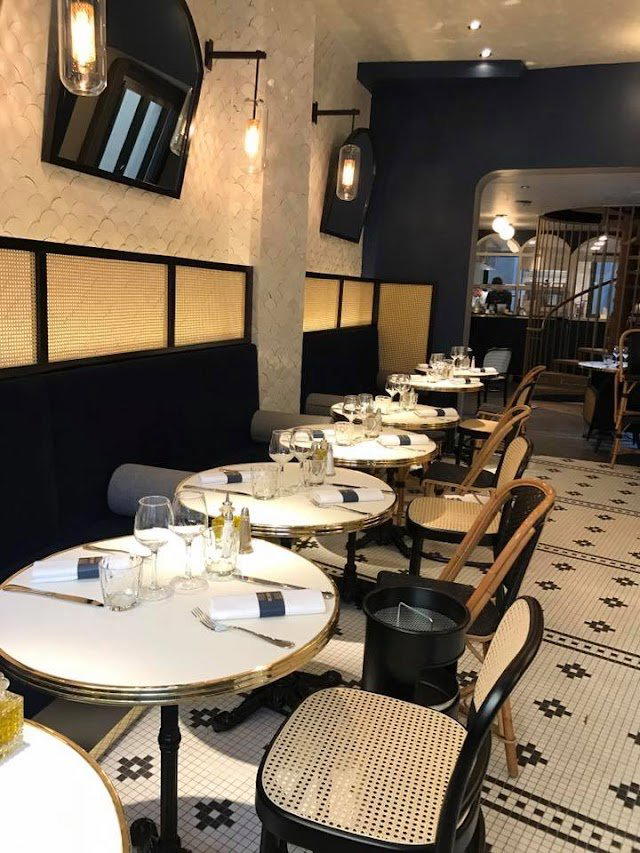
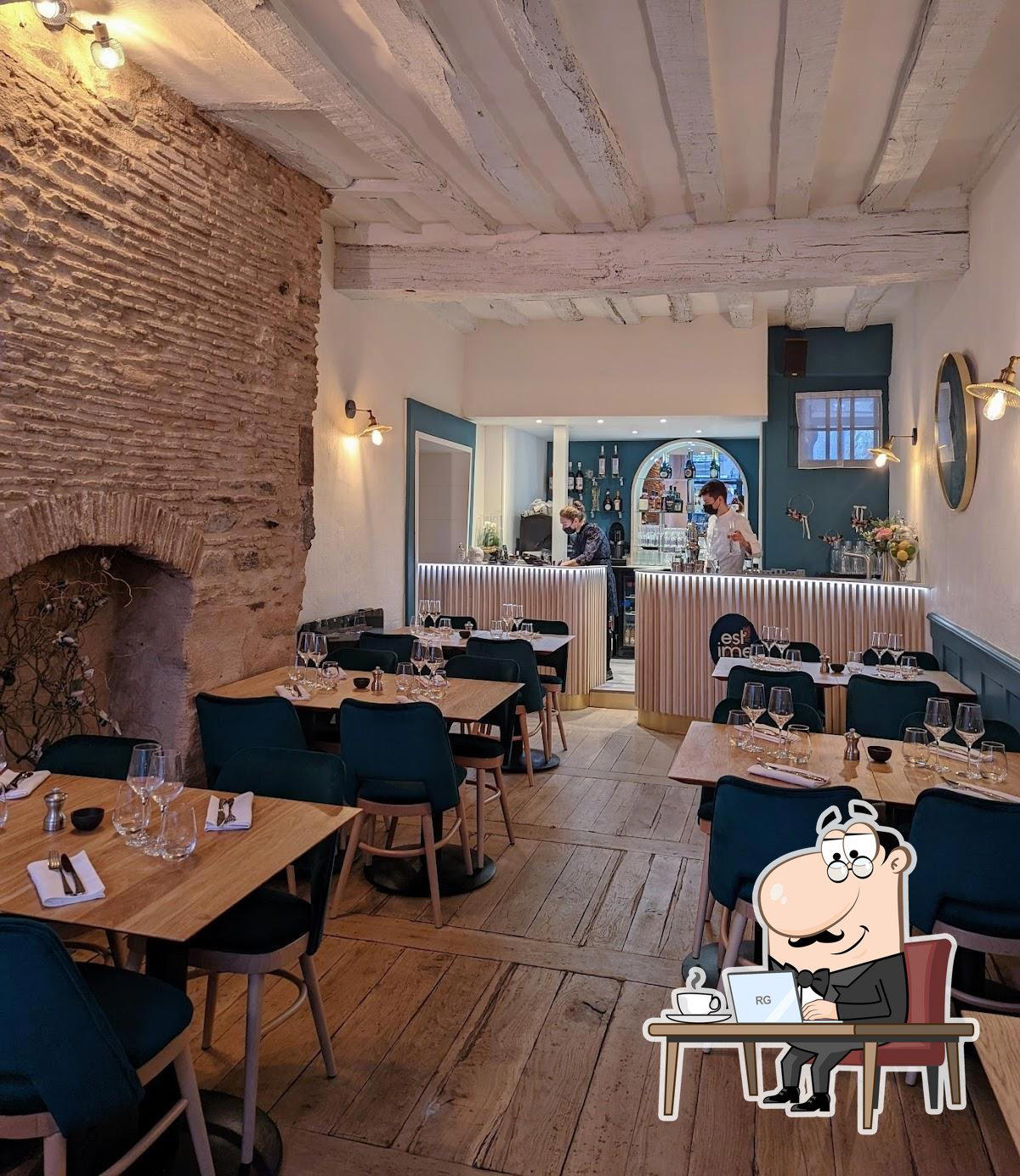
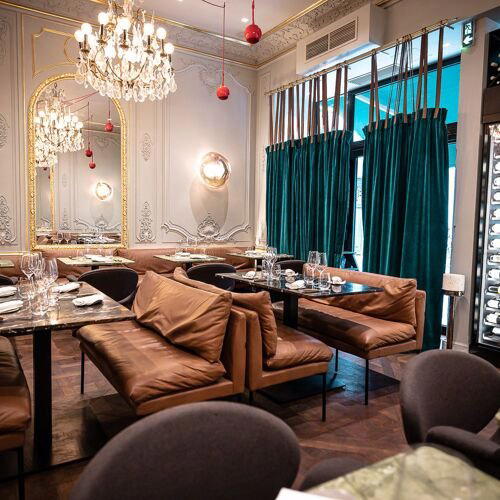
Tamisée et sobre ambiance with soft lighting creating an intimate and refined atmosphere.