
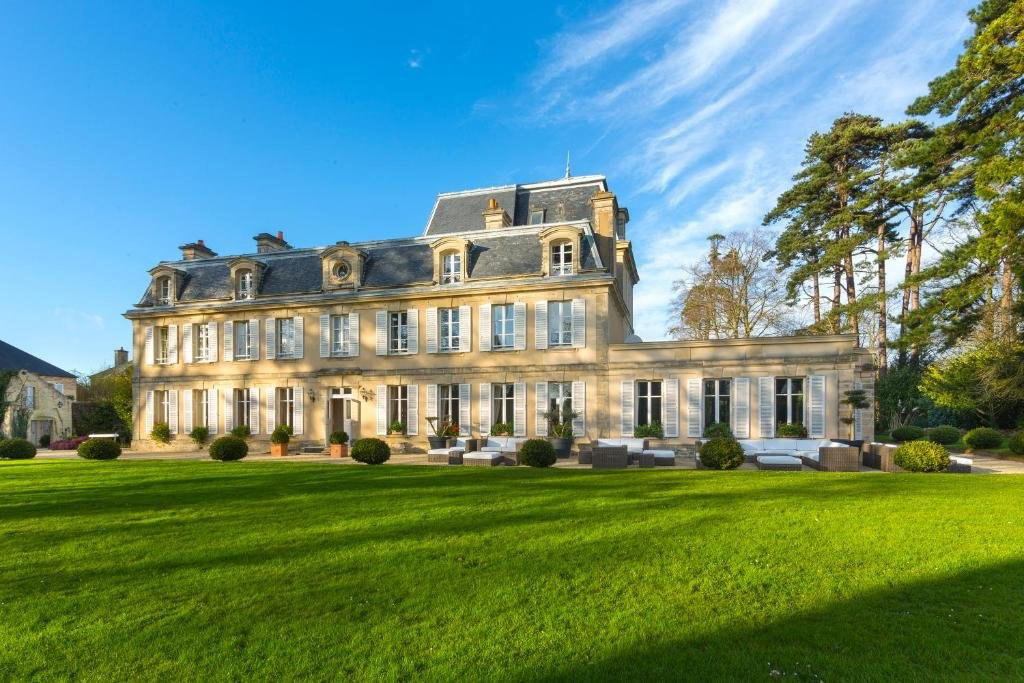
A Michelin Selected château-hotel in the Norman countryside, Château de Canisy occupies a historic estate in the Manche département, positioning it among France's small collection of castle conversions that trade metropolitan access for architectural weight and landed quietude. The property sits in a comparable set defined by heritage fabric and estate scale rather than urban amenity.
Pearl is the En Primeur Club membership app — saves, bookings, and concierge access live there. Same editors, same standards.
- Address
- 8 Rue de Kergorlay, 50860 Canisy, France
- Phone
- +33 6 75 82 08 30
- Website
- chateaudecanisy.com
 Saves & bookings on Pearl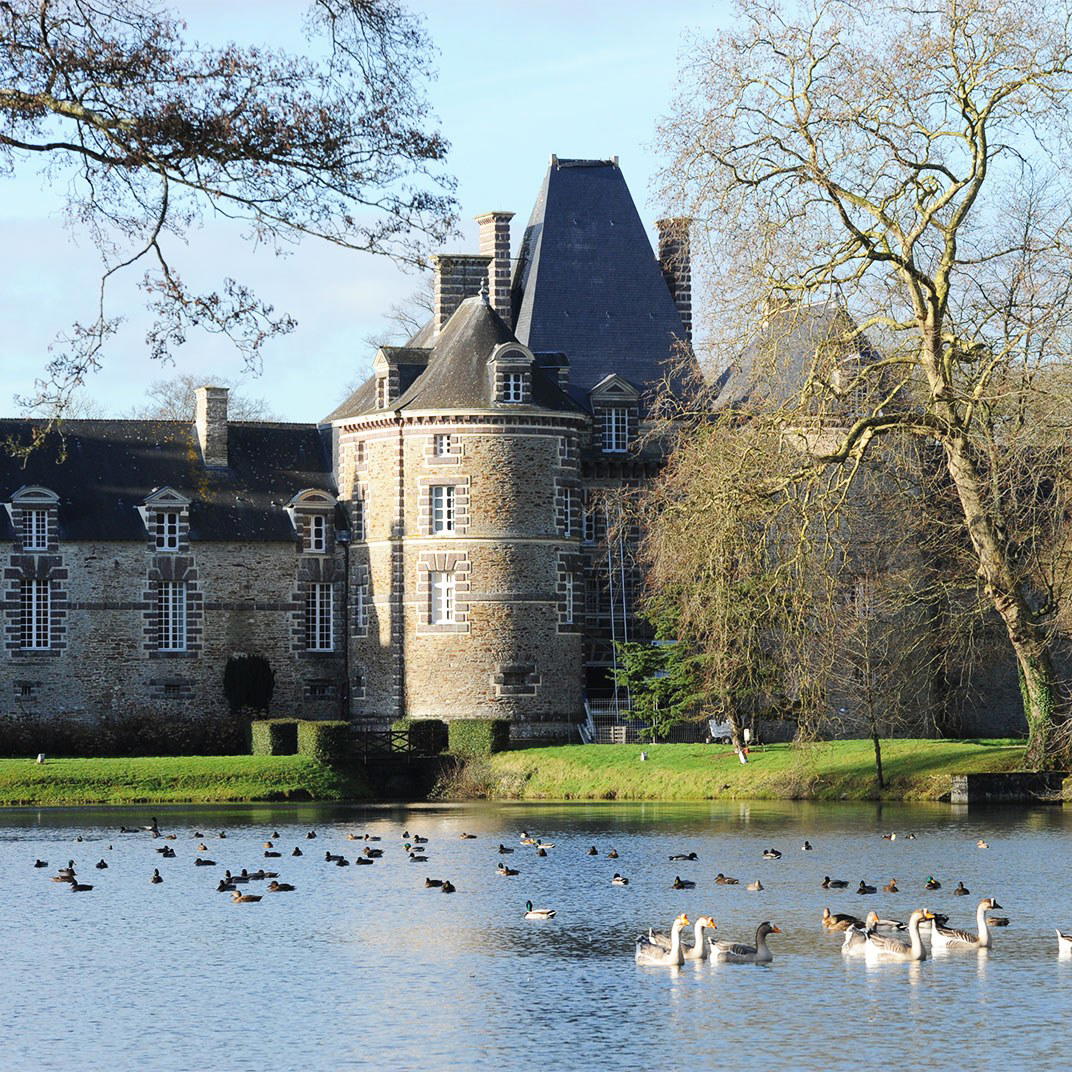
Stone, Slate, and the Norman Countryside
Approaching Château de Canisy, the visual grammar is immediately that of the Norman interior: slate rooflines, limestone walls, and the kind of horizontal stillness that distinguishes the Manche département from the more photographed coastline to its north. The château does not announce itself with a grand avenue in the Loire manner; instead, it appears through the landscape with the understated confidence of a building that has occupied this ground for centuries. That architectural presence, solid, rooted, historically layered, is the property's primary argument for a stay, and it is a persuasive one.
France holds a particular category of hospitality that has no clean equivalent elsewhere: the château-hotel, where the building itself is the programme. Unlike urban palace hotels such as Le Bristol Paris or Hôtel de Paris Monte-Carlo, which frame architecture as backdrop to city life, a property like Canisy inverts that relationship: the estate is the destination, and the surrounding Normandy countryside is context rather than convenience. Guests come for the building first. That demands a certain architectural seriousness from the property, and the Michelin Selection for 2025 suggests Château de Canisy meets the standard that programme implies.
A Michelin Selection in a Low-Density Market
The Michelin hotel guide, relaunched in its current form to complement the restaurant guide, applies selection criteria that weight character, quality of accommodation, and coherent hospitality experience. Being listed as Michelin Selected in 2025 places Château de Canisy in a small cohort of Normandy properties recognised by that system, a region where Michelin hotel entries cluster more toward the coast (Honfleur, the Côte Fleurie) and where inland selections remain relatively sparse. For context, Normandy's inland château-hotels occupy a niche that sees less competitive pressure than, say, the Loire Valley or Provence, where properties such as Château du Grand-Lucé or Château de la Gaude compete in denser markets. Canisy's selection speaks to a property holding its own in a quieter but not undemanding regional field.
The comparison set for a property like this is not the grandes maisons of the Riviera, Hotel du Cap-Eden-Roc or La Réserve Ramatuelle, nor the spa-forward Alpine addresses such as Le K2 Palace or Four Seasons Megève. Château de Canisy belongs instead to the estate-stay tradition: a category defined by parkland, period architecture, and the particular quality of silence that comes from genuine rural position. Within France, the closest conceptual peers are properties like Domaine Les Crayères in Reims, though Crayères skews toward gastronomic destination, or Royal Champagne Hotel & Spa, which similarly trades on a combination of landscape position and architectural heritage.
The Architecture of Norman Hospitality
Norman château architecture carries a distinct character within French heritage building. Where Loire châteaux tend toward the theatrical, turrets, moats, Renaissance ornament, the manor and château tradition of the Manche and Calvados regions favours a more pragmatic weight: thicker walls, steeper pitched roofs designed for Atlantic weather, and a material palette rooted in the pale local limestone and grey slate that defines the region's villages and farms alike. Canisy sits within that tradition. The address at 6-8 rue de Kergorlay places the property within the commune itself, which is characteristic of the Norman pattern where château and village historically existed in close proximity rather than in deliberate isolation.
For the design-oriented traveller, this means the experience of the building is inseparable from the experience of place. The architecture is not decorative heritage; it is functional heritage that has been adapted for hospitality use. That distinction matters when setting expectations: a Norman château-hotel rewards guests who read the building as document, as accumulated evidence of centuries of occupation and modification, more than those seeking a curated aesthetic statement of the kind found at, say, Villa La Coste or Casadelmar, where design intention is legible in every material choice.
Situating Canisy: The Manche Interior
Canisy sits in the Manche département, in the bocage country of central Normandy. This is not the Normandy of the D-Day beaches and the tourist infrastructure they generate, nor the Normandy of Honfleur's painted harbour, a different register entirely, as La Ferme Saint-Siméon exemplifies. The Manche interior is agricultural Normandy: cattle country, apple orchards, sunken lane networks. Saint-Lô, the departmental capital rebuilt after near-total wartime destruction, lies close by, and the contrast between that city's postwar urbanism and the pre-revolutionary fabric of the château reinforces the sense of historical layering that defines the region.
For travellers combining a Canisy stay with broader Normandy itineraries, the property's position gives reasonable access to both the Cotentin peninsula to the west and the more visited eastern Normandy of the Seine valley. Those arriving from Paris typically approach via the A13 motorway toward Caen, then southwest through the bocage, a drive that runs approximately two and a half hours from central Paris. This is part of the trade: the Michelin Selected properties in Normandy's interior require commitment to reach, which is also what preserves their character.
Planning a Stay
The venue's address, 8 Rue de Kergorlay, 50860 Canisy, France, is the practical anchor for logistics. What is verifiable is its 4-star hotel classification and 4.3 Google rating from 185 reviews, alongside its 2025 Michelin Selected status.
For travellers comparing options across Normandy and the broader northwest of France, Château de Canisy occupies a position that neither the coastal properties nor the Paris-adjacent châteaux fully replicate: an inland estate-hotel with genuine historical fabric, Michelin recognition, and the particular atmosphere of the Norman bocage. Those searching for something comparable in the southwest might look toward Les Sources de Caudalie or Hôtel Chais Monnet & Spa; in Provence, La Bastide de Gordes and Baumanière Les Baux-de-Provence hold comparable estate-hotel positions in their respective regions. The Michelin Selected designation cuts across all of them as a shared benchmark, though the architectural character and landscape context of each is entirely distinct.
Side-by-Side Snapshot
Comparable venues nearby, for context on price, style, and recognition.
| Venue | Cuisine | Price | Awards | Notes |
|---|---|---|---|---|
| Château de CanisyThis venue — the venue you are viewing | Historic family château with preserved landscapes and medieval elements | $$$$ | 4-Star | |
| Castel Clara | Chic seaside resort with slate-roofed buildings blending into the landscape. | $$$$ | 4-Star | Goulphar |
| Version Maquis Santa Manza | Art Deco boutique in Corsican countryside | $$$$ | 4-Star | Santa Manza |
| Domaine de Barive | Château hotel with antique charm and contemporary comforts in verdant parkland. | $$$$ | 4-Star | Sainte-Preuve |
| Château Le Nessay | Château-style boutique hotel blending historic charm with modern comfort | $$$$ | 4-Star | Saint-Briac-sur-Mer |
| Mercure La Corderie Royale | Contemporary design harmoniously blended with 17th-century military heritage architecture, eco-certified and restored in 2018. | $$$ | 4-Star | historical district, riverwalk |
Continue exploring
More in Canisy
Hotels in Canisy
Browse all →
Restaurants in Canisy
Browse all →
Wineries in Canisy
Browse all →
At a Glance
- Romantic
- Elegant
- Classic
- Scenic
- Quiet
- Sophisticated
- Opulent
- Romantic Getaway
- Anniversary
- Weekend Escape
- Honeymoon
- Historic Building
- Garden
- Terrace
- Wifi
- Restaurant
- Bar
- Garden
- Terrace
- Concierge
- Garden
Radiant and elegant 18th-century style with preserved historic grandeur, offering a fairytale-like atmosphere in Normandy countryside.