Langano Ethiopian Restaurant
Our verdict
Langano Ethiopian Restaurant serves Authentic Ethiopian dishes at 8305 Georgia Ave in Silver Spring, with Beef Tibs, Kitfo, Girgiro, and a Vegetarian Platter on a casual, lively, late-night schedule.

Pearl is the En Primeur Club membership app, where members save venues, book tables and use the concierge.
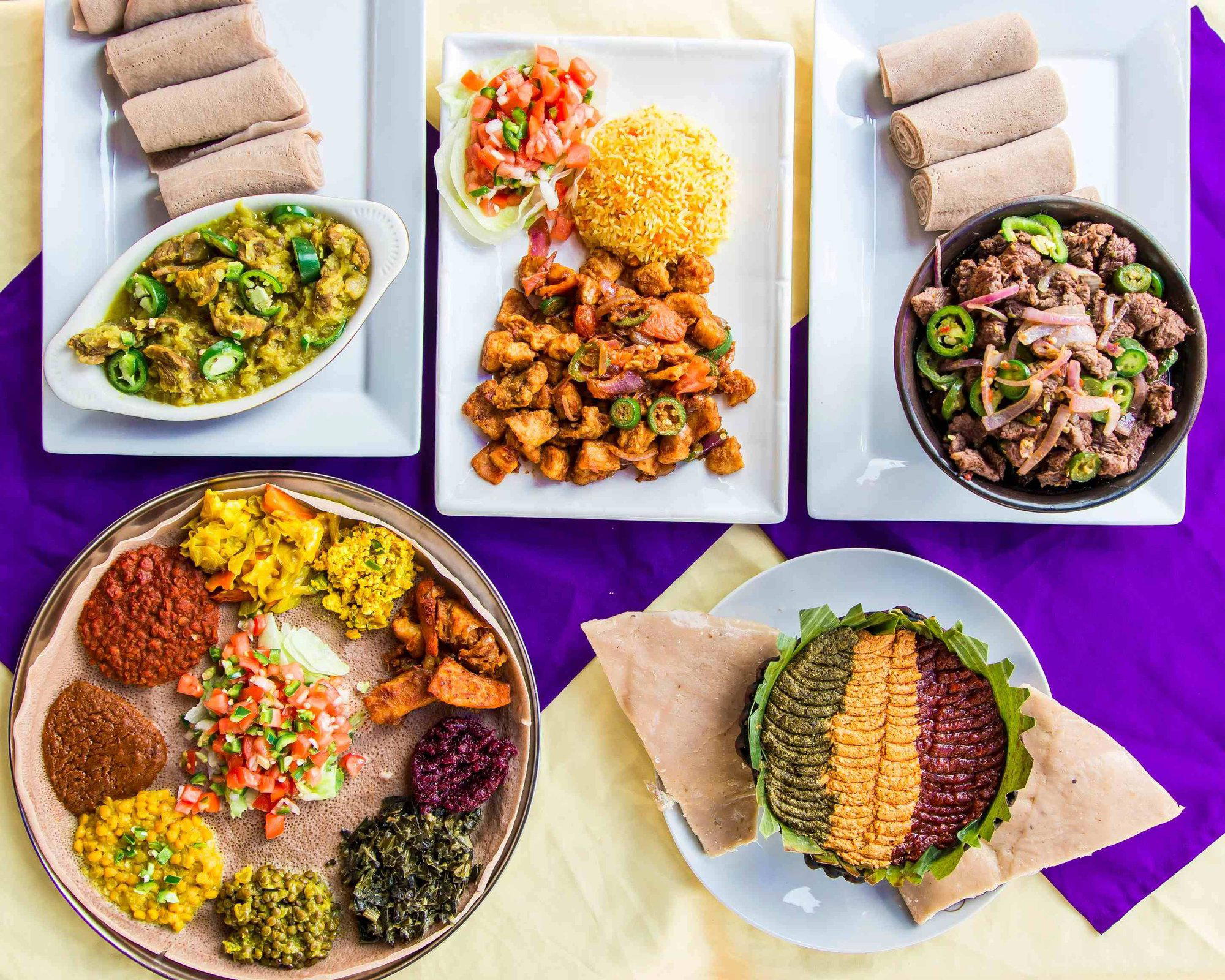
The menu
What to order
- Beef Tibs
- Kitfo
- Girgiro
- Vegetarian Platter
Georgia Avenue and the Ethiopian Corridor
The stretch of Georgia Avenue running through Silver Spring has quietly become one of the Washington metro area's most concentrated zones for East African cuisine. Storefronts that once housed laundromats and dollar stores have given way to injera-first menus, coffee ceremony corners, and the kind of communal eating format that seats six around a single platter. Langano Ethiopian Restaurant, at 8305 Georgia Ave, sits inside that corridor, a neighborhood-level institution for a community that has made Silver Spring one of the largest Ethiopian diaspora hubs on the East Coast.
The physical experience of arriving on this block gives the context before you open the door. The smell of berbere and clarified niter kibbeh butter drifts out into the corridor. Inside, the room operates on a logic that prioritizes the table, not the individual plate. Injera, the spongy, fermented teff flatbread that functions simultaneously as plate, utensil, and starch, arrives spread across a shared platter. The format is communal by design, and the sourcing of that format matters as much as any single dish on it.
Teff, Berbere, and the Case for Ingredient Provenance
Ethiopian cuisine is built on a small, specific set of foundational ingredients, and their quality and origin determine almost everything about the finished dish. Teff, the ancient grain used to ferment and cook injera, is native to the Ethiopian highlands and carries a mild sourness developed over a 24-to-72-hour fermentation window. The leading injera in the diaspora comes from restaurants that either import teff flour or source it from specialist domestic suppliers, rather than substituting with cheaper grain blends. That sourcing decision is immediately legible on the plate: properly fermented teff injera has a pronounced sour note, a porous surface that captures stew liquid, and a texture that holds without going gummy.
Berbere, the spice blend that anchors the majority of Ethiopian meat and legume stews, is similarly variable by origin. A well-made berbere contains dried chilies, fenugreek, coriander, black cardamom, and a dozen additional spices in proportions that vary by region and household tradition. Restaurants that grind their own or import pre-blended berbere from Ethiopian suppliers produce a noticeably different result from those using generic commercial spice mixes. Across Silver Spring's Ethiopian corridor, the depth of that spice work is the primary differentiator between establishments, more so than décor, price point, or seating format.
Silver Spring's Ethiopian dining scene sits in a specific tier relative to the broader DC metro area. It operates as a neighborhood-embedded category rather than a restaurant-destination category: lower price points, higher regularity of local patronage, and a kitchen culture focused on consistency of the staple dishes rather than seasonal menu rotation. That structure differs substantially from how Ethiopian food appears at concept-forward urban restaurants in cities like New York or San Francisco, where dishes like tibs and shiro are reframed through a tasting-menu lens. The Georgia Avenue corridor remains in a different, more grounded register, closer to how this food is actually eaten in Addis Ababa than to how it gets packaged for fine dining audiences. For comparison, the editorial ambitions of places like Alinea in Chicago or Le Bernardin in New York City represent a fundamentally different relationship between kitchen and diner, one built on transformation and technique-as-spectacle. Langano operates in the opposite direction: tradition as the point, not the starting material.
The Communal Format as Structural Argument
There is a specific argument embedded in how Ethiopian restaurants serve food, and it's worth stating plainly. The single shared platter, the absence of individual utensils, the expectation that you eat from the same surface as your companions, these are not aesthetic choices. They are a structural statement about the relationship between food and community. In a dining culture that has increasingly atomized around individual plates, tasting menus, and personalized dietary accommodations, the Ethiopian communal format pushes back with a different set of values.
Across the Georgia Avenue corridor, this format operates with varying degrees of rigidity. Some restaurants accommodate individual plates on request; others hold firmly to the shared format. The category logic here is worth comparing against the approach taken at farm-to-table destinations like Blue Hill at Stone Barns in Tarrytown or produce-driven tasting formats like Single Thread Farm in Healdsburg, where the sourcing story is equally central but deployed through a completely different service architecture. In Silver Spring, the story is told through the platter, not the plate.
Positioning Within Silver Spring's Dining Range
Silver Spring's restaurant range has broadened considerably over the past decade. Elysium and District Bistro represent the neighborhood's more Euro-leaning, wine-forward tier. Cubano's anchors the Latin-American casual end. And the East African corridor, which includes Full Key and Kefa Cafe alongside Langano, constitutes the most culturally specific and locally embedded dining tradition in the area. These are not restaurants built around attracting regional food tourists. They serve a residential community with consistent expectations and a long institutional memory for what the food is supposed to taste like.
That community orientation shapes everything from portion size to pricing to hours. The goal is regularity, not novelty. For a diner arriving from outside the neighborhood, that orientation is part of what makes the experience legible: you are eating inside a living culinary tradition, not a curated representation of one. A broader map of the neighborhood's range appears in our full Silver Spring restaurants guide.
Planning a Visit
Langano is located at 8305 Georgia Ave in Silver Spring, Maryland 20910, within walking distance of the Silver Spring Metro station on the Red Line. The Georgia Avenue corridor is leading approached on foot or via Metro from central DC; street parking on Georgia Ave is available but limited during peak evening hours. For groups, the communal platter format works well with four or more diners, it allows the table to order across multiple stews and vegetable preparations rather than narrowing to one or two dishes per person. Vegetarian diners are well-served by Ethiopian cuisine's tradition of meat-free fasting dishes, which in most corridor restaurants constitute roughly half the menu. The corridor tends to be busiest on weekend evenings, when family groups dominate the dining room and wait times for tables are common.
Frequently asked questions
Where do I go for Langano Ethiopian Restaurant?
Langano Ethiopian Restaurant is located at 8305 Georgia Ave, Silver Spring, MD 20910, Silver Spring.
Is Langano Ethiopian Restaurant close to public transit in Silver Spring?
Langano is at 8305 Georgia Ave, Silver Spring, MD 20910, within walking distance of the Silver Spring Metro station on the Red Line. That station connects directly to downtown Washington, DC, making the restaurant reachable from much of the metro area without a car. The Georgia Avenue address also places it at the center of Silver Spring's East African dining corridor.
What should I order at Langano Ethiopian Restaurant?
Ethiopian menus typically center on a shared platter of wats and tibs served over injera, the spongy teff flatbread that doubles as utensil. At Langano, located at 8305 Georgia Ave in Silver Spring, the communal format means ordering a spread of two or three dishes gives a more complete picture of the kitchen than a single plate would. Vegetarian combinations are a reliable entry point, as Ethiopian cuisine has a deep tradition of legume and vegetable preparations rooted in Orthodox fasting days.
Do they take walk-ins at Langano Ethiopian Restaurant?
The restaurant is at 8305 Georgia Ave in Silver Spring, steps from the Silver Spring Metro on the Red Line, which makes it accessible without advance planning on the transit side. Arriving during off-peak hours on weeknights is generally the safest approach at neighborhood Ethiopian restaurants of this scale.
What's Langano Ethiopian Restaurant best at?
The communal platter format, standard across Ethiopian tradition, is where the kitchen's sourcing decisions around ingredients like teff and berbere become most legible. That format also makes Langano a practical choice for groups who want to eat across a broader range of the menu in a single sitting.
Comparison Snapshot
Comparable venues nearby, for context on price, style, and recognition.
| Venue | Cuisine | Price | Notes |
|---|---|---|---|
| Langano Ethiopian RestaurantThis venue (the venue you are viewing) | Authentic Ethiopian | $10–20 | Not listed |
| Negril | Authentic Jamaican | $10–20 | Fenton Village |
| Kefa Cafe | Cozy American Cafe | $10–20 | Fenton Village |
| District Bistro | Classic American Gastropub | $20–30 | Wheaton |
| La Malinche | Spanish and Mexican Tapas | $30–50 | Downtown Silver Spring |
| Mandalay Restaurant & Cafe | Authentic Burmese | $20–30 | Fenton Village |
Continue exploring
More in Silver Spring
Restaurants in Silver Spring
All restaurants in Silver Spring →
Bars in Silver Spring
Browse all →

Details
- Lively
- Energetic
- Casual
- Group Dining
- Casual Hangout
- Late Night
- After Work
- Live Music
- Standalone
- Family Style
- A La Carte
- Vegetarian Friendly
Current opening hours
- Monday
- 10 AM–2 AM
- Tuesday
- 10 AM–2 AM
- Wednesday
- 10 AM–2 AM
- Thursday
- 10 AM–2 AM
- Friday
- 10 AM–3 AM
- Saturday
- 10 AM–3 AM
- Sunday
- 10 AM–2 AM
Hours can change for holidays and private events. Hours as of .
Casual, energetic atmosphere with live cultural and modern music performances; relaxed and welcoming environment for groups and solo diners