
La Vieja brings an unlikely culinary dialect to Palma's old town: new Canarian cuisine filtered through the kitchen instincts of chef Jonay Hernández, with fish and seafood at the centre and American and Mexican influences woven through the edges. The graffiti-covered interior, dominated by a floor-to-ceiling octopus mural, sets the register before you order. A Michelin Plate holder in both 2024 and 2025, it sits at the mid-range tier of Palma's increasingly competitive restaurant scene.
Pearl is the En Primeur Club membership app — saves, bookings, and concierge access live there. Same editors, same standards.
- Address
- Plaça de Raimundo Clar, 11, Centre, 07002 Palma, Illes Balears, Spain
- Phone
- +34 871 53 17 31
- Website
- lavieja.net
- Directions
- Get directions
 Saves & bookings on Pearl
Where the walls speak first
Palma's Centre district is dense with centuries-old stone, shuttered façades, and the kind of architectural gravity that can make a new restaurant feel like an interruption. La Vieja reads differently. The graffiti mural that covers the exterior wall, a monumental octopus rendered in spray paint, announces its register immediately: this is not a place trying to blend in. Inside, the aesthetic carries the same energy, a deliberate urban rawness that sits in productive tension with the cooking coming out of the kitchen.
That tension is the point. Canarian cuisine, shaped by the Atlantic, by volcanic soil, by centuries of trade routes linking Spain's southernmost archipelago to West Africa and the Americas, has rarely appeared in force on Mallorcan menus. La Vieja brings that culinary language to a city where the dominant frame is still Mallorcan-rooted, whether in the creative register of Zaranda or the modernist approach of Marc Fosh. At La Vieja, the geographic reference point is different, and the room feels like it knows this.
A cuisine that travels in multiple directions
The term "new Canarian cuisine" is doing real work on the menu. Canarian cooking has its own distinct traditions: papas arrugadas, mojo sauces, the fresh catch of the Atlantic, a history of borrowing from the Americas that predates any continental European equivalent. What Hernández has built at the restaurant takes those foundations and pulls them in additional directions, folding in American and Mexican influences that sit comfortably alongside the Atlantic-island base.
This is a broader pattern in Spanish regional cooking: chefs rooted in one geographic tradition using that identity as a stable platform from which to absorb other influences rather than dilute the original. The approach places the restaurant in a different competitive lane from the Mallorcan-heritage restaurants around it. Where Adrián Quetglas or Aromata are working within or adjacent to Mediterranean frameworks, the restaurant's cooking draws its vocabulary from the Atlantic edge of Spain and the cross-currents that shaped it.
The menu's orientation toward fish and seafood is not incidental. Canarian cooking is, at its core, a maritime cuisine, and that priority is reflected here consistently. Several dishes trace directly to what the kitchen describes as inherited recipes, techniques and combinations that arrived through family rather than through formal training alone. In a dining culture that frequently privileges innovation at the expense of continuity, that acknowledgment of lineage carries its own weight.
La Vieja in Palma's broader dining picture
Palma's restaurant scene has matured considerably over the past decade. The island now holds multiple Michelin-starred addresses, including one-star kitchens at Zaranda and Marc Fosh at the upper price tier, alongside a growing mid-range bracket that takes cooking seriously without the formality or the price point of tasting-menu formats. The restaurant sits in that mid-range tier, priced at about €40 per person, where it competes with places like Bàrbar for diners who want substance without ceremony.
The Michelin Plate recognition in 2025 confirms that the guide's inspectors have taken notice, placing the restaurant within a tier that Michelin defines as restaurants serving food of good quality. It is a different signal from a star, but it is a meaningful one: the cooking here is consistent enough to hold attention in a city where the competition at this price point has sharpened. For context on Spain's wider creative restaurant scene, the country's track record runs from El Celler de Can Roca in Girona and Arzak in San Sebastián through to DiverXO in Madrid, Azurmendi in Larrabetzu, Aponiente in El Puerto de Santa María, and Cocina Hermanos Torres in Barcelona. The restaurant is not operating at those heights, but it is participating in the same national conversation about what Spanish regional identity means when it encounters outside influences.
The regional European category, which the restaurant occupies alongside addresses like Adler Stuben in Hinterzarten and Cibû in Leça da Palmeira, tends to reward specificity. The more precisely a restaurant can articulate where it comes from, the more clearly it can distinguish itself. At the restaurant, that specificity is Canarian, and it registers as something genuinely different against the Mallorcan-and-Mediterranean backdrop of the city around it.
The atmosphere as editorial statement
Physical environment at the restaurant is not incidental decoration. In a city where dining rooms often default to the same palette of exposed stone, linen, and soft lighting, a graffiti-heavy interior functions as a statement about the kind of experience on offer. The large octopus mural carries a double register: it is arresting as visual art, and it is also a direct signal about what arrives on the plate. Fish and seafood figure prominently throughout the menu, so the imagery and the cooking are consistent.
Urban feel that the space creates is calibrated. It is the kind of environment that suggests informality without sacrificing seriousness, the register of a kitchen that is confident enough in its food not to require ceremonial framing around it. Among Palma's current generation of interesting mid-range restaurants, that combination is less common than it might appear.
Planning a visit
The restaurant is located at Plaça de Raimundo Clar, 11, in Palma's Centre district, placing it within walking distance of most of the old town's key points.
Fast Comparison
Comparable venues nearby, for context on price, style, and recognition.
| Venue | Cuisine | Price | Awards | Notes |
|---|---|---|---|---|
| La ViejaThis venue — the venue you are viewing | Modern Canarian Fusion | $$$ | Michelin Plate | Not listed |
| Guethary | Mediterranean Grilled Seafood | $$$ | Michelin Plate | Platja de Palma |
| Stagier Bar | Mediterranean-Latin Fusion Tapas | $$ | Michelin Plate | Santa Catalina |
| Sumaq | Modern Peruvian Fusion | $$$ | Michelin Plate | Santa Catalina |
| Periplo Portixol | Modern Seafood Grill | $$$ | Michelin Plate | Portixol |
| Bàrbar | Modern Mediterranean Tapas | $$$ | Michelin Plate | old quarter |
Recognition history
Dated appearances from independent guides and award organizations, with the underlying list record or original source where available.
Michelin Plate
Michelin
Michelin Plate
Michelin
Michelin Plate
Michelin
Continue exploring
More in Palma
Restaurants in Palma
Browse all →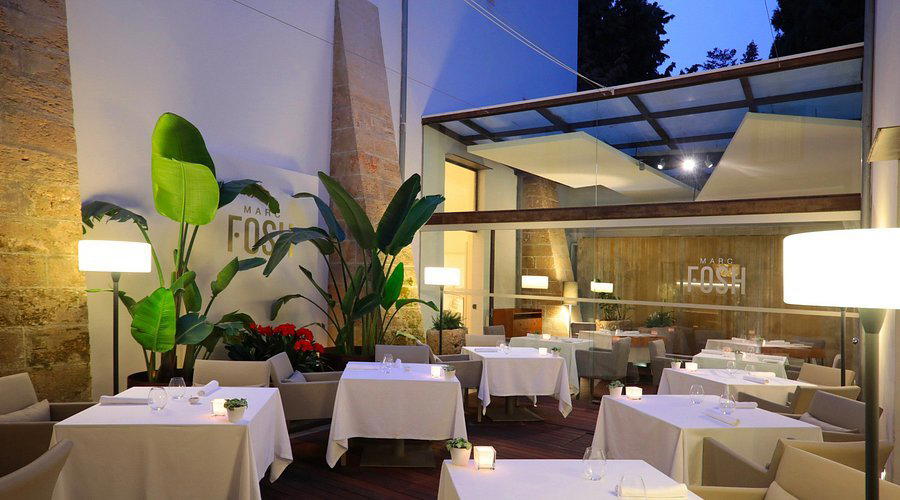
Bars in Palma
Browse all →
Hotels in Palma
Browse all →
At a Glance
- Trendy
- Lively
- Date Night
- Group Dining
- Casual Hangout
- Open Kitchen
- Extensive Wine List
- Local Sourcing
- Street Scene
Current opening hours
- Monday
- Closed
- Tuesday
- 12:30–11:30 PM
- Wednesday
- 12:30–11:30 PM
- Thursday
- Closed
- Friday
- Closed
- Saturday
- Closed
- Sunday
- Closed
Hours can change for holidays and private events. Last verified .
Urban and lively with colorful graffiti murals including a huge octopus, lively open kitchen, and funky bright decor.