Cibû

Cibû in Leça da Palmeira presents contemporary Portuguese sharing plates rooted in northern tradition. Must-try dishes include Beef with Chaves bread, the Mindinha rib and fried Pilchard. Chef Hugo Portela blends techniques from Norway, Barcelona and Switzerland with local ingredients, creating savory, smoke-kissed textures and bright coastal flavors. Recognized by the Michelin Guide for "Good cooking" (2024), the restaurant pairs rustic regional recipes with a refined presentation inside stone walls and warm wood ceilings. Expect intimate service, a communal menu meant to be explored, and desserts worth leaving room for.
Pearl is the En Primeur Club membership app — saves, bookings, and concierge access live there. Same editors, same standards.
- Address
- R. Castelo 15, 4450-632 Leça da Palmeira, Portugal
- Phone
- +351 22 242 6929
- Website
- ciburestaurante.eatbu.com
- Directions
- Get directions
 Saves & bookings on Pearl
A Stone Alley, a Regional Name, and a Kitchen Shaped by the North
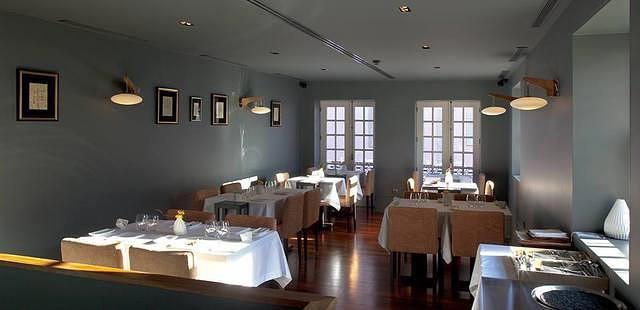
The approach to Cibû tells you something before you reach the door. Tucked into a narrow alley beside the Forte de Leça da Palmeira, the setting carries the grain of old coastal Portugal: stone walls, compressed passage, the salt smell of the Atlantic a short walk west. Inside, the architecture shifts register. Wood dominates the ceilings and furniture; the walls stay stone. The result is closer to a Scandinavian farmhouse transposed onto a Portuguese fortification than anything you would call a conventional restaurant room, and that double identity is precisely the point.
The name Cibû comes from the dialect of Trás-os-Montes, the rugged northeastern interior of Portugal where the language of everyday life still carries words that have dropped out of standard Portuguese. Naming a restaurant after that regional idiom is a statement of allegiance to a culinary tradition that rarely travels far beyond its own valleys: smoked meats, dense breads, river fish, veal from mountain cattle. That tradition sits at the centre of the menu here, filtered through the technical exposure Chef Hugo Portela accumulated during years working in Norway, Barcelona, and Switzerland. The combination is not fusion in the promotional sense of the word, it is, more precisely, the kind of restless regionalism that happens when a cook trained in restraint and Nordic technique returns to the ingredients of their own geography.
Where Cibû Sits in Portugal's Dining Hierarchy
Portugal's most decorated restaurants now cluster at a top tier defined by Michelin recognition and tasting-menu formats: Belcanto in Lisbon, Ocean in Porches, and Cibû's near-neighbour Casa de Chá da Boa Nova all hold two Michelin stars and price accordingly at €€€€. Cibû operates a tier below on both counts: a €€ price point and consecutive Michelin Plate awards in 2024 and 2025, the guide's signal that cooking here is worth attention even if it has not yet crossed into starred territory. That position is actually useful for the reader making decisions. A Michelin Plate is not a consolation prize; it marks kitchens that the inspectors found compelling enough to flag, and in a country where starred seats now book months out at substantial per-head costs, the Plate-level restaurants carry much of Portugal's most interesting cooking.
Within the Porto metro, the comparison that matters most is how Cibû reads against Antiqvvm in Porto, which occupies the starred tier with a more formal register. Cibû's sharing format and mid-range pricing give it a different function: accessible in cost, informal in structure, but grounded in technique that reflects serious kitchen investment. For anyone building a multi-day itinerary in the region, the two restaurants are complementary rather than competing. See our full Leça da Palmeira restaurants guide to understand how the local dining options stack up across price points and styles.
The Menu: Trás-os-Montes Logic, Shared at the Table
Sharing menus have become a default format across much of southern European dining, but the logic fits the ingredients of northern Portugal particularly well. The Trás-os-Montes tradition is built around communal eating: bread as structural element, preserved meats as flavour anchors, vegetables cooked to the point of collapse. A sharing format allows those dishes to function as they were designed to, rather than being plated into individual portions that strip away the social dimension.
Among the dishes cited in the record: Beef with Chaves bread (Chaves being the northern city whose cured meats and breads are among the more recognisable products of the region), Octopus açorda (a bread-thickened preparation with deep roots in both northern and coastal Portuguese cooking), and Barrosã Veal Fralda, a cut from the Barrosã cattle breed whose PDO-protected status signals genuine geographic anchoring. Desserts are noted as a strength of the kitchen, though the specific preparations are not available for description here.
The menu design reflects the kind of thinking that emerges when a cook has spent time in kitchens where ingredient sourcing is the primary discipline (as is common in Scandinavian fine dining) and returns to a home region with notable raw materials but a tradition that has historically undervalued presentation. The combination, when it works, produces plates that are simultaneously legible to a local audience and technically coherent for a more travelled one.
Leça da Palmeira: Atlantic Edge, Porto Proximity
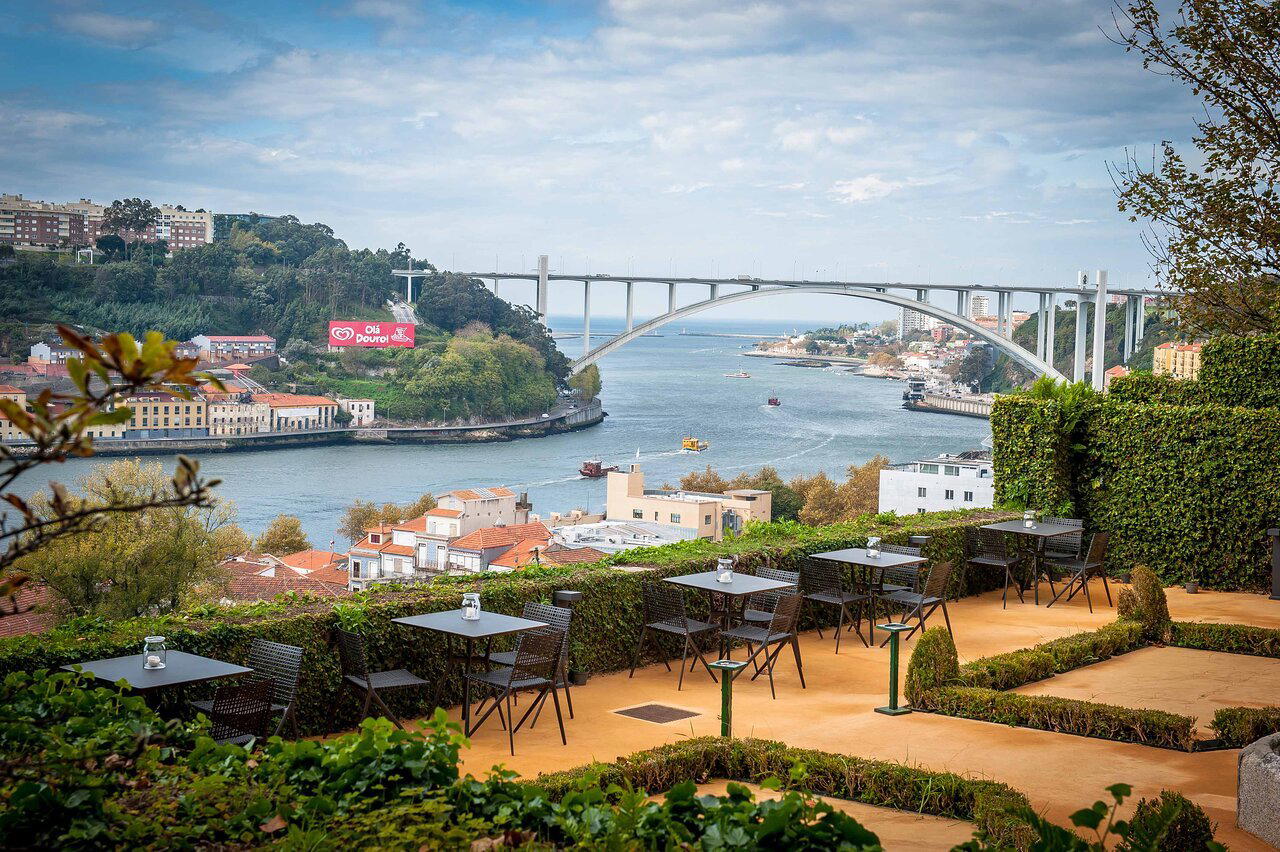
Leça da Palmeira occupies a specific kind of Portuguese geography: close enough to Porto (roughly 10 kilometres north) to draw a city audience on evenings and weekends, far enough to retain its own Atlantic character. The town is better known internationally for the swimming pools Álvaro Siza Vieira built into the shoreline rocks in 1966 than for its restaurants, but that is changing incrementally. The presence of Casa de Chá da Boa Nova, housed in another Siza Vieira building and holding two Michelin stars, has established the town on the serious dining map. Cibû operates in the same town but at a different register: the neighbourhood restaurant drawing on local tradition rather than the architectural landmark drawing on international attention.
For visitors structuring time around dining, Leça da Palmeira makes sense as an afternoon-and-evening sequence: the coastline and Siza Vieira buildings in the afternoon, dinner at one of the town's restaurants. Cibû's address at Rua Castelo 15, close to the fort, is walkable from the seafront. Cibû sits at the €€ price tier, which makes it one of the more accessible options in the local dining set without sacrificing the culinary seriousness that the consecutive Michelin Plate awards confirm.
Vegetarian-focused options in the immediate area include SEIVA, which occupies a different culinary register but the same general neighbourhood.
Regional European Cooking Across Portugal and Beyond
The tradition Cibû draws from sits within a broader Portuguese reappraisal of interior and northern cooking. Restaurants like A Cozinha in Guimarães have made similar moves in the Minho, while the Alentejo and Algarve have their own versions of the pattern in kitchens like A Ver Tavira and Al Sud in Lagos. Further afield, the Regional European category produces analogous debates in establishments like Adler Stuben in Hinterzarten and Gostilna Mahorčič in Rodik, where the question is always the same: how much does technique sharpen a regional tradition before it begins to obscure it. Cibû, based on its positioning and recognition, appears to be answering that question carefully. The Michelin Plate, held across two consecutive years, signals consistency in the answer. Outside Portugal, the broader archipelago of Michelin-recognised cooking includes kitchens like Il Gallo d'Oro in Funchal and The Yeatman in Vila Nova de Gaia, both of which operate at higher price points and with different culinary orientations. Vila Joya in Albufeira represents yet another strand of Portugal's fine dining offer. Cibû's value is that it does none of those things, it is doing something more specific, and at a price that makes the experiment repeatable.
What Regulars Order
The dishes that draw repeat visitors are the ones with the clearest Trás-os-Montes lineage: the Beef with Chaves bread, where the quality of the regional ingredient carries most of the weight, and the Barrosã Veal Fralda, whose PDO-protected provenance makes it a reliable signal of kitchen sourcing standards. The Octopus açorda sits at the intersection of coastal and interior traditions, reflecting the kitchen's position in Leça da Palmeira rather than in the landlocked northeast. Desserts are noted across the available record as a consistent strength, suggesting that the kitchen's technical exposure shows most clearly at that stage of the meal. The sharing format means ordering broadly is both the intended approach and one practical one for understanding what the kitchen can do.
Cost Snapshot
Comparable venues nearby, for context on price, style, and recognition.
| Venue | Cuisine | Price | Awards | Notes |
|---|---|---|---|---|
| Cibû | Leça da Palmeira, Modern Portuguese | $$$ | Michelin Plate | Not listed |
| SEIVA | Not listed | $$$ | Michelin Plate | Leça da Palmeira, Modern Vegan Portuguese |
| Fava Tonka | Leça da Palmeira, Modern Vegetarian | $$$ | Not listed | Not listed |
| Casa de Chá da Boa Nova | Not listed | $$$$ | Michelin 2 Star | Leça da Palmeira, Modern Portuguese Seafood |
| Ferrugem | Portela, Modern Portuguese Minho Cuisine | $$$ | Michelin Plate | Not listed |
| Real by Casa da Calçada | Not listed | $$$ | Michelin Plate | Santo Ildefonso, Modern Portuguese Fine Dining |
Recognition history
Dated appearances from independent guides and award organizations, with the underlying list record or original source where available.
Michelin Plate
Michelin
Michelin Plate
Michelin
Michelin Plate
Michelin
Continue exploring
More in Leça da Palmeira
Restaurants in Leça da Palmeira
Browse all →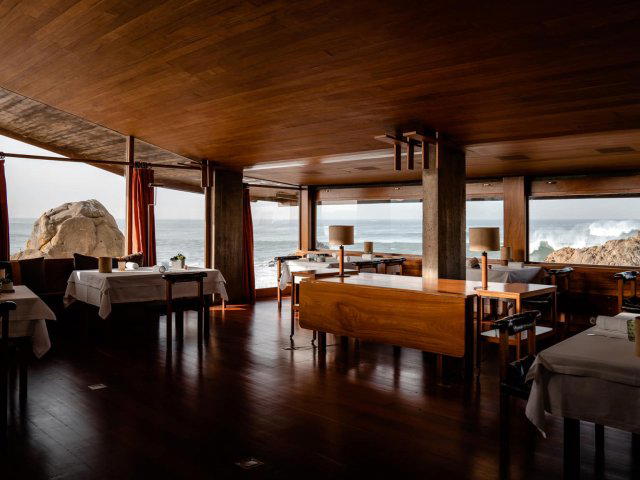
Bars in Leça da Palmeira
Browse all →
Hotels in Leça da Palmeira
Browse all →
At a Glance
- Intimate
- Cozy
- Elegant
- Romantic
- Date Night
- Special Occasion
- Open Kitchen
Current opening hours
- Monday
- Closed
- Tuesday
- Closed
- Wednesday
- 7:30–10 PM
- Thursday
- 7:30–10 PM
- Friday
- 12:30–3 PM, 7:30–10 PM
- Saturday
- 12:30–3 PM, 7:30–10 PM
- Sunday
- 12:30–3 PM
Hours can change for holidays and private events. Last verified .
Charming, welcoming, and comfortable with an open kitchen, soft lighting, and a homely feel described as an intimate dinner party.