La Torre
La Torre sits on Via Annunziata in Massa Lubrense, at the southern tip of the Sorrento Peninsula where the produce of Campania's most fertile coastal terraces reaches the table with minimal distance from source to kitchen. The setting commands views across the Bay of Naples, and the cooking draws directly from the land and sea immediately surrounding it. For ingredient-driven dining on the peninsula, it belongs in the same conversation as the area's other serious kitchens.
 Discover on Pearl
Pearl is the En Primeur Club membership app — saves, bookings, and concierge access live there. Same editors, same standards.
- Address
- Via Annunziata, 7, 80061 Massa Lubrense NA, Italy
- Phone
- +39818089566
- Website
- latorreonefire.it
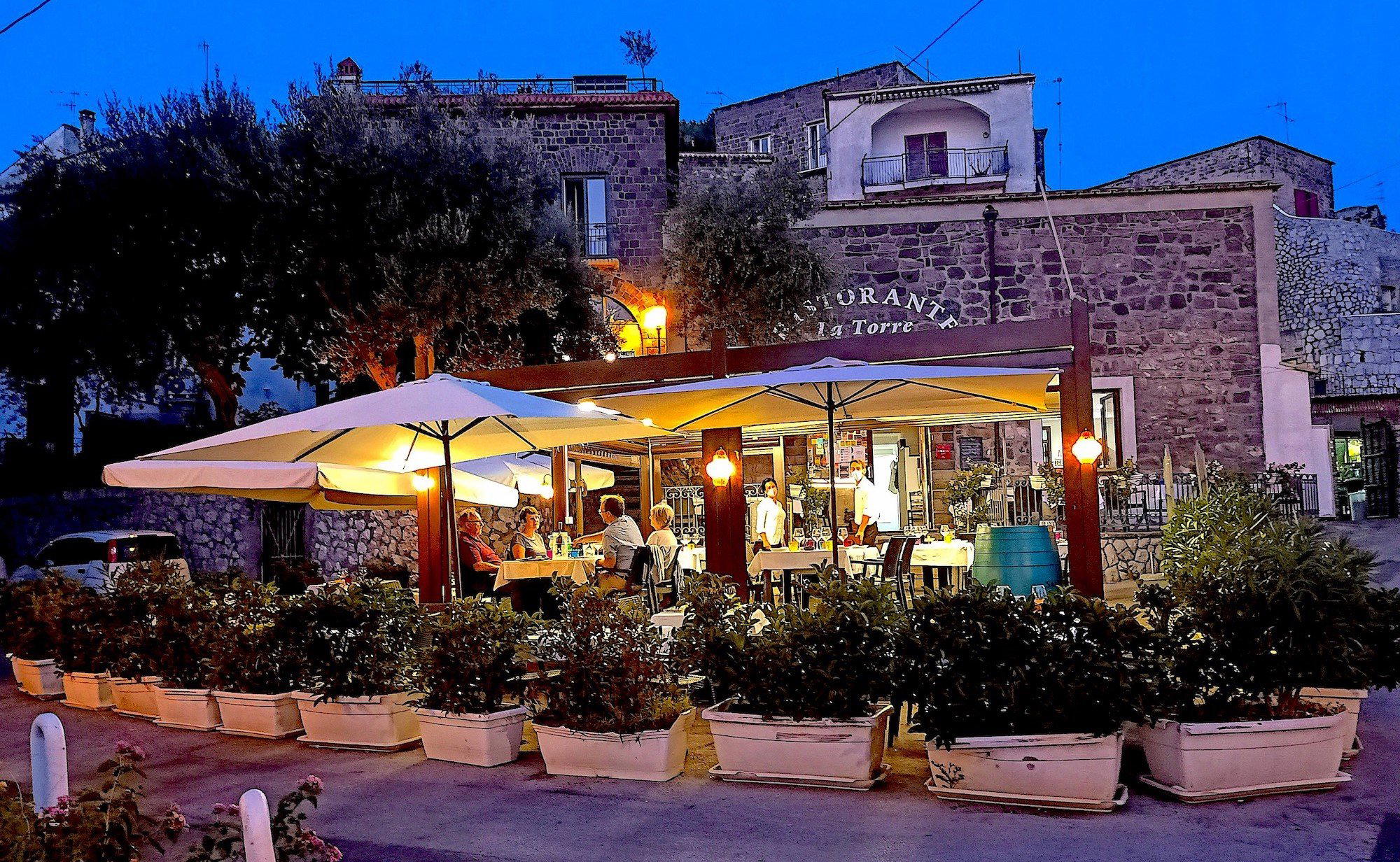
Where the Sorrento Peninsula Puts Itself on the Plate
The drive into Massa Lubrense from Sorrento follows a road that narrows as the peninsula tapers toward Punta Campanella, passing terraced lemon groves, fishing villages, and small farms that drop sharply toward the water. By the time you reach Via Annunziata, you are at the quieter, less-trafficked end of a coastline that has been feeding travellers for centuries. La Torre occupies this position: a restaurant whose address alone places it inside one of the most ingredient-dense micro-territories in southern Italy.
Massa Lubrense is not the Amalfi Coast's loudest entry point. Positano draws the crowds; Ravello gets the cultural tourists. Massa Lubrense, with its scattered hamlets and working fishing coves, operates at a different register, one where the relationship between kitchen and territory tends to be more direct precisely because the audience is smaller and more deliberate. Restaurants here do not need to perform Campania for visitors who arrived by the busload. They can simply cook what grows and swims nearby.
The Ingredient Logic of the Southern Peninsula
Southern Campania's coastal kitchen is built on a specific material reality. The lemons from this stretch of the peninsula, grown on terraces that face the Bay of Naples, are the Sfusato Amalfitano and the Sorrento IGP varieties: thicker-skinned, less acidic, intensely aromatic. The tomatoes from the volcanic soils further inland at the foot of Vesuvius are a different category from anything grown in cooler climates. Local anchovies, particularly those from Cetara on the Amalfitan side, have a salting tradition that dates back to Roman fish-sauce production. Mozzarella di bufala arrives from the Caserta and Salerno plains within the same morning it was made.
This is the sourcing context that serious kitchens on the Sorrento Peninsula operate within, and the proximity of La Torre to these sources is a structural advantage. When a restaurant sits this close to its ingredient supply, the question shifts from what to import and how to preserve it, to how much can be done with what arrived this morning. That constraint tends to produce cooking with clarity rather than complexity, and the southern Italian coastal tradition has always rewarded that approach.
For comparison within Massa Lubrense, Relais Blu (Mediterranean Cuisine) takes a €€€ Mediterranean-leaning position that foregrounds seasonal local produce within a hotel dining context. Terrazza Fiorella (Italian Contemporary) works at a similar price tier with a more contemporary Italian framework. Lo Scoglio, Essenza, and Scirocco Sunset Restaurant round out a dining scene that, for a small municipality, carries genuine range. La Torre operates within this field, positioned by its address and character as a local anchor rather than a destination-hotel dining room.
Campania's Coastal Cooking in a Broader Italian Frame
Understanding what kitchens in places like Massa Lubrense are doing requires placing them inside the longer arc of Italian fine dining. The past two decades have seen the country's most celebrated restaurants move toward ingredient discipline and regional specificity: Osteria Francescana in Modena rebuilt Emilian tradition through a conceptual lens; Dal Pescatore in Runate held a three-Michelin-star position for years on the back of a deeply local river-plain kitchen; Piazza Duomo in Alba made Langhe produce its central argument.
In the south, that movement has taken a different form. The Campanian coast does not have the same density of starred kitchens as Piedmont or Emilia-Romagna, but it has something those regions cannot replicate: the intersection of volcanic terroir, Mediterranean climate, and a fishing tradition that runs unbroken from antiquity. Restaurants that tap that combination without overcooking the argument tend to produce food that is more interesting than their award count might suggest. For starred reference points in coastal Italian seafood, Uliassi in Senigallia and Quattro Passi in Marina del Cantone (the latter just a few kilometres from Massa Lubrense) mark what the upper tier of this tradition looks like when it reaches formal recognition. Further afield, Atelier Moessmer Norbert Niederkofler in Brunico has built an entire philosophy around hyper-local Alpine sourcing, showing how constraint and proximity can be the engine of a serious kitchen rather than a limitation.
The contrast with technically globalised fine dining, say Le Bernardin in New York City or Atomix in New York City, is instructive. Those kitchens achieve sourcing precision through infrastructure and expense. A restaurant on the Sorrento Peninsula at La Torre's address achieves something similar simply by being where it is. The supply chain is the landscape itself.
Planning a Visit
La Torre is located at Via Annunziata, 7, in Massa Lubrense, on the Sorrento Peninsula in the province of Naples. Getting there from Sorrento involves either a local bus service (the SITA Sud network connects the peninsula towns) or a hired car, the latter giving access to the smaller coastal roads and the ability to combine the meal with an exploration of the area's hamlets and viewpoints. The peninsula rewards slow movement; the cooking here makes more sense when you have spent a morning walking its terraces first.
For those building a wider dining itinerary around the area, our full Massa Lubrense restaurants guide maps the range of options across the municipality's different coves and villages. Elsewhere in Italy, Enoteca Pinchiorri in Florence, Enrico Bartolini in Milan, Le Calandre in Rubano, and Reale in Castel di Sangro represent the broader spectrum of serious Italian dining that provides a reference frame for understanding where a coastal Campanian kitchen sits in the national conversation.
Specific booking methods, hours, and current pricing are not published in the records available to us; confirm details directly before visiting, particularly in the shoulder seasons of early spring and late autumn when hours on the peninsula tend to contract.
At-a-Glance Comparison
Comparable venues nearby, for context on price, style, and recognition.
| Venue | Cuisine | Price | Awards | Notes |
|---|---|---|---|---|
| La TorreThis venue — the venue you are viewing | Authentic Campanian Seafood & Home Cooking | $$ | , | |
| Scirocco Sunset Restaurant | Amalfi Coast Seafood | $$$ | , | Massa Lubrense |
| Lo Scoglio | Traditional Neapolitan Seafood | $$ | , | Marina del Cantone |
| Essenza | Italian with Local Traditions | $$$ | , | Massa Lubrense |
| Terrazza Fiorella | Modern Campania Fine Dining | $$$$ | Michelin Plate | Massa Lubrense |
| Relais Blu | Modern Italian Fine Dining | $$$$ | Michelin 1 Star | Massa Lubrense |
Continue exploring
More in Massa Lubrense
Restaurants in Massa Lubrense
Browse all →
Bars in Massa Lubrense
Browse all →
Hotels in Massa Lubrense
Browse all →
Wineries in Massa Lubrense
Browse all →
At a Glance
- Romantic
- Scenic
- Cozy
- Elegant
- Intimate
- Date Night
- Family
- Group Dining
- Special Occasion
- Waterfront
- Terrace
- Panoramic View
- Historic Building
- Standalone
- Beer Program
- Local Sourcing
- Sustainable Seafood
- Farm To Table
- Waterfront
Warm, welcoming, and elegant with sober décor; sea views and coastal scents create an inviting, family-like atmosphere that feels both refined and intimate.