



At La Lobita, chef Elena Lucas distills three generations of culinary heritage into a luminous ode to the forest, crafting a cuisine that treats wild mushrooms as both muse and medium. Each course feels like a quiet walk beneath pines, thyme curd perfumed with fermented pine nut honey, textures of fungi that are brushed, scraped, and only washed the day they are served, and ceramics that mirror the woodland’s palette. Paired with the elegant selections of sommelier Diego Muñoz, the experience is intimate, refined, and deeply rooted in its Sorian terroir, offering informed travelers a rare, lyrical dialogue between nature and plate.
Pearl is the En Primeur Club membership app — saves, bookings, and concierge access live there. Same editors, same standards.
- Address
- Av. de la Constitución, 54, 42149 Navaleno, Soria, Spain
- Phone
- +34 975 37 43 68
- Website
- lalobita.es
- Directions
- Get directions
 Saves & bookings on Pearl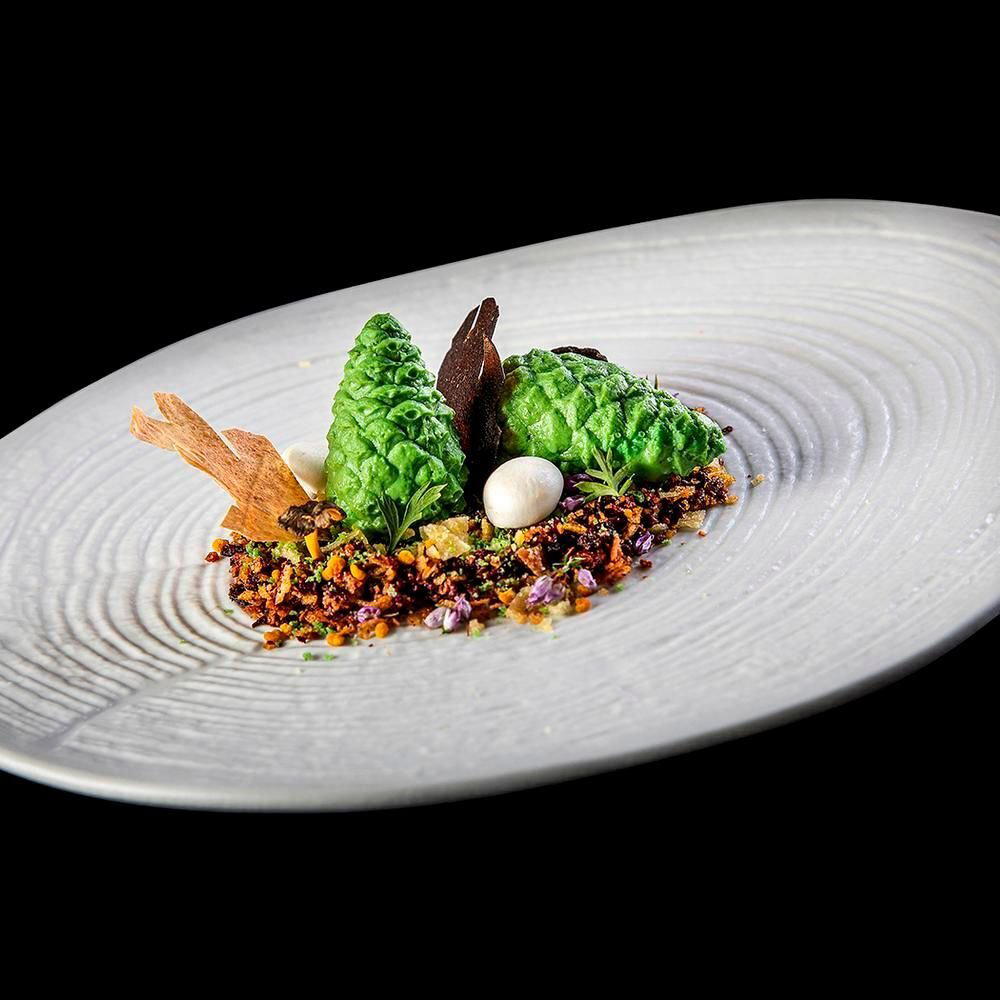
Where the Pine Forest Meets the Plate
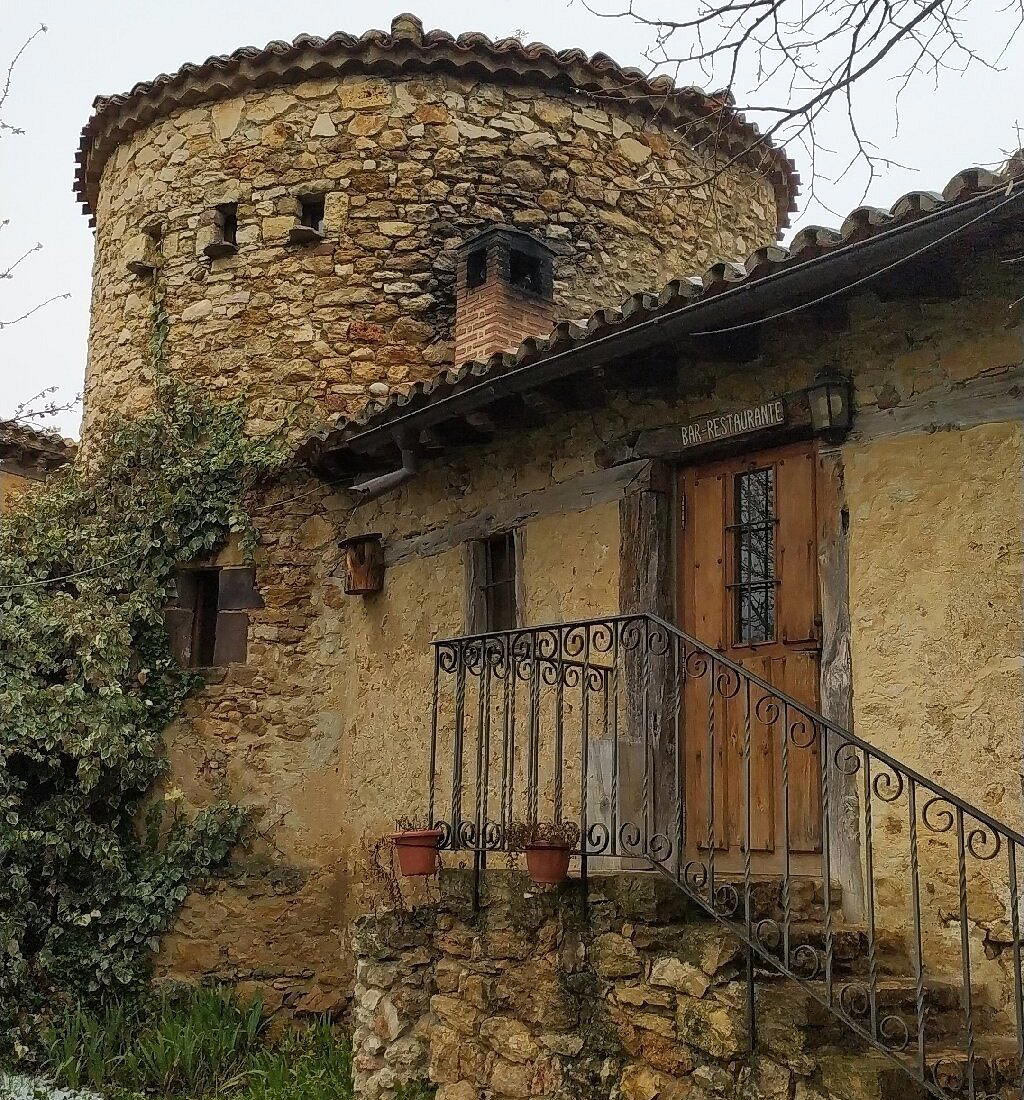
Navaleno sits in the Sierra de Cebollera, in Spain's Soria province, deep inside a pine-forested stretch of Castile that most visitors to the country pass over in favour of more obvious destinations. Arriving at the village, the air carries resin and damp earth, and the surrounding woodland makes clear what this part of Spain is actually about: mycology. The forests around Navaleno are among the more productive wild mushroom territories in the Iberian peninsula, and that fact has shaped local cooking for generations in a way that no amount of urban creative cuisine can replicate.
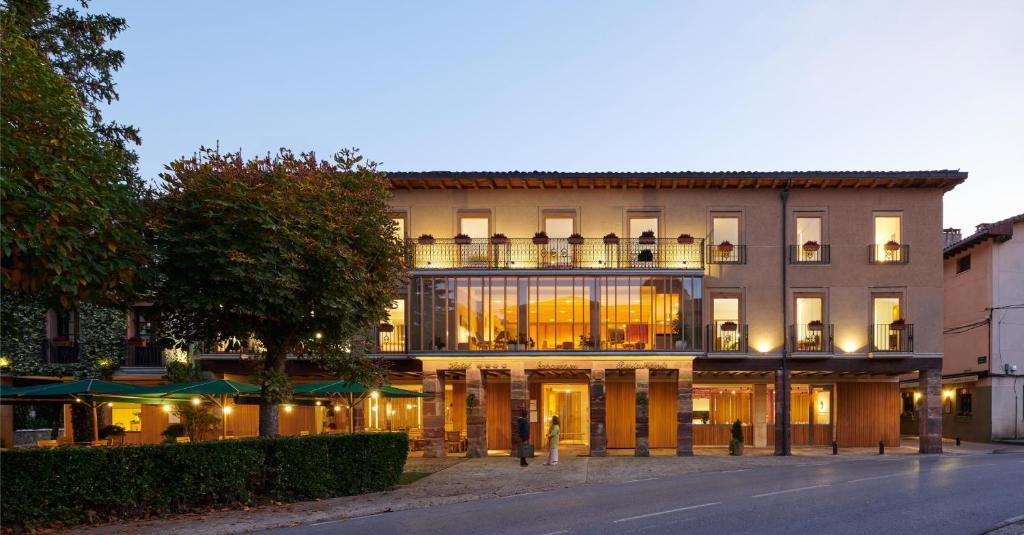
La Lobita is a one-Michelin-star restaurant in Navaleno, Soria, serving Seasonal Mycological Fine Dining at about $95 per person. La Lobita occupies a position in Navaleno's central avenue that undercuts any expectation of rural modesty. At the €€€€ price tier, it prices against Spain's serious creative restaurants, a comparable set that includes multi-Michelin houses such as El Celler de Can Roca in Girona, Azurmendi in Larrabetzu, and Arzak in San Sebastián. The difference is that La Lobita is doing this from a village with a few hundred inhabitants rather than from a coastal city with a fully developed fine dining infrastructure. That geographical reality is not incidental; it is the restaurant's entire editorial argument.
The Sourcing Logic That Drives Everything
The defining feature of Spanish creative restaurants at this level is usually technique applied to a regional ingredient canon. What separates a small tier of producers and restaurants is the degree to which sourcing functions as a structural discipline rather than a marketing narrative. At the restaurant, wild mushroom sourcing operates as the latter: only mushrooms that will be used the same day are scraped and brushed, then washed with water and dried in open air before service. The sequence matters. It means the kitchen carries no inventory of treated mushrooms, no pre-prepared stock. Each service cycle begins from scratch with that morning's harvest. For kitchens working at the summit of their category alongside Spain's three-Michelin-star operators, sourcing precision of this kind is not unusual in aspiration but is genuinely rare in execution, particularly when applied to wild-foraged product with highly variable daily yields.
The forest does not produce on a schedule, and a restaurant that commits this rigidly to day-of sourcing is, in effect, giving the surrounding terrain editorial control over the menu. That is a different relationship with ingredients than the model followed by, say, Aponiente in El Puerto de Santa María, where marine product sovereignty drives the kitchen, or Quique Dacosta in Dénia, where the Levantine coastline and its micro-seasonal catches inform a more technique-forward program. At the restaurant the territory's rhythms come first, and the kitchen follows.
Three Generations of Context
Family lineage behind the restaurant is now in its third generation, with chef Elena Lucas representing a kitchen tradition that predates the current creative cooking era in Spain entirely. The restaurant's name is a tribute to her grandmother Luciana Lobo, which in itself encodes the idea that a living person's practice connects back to someone else's practice in this specific kitchen. That generational depth is something Spain's newer urban creative restaurants, including the three-Michelin-star cohort in Madrid and Barcelona such as DiverXO and Cocina Hermanos Torres, are structurally unable to replicate. A €€€€ tasting menu in a third-generation family restaurant in a Castilian village carries entirely different institutional meaning than a €€€€ tasting menu opened in the last decade in a capital city.
Elena Lucas works alongside her husband Diego Muñoz, who manages the wine program and has received recognition from Star Wine List. In Spain's fine dining context, where the wine programs at houses like Martin Berasategui, Mugaritz, and Atrio in Cáceres are frequently cited as competitive differentiators, a regional-restaurant wine list receiving that level of international specialist recognition is notable. It also suggests the pairing experience here is designed with comparable seriousness to the food, rather than functioning as a secondary consideration.
What the Decor Is Actually Telling You
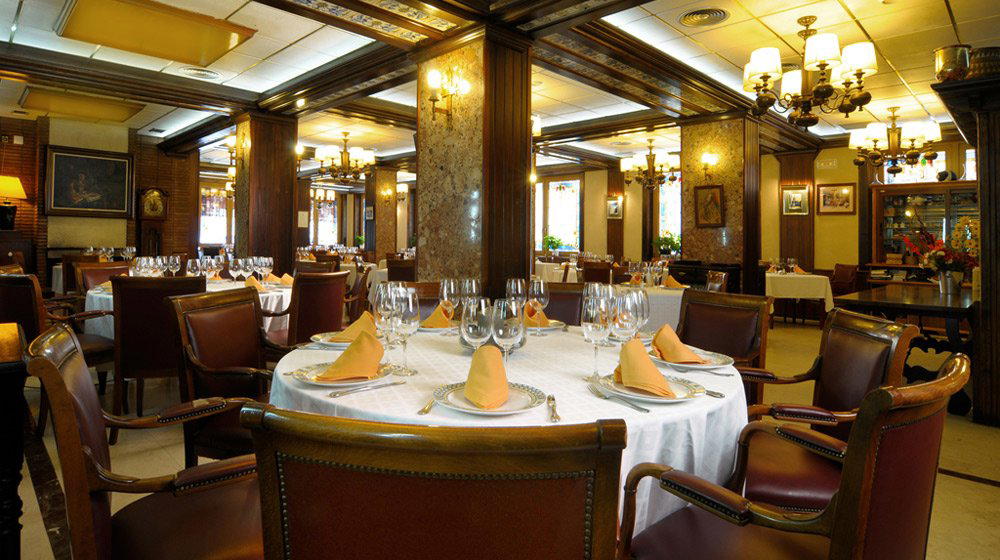
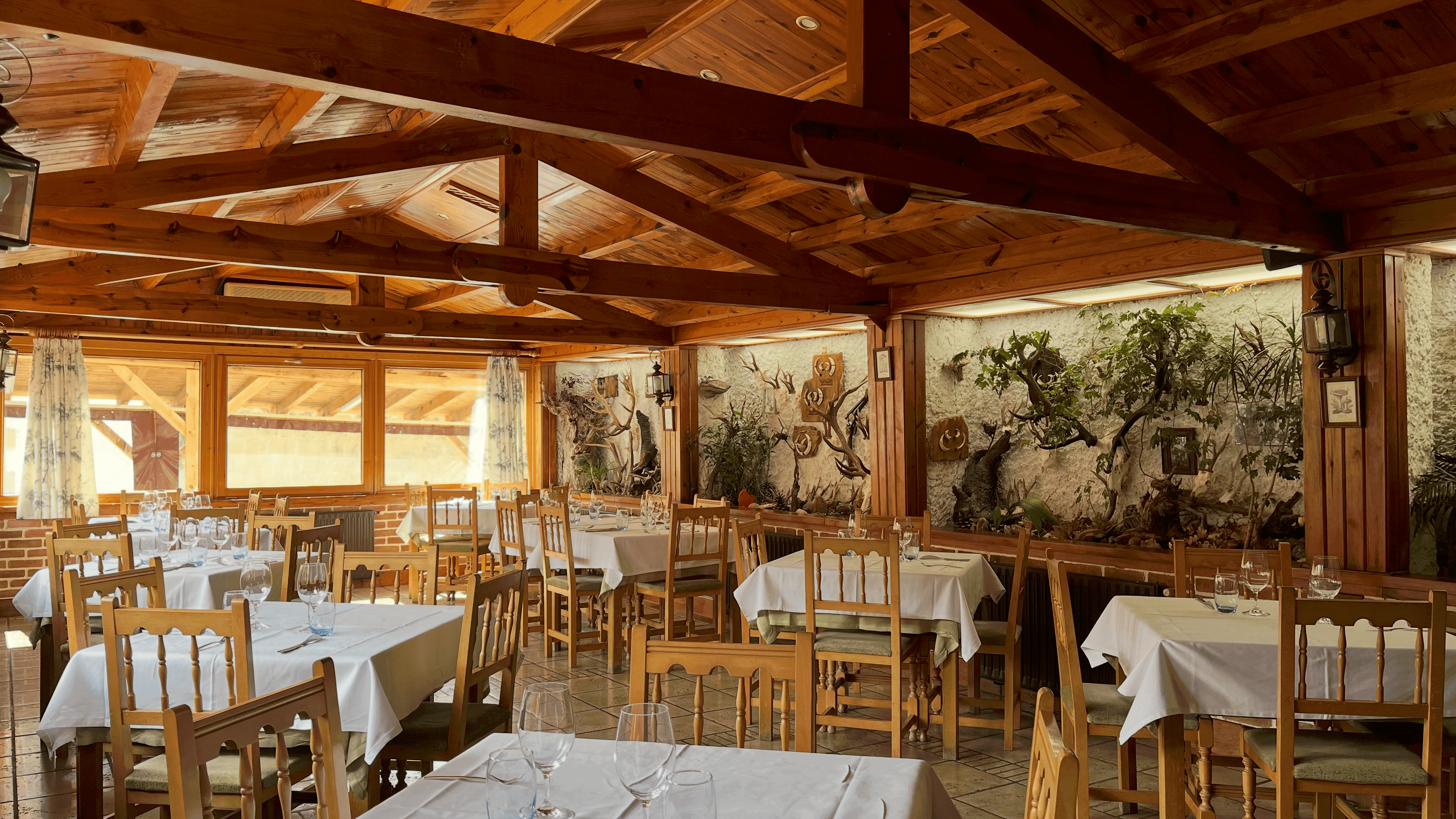
The physical environment at the restaurant extends the sourcing logic beyond the kitchen. The crockery and interior decor reference the local forest directly, a choice that in lesser hands would read as superficial theming but here functions as coherent continuity. When dishes arrive on crockery that mirrors the textures of pine bark or forest floor, and when a preparation like thyme cuajada with fermented pine nut honey appears on the menu, the design and the ingredients are making the same argument: that Soria's pine groves are not a backdrop but the actual subject.
Visiting in Practice
The restaurant is open for lunch from 1:30 PM to 3:00 PM Thursday through Sunday, with an additional dinner service on Saturday from 9:00 PM to 10:00 PM. Monday and Tuesday are closed. The extremely narrow service windows are consistent with a kitchen operating on day-of sourcing: the mushroom harvest and preparation cycle sets the pace, not a conventional hospitality schedule. Visitors traveling specifically for this restaurant should plan around those hours carefully, and Saturday dinner represents the only evening option in the week. The address is Avenida de la Constitución, 54, in Navaleno, Soria. Navaleno is accessible by road from Soria city, approximately 40 kilometres to the south, and from Burgos to the northwest.
For context on how ingredient-driven creative cooking plays out across European formats, the programs at Arpège in Paris and Alléno Paris au Pavillon Ledoyen represent the French parallel to what the restaurant is doing in Castile, and Ricard Camarena in València offers a useful Spanish comparison within the territory-first creative format.
At-a-Glance Comparison
Comparable venues nearby, for context on price, style, and recognition.
| Venue | Cuisine | Price | Awards | Notes |
|---|---|---|---|---|
| La LobitaThis venue — the venue you are viewing | Seasonal Mycological Fine Dining | $$$$ | Michelin 1 Star | Not listed |
| Boroa | Modern Basque Fine Dining | $$$$ | Michelin 1 Star | San Pedro de Boroa |
| Santerra | Modern Spanish Game and La Mancha Cuisine | $$$$ | Michelin 1 Star | Lista |
| Zarate | Modern Basque Seafood | $$$$ | Michelin 1 Star | Abando |
| Hospedería El Batán | Modern Spanish Tasting Menu | $$$$ | Michelin 1 Star | Tramacastilla de Tena |
| Refectorio | Contemporary Spanish Fine Dining | $$$$ | Michelin 1 Star | Sardón de Duero |
Recognition history
Dated appearances from independent guides and award organizations, with the underlying list record or original source where available.
Guía Repsol 2 Soles
Guía Repsol
Macarfi 7.8 Food Rating
Macarfi
Michelin 1 Star
Michelin
Star Wine List
Star Wine List
Michelin 1 Star
Michelin
Star Wine List
Star Wine List
Michelin 1 Star
Michelin
At a Glance
- Romantic
- Elegant
- Sophisticated
- Intimate
- Date Night
- Special Occasion
- Celebration
- Open Kitchen
- Standalone
- Extensive Wine List
- Sommelier Led
- Local Sourcing
- Farm To Table
Current opening hours
- Monday
- Closed
- Tuesday
- Closed
- Wednesday
- 1:30–3 PM
- Thursday
- 1:30–3 PM
- Friday
- 1:30–3 PM
- Saturday
- 1:30–3 PM, 9–10 PM
- Sunday
- 1:30–3 PM
Hours can change for holidays and private events. Last verified .
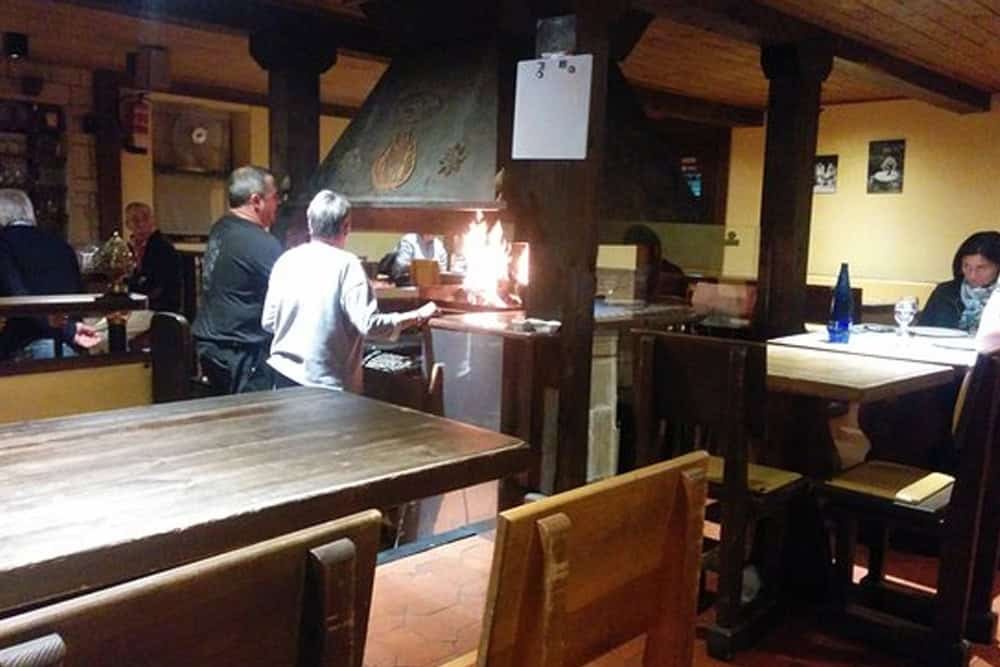
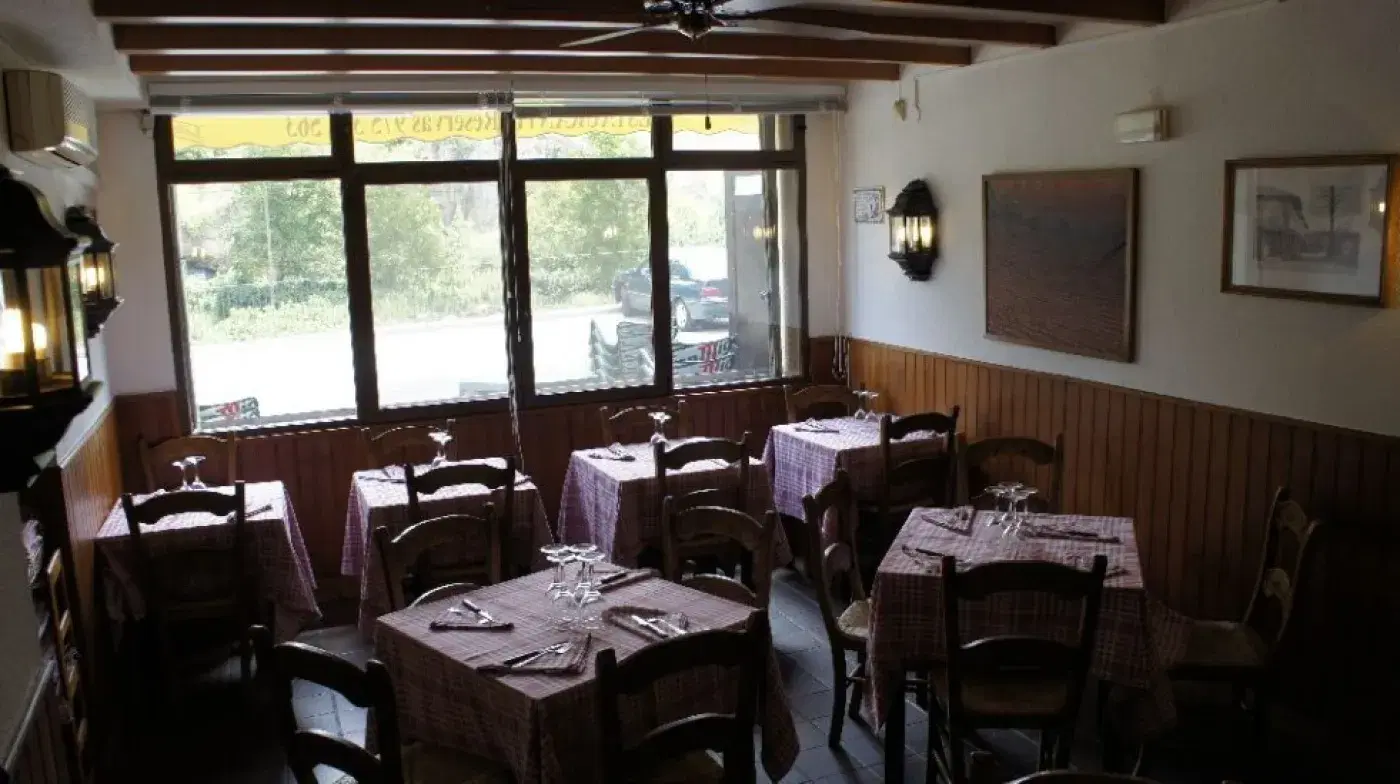
Warm and welcoming with elegant decor that reflects the natural surroundings; guests describe a sensory experience with thoughtful staging, soft lighting, and a connection to the forest theme throughout the dining room.