
Kamakura’s bakery culture sits between beach-town ease and railway-town precision, and La for e t et la table belongs to its small, serious bread circuit. Tabelog selected it for Bread EAST “Tabelog 100” in 2020 and 2022, placing it among eastern Japan’s recognized bread specialists rather than the city’s formal restaurant tier.
Pearl is the En Primeur Club membership app — saves, bookings, and concierge access live there. Same editors, same standards.
- Address
- Confort Yuigahama, 1 Chome-3-16 Yuigahama, Kamakura, Kanagawa 248-0014, Japan
- Phone
- +81 467-24-5222
- Website
- facebook.com
 Saves & bookings on Pearl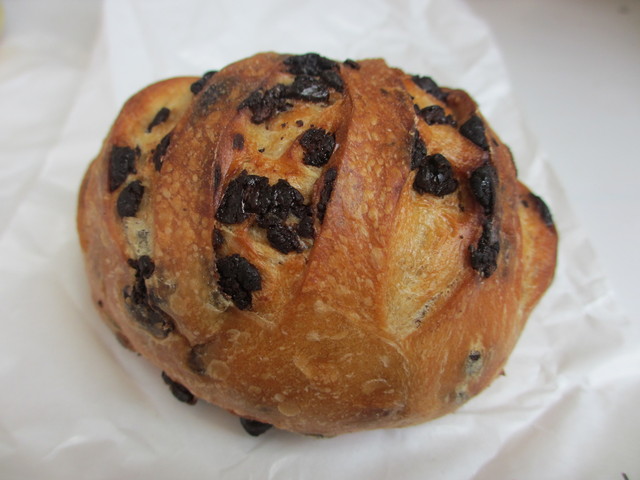
Yuigahama has a different rhythm from temple-side Kamakura: lower buildings, salt air, bicycles, and the practical foot traffic of locals moving between the station, the beach, and the day’s errands. In that setting, bread is not an imported luxury pose. It functions as breakfast, picnic supply, train food, and a quiet marker of how far Japanese baking has moved beyond simple imitation of France.
La for e t et la table sits inside that Kamakura pattern. The category is bread and sandwiches, not a tasting-menu restaurant, which matters in a city where dining can swing from casual cafés to serious reservations. Its recognition on Tabelog Bread EAST “Tabelog 100” in 2020 and 2022 gives the shop a measurable place in eastern Japan’s bakery conversation. That is a different kind of credential from Michelin dining, but for bread in Japan it signals consistency, local demand, and a product that competes beyond neighbourhood convenience.
Kamakura's bakery culture is built for walking, trains, and the beach
Kamakura rewards food that travels well. The city’s geography encourages grazing: visitors move between Komachi-dori, Tsurugaoka Hachimangu, Hase, Yuigahama, and the Enoden line rather than committing every meal to a table. Bakeries fit that structure better than many restaurants. They compress craft into something portable, and in Japan the category carries high expectations: flour selection, fermentation, pastry technique, sandwich assembly, and packaging all become part of the assessment.
That is why a bakery selected for a bread-specific list should be read differently from a general café recommendation. The useful comparison is not only with Kamakura’s dining rooms, but with the city’s other bakery addresses and casual specialists. Bergfeld Kamakura honten speaks to Kamakura’s long-running European bakery thread, while Cabbage Batake and CALVA show how nearby Kanagawa bread culture ranges from everyday local counters to more polished pastry-bakery formats. La for e t et la table belongs to the compact end of that field: a bread-and-sandwich address with a low spend profile and recognition tied directly to the category.
The cultural point is easy to miss if Kamakura is treated only as a temple excursion from Tokyo. This is also a coastal commuter city with a serious lunch-and-snack economy. Bread shops, coffee rooms, curry counters, soba houses, and small bistros do the daily work. A route through our full Kamakura restaurants guide makes that clear: the city is not defined by a single cuisine, but by a pattern of small formats that suit short distances and repeat local use.
Why a bread award matters more here than a long menu
In a bakery, breadth can be less persuasive than discipline. The categories listed here are bread and sandwich, and the appeal is in the format’s restraint: buy, carry, eat nearby, or fold it into a Kamakura day that may include temples, the coast, and a train ride back toward Yokohama or Tokyo. That compactness is part of the value. Kamakura Waku and Salmanje de Yoshino occupy a higher-spend restaurant tier in the same city; Grandir Ensemble and KIBIYA Bakery Honten sit closer to the casual bakery and café register. The point is not that one mode replaces another. It is that Kamakura’s food scene works because these tiers coexist within a walkable coastal city.
Tabelog’s Bread EAST “Tabelog 100” selection in 2020 and 2022 is the central trust signal here. It places La for e t et la table in a curated bread category across eastern Japan, rather than relying on a generic popularity claim. The listed score of 3.67 also matters in context: Tabelog ratings tend to move in narrow bands, and bakery scores above the mid-threes usually indicate sustained approval from a demanding user base. For a low-spend, take-out-led format, that combination is more useful than ornate dining-room language.
Kamakura’s café culture forms the natural companion to its bakeries. Cafe Vivement Dimanche captures the city’s coffee-and-daytime rhythm, while arbre noir YAKUMI points to the smaller specialist addresses that sit outside the obvious tourist circuit. The better plan is not to turn the day into a checklist. Build it around formats: bread in the morning, coffee after a walk, a more formal meal only if the schedule allows.
How to place it in a Kamakura food day
The strongest use case is daytime Kamakura, especially for travellers who want quality without surrendering the day to a long lunch. Bread and sandwiches are well suited to Yuigahama’s coastal geography and to an itinerary that may move between Wadazuka, the beach, and central Kamakura. This is also a sensible address for families or mixed groups because the category is flexible: people can choose lightly, avoid a long seated meal, and keep moving.
For travellers building a broader city file, the useful split is by occasion. Use our full Kamakura hotels guide for where to stay, our full Kamakura bars guide for the evening map, our full Kamakura wineries guide for wine-led planning, and our full Kamakura experiences guide for cultural time between meals. Kamakura works better when food is matched to movement, not forced into a city-break template borrowed from Tokyo.
The wider Japan file is useful for contrast. Urban casual dining in. 鮪と炭火焼き うお炭 秋葉原店 in Tokyo, café culture at.cafe in Osaka, regional dining at.know in Kumamoto, and Vietnamese cooking at (Shoku) Vietnam in Kawasaki all show how Japan’s casual formats can carry serious intent without formal service. The same logic applies here, though on Kamakura’s quieter scale.
That scale is the editorial reason to care. The restaurant is not competing with high ceremony; it represents the small-format craft that makes Kamakura rewarding between the headline stops. Readers mapping broader travel can compare it with specialist casual addresses such as [Curry Senmon Ten] Maruyama Kyoju. in Sapporo, [ki:] in Kyoto, Jōdo Saké Bar in Los Angeles, and Onigiri Time in Pasadena: different cities, different cuisines, same lesson that low-friction formats can be culturally precise.
Price Lens
Nearby venues at a similar price tier for orientation.
| Venue | Cuisine | Price | Notes |
|---|---|---|---|
| La for e t et la tableThis venue — the venue you are viewing | Kamakura, Bakery Cafe | $ | Not listed |
| Come va? SHOP Dankazura ten | Not listed | $ | Kamakura, Bakery and bagels takeaway shop |
| Coquelicot Crepe Ten | Kamakura, Crepe & dessert stand | $ | Not listed |
| Cafe Vivement Dimanche | Kamakura, Specialty coffee & café sweets | $$ | Not listed |
| Iwata Coffee Ten | Not listed | $$ | Kamakura, Traditional Japanese kissaten & pancake cafe |
| Taiyaki Namihei | Not listed | $ | Kamakura, Traditional Japanese taiyaki & vegan-friendly bakery |
Recognition history
Dated appearances from independent guides and award organizations, with the underlying list record or original source where available.
Tabelog 100 #11 · No. 11
Tabelog · Tabelog 100 - Bread - EAST - 2022











At a Glance
- Cozy
- Rustic
- Quiet
- Solo
- Casual Hangout
- Brunch
- Standalone
- Street Scene
Current opening hours
- Monday
- Closed
- Tuesday
- Closed
- Wednesday
- 10 AM–6 PM
- Thursday
- 10 AM–6 PM
- Friday
- 10 AM–6 PM
- Saturday
- 10 AM–6 PM
- Sunday
- 10 AM–3 PM
Hours can change for holidays and private events. Last verified .
Casual, neighborhood-bakery atmosphere with a quiet, low-key feel.