
Taiyaki Namihei gives Kamakura’s Hase-Yuigahama corridor a low-key wagashi stop built around taiyaki, obanyaki, bread, and kakigori rather than a formal restaurant format. Its Tabelog 100 selection for Japanese traditional sweets and sweets cafes in East Japan puts a modest take-out counter into a serious regional conversation about everyday confectionery craft.
Pearl is the En Primeur Club membership app — saves, bookings, and concierge access live there. Same editors, same standards.
- Address
- 神奈川県鎌倉市長谷1-8-10
- Phone
- +81467247900
- Website
- taiyaki-namihei.com
 Saves & bookings on Pearl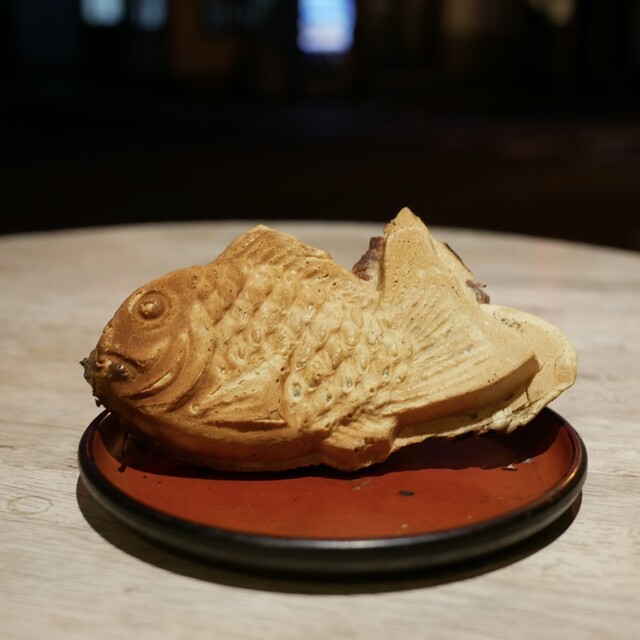
Approaching the Hase and Yuigahama side of Kamakura, the rhythm changes from temple traffic to seaside strolling: Enoden trains, narrow streets, small shopfronts, and sweets counters that make sense between shrine visits rather than across a long lunch. This is where taiyaki belongs. It is not a plated dessert tradition with ceremony announced in advance; it is eaten in motion, judged quickly, and remembered by texture, heat, filling, and timing.
Taiyaki Namihei sits inside that Japanese snack ritual rather than outside it. The format is compact, take-out led, and built for a city where visitors often move between Hase-dera, Yuigahama, and central Kamakura without committing to a seated meal. In that context, taiyaki carries more cultural weight than its scale suggests: fish-shaped batter, sweet filling, a paper wrapper, and the small etiquette of eating before it cools. Kamakura has plenty of destination dining, but this kind of stop explains the city’s food culture with fewer gestures.
Taiyaki as Kamakura pacing, not restaurant theatre
Kamakura’s strongest eating routes often work by alternation: soba or seafood at lunch, coffee in the afternoon, wagashi between train stops, and something more formal after the day-trip crowd thins. That makes a sweets counter part of the itinerary rather than a detour. The category also rewards specialization. Taiyaki, obanyaki, bread, and kakigori occupy adjacent but different registers: griddle snack, round filled cake, bakery item, and shaved ice. Together they place the shop in the border zone between wagashi, kissaten-adjacent sweets culture, and seaside snacking.
The Tabelog 100 recognition matters because casual Japanese sweets rarely fit the international award language used for tasting menus. Selection for the 2023 Japanese traditional sweets and Japanese sweets cafe East list, alongside earlier Sweets East selections in 2022 and 2020, signals consistency in a category where the reader’s decision is usually made at street level. A score of 3.67 also places it in the serious Tabelog range for a low-price sweets shop, where volume, habit, and repeat local use tend to count as much as destination prestige.
Compared with Kamakura’s broader dining spread, the appeal is partly the lack of ceremony. Spanish restaurant Arashida sits in a higher-price, longer-meal bracket; Chikara Mochi Ya and Fuhan occupy the same sub-¥999 sweets-and-snack economy; beef sukiyaki, contemporary dining, and cafe culture pull visitors in different directions. Taiyaki Namihei belongs to the side of the city that works by appetite windows: before a beach walk, after a temple visit, or between Enoden stops.
The ritual is brief, but the standards are not
Taiyaki is a deceptively strict food. The mold defines the form, but the judgment sits in the contrast between casing and filling, the speed of service, and the decision to eat immediately rather than save it for later. No diner needs a tasting note to understand that timing matters. In Japan, the snack’s value is bound to freshness from the iron, and that creates its own etiquette: order, step aside, keep the queue moving, and eat while the texture is still doing what it was made to do.
That ritual explains why the counter format feels correct here. No table seating is part of the logic, not a deficit. Chairs and tables outside, plus tatami seating, give limited pause points, but the main act is portable. The non-smoking, family-friendly setup also suits Kamakura’s mixed crowd of local regulars, weekend couples, children, and visitors tracing the temple-to-sea route. For travelers accustomed to booking-led dining, this is a useful corrective: not every serious food stop asks for a long meal or a high bill.
Kakigori adds seasonality without turning the place into a dessert salon. Shaved ice in Japan has moved far beyond summer fairground nostalgia, yet in a coastal city it still reads as weather-sensitive pleasure: a warm-day stop rather than a calendar obligation. Bread and obanyaki broaden the range, but the fish-shaped cake remains the category anchor, the item that links Kamakura’s visitor flow to a national snack tradition.
How to fit it into a sharper Kamakura food day
The smart use of this stop is not to overplan it. Kamakura rewards flexible sequencing, especially around Hase and Yuigahama, where train timing, temple crowds, and beach weather can reshape an afternoon. Treat the sweets counter as a hinge between larger meals. Pair it with coffee culture at Cafe Vivement Dimanche, bread-focused browsing at Bergfeld Kamakura honten, or a different bakery register at CALVA. For a more savory day, arbre noir YAKUMI and Cabbage Batake show how compact local addresses can define a route as much as formal reservations do.
For planning across the city, use Our full Kamakura restaurants guide first, then widen the trip with Our full Kamakura hotels guide, Our full Kamakura bars guide, Our full Kamakura wineries guide, and Our full Kamakura experiences guide. Readers building a wider Japan or Japanese-food map can compare the casual-format logic with. 鮪と炭火焼き うお炭 秋葉原店 in Tokyo.cafe in Osaka.know in Kumamoto, (Shoku) Vietnam in Kawasaki, [Curry Senmon Ten] Maruyama Kyoju. in Sapporo, [ki:] in Kyoto, Jōdo Saké Bar in Los Angeles, and Onigiri Time in Pasadena.
The editorial case is simple: Kamakura’s food memory is not built only from long meals. A sub-¥999 sweets stop with Tabelog 100 recognition can carry as much local signal as a reservation restaurant, because it reflects how the city is actually eaten. Taiyaki Namihei is strongest when treated as part of that movement: brief, precise, and tied to place by pacing rather than performance.
Category Peers
Side-by-side context: comparable cuisine and price.
| Venue | Cuisine | Price | Notes |
|---|---|---|---|
| Taiyaki Namihei | Traditional Japanese taiyaki & vegan-friendly bakery | $ | Kamakura |
| Cuillere | Japanese Curry | $ | Kamakura |
| Chikara Mochi Ya | Traditional Kamakura wagashi & mochi shop | $ | Kamakura |
| Sango Sho Honten | Japanese Curry & Yoshoku | $$ | Kamakura |
| Toshimaya Karyo Hatokoji | Traditional Japanese sweets cafe (wagashi) | $ | Kamakura |
| OXYMORON komachi Komachi | Japanese-style spice curry & café | $$ | Kamakura |
Recognition history
Dated appearances from independent guides and award organizations, with the underlying list record or original source where available.
Tabelog 100 #38 · No. 38
Tabelog · Tabelog 100 - Japanese traditional sweets / Japanese sweets cafe - EAST - 2023









At a Glance
- Cozy
- Classic
- Solo
- Family
- Casual Hangout
- After Work
- Standalone
- Local Sourcing
- Street Scene