Kyoto Kitcho Arashiyama operates at the apex of Japan's kaiseki tradition, holding a 4.6-star rating and recognised in 2024 for Best Service in Asia. Set in the Sagatenryuji district against the forested hills of Arashiyama, it represents the ryotei format at its most considered, multi-course precision, seasonal ingredients, and a service cadence that has drawn international recognition for decades.
Pearl is the En Primeur Club membership app — saves, bookings, and concierge access live there. Same editors, same standards.
- Address
- Japan, 〒616-8385 Kyoto, Ukyo Ward, Sagatenryuji Susukinobabacho, 58
- Phone
- +81758811101
- Website
- kyoto-kitcho.com
- Directions
- Get directions
 Saves & bookings on Pearl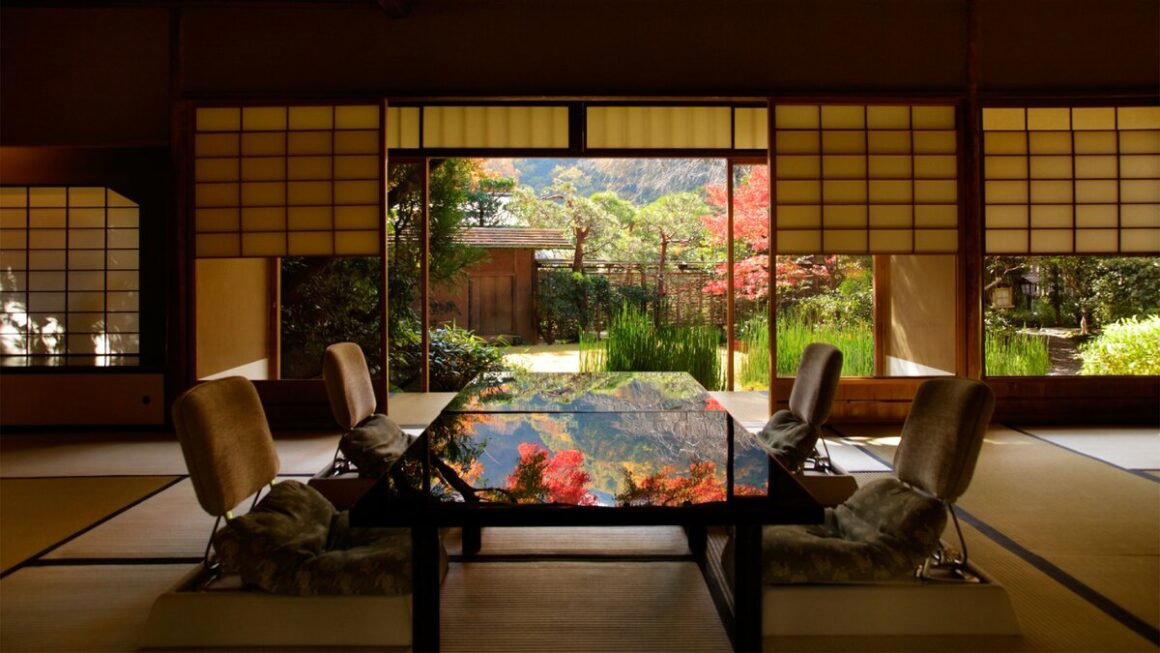
Where the Arashiyama Forest Meets the Kaiseki Counter
Approaching Kyoto Kitcho Arashiyama along the Sagatenryuji district, the shift in register is immediate. The city noise recedes. Stone paths replace pavement. The bamboo groves that define this western corridor of Kyoto press close, and the building itself, traditional timber architecture set against forested hills, communicates restraint before you've crossed the threshold. This is not the dense, lantern-lit streetscape of Gion or the compressed energy of Pontocho. Arashiyama operates at a different tempo, and Kitcho has chosen that setting deliberately: the environment is part of the meal.
In the grammar of Japanese fine dining, ma, the meaningful use of negative space and pause, governs everything. At a ryotei of this standing, even the approach is choreographed. The transition from street to gate to garden to interior follows a sequence that formal kaiseki has refined over centuries. By the time the first course arrives, the diner has already been slowly, quietly recalibrated.
The Kaiseki Framework: Tradition as Precision
Kaiseki is frequently described abroad as a tasting menu, which undersells it considerably. The format traces its origins to the tea ceremony meal, a disciplined sequence designed to sharpen attention before, not distract from, the bowl of matcha. What evolved from that austere beginning is now Japan's most codified fine-dining tradition: courses ordered by cooking technique (raw, simmered, grilled, steamed, fried), ingredients sourced with near-compulsive seasonality, and presentation governed by principles drawn from lacquerwork, ceramics, and classical poetry.
Kyoto remains the discipline's geographic and philosophical centre. Among the city's kaiseki houses, Kitcho Arashiyama belongs to the tier that sets the standard against which other practitioners are measured. Its 2024 recognition for Best Asia Service signals a service architecture that operates well beyond the transactional. At this level, service in kaiseki means an understanding of the diner's pace, the sequencing of vessels, the quiet replacement of ceramic without interruption, and the ability to explain the provenance of a single ingredient without making the explanation feel like a lecture.
For comparison, other Kyoto kaiseki houses in the upper tier, including Gion Sasaki, Hyotei, and Kikunoi Honten, each present distinct house styles, Gion Sasaki leaning toward refined intimacy, Hyotei carrying a pedigree that spans multiple generations and Michelin recognition, Kikunoi operating across multiple formats and price points. Kitcho Arashiyama positions within this set at the formal ryotei end: private dining rooms, garden views, and a service ethos calibrated for extended, unhurried meals. Mizai and Isshisoden Nakamura round out Kyoto's kaiseki upper bracket, each commanding a different type of attention from serious diners making the city their primary destination.
Seasonality as the Operating System
Kaiseki at this level runs on a different calendar than ordinary restaurants. The menu does not change weekly or monthly, it shifts with the micro-seasons of the Japanese agricultural year, tracking not just spring or autumn but the specific window when a particular river fish peaks, when a mountain vegetable arrives at exact maturity, when the first matsutake mushrooms justify their price. A meal at Kitcho Arashiyama in late October carries an entirely different set of ingredients, vessels, and atmospheric register than one taken in early April, when cherry blossoms alter both the mood of Arashiyama and the visual language of the plating.
This seasonal discipline is why the kaiseki dining calendar matters for planning. Autumn in Kyoto, roughly mid-October through late November, is widely considered one of the two premium windows for this style of dining, when maple foliage transforms the Arashiyama hillsides and the kitchen's ingredient list shifts to mushrooms, root vegetables, and the fatty river fish of colder water. Spring's cherry blossom period in late March and early April competes with autumn for atmosphere, though the crowds that descend on Arashiyama during sakura season mean that access to the physical setting is harder to enjoy with the same quietude.
The Sensory Architecture of a Ryotei Meal
At a ryotei operating at this tier, the sensory experience is constructed in layers that go well beyond the food itself. The ceramics matter, pieces selected by season and course, some of considerable age or provenance. The lacquerwork carries colour and texture that shifts under different lighting. The garden visible from the private dining room changes character across the meal as afternoon light moves. The sound register is managed: there is almost no ambient noise beyond what drifts in from the garden, and the staff move with a precision that avoids the clatter and disruption common to more casual formats.
Compared to kaiseki in a counter format, the ryotei model at Kitcho Arashiyama places the diner inside a complete environment rather than at a working counter. The drama is quieter but more total. Elsewhere in Japan's fine dining circuit, comparable total-environment experiences include HAJIME in Osaka, which pursues a different aesthetic through contemporary French-Japanese form, and Harutaka in Tokyo, which operates at a smaller sushi-counter scale. In the regional kaiseki circuit, akordu in Nara and Goh in Fukuoka demonstrate how the discipline adapts outside Kyoto. Further north, Bleston Court Yukawatan in Nagano and giueme in Akita show Japan's fine dining extending well into mountain and coastal prefectures. For international reference points in sustained-excellence fine dining service, Le Bernardin in New York City and Emeril's in New Orleans occupy a comparable institutional standing in their respective cities, though the kaiseki model is architecturally distinct.
Planning Your Visit
Reservations for Kyoto Kitcho Arashiyama are handled through the restaurant's own booking platform at kyoto-kitcho.com, which sets out the reservation policy in full. For peak autumn and spring windows, lead time of several months is standard for international travellers. The price range sits at the highest tier of Kyoto's kaiseki market, and the experience is better suited to an evening scheduled as the primary event of the day rather than one activity among several. The Sagatenryuji district is accessible by rail from central Kyoto, with the Randen Arashiyama Station and the JR Saga-Arashiyama Station both within walking distance of the broader Arashiyama area.
Peers in This Market
Comparable venues nearby, for context on price, style, and recognition.
| Venue | Cuisine | Price | Notes |
|---|---|---|---|
| Kyoto Kitcho ArashiyamaThis venue — the venue you are viewing | Traditional Kaiseki | $$$$ | Not listed |
| 鮓割烹 なか一 | Sushi Kappo (Edomae Sushi & Kyoto Kaiseki) | $$$$ | Gion |
| 米処いなもと | Traditional Japanese Izakaya with Rice-Focused Kaiseki | $$$$ | Shimogyo Ward (下京区) |
| Yamashita | Traditional Kyoto Kaiseki & Kappo | $$$$ | Nakagyō |
| Tagawa | Modern Kaiseki with Charcoal Grilling | $$$$ | Nakagyō |
| 葵献心 やま田 | Kaiseki Kyoto Cuisine | $$$$ | Shimogamo |
Continue exploring
More in Kyoto
Restaurants in Kyoto
Browse all →
Bars in Kyoto
Browse all →
Hotels in Kyoto
Browse all →
Wineries in Kyoto
Browse all →
At a Glance
- Elegant
- Quiet
- Scenic
- Sophisticated
- Intimate
- Classic
- Special Occasion
- Date Night
- Business Dinner
- Private Dining
- Garden
- Sake Program
- Garden
Current opening hours
- Monday
- 11:30 AM–3 PM, 5–9 PM
- Tuesday
- 11:30 AM–3 PM, 5–9 PM
- Wednesday
- Closed
- Thursday
- 11:30 AM–3 PM, 5–9 PM
- Friday
- 11:30 AM–3 PM, 5–9 PM
- Saturday
- 11:30 AM–3 PM, 5–9 PM
- Sunday
- 11:30 AM–3 PM, 5–9 PM
Hours can change for holidays and private events. Last verified .
Ethereal, elegant atmosphere in traditional ryokan-style private rooms with minimalist interiors, garden views, and polished service.