Our verdict
KUSINA ni LODI sits on Via Scrivia in Milan's Lodi district, a neighbourhood where Filipino community life and working-class Milanese tradition share the same pavements. Where the city's celebrated fine-dining circuit clusters around the centre, this address operates in a different register entirely, drawing a local crowd for whom the food connects to something more personal than a restaurant reservation.

Pearl is the En Primeur Club membership app, where members save venues, book tables and use the concierge.
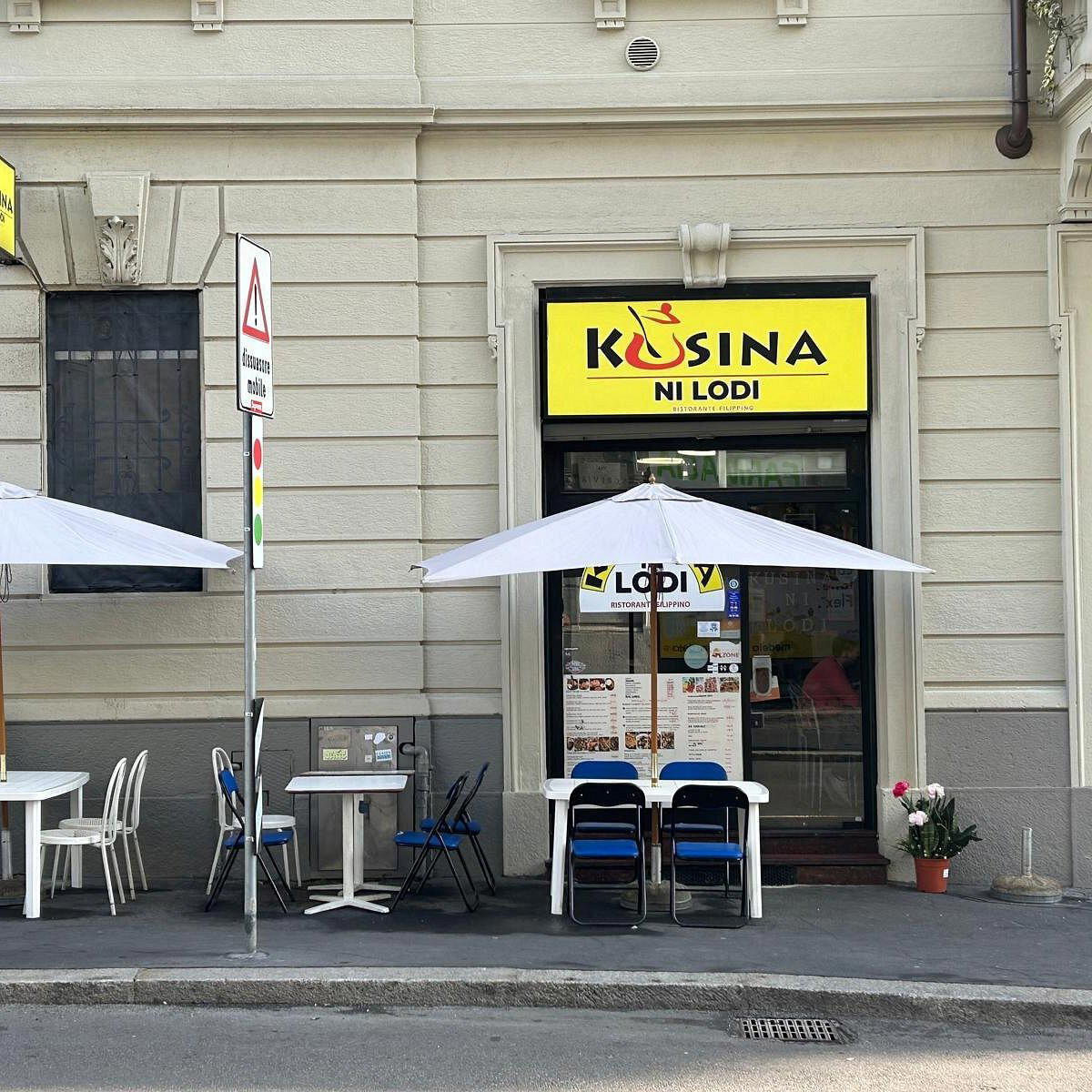
The Lodi Quarter and What It Produces
Milan's restaurant conversation defaults to a tight circuit: the Michelin-starred rooms of Enrico Bartolini, the gallery-set theatre of Cracco in Galleria, the considered modern Italians at Andrea Aprea and Seta. These are addresses that price against each other, that compete for the same tables of corporate expense accounts and visiting food press. The Lodi district, southeast of the centre past Porta Romana, does not participate in that competition. The neighbourhood is predominantly residential and working-class, with a significant Filipino community that has made this part of the city its own over the past three decades. KUSINA ni LODI, on Via Scrivia, is a product of that geography.
The name itself positions the place. Kusina is the Filipino word for kitchen, derived from the Spanish cocina, a linguistic trace of the colonial history that runs through Philippine cuisine. Lodi is the neighbourhood, but also, in Italian slang, a term of affection for a person you respect. The doubling is not accidental. This is a kitchen rooted in a specific community, in a specific part of a city that the headline restaurant guides rarely stop in.
What Filipino Cooking Looks Like in This Context
Filipino cuisine occupies an unusual position in the European dining conversation. It lacks the international infrastructure that has carried Japanese, Chinese, or Indian cooking into mainstream recognition across the continent. There are no Michelin-starred Filipino restaurants in Italy. The cuisine remains largely community-facing: served in homes, in small neighbourhood spots, in social clubs. Dishes like adobo (meat braised in vinegar and soy), sinigang (tamarind-soured broth), and kare-kare (peanut-based stew) are built around flavour logic that is simultaneously simple and specific, the kind of cooking where the quality of the souring agent and the ratio of fat to acid in a braise matter more than technique in the modernist sense.
This is a tradition closer in spirit to the Italian approach to cucina povera than to the tasting-menu format that defines Milan's upper tier. It is also, for the same reasons, a tradition that tends to produce its most honest versions in neighbourhood settings rather than destination restaurants. The address on Via Scrivia fits that pattern. Comparisons to venues like Osteria Francescana in Modena or Piazza Duomo in Alba are category mistakes.
The Neighbourhood as Context
Via Scrivia sits in Zona 4, a part of Milan that has changed considerably since the 1990s. The area around Corso Lodi and the streets feeding off it carries a different social texture from the design-district north of the city or the aperitivo-heavy west. Shops here serve the communities that live in the surrounding residential blocks. The Filipino diaspora, one of the largest in Italy, has established community anchors across this zone: shops, churches, remittance services, and restaurants that function as social infrastructure as much as food businesses.
For a visitor, this geography shapes the experience materially. Getting to Via Scrivia from the centre involves either the yellow M3 line to Lodi TIBB and a short walk, or the M3 to Porta Romana and a longer one. Neither approach puts you in the tourist circuit. You arrive in a working neighbourhood, on a street that is doing its own thing independently of the city's more visible hospitality industry. That distance from the centre is part of what the place is.
Where KUSINA ni LODI Sits in the Broader Italian Scene
Italy's most celebrated restaurants draw on European and Japanese reference points: the three-Michelin-star tier at places like Le Calandre in Rubano, Dal Pescatore in Runate, or Uliassi in Senigallia operate within a long tradition of regional Italian cuisine refined and codified. Addresses like Enoteca Pinchiorri in Florence, Reale in Castel di Sangro, or Atelier Moessmer Norbert Niederkofler in Brunico represent the country's commitment to place-rooted cooking at the highest technical level. That tradition, and the infrastructure around it, does not extend to Filipino cooking in Italy at this point in time.
What exists instead are community restaurants operating outside the award system entirely. This is not a criticism of the form. Community cooking sustains cuisines across generations with less institutional recognition than the Michelin circuit provides, and often with more fidelity to the original. The comparison is structural, not evaluative. KUSINA ni LODI exists in a different category from the starred rooms at Andrea Aprea or the creative cooking at Verso Capitaneo, and that difference is not a deficiency. It reflects the way diaspora cuisines travel and take root, and the specific role this address plays in the Lodi neighbourhood's social fabric.
For context on how diaspora-driven community cooking has gained institutional recognition elsewhere, the trajectory of Korean cuisine in New York is instructive: Atomix now sits at the top of global rankings, while the neighbourhood spots in Koreatown that sustained the community through earlier decades remain essential in a different register. Filipino cuisine in Italy has not yet produced its Atomix moment, but the community restaurants in cities like Milan are where that story, if it develops, will start.
Planning a Visit
Via Scrivia 1 is in Zona 4, accessible via the M3 metro. The venue carries no website or phone number in public records currently available, which makes advance booking difficult to confirm through standard channels. Walk-in appears to be the realistic approach, with timing relative to local meal hours the main variable to manage. Given the neighbourhood character and the community focus of the address, this is not a reservation-book operation in the mould of the city's fine-dining tier. For a broader map of where KUSINA ni LODI sits relative to the rest of the city's restaurant options, the EP Club Milan restaurants guide covers the full range from neighbourhood spots to the top end of the starred circuit. For a sense of what the starred tier looks like, Enrico Bartolini and Casa Perbellini 12 Apostoli in Verona represent the formal end of the spectrum. KUSINA ni LODI operates at the other end, where the draw is community, specificity of place, and a cuisine that has not yet been packaged for the wider market.
Frequently asked questions
How do I find KUSINA ni LODI?
KUSINA ni LODI is located at Via Scrivia, 1, 20139 Milano MI, Italy, Milan.
Is KUSINA ni LODI the right place to eat Filipino food in Milan if you have no prior experience with the cuisine?
A community restaurant in Milan's Lodi district is a more direct encounter with Filipino cooking than any fusion or European-adapted format, precisely because the kitchen is not calibrating dishes for an unfamiliar audience.
What do regulars order at KUSINA ni LODI?
Filipino community restaurants of this type in European cities typically centre on rice-based plates, slow-cooked meat dishes, and sour broth traditions like sinigang or adobo, though what KUSINA ni LODI serves specifically requires a direct visit to Via Scrivia 1 to verify. The kitchen's identity is rooted in the Filipino community it serves in Milan's Lodi district, not in an adapted or fusion format aimed at outside visitors.
Can I walk in to KUSINA ni LODI?
Walking in to Via Scrivia 1 in Zona 4 is the most practical approach, though it is worth arriving with the flexibility that comes with any community-oriented venue where seating capacity and hours are not published.
What has KUSINA ni LODI built its reputation on?
KUSINA ni LODI's documented standing rests on its role as a community anchor for the Filipino diaspora in Milan's Lodi district, not on formal awards or critical recognition in the mainstream Italian dining press. In a city where the restaurant conversation concentrates on the Michelin-starred circuit, a Filipino community venue operating at street level in Zona 4 occupies a different register entirely, closer in function to a neighbourhood canteen than a destination restaurant.
Do they accommodate allergies at KUSINA ni LODI?
With no website or confirmed phone number in public records, there is no remote way to verify allergy accommodation ahead of a visit. Anyone with serious dietary requirements should go directly to Via Scrivia 1 in Milan's Zona 4 and ask in person before ordering, which is standard practice for community-oriented venues operating outside formal booking systems.
Is KUSINA ni LODI worth it?
That depends entirely on the frame of reference. Against the starred circuit in Milan, the technical ambition of Enrico Bartolini or the regional precision of places like Le Calandre, KUSINA ni LODI is a different category of visit. For someone interested in how Filipino food actually functions in the Italian diaspora context, Via Scrivia 1 in Zona 4 offers something that no adapted or upmarket Filipino concept in the city currently provides.
At a Glance
Comparable venues nearby, for context on price, style, and recognition.
| Venue | Cuisine | Price | Notes |
|---|---|---|---|
| KUSINA ni LODIThis venue (the venue you are viewing) | Filipino | Not listed | Not listed |
| La Cristalleria | Catalan Pan de Cristal Sandwiches | $10–20 | Sarpi, Catalan Pan de Cristal Sandwiches |
| Monkey In The City | Authentic Cuban | $30–50 | Xxii Marzo, Authentic Cuban |
| CANTINE A MARE | Italian Seafood | $50–100 | Buenos Aires - Porta Venezia - Porta Monforte, Italian Seafood |
| Montesoprano Street | Sicilian Street Food | $20–30 | Duomo, Sicilian Street Food |
| Ristorante Pizzeria Convivium | Italian Ristorante & Pizzeria | $30–50 | Brera, Italian Ristorante & Pizzeria |
Continue exploring
More in Milan
Restaurants in Milan
All restaurants in Milan →
Bars in Milan
All bars in Milan →

Details
- Lively
- Cozy
- Family
- Casual Hangout
- A La Carte
Current opening hours
- Monday
- Closed
- Tuesday
- 12–3 PM, 6–10 PM
- Wednesday
- 12–3 PM, 6–10 PM
- Thursday
- 12–3 PM, 6–10 PM
- Friday
- 12–3 PM, 6–10 PM
- Saturday
- 12–3 PM, 6–10 PM
- Sunday
- 12–3 PM, 6–10 PM
Hours can change for holidays and private events. Hours as of .
Informal, lively, welcoming, and cozy atmosphere with friendly service.