Kura occupies a quiet stretch of the 16th arrondissement at 56 Rue de Boulainvilliers, sitting at a remove from the grand-boulevard dining circuits that define much of Paris's high-end restaurant scene. The address places it in a neighbourhood where serious cooking tends to arrive without fanfare, drawing a local clientele that values discretion over spectacle. For visitors tracking the more considered edge of Parisian dining, it merits a closer look.
Pearl is the En Primeur Club membership app — saves, bookings, and concierge access live there. Same editors, same standards.
- Address
- 56 Rue de Boulainvilliers, 75016 Paris, France
- Phone
- +33145201832
- Website
- mymenuweb.com
- Directions
- Get directions
 Saves & bookings on Pearl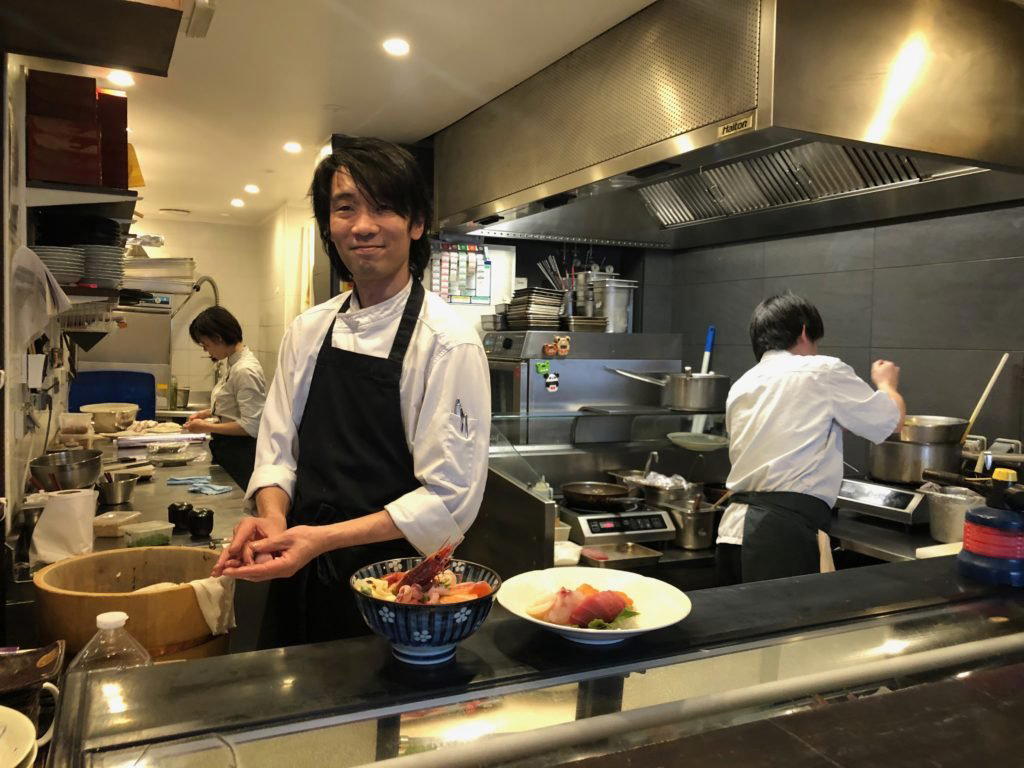
The 16th Arrondissement's Quieter Register
Paris dining tends to cluster around a handful of gravitational centres: the trophy addresses of the 8th, the chef-driven rooms of the 6th and 7th, the natural-wine corridors of the 11th. The 16th sits apart from all of them. Its residential avenues and lower restaurant density have historically positioned it as a neighbourhood for reliable neighbourhood cooking rather than destination dining, which makes the presence of serious kitchens here all the more instructive. When a table earns repeat custom in the 16th, it does so on the quality of the cooking alone, stripped of the scene-making that buoys rooms in more fashionable arrondissements.
Kura is a Paris restaurant serving Modern Japanese Kaiseki at 56 Rue de Boulainvilliers, 75016 Paris. The address is walkable from La Muette and Ranelagh, a calm residential pocket where the dining audience skews local and the expectation is for precision over performance. That geography shapes the room before a single course arrives.
Entering the Room
The physical approach along Rue de Boulainvilliers sets a particular register: quiet, low-traffic, with the architectural uniformity of Haussmann-era buildings on either side. There is no signage designed to arrest the passerby, no queue management visible from the street. What this kind of address signals, in Paris, is a kitchen confident enough to rely on word of mouth and repeat visits rather than foot traffic. It is the dining equivalent of a Burgundy domaine that ships its entire allocation before harvest: the audience already exists.
Inside, the expectation in rooms of this type in the 16th is for controlled scale, considered lighting, and a format that allows the food to do the work. The neighbourhood tradition rewards kitchens that understand pacing, and pacing is the operative word when considering how a multi-course meal unfolds in a space of this character.
The Arc of the Meal
The editorial angle on Kura is most usefully framed through the sequence of a meal rather than any single dish, because that sequencing is where kitchens in this tier of Parisian dining differentiate themselves. At the summit of the Paris market, rooms like Alléno Paris au Pavillon Ledoyen, Arpège, and Le Cinq at the Four Seasons George V structure their tasting menus around a clear narrative arc: a light, technically precise opening sequence, a central act built around a signature protein or vegetable treatment, and a dessert passage that returns to restraint. The architecture of the meal is as deliberate as the cooking.
At the neighbourhood end of that same tradition, the same logic applies at smaller scale. A well-run multi-course menu in the 16th will typically open with preparations designed to establish register, textures that signal what the kitchen values: clarity of flavour, restraint in seasoning, respect for primary ingredients. The middle courses carry the meal's weight, and the close should resolve, not overwhelm. This is the grammar of French tasting-menu cooking in its more classically inflected form, distinct from the free-associative creativity that characterises rooms like Kei, where Japanese technique is threaded through the French format.
It is also worth noting how this compares to French fine dining beyond Paris. Tables like Mirazur in Menton, Bras in Laguiole, or Flocons de Sel in Megève build their meal arcs around a strong sense of terroir and landscape specificity. Paris kitchens, by contrast, tend to draw on the full range of French regional produce without anchoring to a single territory, which gives the multi-course format a different kind of breadth. Troisgros in Ouches and Auberge de l'Ill in Illhaeusern represent the deep-rooted regional model; Paris offers the metropolitan synthesis.
Where Kura Sits in This Field
The 16th arrondissement supports a number of kitchens that operate in the considered, non-theatrical tier of Parisian dining. These rooms are not competing with the palace hotel addresses or the internationally recognised three-star circuit. They are competing for the custom of a local audience that eats out frequently and returns to tables that demonstrate consistent craft. In that field, the relevant peer comparison is not L'Ambroisie on Place des Vosges or the institutional weight of Paul Bocuse in Collonges-au-Mont-d'Or, but the neighbourhood room that earns its regulars through quiet reliability.
Internationally, the model has a recognisable counterpart. Rooms like Le Bernardin in New York or Atomix demonstrate that serious cooking can hold an audience without relying on spectacle or celebrity. The discipline of the format does the work. French regional kitchens like Au Crocodile in Strasbourg, Assiette Champenoise in Reims, Auberge du Vieux Puits in Fontjoncouse, and AM par Alexandre Mazzia in Marseille each demonstrate a version of the same principle: the meal's architecture earns the table's loyalty over time.
Kura, at its Rue de Boulainvilliers address, operates in that quieter register of Parisian dining where the room itself is not the attraction. The arrondissement provides context; the kitchen must supply the reason to return.
Planning Your Visit
The address at 56 Rue de Boulainvilliers in the 16th is accessible from La Muette metro station on Line 9, placing it roughly fifteen minutes from central Paris by rail. The residential character of the street means that evenings are calm and unhurried, with none of the noise spillover that can affect dining rooms in denser arrondissements. For a broader orientation to the city's dining options across price tiers and neighbourhoods, our full Paris restaurants guide maps the field in detail.
Category Peers
Comparable venues nearby, for context on price, style, and recognition.
| Venue | Cuisine | Price | Notes |
|---|---|---|---|
| KuraThis venue — the venue you are viewing | Modern Japanese Kaiseki | $$$$ | Not listed |
| Mun | Modern Asian Fusion with Japanese Influences | $$$$ | 8th Arr. - Élysée |
| EnYaa | Kyoto-Inspired Japanese Kaiseki | $$$$ | Louvre / Palais-Royal |
| Benkay | Traditional Japanese Teppanyaki and Washoku | $$$ | Front de Seine |
| Yoshi | Japanese Sushi & Sashimi | $$ | 16th Arr. - Passy |
| Yatai Ramen | Japanese Ramen with French Fusion | $$ | 8th arrondissement (Saint-Honoré) |
Continue exploring
More in Paris
Restaurants in Paris
Browse all →

Bars in Paris
Browse all →
Hotels in Paris
Browse all →
Wineries in Paris
Browse all →
At a Glance
- Elegant
- Minimalist
- Intimate
- Sophisticated
- Quiet
- Date Night
- Business Dinner
- Special Occasion
- Celebration
- Open Kitchen
- Chefs Counter
- Terrace
- Private Dining
- Sake Program
- Extensive Wine List
- Local Sourcing
Current opening hours
- Monday
- Closed
- Tuesday
- 12–2 PM, 7:30–10 PM
- Wednesday
- 12–2 PM, 7:30–10 PM
- Thursday
- 12–2 PM, 7:30–10 PM
- Friday
- 12–2 PM, 7:30–10 PM
- Saturday
- 12–2 PM, 7:30–10 PM
- Sunday
- Closed
Hours can change for holidays and private events. Last verified .
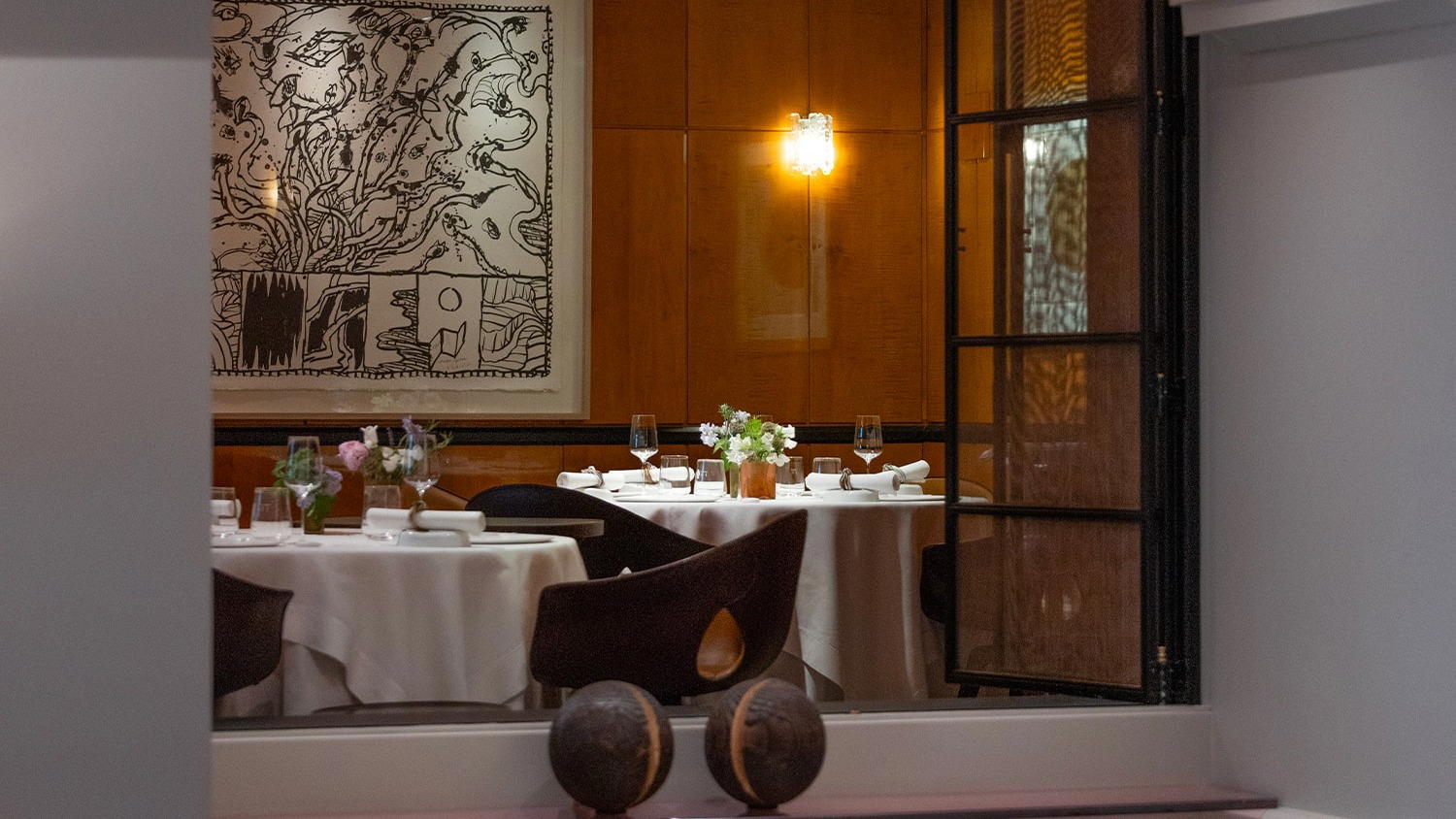
Dark wood-paneled room with atmospheric lighting, rough-hewn bar, open kitchen counter, and minimalist zen aesthetics creating a serene, refined atmosphere.