Our verdict
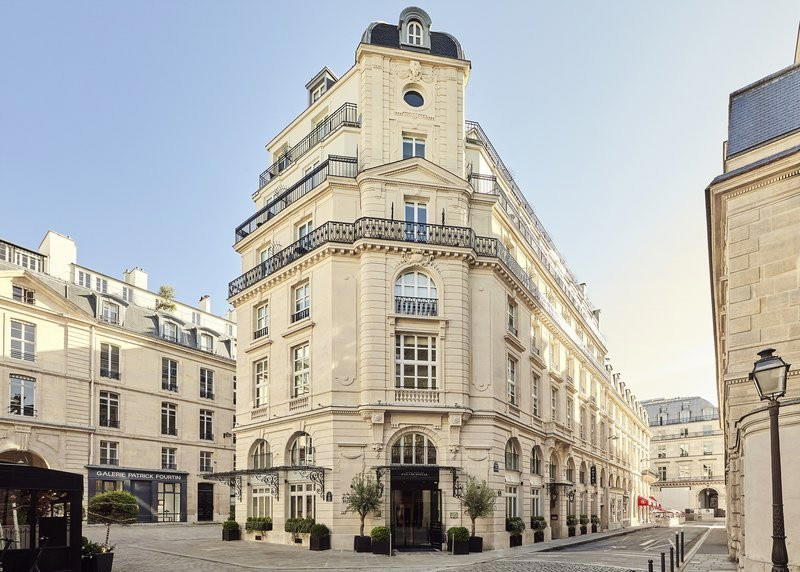
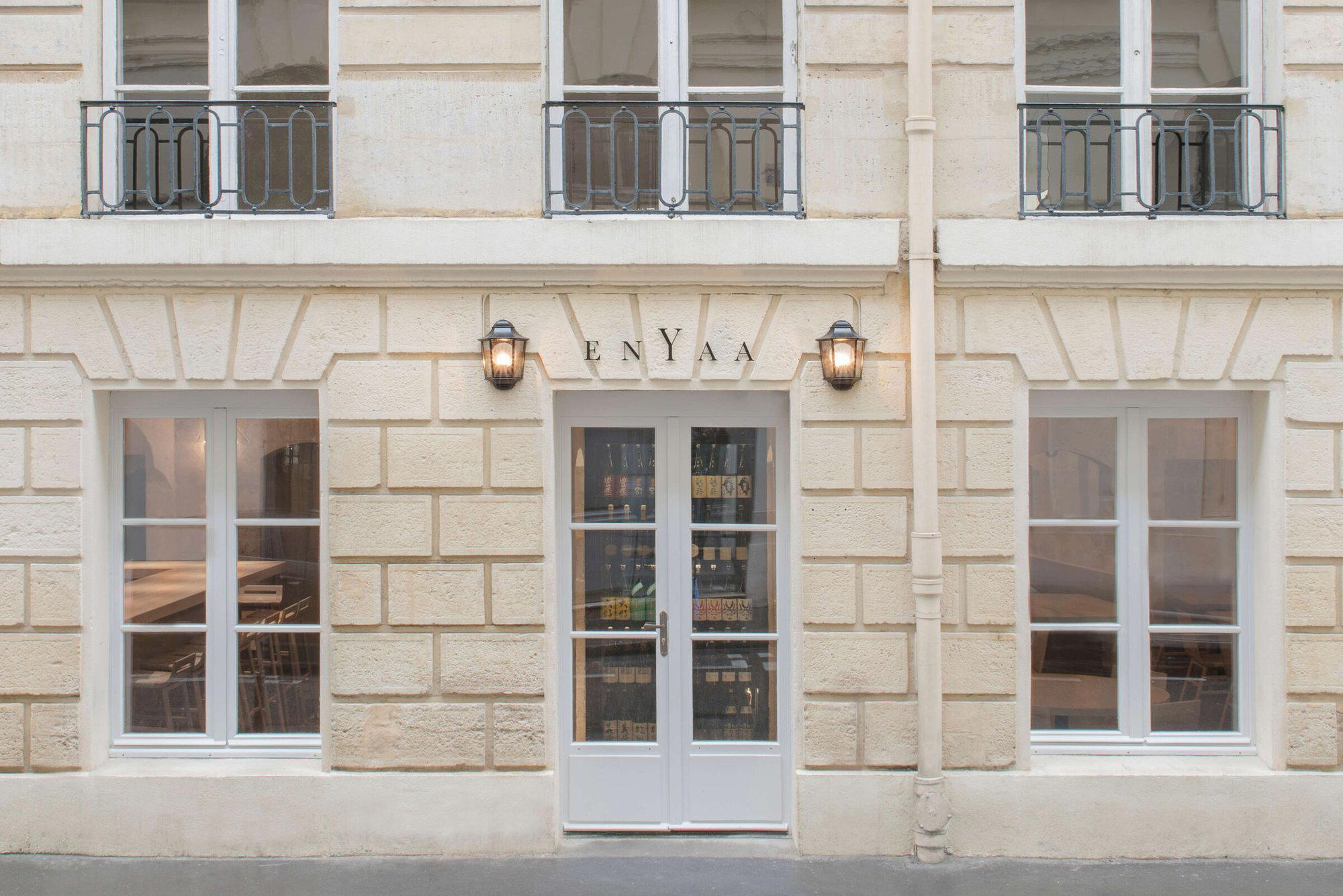
EnYaa occupies a considered address at 37 Rue de Montpensier in Paris's first arrondissement, steps from the Palais-Royal gardens. The restaurant sits within a neighbourhood that has long attracted serious dining, positioning it against some of the city's most deliberate creative kitchens. Confirm details and availability directly with the venue before visiting.

Pearl is the En Primeur Club membership app, where members save venues, book tables and use the concierge.
The menu
What to order
- Kaiseki Tasting Menu
- Sashimi Platter
- Ginger Pork in Jyubako
- Chicken Soboro Rice
- Charcoal-Grilled Meats
- Matcha Ice Cream
A Palais-Royal Address in Paris's Most Layered Dining Quarter
The first arrondissement has operated on a different register from the rest of Paris's restaurant scene for at least two centuries. The arcades of the Palais-Royal, which gave commercial shelter to writers, jewellers, and restaurateurs alike from the late eighteenth century onward, still define the tone of the streets immediately surrounding them: discreet without being invisible, frequented by people who know what they are looking for. Rue de Montpensier, running along the western gallery of the Palais-Royal, belongs to that tradition. EnYaa sits at number 37 on that street, inside a neighbourhood where the dining context is set by some of the most deliberate creative kitchens operating in the city today.
Paris's first arrondissement is not, in 2024, a neighbourhood that rewards casual drift. It rewards research. The restaurants that have established themselves here, from the high-formality classical houses to the more recent generation of technique-focused smaller rooms, share a common quality: they ask something of their guest before the meal begins. Booking windows, dress expectations, and menu formats tend to be defined rather than approximate. EnYaa, at its Rue de Montpensier address, operates in precisely that environment.
The Intersection of Imported Method and Indigenous Product
The broader movement that has shaped serious Parisian dining over the past fifteen years is not a single cuisine but a set of working principles: sourcing with unusual specificity, applying cross-cultural technique to French-grown or French-raised ingredients, and letting the result carry the argument rather than leaning on category labels. That movement now runs from the very best of the Michelin hierarchy, Alléno Paris au Pavillon Ledoyen operates in the Creative tier at the €€€€ price point partly because of how far it has pushed the intersection of classical extraction technique and contemporary ingredient logic, down through smaller rooms that apply similar discipline at a more compressed scale.
This is the editorial frame that matters for understanding where a restaurant like EnYaa sits in the city's current scene. Paris has long accommodated the imported practitioner who brings a formed technique and then sources locally: Kei, at the Contemporary French, Modern Cuisine end of the €€€€ spectrum, is perhaps the clearest institutional example, having maintained Michelin recognition by applying Japanese discipline to French product. What has changed in the current decade is that this approach is no longer a novelty argument, it is simply a credible way to run a serious kitchen. The venues that do it well tend to cluster around neighbourhood addresses with low visual noise and high operational focus, which describes the Palais-Royal area as accurately as it describes any part of the city.
For context on what the French kitchen at its most rooted looks like, the regional houses remain instructive. Bras in Laguiole built its identity around the Aubrac plateau's specific flora; Mirazur in Menton has indexed the entire menu to the microclimate of the Ligurian coast. Urban kitchens in Paris that want to make a similar argument about product have to work harder to establish the sourcing credential, precisely because the city does not supply the visual shorthand that a mountain or a coastline provides. The restaurants that succeed in making that argument in a Paris setting tend to communicate it through the menu format itself rather than through the room's décor.
L'Ambroisie on the Place des Vosges and Le Cinq at the Four Seasons George V represent the formal high-classical end of the Parisian spectrum, where the room and the service architecture are as much a part of the offering as the plate. Restaurants that operate closer to the Palais-Royal arcades tend to allow the kitchen more room to define the register. That is a structural condition of the neighbourhood, not a statement about individual ambition.
The broader French dining tradition that shapes these comparisons is deep and well-documented. Houses like Auberge de l'Ill in Illhaeusern, Les Prés d'Eugénie in Eugénie-les-Bains, and Georges Blanc in Vonnas have each demonstrated that French regional cooking at the highest level is defined by a relationship between a specific territory and a sustained technique, not by a single dish or a single season. That principle translates into the Paris environment differently, because the city is not itself a terroir. What Paris-based kitchens do instead is assemble a terroir: sourcing from specific producers, sometimes across multiple regions, and applying a formed technique to hold those disparate materials together. Arpège has made that argument more consistently than almost anyone else over three decades. The question for any new addition to the first arrondissement's serious dining offer is what version of that argument it is making.
For comparison further afield, the ingredient-first model has also taken hold internationally. Le Bernardin in New York has maintained its position at the top of the American fine dining market by applying classical French technique to a narrow, precisely sourced product category. Lazy Bear in San Francisco approaches a similar principle from a different cultural angle. Both examples confirm that the method of intersecting imported or trained technique with product specificity is not a Paris-only phenomenon, even if Paris remains its most concentrated testing ground.
Planning a Visit to EnYaa
EnYaa is located at 37 Rue de Montpensier in the first arrondissement, directly adjacent to the western arcade of the Palais-Royal. The nearest Métro stations are Palais Royal-Musée du Louvre (lines 1 and 7) and Pyramides (lines 7 and 14), both within a short walk. The neighbourhood is leading approached on foot once in the area; the streets around the arcades are narrow and parking is neither convenient nor appropriate for the zone. Because detailed operational data, including confirmed hours, booking windows, menu format, and price structure, is not publicly consolidated in a single verified source at the time of writing, the direct recommendation is to contact the venue before making plans, particularly if travelling specifically for this meal. Given the address and peer context, the reasonable assumption is that demand is managed, and walk-in availability on preferred evenings should not be taken for granted. See our full Paris restaurants guide for broader planning context across the city's arrondissements.
Frequently asked questions
Where exactly is EnYaa?
EnYaa is located at 37 Rue de Montpensier, 75001 Paris, France, Paris.
What kind of dining experience does EnYaa offer compared to other Palais-Royal restaurants in Paris?
EnYaa at 37 Rue de Montpensier sits within the western arcade of the Palais-Royal, a corridor in Paris's first arrondissement that has carried serious culinary weight for two centuries. That differentiates it from the more classical addresses in the same neighbourhood, though cuisine type and chef details are not yet publicly confirmed.
What dish is EnYaa famous for?
What the broader editorial context makes clear is that the cooking sits within a Parisian movement built on fermentation, acidity, and precise sourcing of indigenous French product, so expect a menu shaped by those working principles rather than a single flagship plate. Confirming current menu highlights directly with the restaurant at 37 Rue de Montpensier is the practical route.
Should I book EnYaa in advance?
EnYaa is located in the first arrondissement at 37 Rue de Montpensier, directly beside the Palais-Royal arcade, one of Paris's most frequented dining addresses. Advance booking is the sensible approach; the restaurant's current reservation channels are best confirmed via direct contact.
What's EnYaa best at?
Based on the editorial framing around EnYaa, the kitchen works at the intersection of imported culinary method and French indigenous product, a set of principles that has defined serious Parisian dining for the past fifteen years. That combination of technique-led cooking and a considered address is where the restaurant makes its clearest case.
How does EnYaa handle allergies?
No specific allergy or dietary accommodation policy is documented for EnYaa. The restaurant is at 37 Rue de Montpensier, Paris 75001, and contacting the venue directly before your visit is the only reliable way to confirm how particular dietary requirements are handled.
Is eating at EnYaa worth the cost?
No pricing data is currently documented for EnYaa, so a direct cost-value comparison against peers in the first arrondissement is not possible here. Checking current menu pricing directly with EnYaa before booking is the practical first step.
Price and Recognition
| Venue | Cuisine | Price | Awards | Notes |
|---|---|---|---|---|
| EnYaaThis venue (the venue you are viewing) | Kyoto-Inspired Japanese Kaiseki | $100–150 | Not listed | Not listed |
| Alléno Paris au Pavillon Ledoyen | Modern French Fine Dining | $150–200 | 3 Michelin Stars · World's 50 Best #79 | Creative |
| Kei | Modern French with Japanese Influences | $300–500 | 3 Michelin Stars · World's 50 Best #93 | Contemporary French, Modern Cuisine |
| L'Ambroisie | Classic French Haute Cuisine | $300–500 | 2 Michelin Stars · World's 50 Best #23 | French, Classic Cuisine |
| Le Cinq - Four Seasons Hôtel George V | Modern French Fine Dining | $300–500 | 3 Michelin Stars · World's 50 Best #24 | French, Modern Cuisine |
| Pierre Gagnaire | Avant-Garde French Fine Dining | $200–300 | 3 Michelin Stars · World's 50 Best #17 | French, Creative |