Our verdict
A Thai restaurant on Calle de Fernán González in Madrid's Retiro district, Krathong Thai represents the quieter end of the city's international dining spectrum, where Southeast Asian cooking traditions hold their own against a scene dominated by Michelin-chased Spanish creativity. For visitors seeking a deliberate change of register from the capital's tasting-menu circuit, it offers a distinct culinary reference point in a residential neighbourhood rarely mapped by food tourists.

Pearl is the En Primeur Club membership app — saves, bookings, and concierge access live there. Same editors, same standards.
- Address
- C/ de Fernán González, 37, Retiro, 28009 Madrid, Spain
- Phone
- +34614200868
- Hours
- Mon ClosedTue–Thu 1–4 PM, 8–11:30 PMFri–Sat 1–4 PM, 8 PM–12 AMSun 1–4 PM, 8–11:30 PM
- Website
- krathongthai.es
- Directions
- Get directions
- Booking
- Book on OpenTable
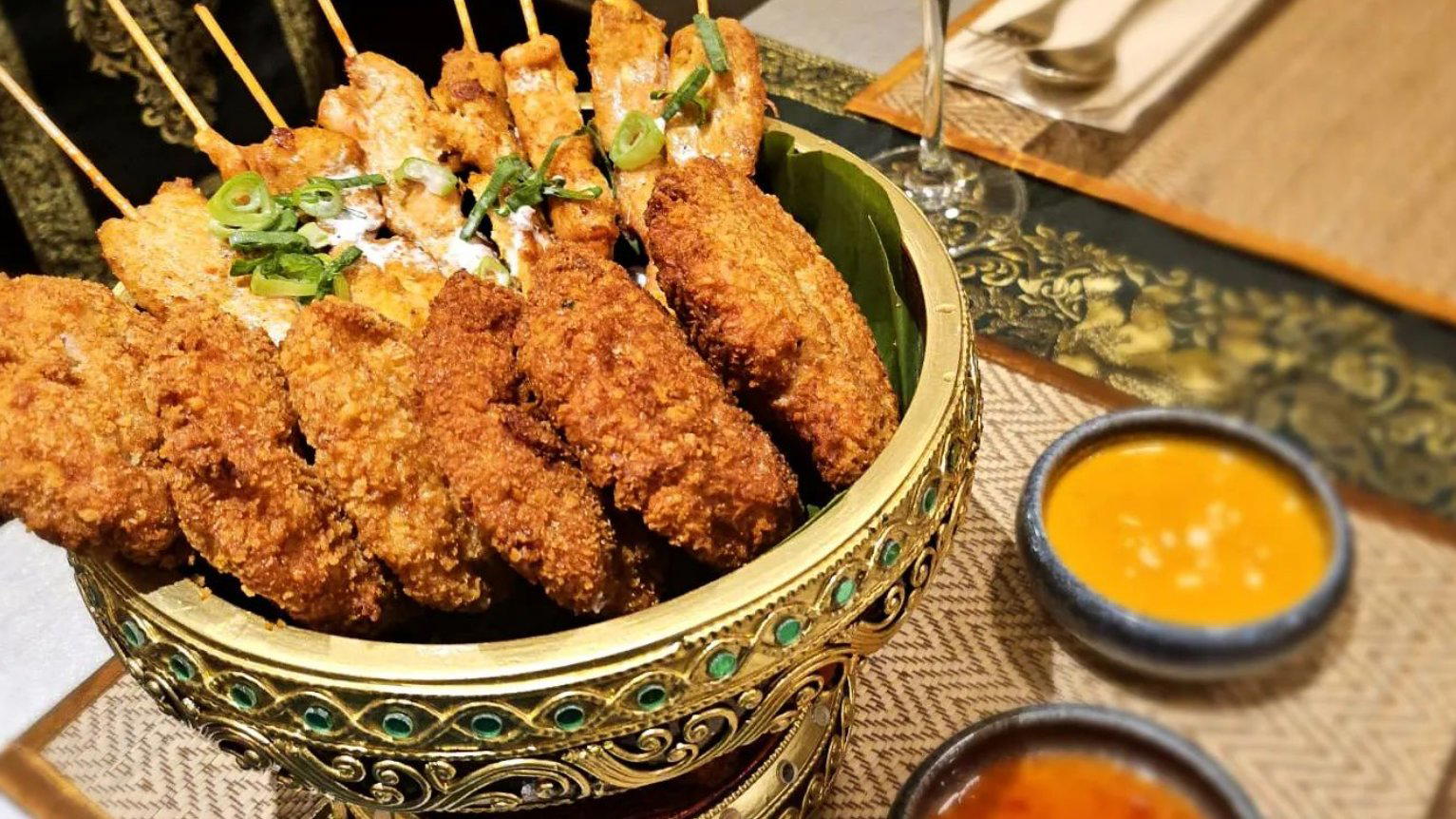
Thai Dining in Madrid's Retiro: A Different Rhythm Entirely
The stretch of Calle de Fernán González that runs through Retiro is not the Madrid most visitors photograph. There are no grand terraces facing the park, no queues of tourists at the door. The neighbourhood operates at the pace of its residents: deliberate, unpretentious, and indifferent to trends. It is precisely this context that makes Krathong Thai legible as a dining choice. Thai restaurants in European capitals have historically occupied two positions: the fast, communal canteen serving the weeknight crowd, and the more composed dining room that takes the cuisine's structural complexity seriously, building meals around layered broths, fresh aromatics, and the counterpoint between heat, sourness, and sweetness that defines central Thai cooking. Krathong Thai sits in the latter register, in a city where the dominant conversation is about Spanish technique and progressive Asian-fusion ambition.
The Ritual of the Thai Meal and Why It Translates Poorly When Rushed
Thai dining is not structured the way most European tasting menus are. There is no linear progression from cold to hot, from light to rich. Dishes arrive according to kitchen readiness and are shared across the table simultaneously, so that a bowl of tom kha arrives alongside a plate of stir-fried greens and a portion of grilled protein. The diner's role is to compose each spoonful themselves, adjusting the ratio of rice to curry, of herb garnish to broth. This is a fundamentally different etiquette from the sequenced tasting formats you find at DSTAgE or Deessa, where the kitchen controls pace entirely and individual plates arrive as closed arguments.
At a restaurant like Krathong Thai, the meal asks more of the guest. You are not being guided through a narrative; you are assembling one. The custom of sharing without hierarchy — no dish outranks another in arrival or importance — runs counter to the instinct of European fine dining, where the main course is still psychologically the centrepiece. Understanding this distinction changes how you order and, more importantly, how you eat. Thai cuisine in a European context is often reduced to a handful of internationally familiar dishes, but the full vocabulary of the tradition includes fermented pastes, regional herb combinations, and spice calibrations that shift considerably between north and south Thailand.
Madrid's International Dining Tier: Where Thai Fits
Madrid's restaurant conversation is largely framed by its Spanish creative output. The city's highest-profile tables, from Coque to Paco Roncero, compete on the terms of Spanish gastronomy, referencing local product and regional technique. International cuisine exists in the city but rarely dominates the editorial conversation. This creates an interesting dynamic: a Thai restaurant in Madrid is not competing on the same terms as one in London or Paris, where Southeast Asian fine dining has developed its own critical vocabulary and institutional recognition.
For context, Spain's broader dining circuit extends well beyond Madrid. If the city's creative flagships represent one pole, restaurants like El Celler de Can Roca in Girona, Arzak in San Sebastián, and Mugaritz in Errenteria represent another, each rooted in regional identity and long institutional histories. Against this backdrop, the presence of Thai cooking in Retiro is a reminder that Madrid's dining ecosystem is wider than its trophy tables suggest, even if that width is less frequently documented.
Retiro as a Dining Address
The Retiro district is primarily residential, bordered by the park to the east and the upscale shopping corridors of Salamanca to the north. Its restaurants serve a local clientele rather than a transient one, which tends to produce a different kind of hospitality: less performative, more consistent. A Thai restaurant in this postcode is not positioned as a destination for food tourists crossing the city; it serves the neighbourhood, which means repeat customers and a certain expectation of reliability over spectacle. This is worth understanding before you go. The experience is unlikely to resemble a high-concept Asian dining room of the kind that has emerged in cities with larger Southeast Asian restaurant ecosystems. The register is more grounded.
Getting to Calle de Fernán González from central Madrid is direct on foot from the Retiro metro station on Line 2, or by a short taxi or ride-share from the Sol or Atocha areas. The street itself is quiet and primarily residential, which makes it easy to locate without the noise and foot traffic of busier dining corridors.
Planning Your Visit
Walk-in availability at neighbourhood Thai restaurants in Madrid tends to be more accessible than at the city's tasting-menu tables, where DiverXO and its peers require advance reservation weeks or months ahead. That said, confirming availability before travelling to Retiro specifically for this restaurant is advisable, particularly on weekend evenings when the neighbourhood draws more demand. For the broader Madrid dining picture, our full Madrid restaurants guide maps the city's key tables across all price points and cuisines.
If your Madrid itinerary includes a day trip or regional extension, Spain's fine dining circuit beyond the capital is worth considering: Azurmendi in Larrabetzu, Cocina Hermanos Torres in Barcelona, Quique Dacosta in Dénia, Martin Berasategui in Lasarte-Oria, Aponiente in El Puerto de Santa María, Ricard Camarena in València, and Atrio in Cáceres each represent distinct expressions of Spanish regional cooking that extend well beyond the capital's offer.
Frequently Asked Questions
- What is Krathong Thai known for? Krathong Thai is a Thai restaurant in Madrid's Retiro district on Calle de Fernán González. In a city where the dominant dining conversation centres on Spanish creative cooking, it represents an entry point into Southeast Asian cuisine for a neighbourhood-level clientele.
- What's the signature dish at Krathong Thai? Thai cuisine across the central and regional traditions includes curry-based preparations, aromatic broths, and herb-driven stir-fries; any restaurant operating in this tradition is likely to cover a range of those categories. We recommend checking directly with the restaurant for current menu details.
- Can I walk in to Krathong Thai? Neighbourhood Thai restaurants in Madrid's residential districts generally operate with more flexibility than the city's high-demand tasting-menu tables, but confirming by phone or on-site check before visiting is advisable, particularly on weekends. Madrid's most sought-after tables, including those at DiverXO, require advance booking well in advance and are not comparable in this regard.
- Can Krathong Thai handle vegetarian requests? Thai cuisine as a tradition includes a substantial range of vegetable-forward dishes, though fish sauce and shrimp paste appear frequently in otherwise meat-free preparations. Contacting the restaurant directly, via phone or in person, before your visit is the most reliable way to confirm what the kitchen can accommodate.
- Is Krathong Thai a good choice for a group dinner in the Retiro area? Thai dining is structurally well suited to group formats because the shared-table approach, with multiple dishes arriving for the table rather than individual plating, scales naturally with party size. The Retiro location on Calle de Fernán González is accessible and residential, without the logistical pressure of busier central Madrid dining corridors. For groups planning a wider evening that includes cocktails or a second stop, Madrid's bar and restaurant options in the Salamanca and Chueca neighbourhoods are within easy reach. Confirming capacity and reservation options directly with the restaurant before a group visit is recommended.
Comparable Venues
Comparable venues nearby, for context on price, style, and recognition.
| Venue | Cuisine | Price | Awards | Notes |
|---|---|---|---|---|
| Krathong ThaiThis venue — the venue you are viewing | Authentic Thai | $20–30 | Not listed | Not listed |
| Oam Thong | Authentic Thai | $30–50 | Macarfi 6.6 Food Rating | Las Tablas |
| Osteria da Nando | Traditional Asturian Cuisine | $30–50 | Not listed | Castellana |
| Vinateros 28 | Contemporary Mediterranean Spanish | $30–50 | Not listed | Media Legua |
| Bazaar | Modern Mediterranean with Exotic Touches | $20–30 | Not listed | Chueca |
| GOXO | Global Fusion Fast Food | Not listed | Not listed | Ciudad Jardin |
Continue exploring
More in Madrid
Restaurants in Madrid
Browse all →
Bars in Madrid
Browse all →
Hotels in Madrid
Browse all →



Details
- Cozy
- Elegant
- Date Night
- Casual Hangout
- A La Carte
Current opening hours
- Monday
- Closed
- Tuesday
- 1–4 PM, 8–11:30 PM
- Wednesday
- 1–4 PM, 8–11:30 PM
- Thursday
- 1–4 PM, 8–11:30 PM
- Friday
- 1–4 PM, 8 PM–12 AM
- Saturday
- 1–4 PM, 8 PM–12 AM
- Sunday
- 1–4 PM, 8–11:30 PM
Hours can change for holidays and private events. Last verified .
Cozy and elegant atmosphere with warm lighting in a small intimate space.