Our verdict
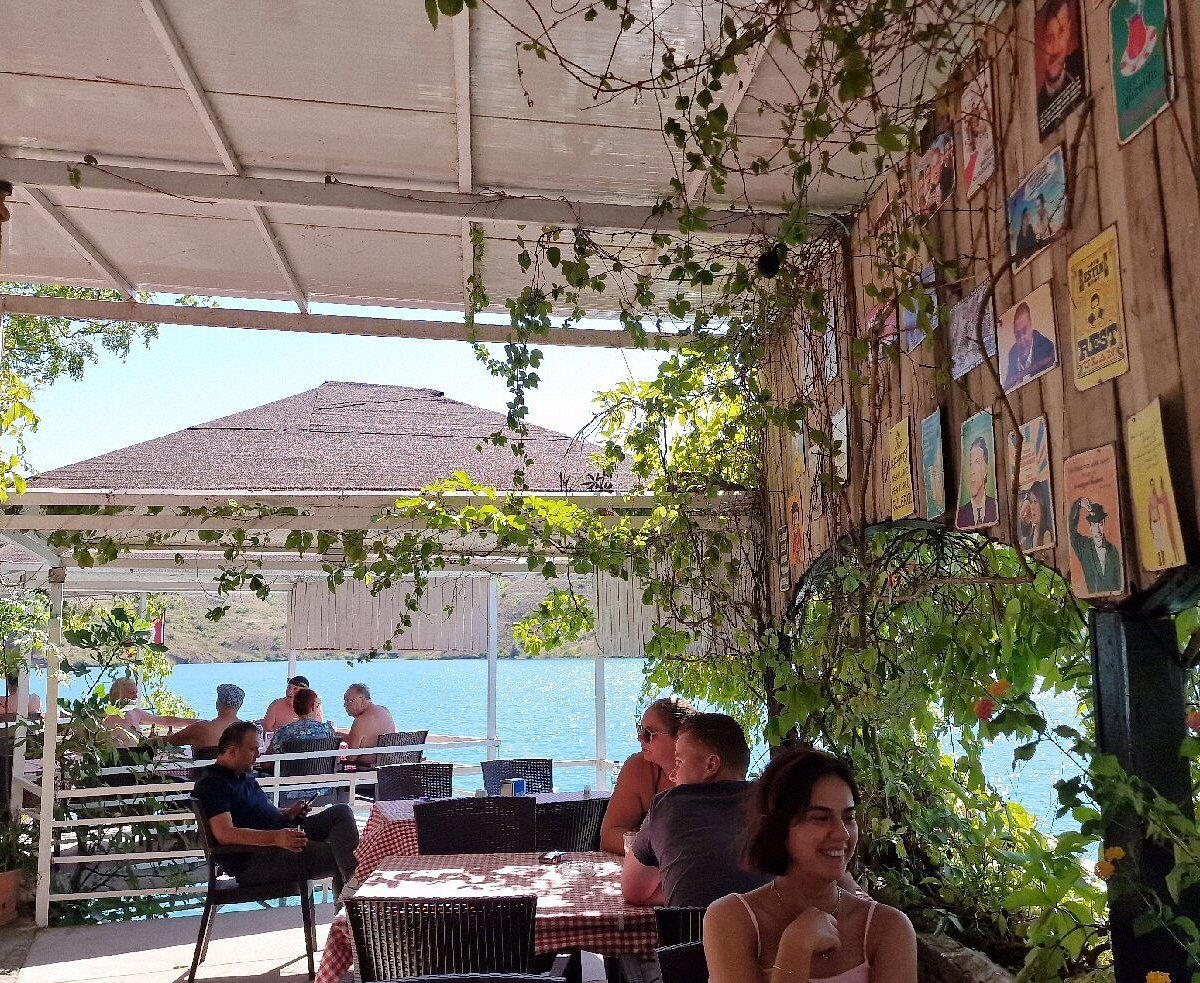
Köyüm Restaurant pairs authentic Turkish lakeside dining with waterfront terrace seating and trout or perch, suited to a casual, conversation-led meal.

Pearl is the En Primeur Club membership app, where members save venues, book tables and use the concierge.
The menu
What to order
- Trout
- Perch
Where Manavgat Eats, Away from the Resort Strip
The road into Karavca runs through a stretch of Antalya province that most coastal visitors never reach. The Mediterranean resort infrastructure thins out here, replaced by the quieter rhythms of a working agricultural district, and it is in this context that Köyüm Restaurant sits. The name itself signals intent: köyüm translates from Turkish as "my village," a framing that positions the place squarely within the tradition of the Anatolian köy lokantası, the village eating house that has fed rural Turkey for generations with whatever the surrounding land provides.
That tradition is worth understanding before you arrive. The köy lokantası operates on a logic that is essentially the inverse of a menu-driven restaurant. The cook works from what is available, seasonal, and local, rather than from a fixed list of dishes engineered around year-round supply chains. It is a format that has survived not because it is fashionable, which it now is in certain metropolitan circles, but because it is economically and geographically logical in regions where ingredient provenance is a function of necessity as much as philosophy. Manavgat sits in a district that produces citrus, vegetables, and livestock, and the Taurus Mountains that frame the region to the north create a microclimate that supports a longer growing season than much of the Turkish interior.
Sourcing as Structure: The Anatolian Kitchen Logic
The ingredient-sourcing tradition of southern Anatolian cooking is one of the most coherent in the country. Unlike the highly codified Ottoman palace cuisine that has shaped places such as Asitane in Fatih, or the modern reinterpretation model practiced at Turk Fatih Tutak in Istanbul, the southern Anatolian village table is defined by proximity and season above all else. Herbs come from the hillsides, olive oil from local presses, and legumes from nearby plots. Meat is typically lamb or chicken, sourced regionally, and preparation leans toward slow cooking, charcoal grilling, and clay-pot techniques that have not changed materially in centuries.
This is the culinary lineage that a place like Köyüm operates within, whether consciously positioned as such or not. The Antalya province corridor from Alanya to Side has been subject to significant tourist-economy pressure for three decades, and a large proportion of the restaurants in that corridor serve food calibrated for international visitors rather than for the local palate. Venues that have held to a more grounded, regionally sourced approach occupy a different position in that local ecosystem. They are used by residents who know the area well, by Turkish domestic travellers seeking food that connects to a recognisable culinary reference, and increasingly by international visitors who have grown impatient with the resort-hotel buffet as their primary food experience in the region.
For a broader survey of where to eat in the area, see our full Manavgat restaurants guide, which maps the town's dining options across price points and styles.
Manavgat in the Wider Turkish Dining Conversation
The dining conversation in Turkey is dominated by Istanbul, and that is understandable: the density of serious restaurants in districts like Beyoglu and Fatih is genuinely high, and the city has produced some of the country's most discussed cooking. Maçakızı in Bodrum represents the coastal premium tier, and Narımor in Izmir has built a following around a distinct Aegean approach. These are venues that operate with the infrastructure of editorial attention, award cycles, and urban food culture behind them.
Manavgat sits outside that circuit entirely. The town is leading known internationally as the departure point for the Manavgat waterfall and the Manavgat River market, and its restaurant scene receives almost no dedicated coverage in the international food press. That gap is partly a function of geography, partly of the resort economy that surrounds it, and partly because the town's most locally relevant eating houses have never needed external validation to maintain their position. This places Köyüm in a peer group that includes places like Hiç Lokanta in Urla or Kısmet Etliekmek ve Lahmacun Salonu in Karaman: regionally grounded, locally trusted, and largely invisible to the international ranking apparatus.
That invisibility is not necessarily a deficiency. Across Turkish provincial cooking, the most interesting eating often happens in places that are not optimised for outside attention. The same could be said of Dürümzade in Beyoglu, which built its reputation through local use long before it attracted the notice of food tourists. Locally embedded restaurants tend to maintain quality by accountability to a repeat customer base rather than by managing the first-impression economics of destination dining. The contrast with globally recognised fine-dining formats, such as Le Bernardin in New York City or Atomix in New York City, could hardly be more pronounced: different price structures, different ambitions, and a different relationship between kitchen and community entirely.
Planning a Visit: What to Expect
Köyüm Restaurant is located on an unnamed road in Karavca, outside the Manavgat town centre. The address places it in a peri-urban zone that requires a car or a clear plan to reach by taxi, and visitors coming from the coastal resort strip around Side or Manavgat should allow time for navigation. The Karavca area is not a dining district in any conventional sense; Köyüm is the destination, not one stop among many.
Booking information, hours, and pricing are not publicly listed in the sources available to us at time of publication. Given the format suggested by the name and location, an in-person visit or a call made through local enquiry is likely the most reliable way to confirm opening times before travelling. Turkish village restaurants of this type frequently operate on hours that respond to seasonal demand and local custom rather than fixed service windows, so advance confirmation is sensible, particularly for groups or for dinner service outside peak summer months.
Given the regional context and evident positioning, Köyüm sits closer to the everyday, accessible end of the Manavgat dining spectrum than to the premium coastal tier. Other regionally embedded options worth knowing about include Bayramoğlu Döner in Beykoz, Konya Kebap Evi in Selcuklu, and Ciğerci Mahmut in Adana, each of which operates within a comparable tradition of provincial Turkish cooking at a non-tourist price point. For ingredient-led eating in a rural setting, Kartepe Organic Foods in Kartepe and Lokanta Göktürk in Eyupsultan represent similar values in different parts of the country. For those with an interest in traditional pastry and confectionery alongside the main meal, Kocak Baklava in Gaziantep and Kritikos Meyhane in Mudanya and Casa Lavanda in Sile each illuminate distinct strands of the broader Anatolian table.
Frequently asked questions
Is Köyüm Restaurant child-friendly?
Köyüm sits on an unnamed road in Karavca, away from the resort-zone crowds, which tends to produce a quieter, more relaxed setting than tourist-facing restaurants in central Manavgat. That kind of peri-urban, locally oriented place typically runs at a pace that accommodates families. Confirming specific facilities in advance is sensible given the rural address.
Is Köyüm Restaurant formal or casual?
The Karavca location on an unnamed road outside Manavgat places Köyüm firmly in casual territory. Restaurants in this part of Antalya province serving a local clientele are rarely dressy affairs. Comfortable, everyday clothing is appropriate.
How far is Köyüm Restaurant from central Manavgat, and how do I get there?
Köyüm is located on an unnamed road in Karavca, a peri-urban area outside Manavgat town centre in Antalya province. The address means it is not walkable from the central district and is most practically reached by car or taxi. Visitors coming from coastal resorts in the wider Antalya region should allow additional travel time and confirm the exact route before departing, as unnamed rural roads in this part of southern Turkey are not always well-served by standard navigation apps.
How do I find Köyüm Restaurant?
Köyüm Restaurant is located at Unnamed Road, Karavca, 07600 Manavgat/Antalya, Türkiye, Manavgat.
Do I need a reservation for Köyüm Restaurant?
No booking contact details are currently listed for Köyüm. Given the Karavca address and its distance from the main Manavgat town centre, visiting mid-week or arriving early in a meal period is a practical approach until contact information can be confirmed directly.
What is Köyüm Restaurant known for?
Köyüm is a locally oriented restaurant in Karavca, in Antalya province, positioned outside the resort infrastructure that defines most visitor dining around Manavgat. Its identity is grounded in the sourcing logic of southern Anatolian cooking, where the supply chain from regional producers shapes the menu rather than a fixed international format.
Comparable Spots, Quickly
Comparable venues nearby, for context on price, style, and recognition.
| Venue | Cuisine | Price | Notes |
|---|---|---|---|
| Köyüm RestaurantThis venue (the venue you are viewing) | Authentic Turkish Lakeside Dining | Not listed | Not listed |
| Karakoy Gulluoglu | Traditional Turkish Baklava and Sweets | Not listed | Karakoy |
| Kocak Baklava | Traditional Gaziantep Baklava | Not listed | Şehitkamil |
| Kofteci Huseyin 1958 | Traditional Turkish Kofte | $10–20 | Beyoglu |
| Metanet Katmer | Traditional Gaziantep Katmer | $1–10 | Suyabatmaz |
| Bayramoğlu Döner | Traditional Turkish Döner | $10–20 | Kavacık |
Continue exploring
More in Manavgat
Details
- Rustic
- Scenic
- Casual Hangout
- Family
- Waterfront
- Terrace
- Waterfront
- A La Carte
Current opening hours
- Monday
- 9 AM–7 PM
- Tuesday
- 9 AM–7 PM
- Wednesday
- 9 AM–7 PM
- Thursday
- 9 AM–7 PM
- Friday
- 9 AM–7 PM
- Saturday
- 9 AM–7 PM
- Sunday
- 9 AM–7 PM
Hours can change for holidays and private events. Last verified .
Scenic open-air setting by the lake with a relaxed, rustic atmosphere.