
In Novigrad's compact old town, Palazzo Rainis Hotel & Spa occupies a position that few Istrian properties can match: direct Adriatic views, a full spa, and architecture that reads as a considered translation of Croatia's layered coastal heritage rather than a generic resort product. The red-roofed waterfront setting is context as much as backdrop.
Pearl is the En Primeur Club membership app — saves, bookings, and concierge access live there. Same editors, same standards.
- Address
- Kastanija 2, 52466, Novigrad
- Phone
- +385 52 645 993
- Website
- palazzorainis.com
- Directions
- Get directions
 Saves & bookings on Pearl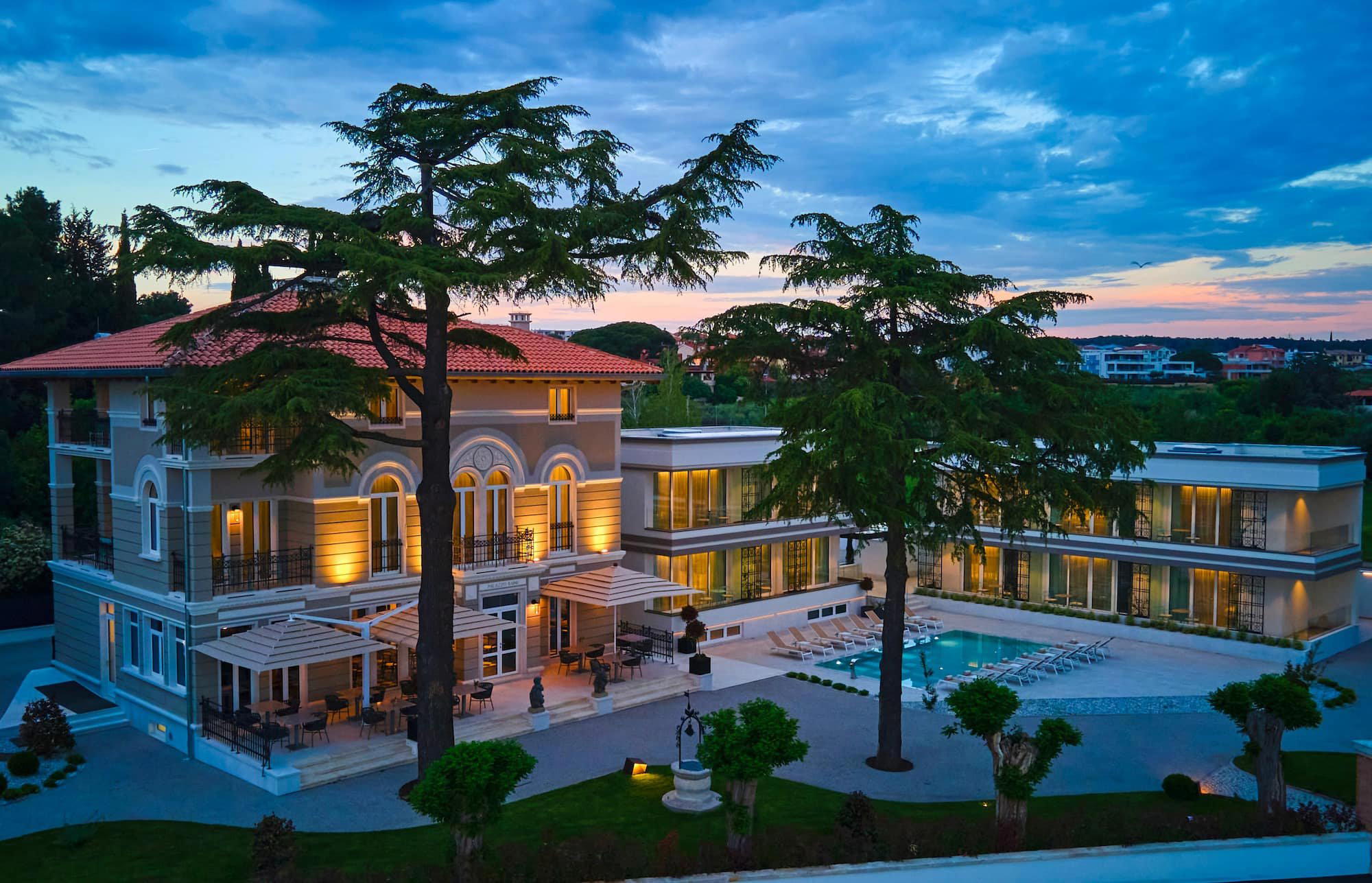
Stone, Sea, and the Istrian Vernacular
Novigrad sits at the northwestern tip of Istria, a small peninsula town where Venetian-era stone buildings crowd close to the waterfront and the Adriatic opens broadly to the west. The town's architectural character is inseparable from that Venetian imprint: narrow lanes, compact piazzas, and a roofline of terracotta tile that repeats across the old quarter in a largely unbroken register. Hotels that work well here do so by reading that context rather than overriding it. Palazzo Rainis Hotel & Spa, positioned along the waterfront at Kastanija 2, is a 4-star hotel in Novigrad that draws from the built environment around it rather than positioning against it.
The name itself signals intent. "Palazzo" in the northern Adriatic context carries Venetian associations, a term historically applied to civic and patrician buildings of some substance. Framing a hotel within that reference sets an expectation of architectural seriousness, of spaces with volume and proportion rather than the compressed efficiency of a modern resort block. For travelers moving along Croatia's coast, the contrast with large-format Dalmatian resort properties is immediate: see also the Grand Park Hotel Rovinj by Maistra Collection in Rovinj, which operates at a different scale and format entirely.
The Physical Position and What It Delivers
Waterfront hotels in small Istrian towns occupy a different category from their counterparts on the Dalmatian coast. Novigrad's old town is compact enough that proximity to the water is measured in steps rather than minutes, and properties directly overlooking the Adriatic command their position in a literal sense: the sea is the primary architectural feature, not a distant amenity. At Palazzo Rainis, the view across translucent Adriatic water is the framing condition for most of what happens on the property. Far-reaching sea views, as the property notes, are not incidental but structural to the guest experience.
This waterfront orientation places Palazzo Rainis in a peer group of design-conscious Croatian coastal properties that use setting as an editorial argument. Compare the cliff-positioned Boutique & Design Hotel Navis in Opatija, or the Adriatic-facing Boutique Hotel Alhambra in Mali Lošinj, where geographic specificity is the product. In each case, the view and the architecture are in dialogue; the room is not a container from which one happens to see water, but a space calibrated to that relationship.
Architecture as Argument
Particularly coherent small-town Adriatic hotels tend to share a formal quality: they are built from or into existing stone fabric, and their design vocabulary borrows from the vernacular without costuming itself. The result, when it works, is a kind of spatial authority that new-build resorts rarely achieve. Croatia's coastline has seen both approaches, and the stronger properties in Istria specifically, including Novigrad's waterfront, have generally leaned toward the former.
The tension in Istrian hotel design is between the region's genuine historical layering, Roman, Byzantine, Venetian, Austro-Hungarian, and the pressure to produce a legible luxury product for an international market. Properties that resolve this tension through architectural restraint rather than decorative overlay tend to age better and read more convincingly to experienced travelers. For reference points at the higher end of this approach, San Canzian Hotel & Residences in Buje and Meneghetti Wine Hotel & Winery in Bale both demonstrate how Istrian rural and coastal properties can build a luxury identity from local material and spatial logic rather than imported formats.
The Spa Dimension
Within Croatia's premium coastal hotel market, the presence of a full spa has become a meaningful differentiator for properties targeting mid-season and shoulder-season stays. A hotel positioned purely on summer views competes in a crowded field; one that adds serious wellness infrastructure extends its relevant season and shifts the guest profile toward those seeking a more deliberate, slower pace. Palazzo Rainis carries spa facilities alongside its sea-view positioning, which places it in a bracket of Istrian properties designed for stays that extend beyond a single night's stopover.
Across Croatia's premium tier, spa-enabled coastal properties tend to draw comparisons with properties like the Falkensteiner Hotel & Spa Iadera in Petrčane, where the wellness offering is central to the property's identity rather than supplementary. The question for any spa-positioned hotel on this coastline is whether the treatment and facilities program justifies a longer stay or whether it functions as a comfort addition to a view-led property. That distinction shapes how experienced travelers should frame their planning.
Novigrad in the Istrian Context
Novigrad is frequently overlooked in favor of Rovinj, which draws more international attention, or Poreč, which handles higher visitor volumes. That relative quietness is part of Novigrad's character as a base: the old town is small enough to be walkable in an afternoon, the harbor is active without being overwhelming, and the surrounding countryside, olive groves, vineyards, the hill towns of the interior, is accessible by car within thirty minutes. For travelers building an Istrian itinerary, Novigrad functions well as a quieter anchor from which to move outward.
Istria's broader food and wine scene repays attention from a base here. The region's Malvazija and Teran producers, its truffle trade centered on Motovun and Buzet, and the seafood-driven cooking of the coastal towns all fall within reach.
Planning Your Stay
Palazzo Rainis is located at Kastanija 2, 52466, Novigrad. Novigrad is reached most efficiently by flying into Pula Airport, approximately 50 kilometers south, or Trieste Airport across the border in Italy, which serves some low-cost routes. Driving from Pula takes around 45 minutes on the Istrian Y motorway, and the surrounding region is best explored by car. The Istrian coast runs from late April through October as the primary travel window, with July and August representing peak demand; shoulder months, particularly May, June, and September, offer better availability and more temperate conditions for those who want to move between coast and interior without midsummer crowds.
For travelers building a wider Croatian coastal itinerary, Palazzo Rainis sits logically alongside the Istrian peninsula properties before a move south. Broader regional context is available across our Croatia coverage including Hotel Bellevue Dubrovnik, Maslina Resort in Stari Grad, Palace Elisabeth Hvar Hotel, D-Resort Šibenik, Hotel Supetar in Cavtat, Ikador Luxury Boutique Hotel & Spa in Ika, Lešić Dimitri Palace in Korčula, Hotel Ambasador Split, Sun Gardens Dubrovnik, and Villa Korta Katarina & Winery in Orebić.
Comparisons beyond Croatia may also be useful in Aman Venice, which represents the upper register of palazzo-format Adriatic hospitality at a different price point and city scale.
Comparable Spots, Quickly
Comparable venues nearby, for context on price, style, and recognition.
| Venue | Cuisine | Price | Awards | Notes |
|---|---|---|---|---|
| Palazzo Rainis Hotel & SpaThis venue — the venue you are viewing | Historic villa reimagined as a contemporary luxury boutique hotel with classical elegance and refined minimalism. | $$$ | 4-Star | Not listed |
| Valamar Riviera Hotel & Residence | Waterfront boutique in historic old town with elegant villas and suites | $$$ | 4-Star | Poreč Old Town |
| Pullman Hotel Zagreb | Contemporary premium business-leisure hotel in a striking steel-and-glass building integrated into a new mixed-use City Island hub. | $$$ | 4-Star | Novi Zagreb / Buzin (City Island business hub) |
| Boutique Hotel Valsabbion | Modern boutique villa with eclectic, owner-conceived design. | $$$$ | 4-Star | Pjescana Uvala |
| Riva Hvar Yacht Harbour Hotel | Boutique heritage hotel blending original architecture with contemporary style | $$$$ | 4-Star | Hvar Town |
| VERBENICUM | Contemporary boutique in medieval town setting | $$$ | 4-Star | Vrbnik |
Recognition history
Dated appearances from independent guides and award organizations, with the underlying list record or original source where available.
Small Luxury Hotels of the World Member
Small Luxury Hotels of the World
Continue exploring
More in Novigrad
Hotels in Novigrad
Browse all →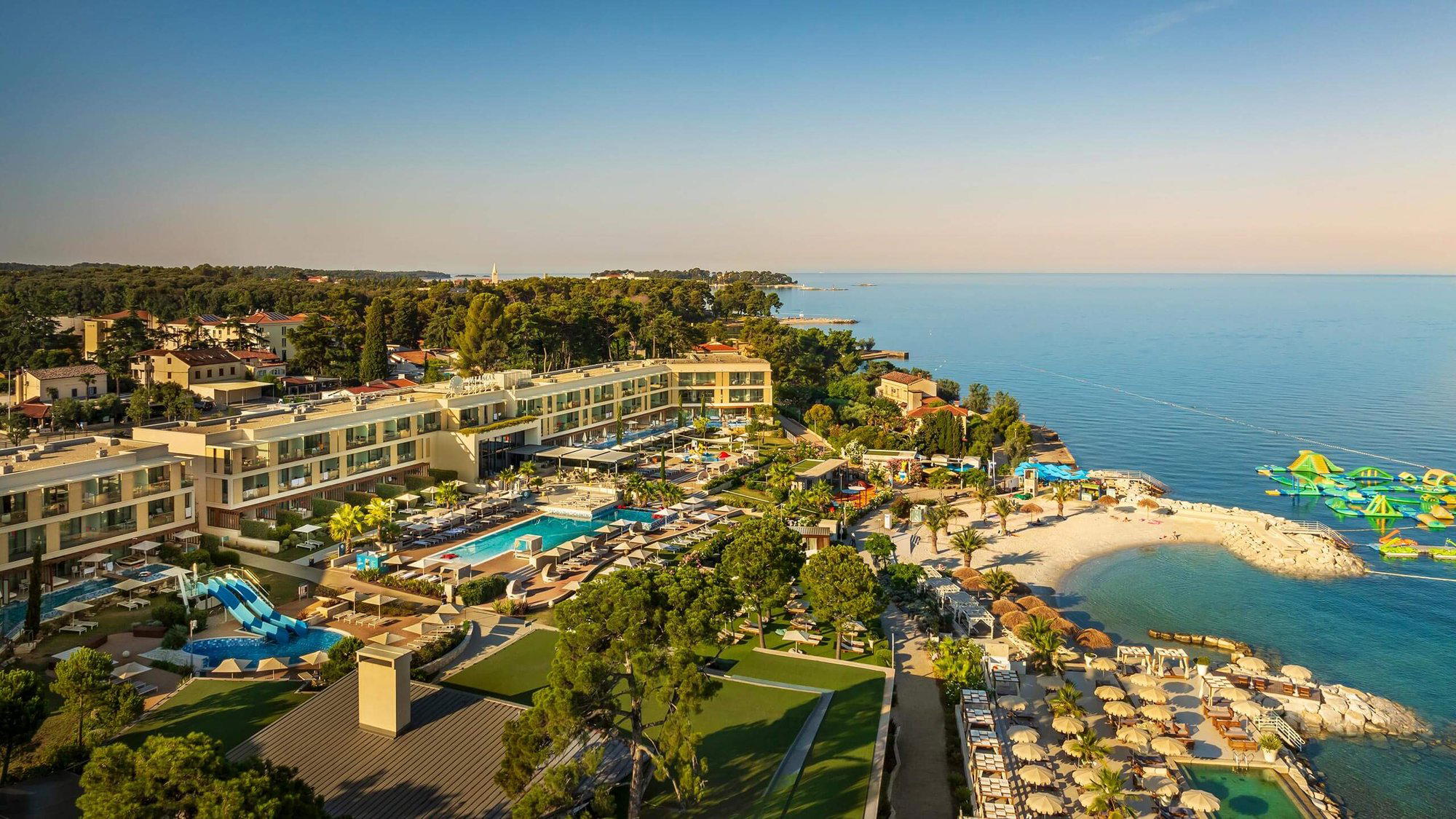
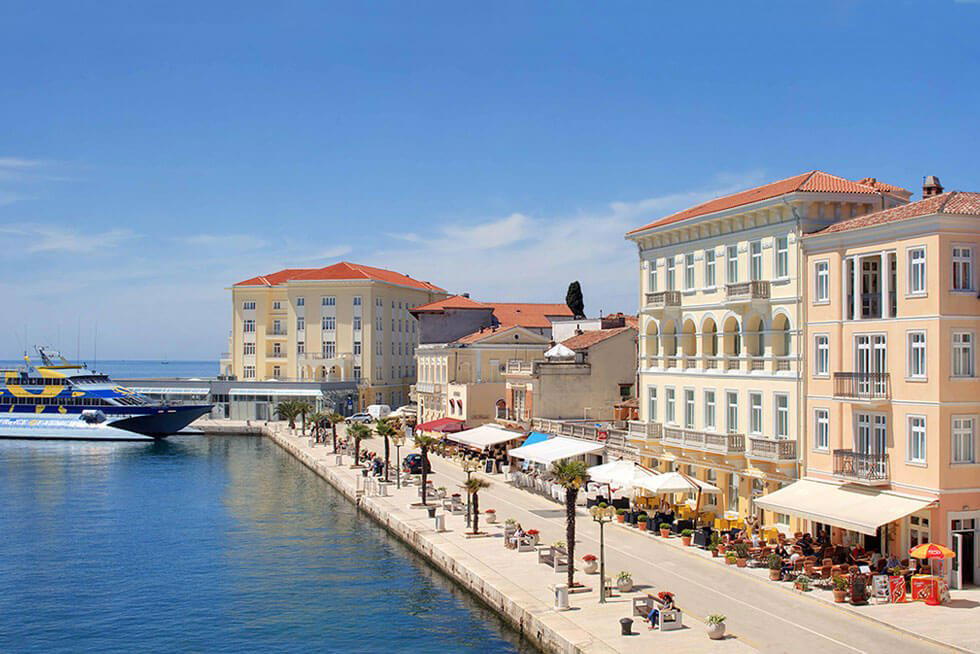
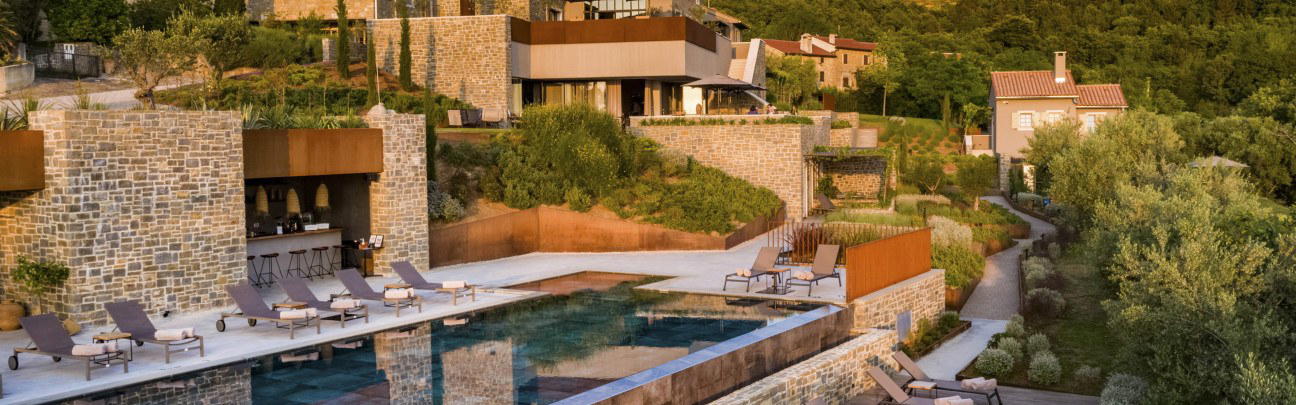
Bars in Novigrad
Browse all →
Restaurants in Novigrad
Browse all →

At a Glance
- Elegant
- Romantic
- Quiet
- Sophisticated
- Scenic
- Romantic Getaway
- Wellness Retreat
- Anniversary
- Weekend Escape
- Waterfront
- Destination Spa
- Garden
- Terrace
- Historic Building
- Panoramic View
- Wi Fi
- Pool
- Spa
- Fitness Center
- Sauna
- Massage
- Room Service
- Concierge
- Restaurant
- Bar
- Valet Parking
- Waterfront
- Garden
- Wi Fi
- Pool
- Spa
- Fitness Center
- Sauna
- Massage
- Room Service
- Concierge
- Restaurant
- Bar
- Valet Parking
Elegant and refined with soft lighting, high ceilings, and a peaceful atmosphere enhanced by garden views and proximity to the marina; guests describe it as idyllic and pampered.