Our verdict
Kōjin occupies the third floor of 190 University Avenue, positioning itself within Toronto's most competitive tier of contemporary dining. The restaurant draws comparison to peers like Alo and Aburi Hana in format and ambition, operating at a level where the sequence of a meal carries as much weight as any single dish. For visitors tracing the city's fine dining arc, it belongs on the shortlist.

The menu
What to order
- Corn Flatbread with grass-fed butter and spiced honey
- Hawaiian Smash Burger
- Grilled Ontario beef cuts
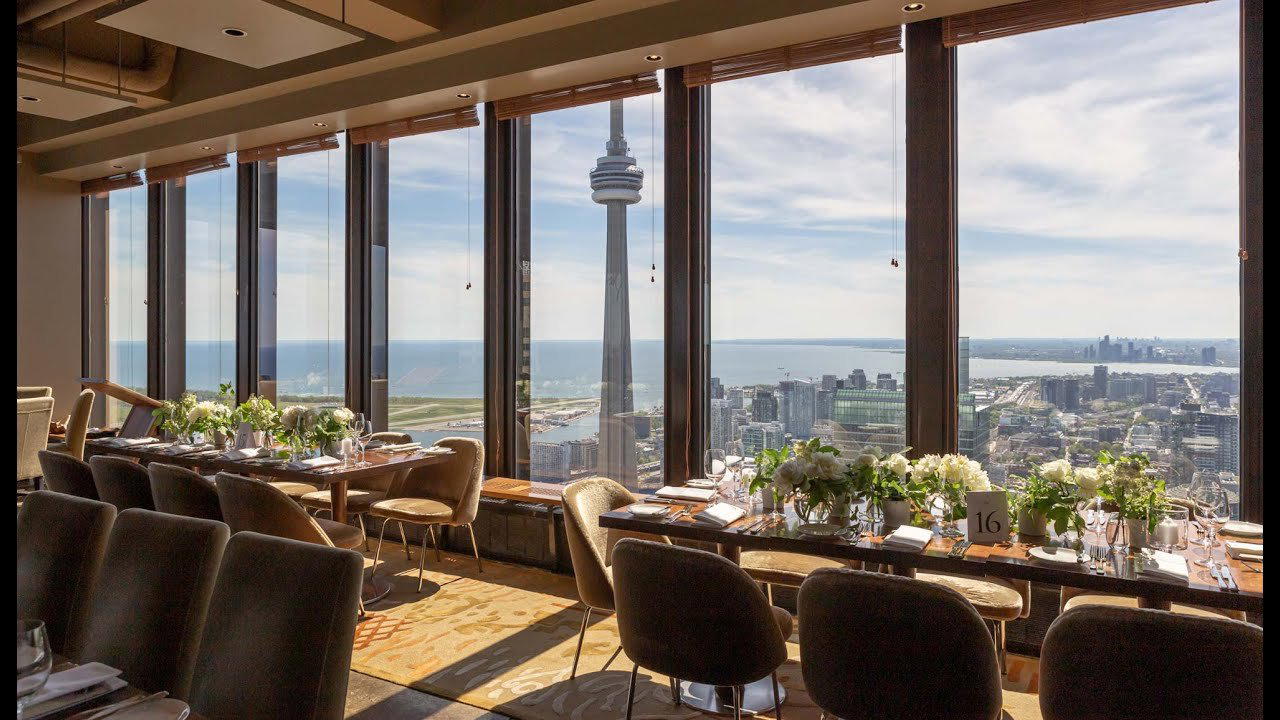
The Third Floor and What It Signals
Toronto's financial district has an awkward relationship with serious dining. The streets below University Avenue move fast and corporate, and most restaurants in the area calibrate to expense-account speed rather than considered eating. Kōjin, occupying the third floor of 190 University Avenue, makes a different bet: that the address can support a kitchen operating at the level of the city's better-known dining rooms further north and west. Whether that bet fully pays off depends on what you bring to the table, but the physical remove from street level is itself a statement of intent. You arrive at a restaurant, not a canteen dressed up for the occasion.
That vertical separation matters more than it sounds. In cities where fine dining clusters in discrete neighbourhoods, Toronto's downtown core has historically lagged. The concentration of serious kitchens runs through Yorkville and the Entertainment District, with outposts scattered further afield. A restaurant at this address, at this tier, operates as a counterargument to the geography, a claim that the financial district can sustain more than power lunches and hotel buffets.
The Arc of the Meal
Contemporary Canadian tasting menus have developed a recognisable grammar over the past decade: a succession of small early courses that establish the kitchen's technique and sourcing credentials, a central protein sequence where the meal finds its weight, and a dessert movement that either lands cleanly or dissipates the momentum built earlier. The leading rooms in the country, from Tanière³ in Quebec City to Restaurant Pearl Morissette in Lincoln, use this structure while finding specific points of distinction within it. Kōjin works within that same framework.
What tends to define the better tasting menus is how well the kitchen manages pace and contrast across the full sequence rather than delivering isolated moments of brilliance. A single strong dish is easy to produce; a coherent meal that builds through eight or ten courses without losing direction is a different discipline entirely. Restaurants operating at this tier in Toronto, including Alo and Aburi Hana, are partly distinguished by how rarely the sequence loses its thread. That standard applies here as a reference point for what the address implies.
The early courses in a meal at this level typically function as calibration: the kitchen reads the table, the table reads the kitchen, and both parties settle into the rhythm that will carry the next two hours. At Kōjin, those first movements matter because the financial district diner can arrive in a different frame of mind than someone who has travelled across the city specifically for the experience. The kitchen absorbs that variability or it doesn't, and the quality of the opening sequence is where you find out.
Where It Sits in Toronto's Competitive Tier
Toronto now has a recognisable upper bracket of contemporary fine dining, a tier that functions more like a peer group than a hierarchy. Alo remains the city's reference point for French-influenced tasting menu service, holding its position through consistent execution over many years. Sushi Masaki Saito and Aburi Hana operate in the Japanese formal dining tradition with credentials that anchor them internationally. DaNico and Don Alfonso 1890 hold the Italian-inflected end of the spectrum.
The comparison to rooms outside the city is instructive. AnnaLena in Vancouver operates in a similar register: a contemporary kitchen in an unexpected neighbourhood, building a reputation on consistency rather than spectacle. Eigensinn Farm in Singhampton represents the Canadian fine dining tradition taken to its logical extreme, where the setting and sourcing become inseparable from the meal itself. Kōjin belongs to an urban version of that same conversation, one where the dining room rather than the farm sets the terms.
For international reference, the discipline of tasting menu sequencing that defines rooms like Le Bernardin in New York City or Lazy Bear in San Francisco provides a useful calibration. Both operate through rigorous course-by-course construction rather than à la carte selection, and both carry reputations built on the coherence of the full meal rather than the fame of individual dishes. That coherence is the standard Kōjin is implicitly measured against in its tier.
Planning Your Visit
The financial district location means access is direct from Union Station and the PATH network, which matters on cold Toronto nights when the walk from a cab or rideshare to the elevator can feel longer than it should. Dinner at this tier in Toronto typically requires advance booking; the rooms above street level with serious kitchens attached do not absorb walk-in traffic the way a neighbourhood bistro can. Anyone interested in the broader Toronto fine dining circuit should cross-reference our full Toronto restaurants guide for context on how the city's top tier distributes geographically and by format.
For those building a multi-city Canadian itinerary around serious eating, the conversation extends well beyond Toronto. Jérôme Ferrer - Europea in Montreal, Narval in Rimouski, and Fogo Island Inn Dining Room in Joe Batt's Arm each represent distinct points on the country's fine dining map, as do regional anchors like The Pine in Creemore, Busters Barbeque in Kenora, and Cafe Brio in Victoria.
Quick Logistics Comparison
| Venue | Cuisine | Price Tier | Format |
|---|---|---|---|
| Kōjin | Contemporary | $$$$ | Multi-course / Tasting |
| Alo | Contemporary | $$$$ | Tasting menu only |
| Aburi Hana | Kaiseki, Japanese | $$$$ | Omakase / Kaiseki |
| Sushi Masaki Saito | Sushi, Japanese | $$$$ | Omakase counter |
| Don Alfonso 1890 | Contemporary Italian | $$$$ | Multi-course |
Frequently asked questions
Is Kōjin better for a quiet night or a lively one?
The third-floor setting at 190 University Ave removes Kōjin from the street-level noise of the financial district, which tends to produce a composed, focused atmosphere rather than a high-energy room. It suits occasions where conversation matters: a serious business dinner or a meal where the food is the main event. Expect a deliberate pace rather than a buzzing crowd.
Where is Kōjin located?
Kōjin is located at 190 University Ave Fl 3, Toronto, ON M5H 0A3, Canada, Toronto.
How does Kōjin fit into Toronto's broader fine dining scene?
Kōjin occupies a position in Toronto's recognized upper bracket of contemporary fine dining, a peer group that includes Alo and a handful of other destination-level rooms. Its financial district address at 190 University Ave draws a different weeknight crowd than the restaurant strips of Ossington or King West, skewing toward corporate and occasion dining. That positioning shapes both the room's energy and the profile of who is typically seated around you.
What should I order at Kōjin?
Kōjin operates within the contemporary Canadian tasting menu format, so the kitchen largely dictates the progression rather than leaving choices to the diner. The structure follows a recognisable arc common to Toronto's upper tier of fine dining: smaller, precise early courses that build toward more substantial plates. Arriving with dietary restrictions communicated in advance gives the kitchen room to adjust without breaking that arc.
What's the best way to book Kōjin?
At Kōjin's tier in Toronto's competitive fine dining bracket, reservations move quickly and advance planning is standard practice. Third-party platforms such as OpenTable and Tock serve most restaurants at this level in the city, and checking those directly is the most reliable starting point. Walk-ins at a tasting menu counter of this format are rarely accommodated.
The Short List
| Venue | Cuisine | Price | Awards | Notes |
|---|---|---|---|---|
| KōjinThis venue (the venue you are viewing) | Wood-Fired Colombian-Inspired Grill | Not listed | Not listed | Not listed |
| Alo | Modern French Fine Dining with Asian Influences | $200–300 | 1 Michelin Star · La Liste Top Restaurants | Contemporary |
| Sushi Masaki Saito | Edomae-Style Omakase | $500+ | 1 Michelin Star · La Liste Top Restaurants | Sushi, Japanese |
| Aburi Hana | Modern Japanese Kyō-Kaiseki | $300–500 | 1 Michelin Star · The Best Chef One Knife | Kaiseki, Japanese |
| Don Alfonso 1890 | Modern Italian Fine Dining | $200–300 | 1 Michelin Star · La Liste Top Restaurants | Contemporary Italian, Italian |
| Edulis | Mediterranean Seafood Tasting Menu | $150–200 | 1 Michelin Star · World's 50 Best #25 | Canadian, Mediterranean Cuisine |