
Tabelog 100 #75
Our verdict
Kojima Ya places Saitama’s eel culture in the serious dining bracket: charcoal-grilled unagi, a 2024 Tabelog 100 Unagi selection, and pricing that separates it from everyday lunch counters. The appeal is not novelty but discipline, with sourcing, grilling fuel, and a traditional room doing the heavy lifting.

Pearl is the En Primeur Club membership app, where members save venues, book tables and use the concierge.
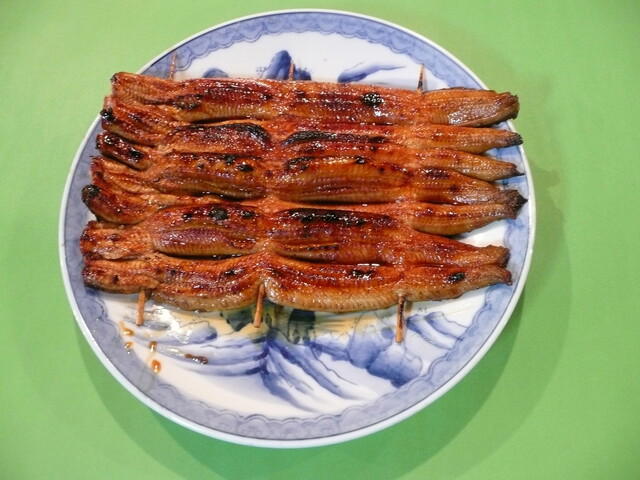
The menu
What to order
- Charcoal-grilled unagi (eel) over rice
- Carp soup with miso
- Japanese omelette
The approach to a serious unagi restaurant in Saitama has a different rhythm from central Tokyo dining. The city setting encourages a slower meal, and the category becomes less about speed than patience: eel, heat, tare built through repetition, and rice that has to carry fat, smoke, and sauce without turning heavy. Kojima Ya is best read through that grammar of Japanese eel dining, where the meal is organized around a focused specialty rather than a broad menu.
Saitama is not usually framed as a destination for destination dining in the way Tokyo is, which is exactly why its strongest specialist restaurants deserve attention. Eel rewards restaurants with a pace suited to families, groups, and meals planned around a single main ingredient. In that setting, an unagi house selected for Tabelog 100 Unagi 2024 reads as a specialist address rather than a casual neighborhood stop.
Careful grilling puts the ingredient, not decoration, at the center
Unagi is unforgiving because the ingredient announces every shortcut. The fish has to be handled for texture, cooked according to house method, lacquered without burying the flesh, then brought to the table before the heat’s work fades. Kojima Ya’s profile is tied to the discipline of eel cookery, a detail that matters because this category depends on restraint as much as richness. In unagi cooking, steadiness is not aesthetic trivia; it governs how fat renders, how sauce tightens, and how the surface carries smoke.
The sourcing angle is plain: eel restaurants live or fail by consistency. Unlike broader formats, where variety across a meal can distract from a weaker item, unagi narrows the field. The meal often turns on one main ingredient and one focused style of preparation. That is why the Tabelog 100 Unagi 2024 selection carries weight here. It places Kojima Ya within the eel category, not among restaurants rewarded for broad menu ambition.
The price band also signals intent. Dinner sits in the JPY 10,000 to JPY 14,999 range, while lunch is listed at JPY 5,000 to JPY 5,999. That puts it in a different planning category from everyday Saitama stops such as Mendokoro Harada, Petit Riche, Patisserie Rotantikku, and Teuchi Udon Matsuna, and closer to the city’s specialist-eel conversation. Unagi Musashino is another Saitama eel reference, but Kojima Ya’s own listed budget makes clear that this is a meal to plan rather than an incidental bite.
Saitama's serious dining is often format-led rather than spectacle-led
Useful comparison in Saitama is not only restaurant against restaurant, but format against format. A ramen counter can deliver precision in a quick, compact register. A pastry shop can become a daily ritual at a different level of commitment. A specialist unagi meal asks for another bargain: fewer variables, higher ingredient focus, longer preparation, and a room built for sitting down rather than moving through. That is the category Kojima Ya occupies.
The restaurant’s practical appeal does not need theatrics. Rather than treating the meal as a performance-first experience, Kojima Ya reads as a mature Japanese dining format: meals planned around eel, rice, sauce, and a sense of occasion. That makes it suitable for diners who are choosing a category deliberately, not simply looking for the nearest place to eat. The listed budget should be treated as part of the planning, especially for groups comparing lunch and dinner.
Drinks, where ordered, should follow the grammar of the cuisine rather than trying to import a separate bar identity. The point is to support the richness of eel without turning the meal into a beverage-led experience. That restraint suits the category. Eel does not need a long narrative around pairings; it needs the table to stay focused on fat, sweetness, heat, and rice.
For travelers using Saitama as more than a commuter extension of Tokyo, the meal fits into a broader map of local appetite. Our full Saitama restaurants guide is the natural next step for comparing the city’s dining range, while Our full Saitama hotels guide, Our full Saitama bars guide, Our full Saitama wineries guide, and Our full Saitama experiences guide help frame the trip beyond a single lunch or dinner.
How to read the meal against Saitama's wider food map
Saitama’s food culture rewards close reading because its strengths are scattered across categories. For pastry, casual daytime eating, and other everyday formats, the city offers a different price and occasion lane. Kojima Ya belongs to the narrower band where a single ingredient becomes the reason to plan a meal. That focus is the point: it is less about sampling Saitama broadly than about giving one specialist tradition the meal slot it deserves.
That distinction matters for international visitors. Japanese eel restaurants can look simple from the outside, yet the underlying economics are closer to other premium ingredient-led formats than to a casual rice-bowl shop. Ingredient quality, handling time, and cooking technique drive the bill. The reward is not variety; it is focus. Readers looking for breadth should build a day around multiple stops. Readers looking to understand one of Japan’s great specialist traditions should give unagi the meal slot it requires.
The broader Japan map gives useful perspective. Across the country, many restaurants let a narrow format carry a full dining identity: beef, seafood, noodles, pastry, rice, or another single subject can become the organizing principle for the whole room. Saitama’s dining scene is part of that logic rather than an exception to it. Kojima Ya’s place within the Tabelog 100 Unagi 2024 selection is best read through that lens: a focused restaurant recognized within a focused category.
The editorial call is clear: this is a meal for readers who value ingredient discipline over menu sprawl. Kojima Ya is not the Saitama choice for a cheap bite or a long tasting-menu progression. It is the choice when the purpose of the meal is eel, rice, sauce, and the confidence of a restaurant recognized within its own demanding category.
Frequently asked questions
What's the price range at Kojima Ya?
Pricing at Kojima Ya is listed as Dinner: JPY 10,000 - JPY 14,999; Lunch: JPY 5,000 - JPY 5,999.
What are the opening hours for Kojima Ya?
Opening hours for Kojima Ya are not included in the supplied details, so diners should confirm directly before visiting.
How do I find Kojima Ya?
Kojima Ya is located in Saitama.
What has Kojima Ya built its reputation on?
Kojima Ya was selected for Tabelog 100 Unagi 2024, which is the clearest trust signal attached to the restaurant. Its profile centers on unagi in Saitama, with a listed Tabelog score of 3.69.
Is Kojima Ya allergy-friendly?
The menu focus is unagi, so diners with eel or seafood allergies should treat it as a narrow-specialty restaurant rather than a broad allergy-safe option. No dedicated allergy policy is included in the supplied details.
Is Kojima Ya suitable for children?
The supplied details do not include a specific children policy. Families should confirm directly with Kojima Ya when planning a visit, especially for group meals or special seating needs.
Comparison Snapshot
Side-by-side context: comparable cuisine and price.
| Venue | Cuisine | Price | Awards | Notes |
|---|---|---|---|---|
| Kojima YaThis venue (the venue you are viewing) | Traditional Unagi (Eel) Restaurant | $50–100 | Tabelog 100 #75 | Not listed |
| Wataya | Traditional Izakaya & Sake Bar | $50–100 | Tabelog 100 #84 | Urawa |
| Toyo Zushi | Traditional Sushi & Hot Pot | $50–100 | Tabelog 100 #1 | Omiya |
| Yakiniku New Hiuchi | Premium Charcoal-Grilled Yakiniku | $30–50 | Tabelog 100 #74 | Omiya |
| かねかつ | Ramen & Tsukemen Shop | $10–20 | Tabelog 100 #9 | 北浦和 (Kita-Urawa) |
| Masuya | Traditional Unagi & Kaiseki Ryotei | $30–50 | Tabelog 100 #63 | Urawa |
Recognition history
Dated appearances from independent guides and award organizations, with the underlying list record or original source where available.
Tabelog 100 #75 · No. 75
Tabelog · Tabelog 100 - Unagi - 2024
Continue exploring
More in Saitama
Restaurants in Saitama
All restaurants in Saitama →

Bars in Saitama
Browse all →




Details
- Classic
- Cozy
- Family
- Group Dining
- Special Occasion
- Date Night
- Private Dining
- Historic Building
- Standalone
- Local Sourcing
- Street Scene
- A La Carte
- Set Menu
- Sake
- Beer
- Tea
- Pescatarian Friendly
Current opening hours
- Monday
- Closed
- Tuesday
- 11 AM–3 PM, 5–8 PM
- Wednesday
- 11 AM–3 PM, 5–8 PM
- Thursday
- 11 AM–3 PM, 5–8 PM
- Friday
- 11 AM–3 PM, 5–8 PM
- Saturday
- 11 AM–3 PM, 5–8 PM
- Sunday
- 11 AM–3 PM, 5–8 PM
Hours can change for holidays and private events. Last verified .
Traditional Japanese house-restaurant with tatami rooms and private spaces, a calm and quietly refined atmosphere that feels like a long-established local hideaway rather than a modern dining room.