
Tabelog 100 #74
Our verdict
Yakiniku New Hiuchi brings Omiya’s grilled-beef culture into a compact 20-seat format, with counter seating, table seating, and a focus on yakiniku and tripe. Its selection for Tabelog 100 - Yakiniku - EAST - 2025 places it in a serious regional conversation, especially for diners tracking meat sourcing, cut selection, and value outside central Tokyo.

Pearl is the En Primeur Club membership app, where members save venues, book tables and use the concierge.
The menu
What to order
- Manpuku New Hiuchi Course
- Assorted premium horumon (offal) platter
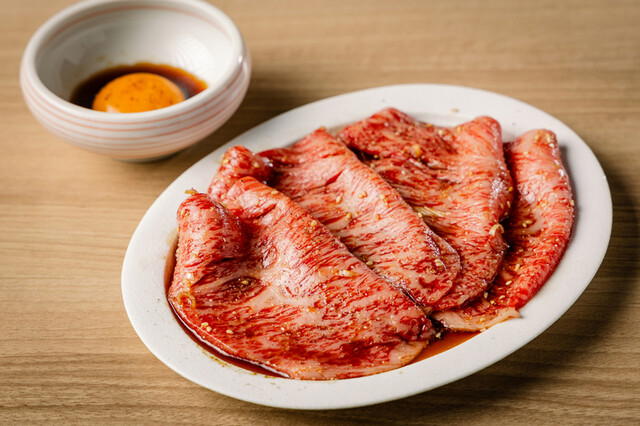
- Unfrozen female Kuroge Wagyu cuts
- Wagyu skirt steak
Saitama is not Ginza theatre or Roppongi polish; it is commuter Japan, where good eating can sit in practical dining rooms rather than luxury itineraries. That suits yakiniku: a genre of repetition, local loyalty, and close-range meals where the grill stays central. Yakiniku New Hiuchi fits that register, a Saitama yakiniku room in a city read more by rail commuters than destination diners.
Japanese yakiniku is a cuisine of cut, heat, and timing rather than ceremony. Diners control the grill, but the restaurant controls the crucial work first: which cuts are bought, how tripe is handled, how portions are sequenced, and whether the room encourages pace or patience. In Saitama, that makes the category revealing: casual format can still mean careful preparation.
Saitama's yakiniku argument is about sourcing, not spectacle
The 2025 selection for Tabelog 100 - Yakiniku - EAST gives Yakiniku New Hiuchi its clearest public credential. Tabelog’s Hyakumeiten lists are not Michelin-style starred hierarchies; they are category-led selections showing where serious local diners focus attention. For yakiniku, a crowded, price-sensitive, technically uneven field, recognition in the eastern Japan selection means the shop is judged against dedicated meat specialists, not generic izakaya-grill hybrids.
The useful lens is ingredient discipline. Yakiniku (Japanese BBQ) and tripe are the core categories, a pairing more telling than a long menu description. Beef restaurants that treat offal as an afterthought reveal it quickly; those that foreground tripe work to a different standard of trimming, washing, seasoning, and grill management. The appeal is not default luxury, but whether preparation makes secondary cuts feel intentional.
Compared with Sumibi Yakiniku Niku no Takumi Hiuchi, Yakiniku New Hiuchi reads as another expression of the same broader Saitama appetite for serious grilled beef. The comparison is about decision-making: one kind of beef night versus a direct yakiniku format. In the same city, Toyo Zushi occupies a different premium lane, with sushi shifting the meal into a separate occasion category. That spread explains Saitama’s dining character better than a Tokyo-centric map.
Saitama is not a single-cuisine stop. Its food culture moves from beef to noodles and casual kitchens without central Tokyo’s sharp neighbourhood branding. For a broader scan, Our full Saitama restaurants guide gives context alongside other local dining rooms, specialist counters, and everyday places that make the city more than a Tokyo overflow map.
A focused room changes the rhythm of the grill
The format keeps the meal closer to a specialist room than a banquet-style night out. In yakiniku, ventilation, pacing, and staff attention shape the experience almost as much as beef. A less focused operation can turn grilled meat into volume business; a more deliberate room makes diners more aware of when to order, how quickly to cook, and how much to commit to the grill.
The appeal sits in a specific Japanese category: serious but not forbidding. This is not the hushed tasting-menu model that asks diners to surrender the evening to the chef. Yakiniku remains interactive, adaptable, and social, which lets it work across different group types. The grill gives diners agency while still depending on the restaurant’s preparation.
Within Saitama, the sharper comparison is with everyday-value specialists rather than luxury rooms. Niboshi Chuka Soba Senmon Niboshi Maru plays in a noodle lane, while KARiKA KiTCHEN sits in a casual kitchen lane. They answer where to eat often. A yakiniku selection recognized in a category list answers when a diner wants meat quality, tripe handling, and tabletop-grill control without moving the night into Tokyo’s higher-cost orbit.
That distinction helps travellers. Saitama is often treated as a transit extension of Tokyo, but its dining map rewards those willing to read local density rather than chase capital-city prestige. The city’s other planning layers are covered separately in Our full Saitama hotels guide, Our full Saitama bars guide, Our full Saitama wineries guide, and Our full Saitama experiences guide.
How to place it within a Japan eating itinerary
The strongest reason to slot this meal into a wider Japan itinerary is calibration, not novelty. After sushi counters, ramen queues, and department-store dining floors, yakiniku shows another side of Japanese precision: procurement and heat transferred partly to the diner. Yakiniku New Hiuchi suits travellers who care about beef but do not want the whole evening framed as a luxury tasting.
The decision is clearest for diners already spending time in Saitama or passing through the area. It is less sensible as a cross-city detour for someone with only one night in Japan, but strong for anyone building a regional food map where Saitama is not filler. The award signal and category focus make it more purposeful than a generic station-area grill.
Beyond Saitama, Japan’s beef and grill culture branches several ways, from sukiyaki and charcoal cooking to regional casual counters, café culture, seafood rooms, curry shops, and Japanese food interpreted abroad. Those examples are useful as broad context, but Yakiniku New Hiuchi is best judged on its own narrower terms: a Saitama yakiniku address where the grill, meat, and tripe categories do the main work.
The verdict is practical rather than breathless: a Saitama yakiniku address with a recognized category credential, a meat-and-tripe focus, and a format for diners who want grill control. Its value lies in clearly expressing the local appetite for grilled beef without turning the meal into performance.
Frequently asked questions
Is Yakiniku New Hiuchi good for families?
Yakiniku New Hiuchi is a Saitama yakiniku restaurant, and its dinner pricing is listed at JPY 5,000 - JPY 5,999. As with any tabletop-grill meal, families should judge suitability by their comfort with a grill-centred dining format.
What is the atmosphere like at Yakiniku New Hiuchi?
Expect a focused yakiniku restaurant rather than a spectacle-led dining room. The restaurant was selected for Tabelog Yakiniku EAST 2025, which signals recognition within its category.
How much does it cost to eat at Yakiniku New Hiuchi?
Pricing at Yakiniku New Hiuchi is listed as JPY 5,000 - JPY 5,999.
What is Yakiniku New Hiuchi known for?
Yakiniku New Hiuchi is known for Yakiniku Japanese BBQ and tripe in Saitama, with recognition in the 2025 Tabelog Hyakumeiten selection.
Side-by-Side Snapshot
Comparable venues by cuisine and price in the same metro.
| Venue | Cuisine | Price | Awards | Notes |
|---|---|---|---|---|
| Yakiniku New HiuchiThis venue (the venue you are viewing) | Premium Charcoal-Grilled Yakiniku | $30–50 | Tabelog 100 #74 | Not listed |
| Ningyocho | Okonomiyaki & Monjayaki | $30–50 | Tabelog 100 #44 | Omiya Ward |
| Masuya | Traditional Unagi & Kaiseki Ryotei | $30–50 | Tabelog 100 #63 | Urawa |
| Yakiniku Kushin | Japanese Yakiniku BBQ | $50–100 | Tabelog 100 #10 | Omiya |
| Inakaya Irori | Traditional Japanese Izakaya with Irori Hearth | Not listed | Tabelog 100 #69 | Urawa-ku |
| Sumibi Yakiniku Niku no Takumi Hiuchi | Charcoal-Grilled Wagyu Yakiniku | $50–100 | Tabelog 100 #97 | Omiya |
Recognition history
Dated appearances from independent guides and award organizations, with the underlying list record or original source where available.
Tabelog 100 #74 · No. 74
Tabelog · Tabelog 100 - Yakiniku - EAST - 2025
Continue exploring
More in Saitama
Restaurants in Saitama
All restaurants in Saitama →



Bars in Saitama
Browse all →






Details
- Lively
- Modern
- Cozy
- Group Dining
- Family
- Casual Hangout
- Late Night
- Date Night
- Standalone
- Beer Program
- Local Sourcing
- A La Carte
- Family Style
- Beer
- Sake
- Highballs
- Pescatarian Friendly
Casual, modern yakiniku with warm lighting, counter and table seating, and a lively atmosphere suited to friends, families, and small groups rather than formal dining.