Kobé Japanese Steakhouse - Lake Buena Vista
Kobé Japanese Steakhouse in Lake Buena Vista brings the teppanyaki format to Orlando's tourist corridor, where tableside cooking and the theatre of the iron griddle have drawn family groups and first-time visitors for years. Positioned along Palm Parkway near the Walt Disney World Resort, it occupies the accessible end of Orlando's Japanese dining spectrum, well below the omakase tier represented by venues like Kadence or Sorekara.
Pearl is the En Primeur Club membership app — saves, bookings, and concierge access live there. Same editors, same standards.
- Address
- 8460 Palm Pkwy, Orlando, FL 32836
- Phone
- +14072391119
- Website
- kobesteakhouse.com
- Directions
- Get directions
 Saves & bookings on Pearl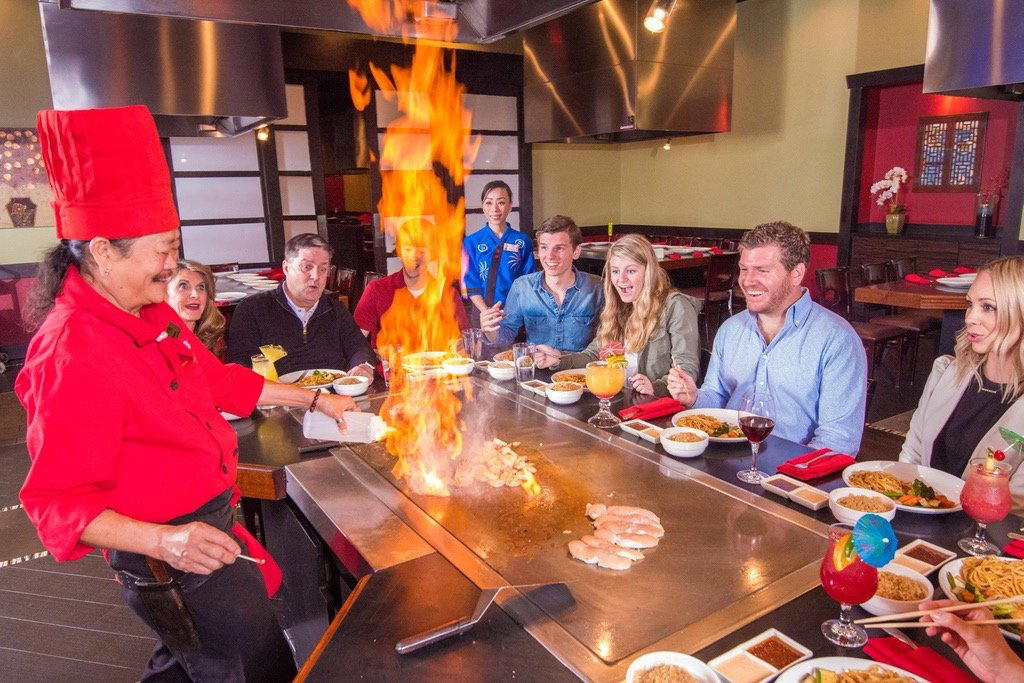
The Teppanyaki Table in the Tourism Belt
Orlando's dining geography divides sharply between the resort corridor and the city's more local-facing neighbourhoods. Along Palm Parkway in Lake Buena Vista, restaurants operate in a high-volume, high-footfall environment where the audience skews toward visitors on a schedule rather than residents with a regular table. Kobé Japanese Steakhouse serves Japanese teppanyaki steakhouse fare in Orlando's Lake Buena Vista dining corridor, with a price point around $40 per person.
Teppanyaki as a dining format carries a particular set of expectations that have little to do with contemporary Japanese fine dining. The iron griddle sits at the centre of the table; protein, vegetable, and fried rice are cooked in sequence by a cook working the surface in front of the group. The theatre is built into the architecture of the meal, and the social structure around a shared table of strangers or extended family groups is part of what the format delivers. In that respect, Kobé operates within a well-established American tradition that traces back to Benihana's mid-century popularisation of the format for a non-Japanese audience.
Where It Sits in Orlando's Japanese Scene
Orlando's Japanese dining has expanded considerably at the upper end of the price spectrum. Kadence and Sorekara represent the omakase and counter-service tier, where seat counts are low, booking windows are long, and the format is built around chef-driven progression. Natsu occupies a related space. Kobé does not compete in that bracket. Its competitive set is the family-format Japanese steakhouse, where the value proposition is communal experience, accessible pricing relative to fine dining, and a format that requires no prior knowledge of Japanese cuisine to navigate.
For context on where steakhouse dining of a more premium register sits in Orlando, Capa at Four Seasons Orlando operates at the $$$$ tier with a rooftop setting and a wine program calibrated to the resort's premium guest. Kobé's position is distinct: it serves a different occasion and a different expectation. That distinction is not a criticism. Within the teppanyaki format, the question is whether the execution is consistent, the service team is capable of managing the multi-party table dynamic, and the sourcing is adequate for the price point.
Team Dynamic at the Griddle
The teppanyaki format places an unusual demand on the person working the griddle. Unlike a kitchen brigade operating behind a pass, the teppanyaki cook functions as front-of-house and back-of-house simultaneously. They read the table, manage timing across proteins cooked to different specifications for different guests, and maintain enough showmanship to keep the format's entertainment value intact without letting it overwhelm the cooking. That combination of skills is not trivial. In lower-quality operations, the performance element cannibalises the food; in better ones, the two reinforce each other.
Front-of-house at a venue like Kobé operates across a room divided into separate griddle tables, each functioning as its own contained dining experience. Coordinating beverage service, pacing the meal relative to where each table is in the cooking sequence, and managing the mix of large group and smaller party bookings requires a degree of orchestration that can go wrong at high volume. The Palm Parkway location draws from the Disney and Universal visitor pool, which means peak periods can be intense and the margin for error in service timing is compressed.
How Kobé Fits the Broader American Teppanyaki Tradition
The American teppanyaki restaurant occupies a category that fine dining critics have largely ignored for decades, which has allowed it to develop along its own lines. The format is not trying to replicate anything happening in Tokyo's steakhouse tier, where wagyu grades and dry-ageing programmes command prices far above anything on offer in the Lake Buena Vista corridor. It is a distinctly American adaptation, and Kobé belongs to a regional chain model that has sustained the format across multiple markets by keeping the experience consistent and the format familiar.
For readers interested in where American restaurant culture has taken more ambitious directions, venues like Alinea in Chicago, Le Bernardin in New York City, or The French Laundry in Napa represent the opposite end of the ambition spectrum. Similarly, farm-to-table formats like Blue Hill at Stone Barns in Tarrytown or Single Thread Farm in Healdsburg show what happens when sourcing philosophy is made central to the proposition. The Korean-inflected fine dining of Atomix in New York City and the seafood precision of Providence in Los Angeles similarly operate in a different register. None of these comparisons diminish Kobé's purpose; they simply map the wider territory.
Other cities with active teppanyaki and Japanese steakhouse scenes include San Francisco, where Lazy Bear has pioneered a different communal-dining model, and New Orleans, where Emeril's demonstrates how chef-driven branding has shaped the mid-premium dining segment. Addison in San Diego and The Inn at Little Washington represent the fine dining anchor at the summit of their respective markets. 8 1/2 Otto e Mezzo Bombana in Hong Kong shows how the premium dining conversation extends internationally. For Vietnamese at the Orlando $$$$ tier, Camille is the reference point locally.
Planning a Visit
Kobé Japanese Steakhouse at 8460 Palm Parkway sits in the Lake Buena Vista dining cluster that serves the Disney-adjacent hotel belt. The location is accessible by car from the major resort areas and draws a high proportion of guests who are already staying nearby. Given the volume of visitors in this corridor, particularly during school holidays and peak theme park seasons, arriving without a reservation at busy periods carries real risk of a long wait or no seating. The format works well for groups of four or more, where the shared griddle table produces its intended communal dynamic; smaller parties may be seated alongside other groups.
Fast Comparison
Comparable venues nearby, for context on price, style, and recognition.
| Venue | Cuisine | Price | Notes |
|---|---|---|---|
| Kobé Japanese Steakhouse - Lake Buena VistaThis venue — the venue you are viewing | Japanese Teppanyaki Steakhouse | $$$ | Not listed |
| Seito Sushi Sand Lake | Contemporary Japanese Sushi | $$$ | The Rialto |
| Cala Bella | Modern Italian Mediterranean | $$$ | Convention Center |
| Kobé Japanese Steakhouse - Kirkman | Teppanyaki Japanese Steakhouse | $$$ | Florida Center |
| Seito Sushi Baldwin Park | Dining | $$$ | Baldwin Park |
| Oza Izakay | Modern Japanese Izakaya | $$$ | Williamsburg |
At a Glance
- Lively
- Energetic
- Family
- Celebration
- Group Dining
- Open Kitchen
- Sake Program
Current opening hours
- Monday
- 5–10 PM
- Tuesday
- 5–10 PM
- Wednesday
- 5–10 PM
- Thursday
- 5–10 PM
- Friday
- 5–10 PM
- Saturday
- 4–10 PM
- Sunday
- 4–10 PM
Hours can change for holidays and private events. Last verified .
Lively and lively atmosphere centered around energetic hibachi performances.