Tabelog 100 #35
Our verdict
A private-room shabu-shabu and sukiyaki address in Kitashinchi, selected for Tabelog 100 Hot Pot 2024. The draw is the menu architecture: beef-led hot pot formats, Japanese cooking discipline, and drinks that range across sake, shochu, wine, and cocktails, all set within Osaka’s after-dark business dining quarter.

Pearl is the En Primeur Club membership app, where members save venues, book tables and use the concierge.
The menu
What to order
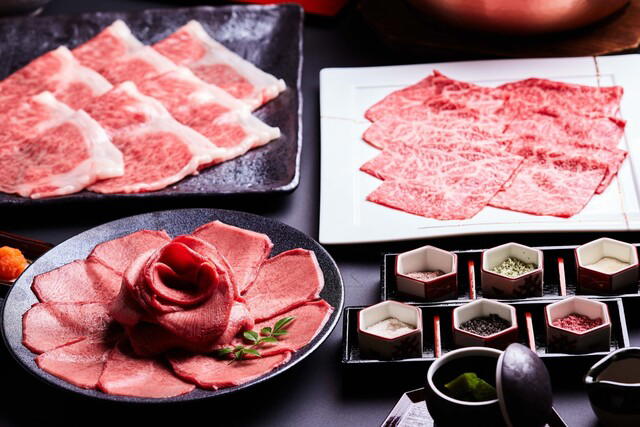
- Wagyu shabu-shabu course
- Wagyu sukiyaki course
- Tamura beef shabu-shabu
- Naruto Kintoki puree
Osaka works differently after dark. Its discreet dining rooms, polished service culture, and evening-focused restaurants are built for meals where privacy and pacing can matter as much as the cooking. In that setting, shabu-shabu and sukiyaki make particular sense: both are structured around heat control, shared attention, and the quality of the main ingredient rather than kitchen theatrics. Kitashinchi Shabushabu Sukiyaki Kiraku belongs to this Osaka category of high-comfort, high-spend Japanese dining, where the meal is less about surprise and more about how a familiar format is tightened into a controlled evening.
The restaurant’s Tabelog 100 Hot Pot 2024 selection places it inside a national conversation about sukiyaki and shabu-shabu at a level above routine group dining. That recognition matters because hot pot in Japan covers a wide range, from casual winter drinking food to more formal dinners calibrated for clients, anniversaries, and small parties. In Osaka, the premium version often sits within the city’s evening dining culture rather than in quick tourist-dining mode. The geography reinforces the point: this is food built for dinner use, not a lunch-counter detour.
Two hot pot formats, one Osaka business-dining grammar
Shabu-shabu and sukiyaki share ingredients but not mood. Shabu-shabu is about quick cooking, broth clarity, dipping sauces, and the rhythm of meat passing through heat. Sukiyaki is denser and sweeter, tied to soy, sugar, and the richer pull of beef cooked in a seasoned base. A menu that gives both formats equal billing tells the reader something useful about the room: it is not chasing novelty, it is organizing choice around two established Japanese hot pot traditions.
That structure also separates this kind of dinner from Osaka’s louder, faster food culture. The city is rightly associated with casual appetite, quick bites, bakeries, and cafe stops. Kitashinchi Shabushabu Sukiyaki Kiraku’s hot pot tier operates at another tempo. The emphasis is seated, ingredient-led, and designed for a full evening rather than a quick city bite.
The format signals similar breadth. Japanese hot pot can suit classic drink pairings, bottle-led dinners, or a less formal sequence depending on the group. Compared with Kasane or Man-u, this format puts the pot at the center and lets the rest of the evening orbit it. The decision is not about which cuisine has greater ambition; it is about which format suits the occasion.
Hot pot changes the rhythm of the table
Hot pot is social by design, and a more deliberate restaurant setting changes its register. The experience leans toward focused conversation rather than broad dining-room energy. That matters in Osaka, where restaurants can function as extensions of business culture: controlled pacing, fewer interruptions, and a format that gives the table a shared point of focus. The cooking method becomes a hospitality tool.
There is also a practical advantage to this setup. Shabu-shabu and sukiyaki require timing, space, and attention to the table. A focused hot pot format reduces friction for small groups and makes the meal easier to pace than in a larger, more casual room. The restaurant’s role in Osaka’s premium dining circuit is clear: not a counter-style evening, not a quick flexible stop, but a hot pot dinner arranged around comfort, attention, and repetition.
For travelers building an Osaka itinerary, this is a useful counterweight to the city’s broader restaurant map. Other Osaka dining rooms show how varied the city’s restaurant culture has become, from international formats to casual local stops. Hot pot at Kitashinchi Shabushabu Sukiyaki Kiraku reads more locally: it reflects Osaka’s preference for convivial eating, but filtered through the demand for privacy and polish. For wider planning, Our full Osaka restaurants guide gives the broader dining spread, while Our full Osaka bars guide, Our full Osaka hotels guide, Our full Osaka experiences guide, and Our full Osaka wineries guide help place dinner within a full city stay.
Where this fits in Japan's wider comfort-food hierarchy
Japanese comfort food is not a single category. It ranges from quick rice-based snacks to sake-led rooms, curry counters, regional cooking, and other everyday formats across the country. Sukiyaki and shabu-shabu occupy a different lane: they are familiar, ceremonial, and ingredient-sensitive without needing a tasting-menu script.
That is the editorial case for Kitashinchi Shabushabu Sukiyaki Kiraku. Its reputation is not built here on a public chef narrative or a catalog of named signature dishes. The available signals are more structural: a recognized hot pot category award, a Japanese menu centered on shabu-shabu and sukiyaki, and a price range that places it in the premium dinner bracket. In a city where dining can swing from quick snacks to exacting counters, this is the controlled middle of premium Osaka hospitality.
That middle has value. A traveler comparing Japanese dining formats might look to unnamed dining elsewhere in Japan for sukiyaki references, seafood-focused meals, regional cooking, or casual international options. Osaka’s hot pot rooms answer another question: where to put a serious, quiet, group-friendly Japanese dinner that does not require the choreography of omakase.
The strongest reason to come is the menu’s clarity. Hot pot has few hiding places; the format exposes sourcing, slicing, heat, service timing, and the table’s own rhythm. When it works, the pleasure comes from restraint and repetition rather than spectacle. In Osaka, that restraint reads as a dining code: controlled pace, familiar dishes handled with enough precision to earn category recognition.
Frequently asked questions
What part of town is Kitashinchi Shabushabu Sukiyaki Kiraku in?
Osaka.
Is Kitashinchi Shabushabu Sukiyaki Kiraku more mid-range or high-end?
Pricing at Kitashinchi Shabushabu Sukiyaki Kiraku is listed as JPY 15,000 - JPY 19,999.
What's the best way to book Kitashinchi Shabushabu Sukiyaki Kiraku?
Use the restaurant’s available contact channels when planning a visit, and specify your party size and preferred date clearly.
What has Kitashinchi Shabushabu Sukiyaki Kiraku built its reputation on?
Its reputation rests on shabu-shabu and sukiyaki, plus its selection for Tabelog 100 Hot Pot 2024. A dinner price range of JPY 15,000–19,999 places it in the serious Osaka dining bracket.
Fast Comparison
Comparable venues side-by-side for orientation.
| Venue | Cuisine | Price | Awards | Notes |
|---|---|---|---|---|
| Kitashinchi Shabushabu Sukiyaki KirakuThis venue (the venue you are viewing) | Traditional Wagyu Shabu-shabu & Sukiyaki | $100–150 | Tabelog 100 #35 | Not listed |
| Takuya | Modern tonkatsu & pork dishes | $50–100 | Tabelog 100 #15 | Kita |
| Tori Yasu | Yakitori & Chicken Cuisine Counter | $50–100 | Tabelog 100 #11 | Kita |
| Tonkatsu Koshirou | Omakase Tonkatsu Counter | $50–100 | Tabelog 100 #35 | Chūō |
| Sushi Akazu | Traditional Edomae Omakase Sushi with Red Vinegar Rice | $150–200 | Tabelog 100 #45 | Kita |
| Kitashinchi Yamagata Ya | Japanese Yakiniku | $150–200 | Tabelog 100 #71 | Kita |
Recognition history
Dated appearances from independent guides and award organizations, with the underlying list record or original source where available.
Tabelog 100 #35 · No. 35
Tabelog · Tabelog 100 - Hot Pot - 2024